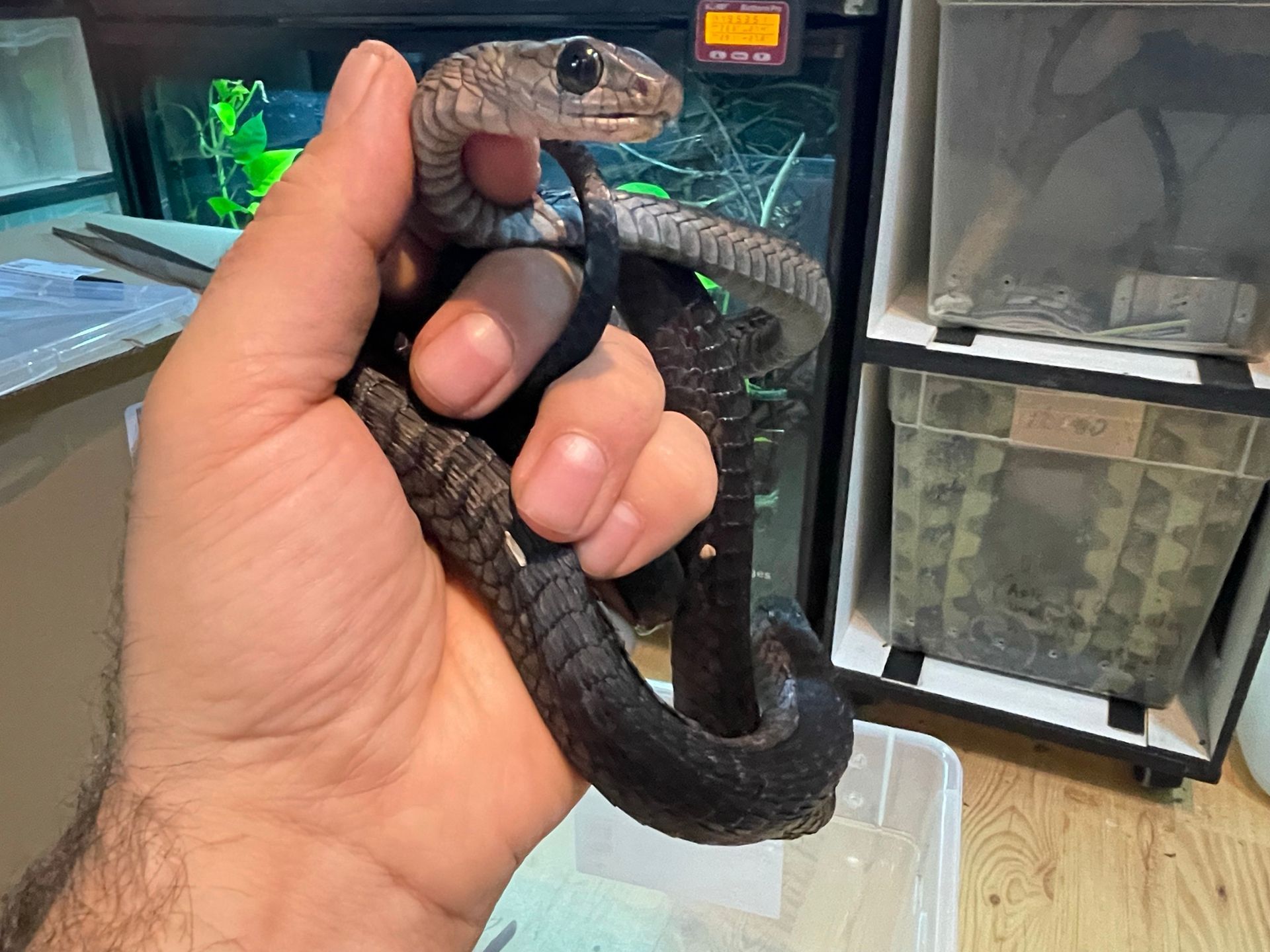
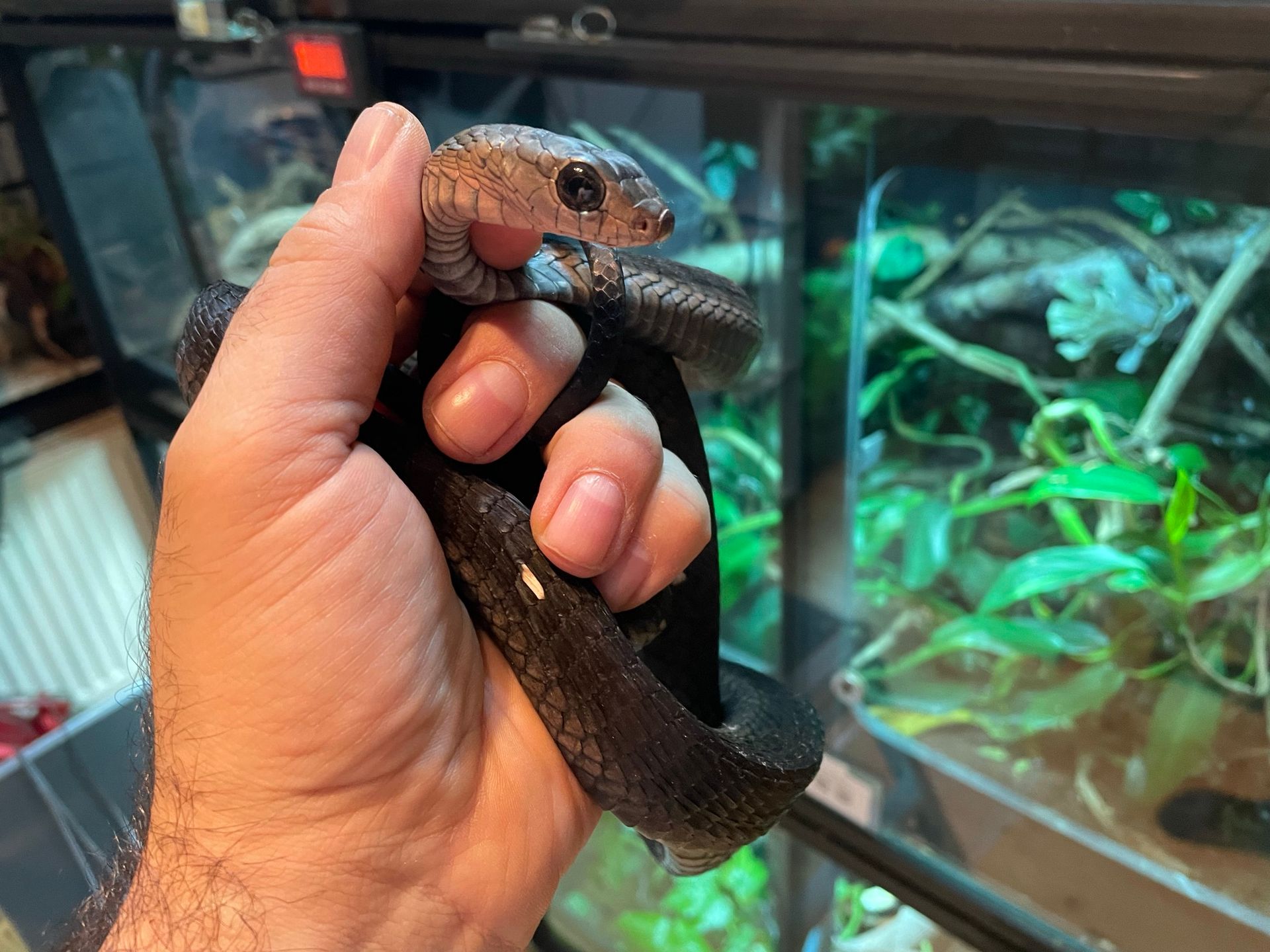
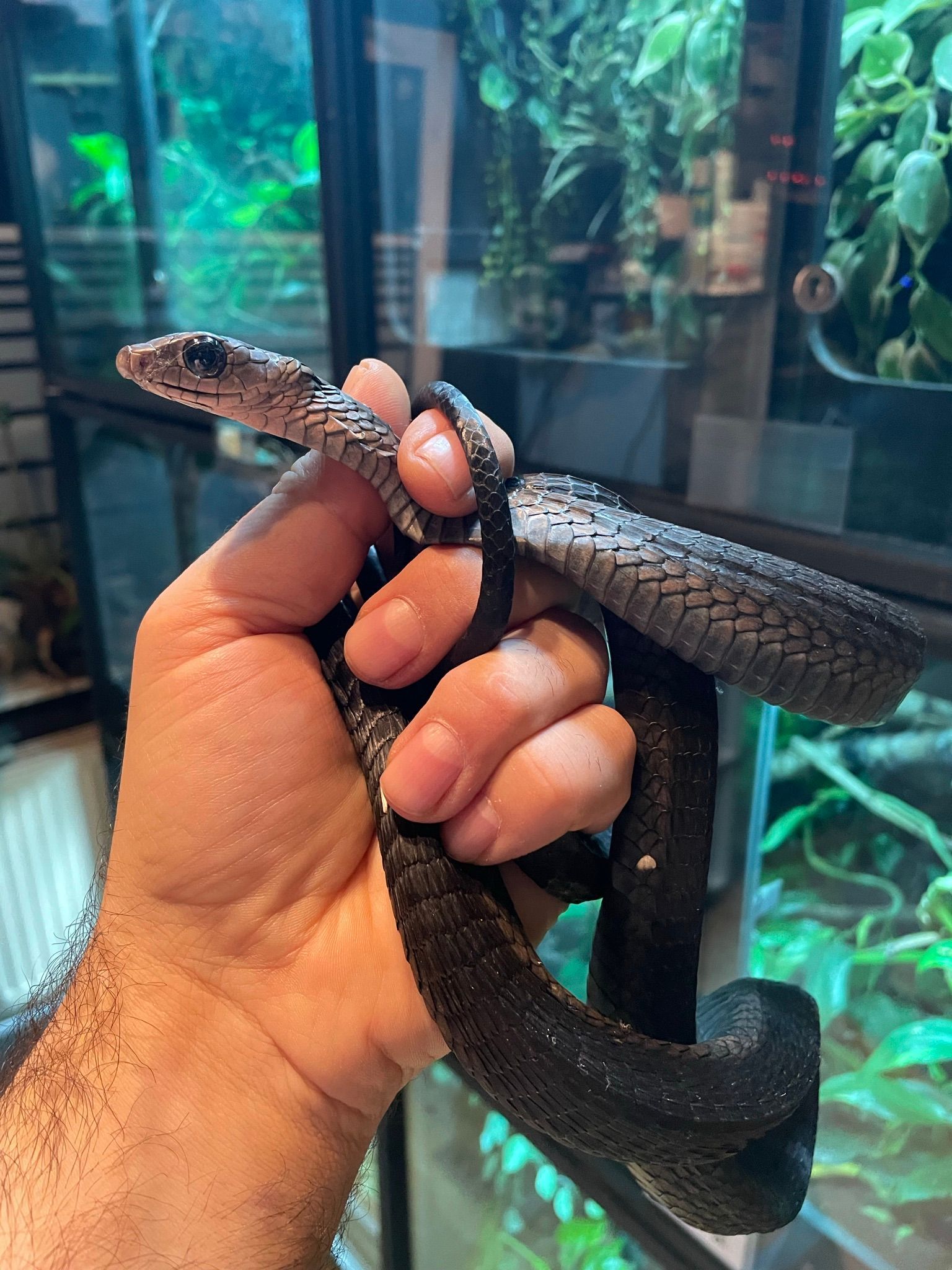
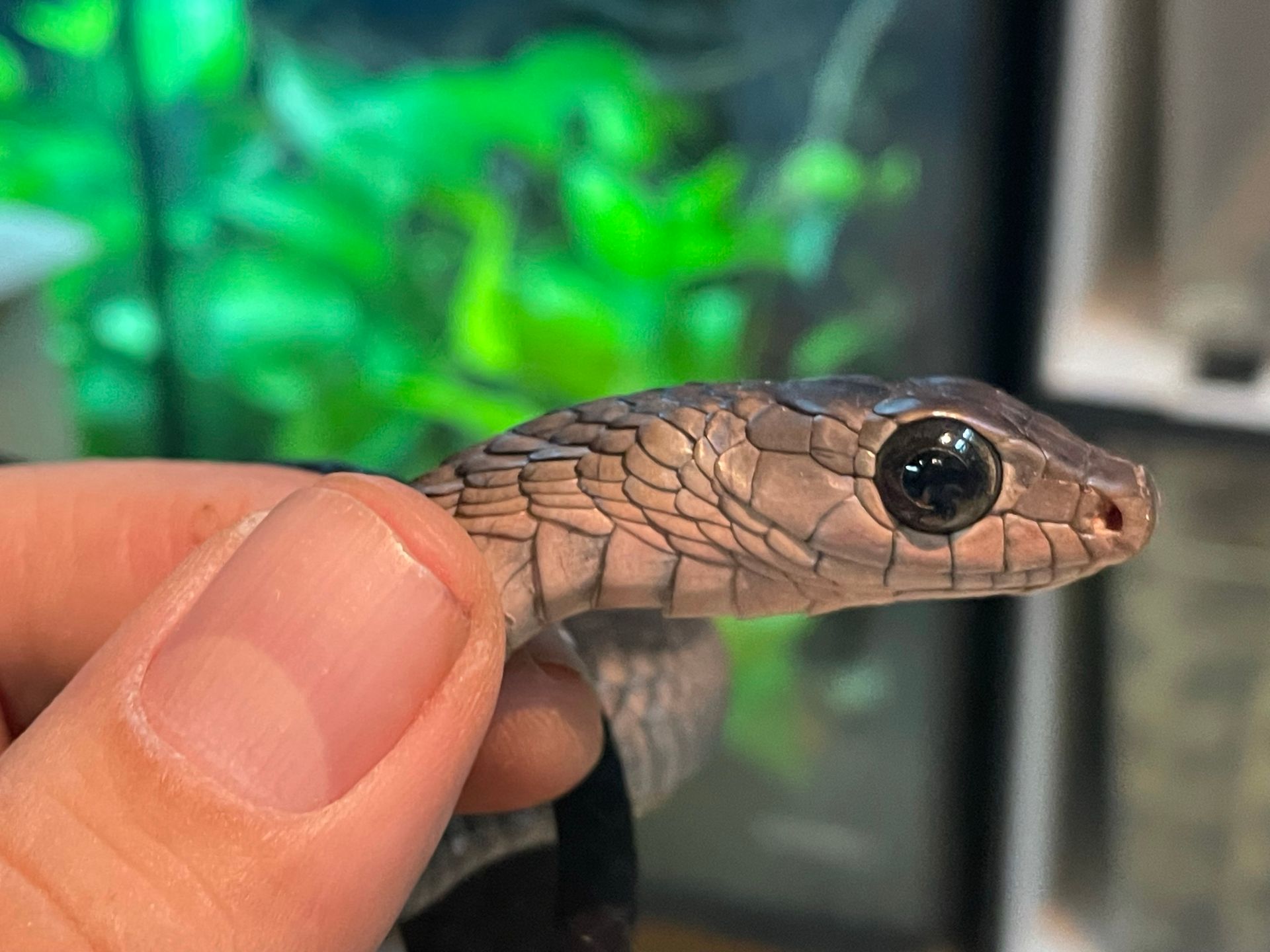
Mating and Breeding Behaviour
The first mating activity was observed on 04.11.2024.
A few days earlier, I had lowered the night temperature to 21 °C and the daytime temperature to 27 °C—this was presumably the trigger. Humidity and the rainy season remained unchanged.
Further matings:
11.11.
23.11.
All three matings took place at around 16:00. The male was extremely active.
Apart from this, the animals showed no further behavioural changes: no food refusal and no visible increase in girth.
⸻
Another mating was observed on 21.02.2025—90 days after the first.
After this final mating, the male became noticeably calmer but continued to eat.
The female, on the other hand, refused food and visibly increased in girth.
⸻
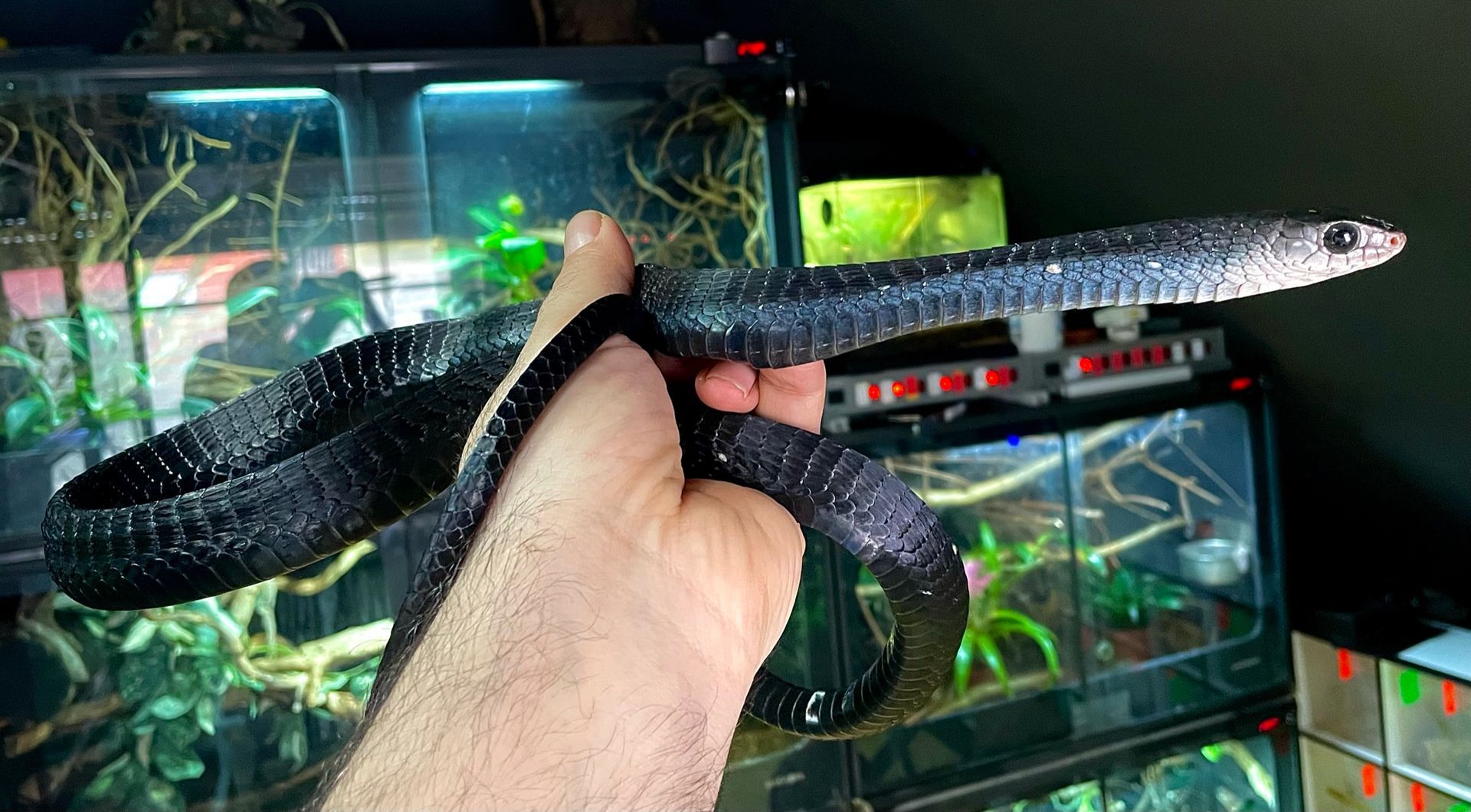
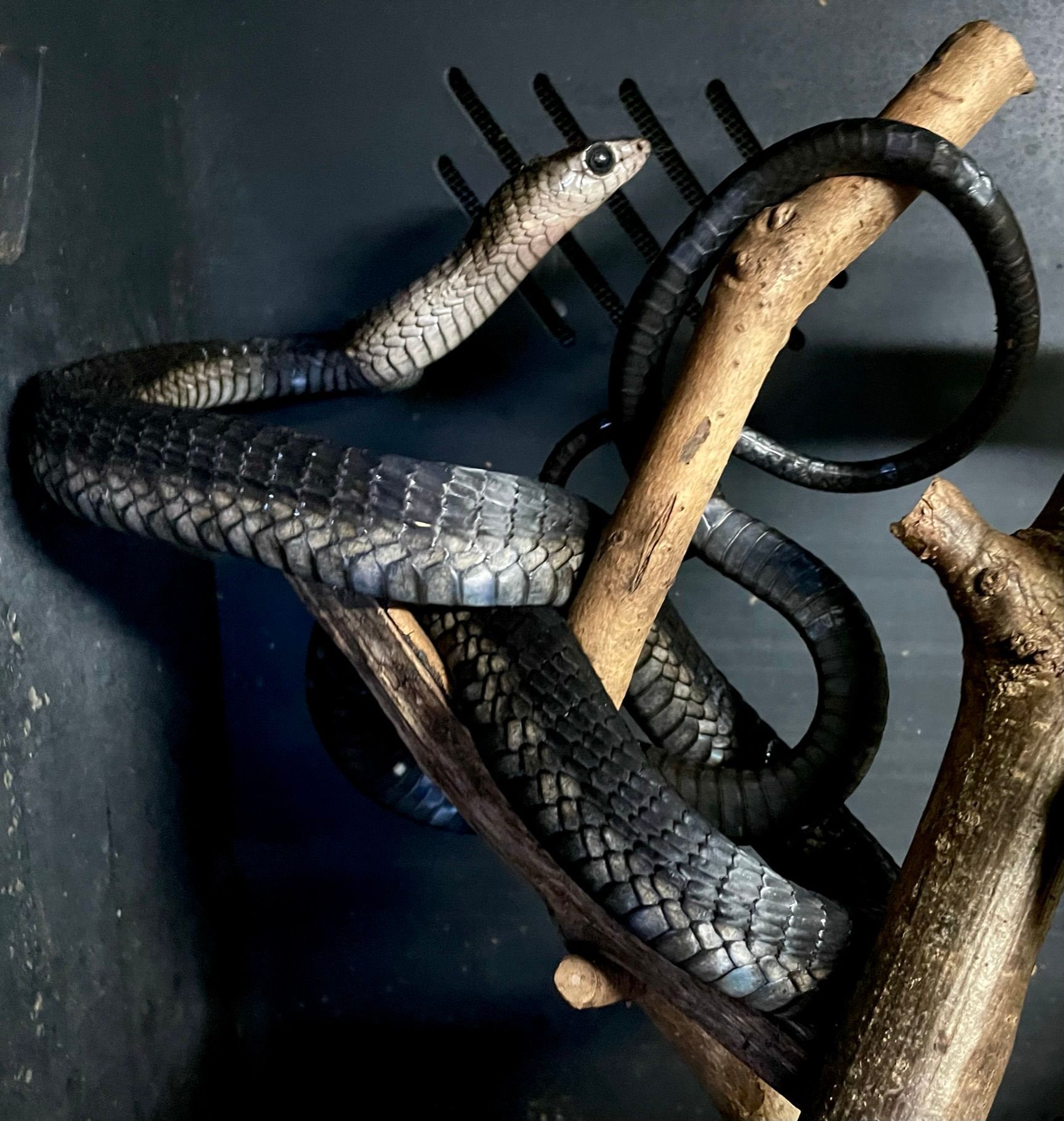
Thrasops occidentalis – Care report 🇩🇪 🇬🇧
⸻
Origin & Initial Stock
On 27 October 2021, I bought my first animals—fresh imports from Ghana.
The male caused problems from the outset. On the very first day, it passed a lump of pus full of worms. Sadly, it died a few days later.
I purchased another male on 14.01.2022. It had already been privately kept in Germany for several months.
⸻
Acclimation & Husbandry
At first, I kept the animals separately for about a year to help them settle in and to better monitor their feeding behavior.
Neither animal caused any major problems, but initially they would not accept rodents, either directly or from tongs. Even when they did accept rodents, they did not always keep them down.
It took a while to find the right size and quantity of food, especially for the male.
After about a year, the two animals were introduced.
The male was slightly smaller than the female. He spent most of his time on the ground and occasionally sought out the female’s favourite spot, but never stayed there for long. This made feeding easier.
Up until 21.04.2024, the animals did not accept rodents from feeding tongs, but ate reliably when suitable prey was placed in the terrarium.
⸻
Husbandry parameters
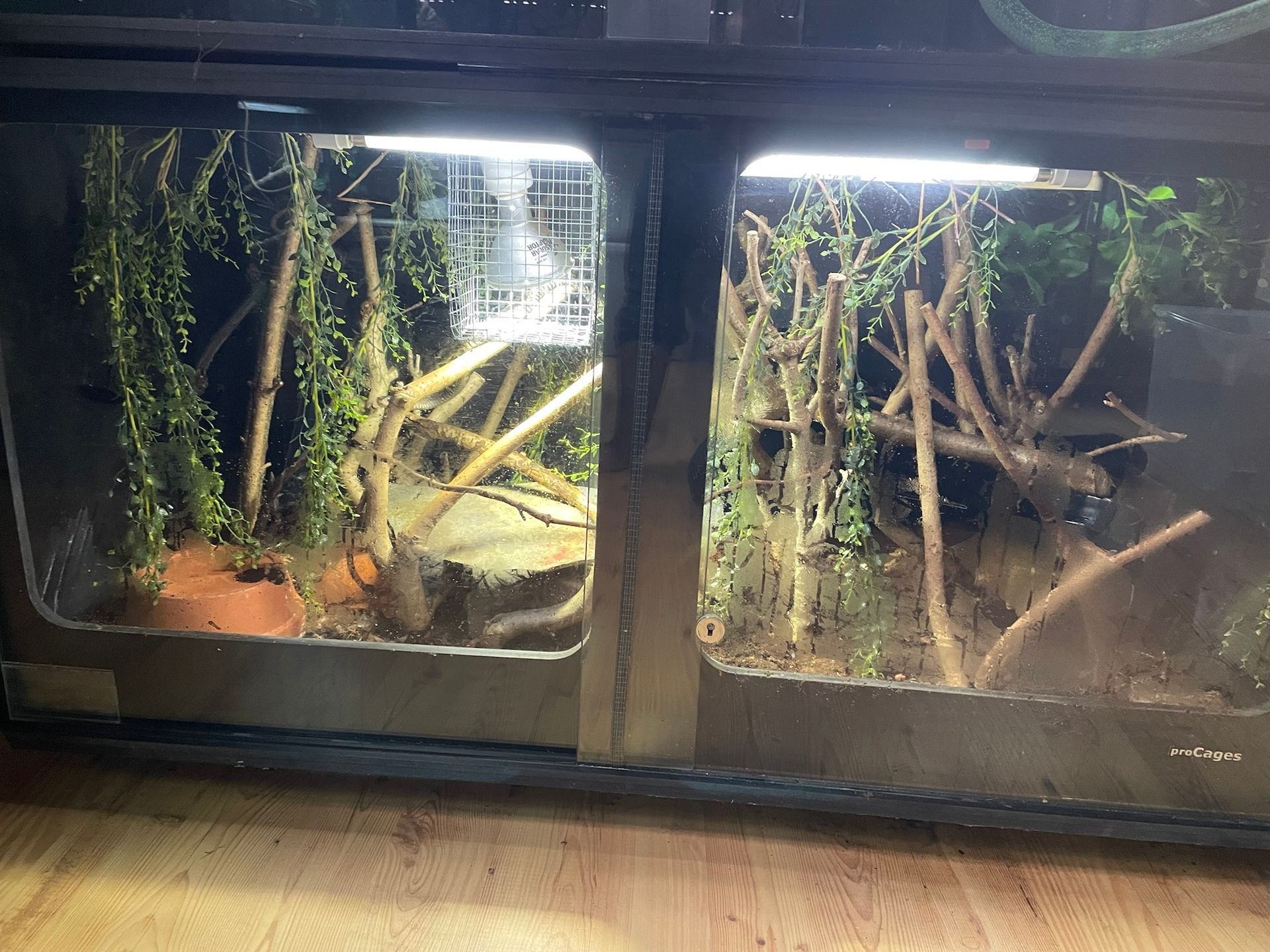
- Heating: Heat panel and additional 35-watt lamp (SolarRaptor)
- Lighting: 24-watt T5 UVA/UVB tube
- Watering: 1–2 times per week
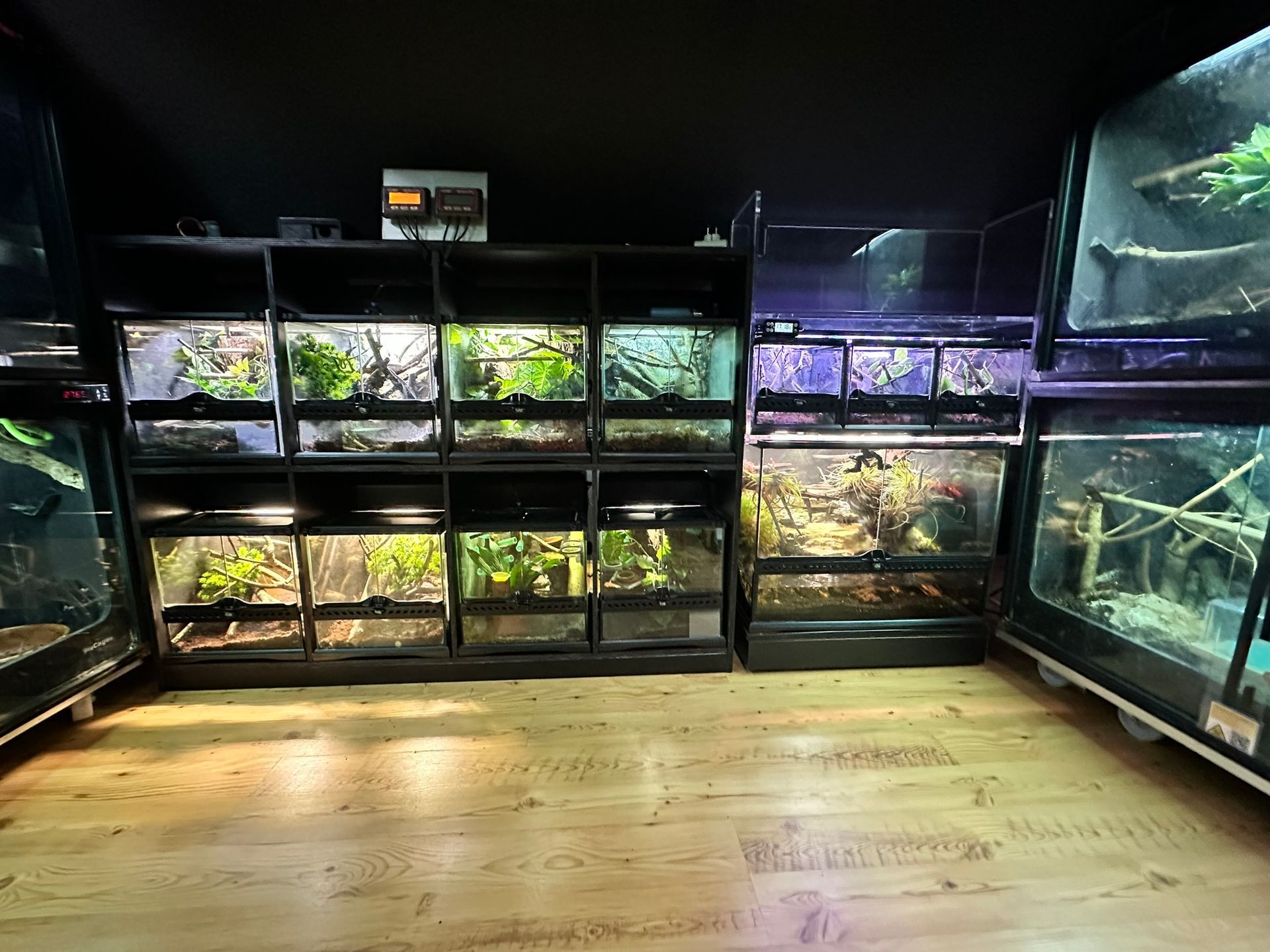
- Setup: plenty of branches and hiding places at all heights
- Favorite hiding spot: beneath the heat panel at 28–30 °C
- Temperature range: 21–32 °C (depending on the season)
⸻
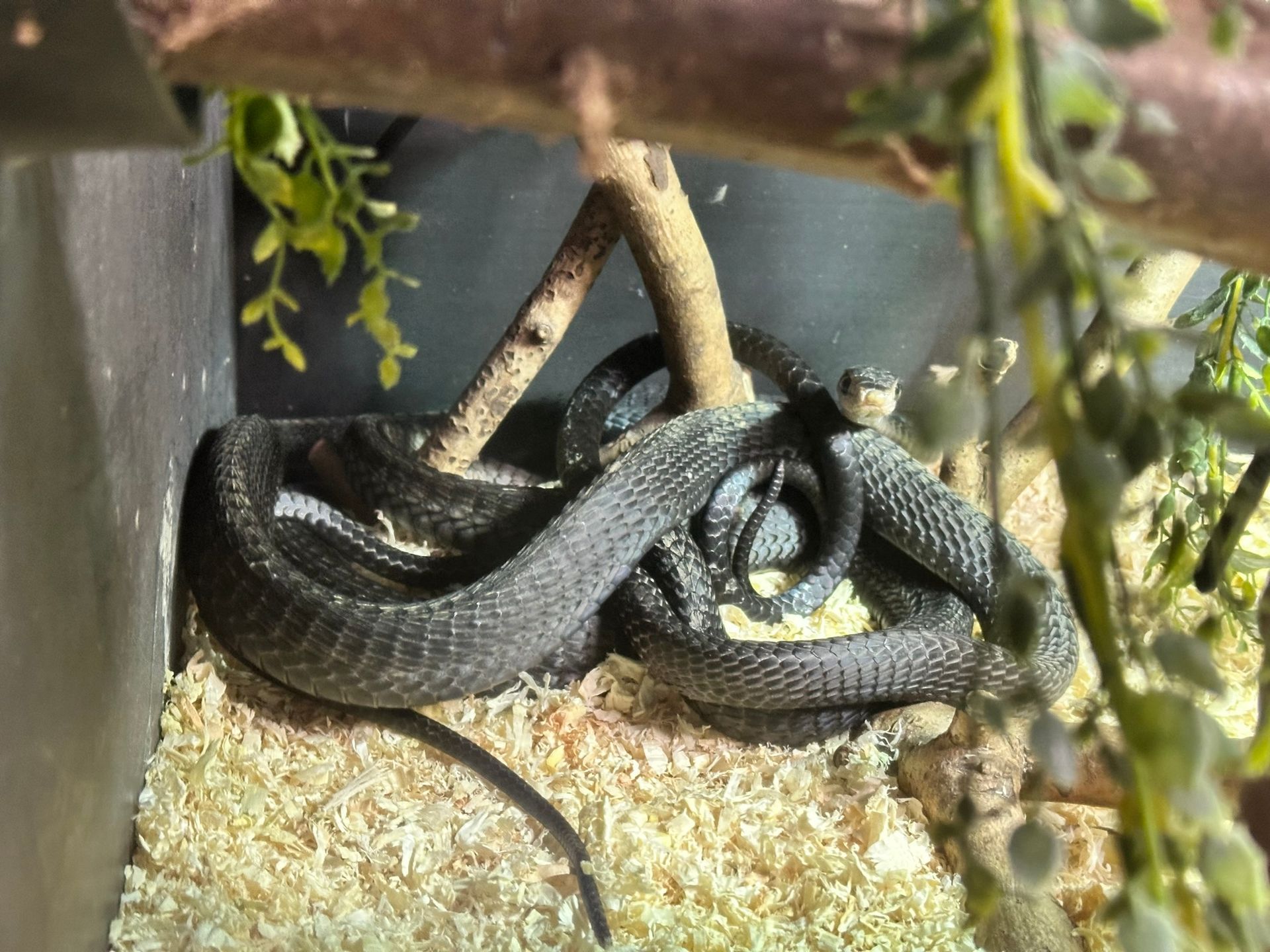
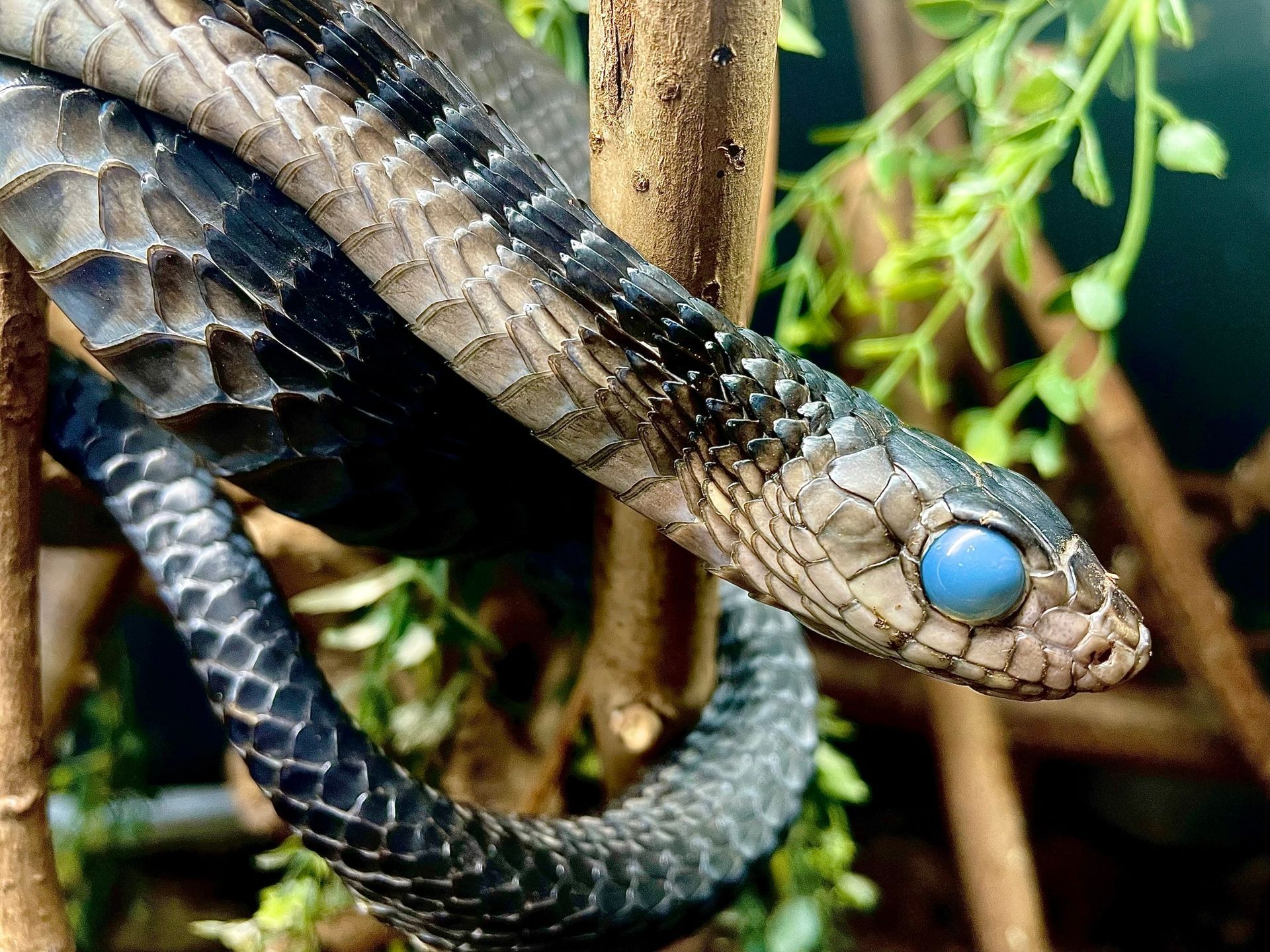
PLS and oviposition
PLS (pre-laying shed): 07.04.
12 days later, the female became very active and searched intensively for a suitable laying site. She disturbed the substrate and almost completely buried herself.
⸻
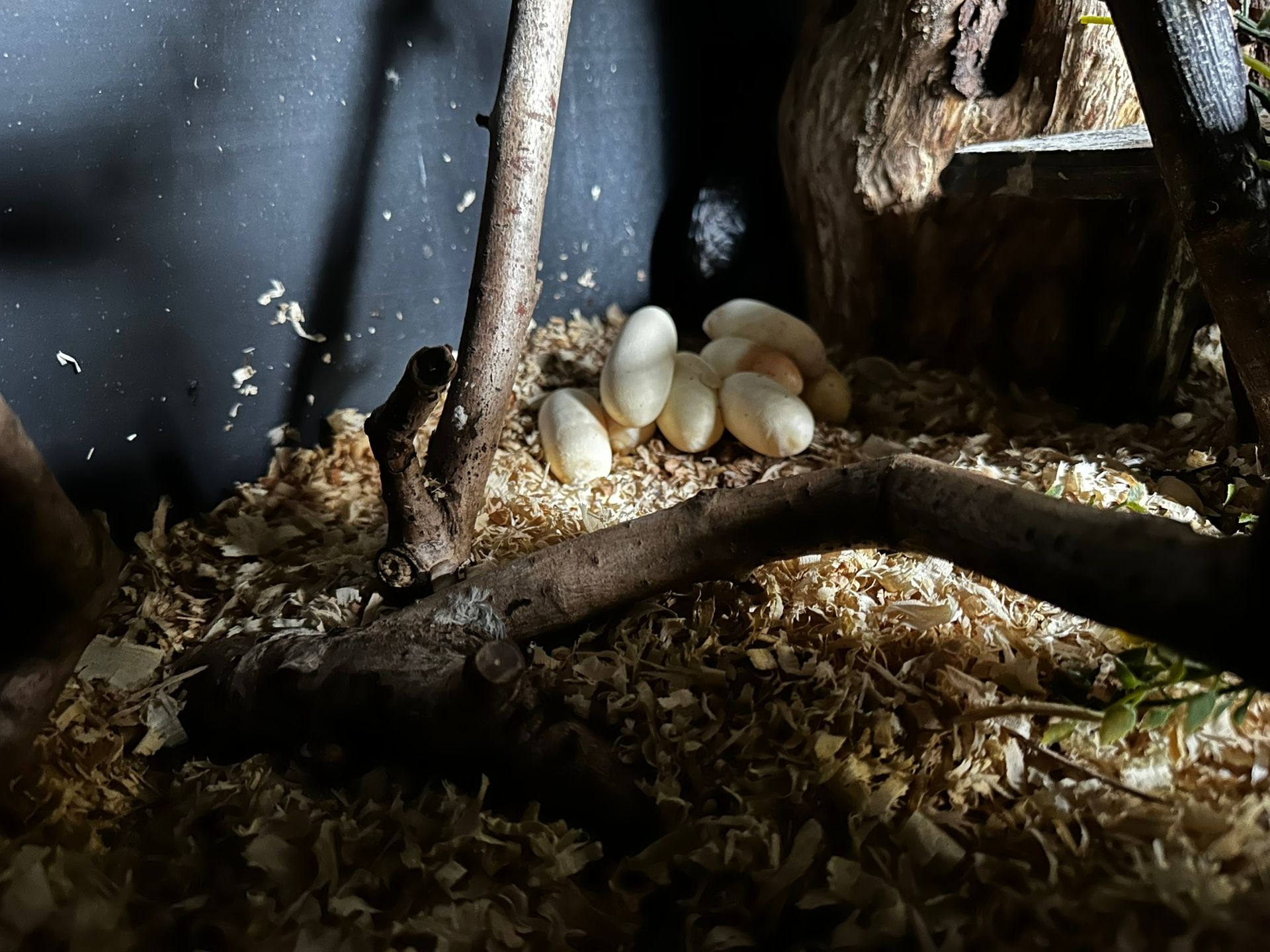
Egg-laying
Date: 20 April
59 days after the last mating
13 days after the pre-laying shed
Location: behind a log
Conditions: 23–24 °C, moist substrate
Time: early morning
⸻
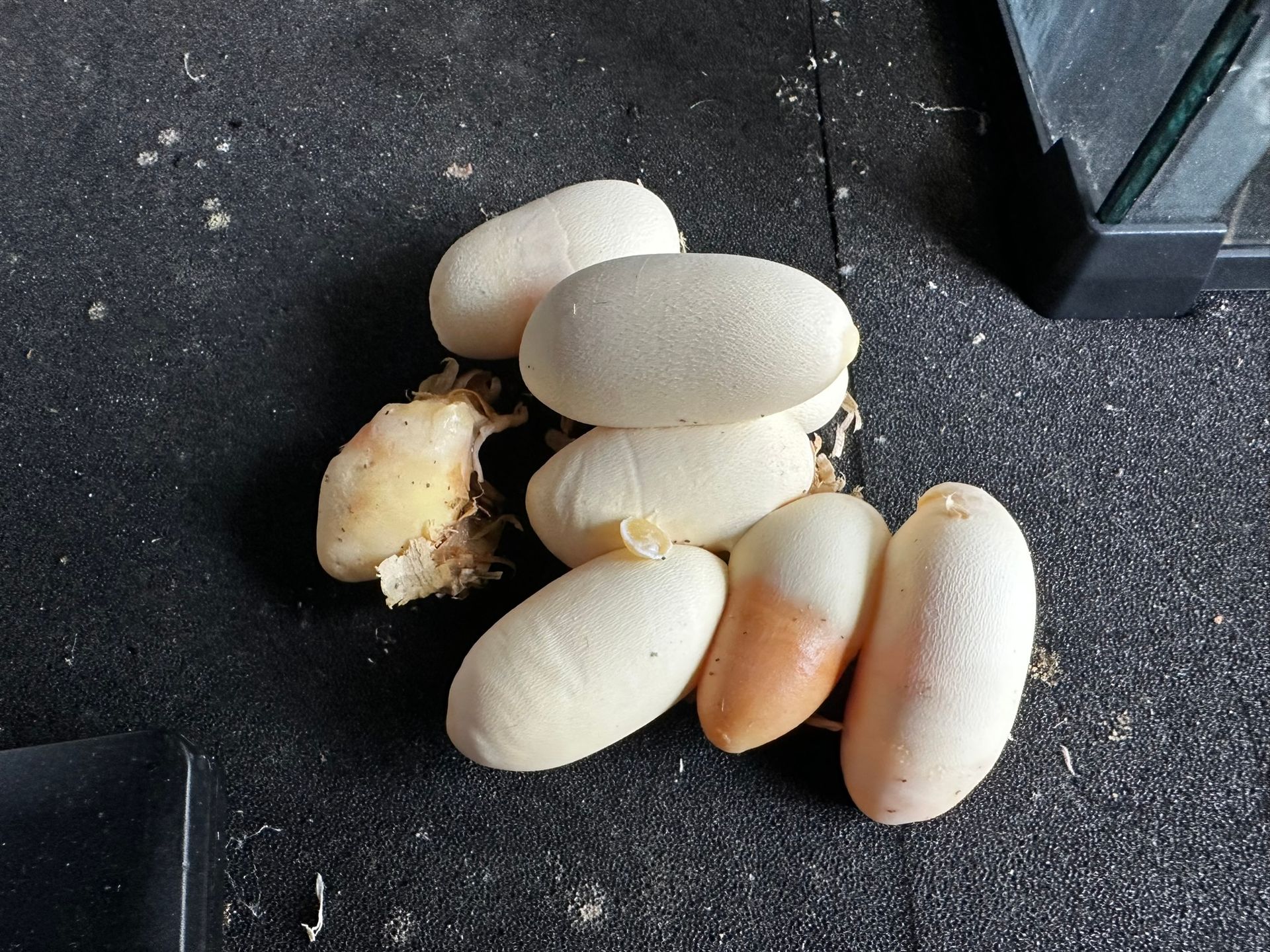
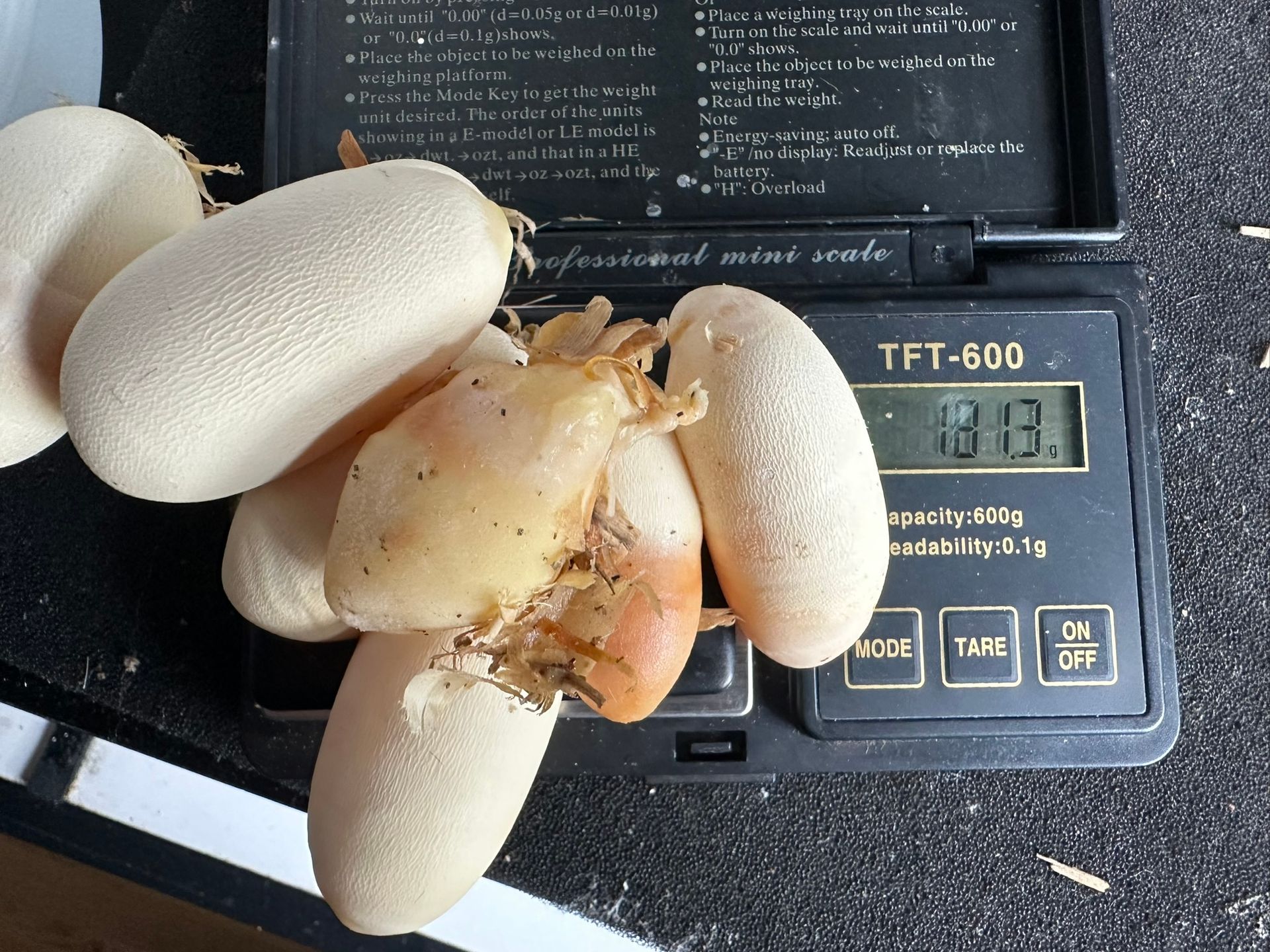
Clutch
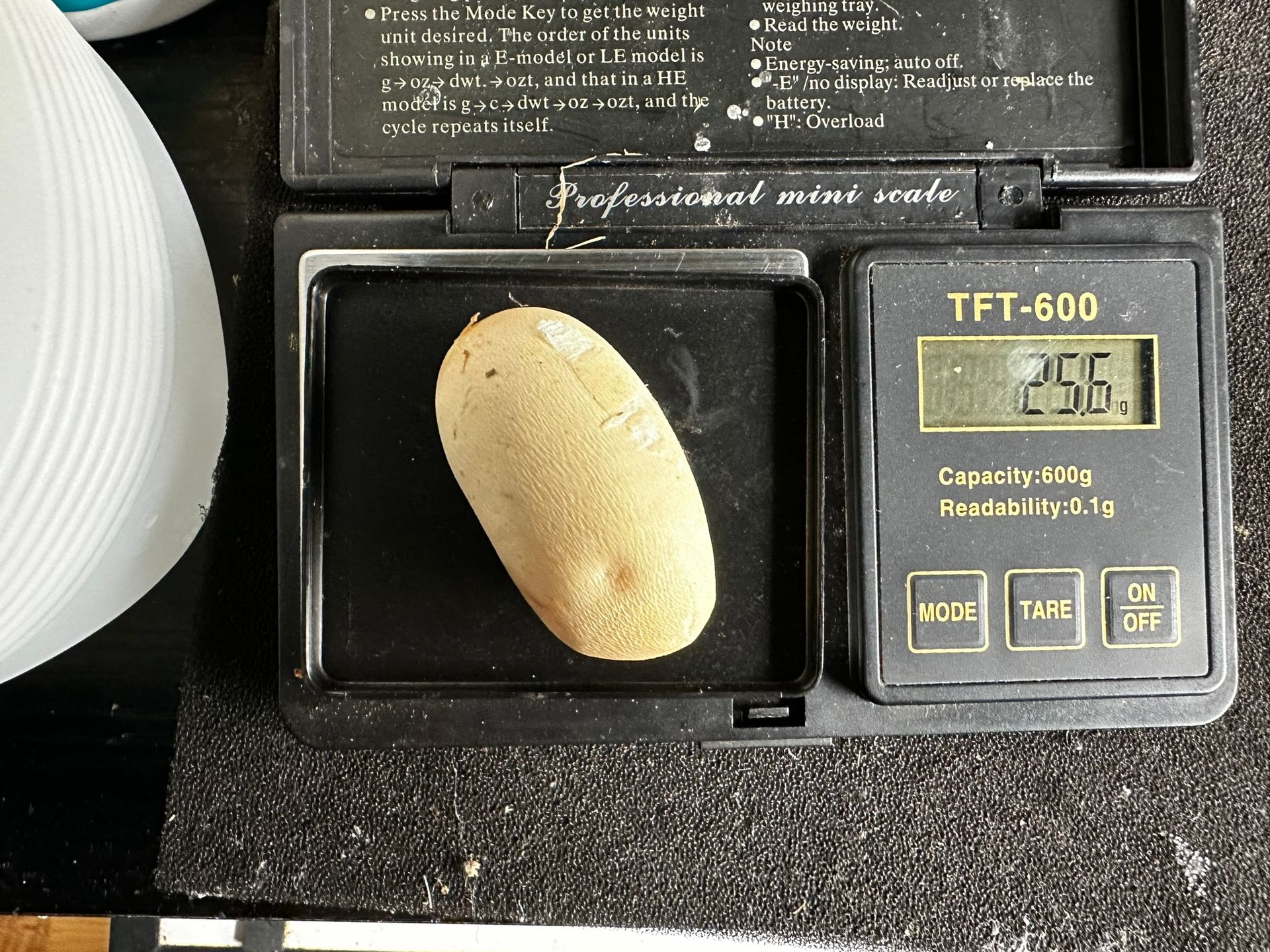
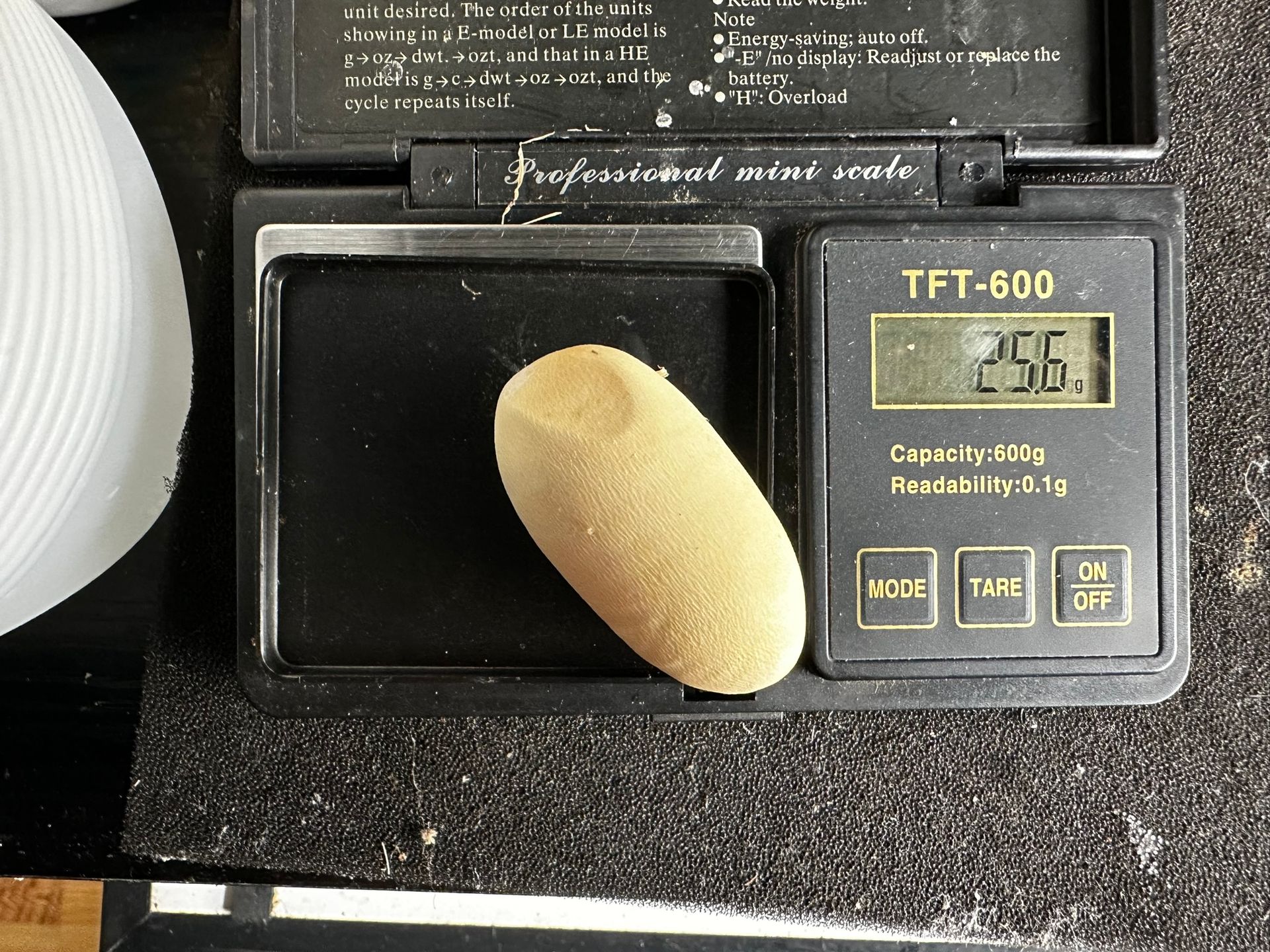
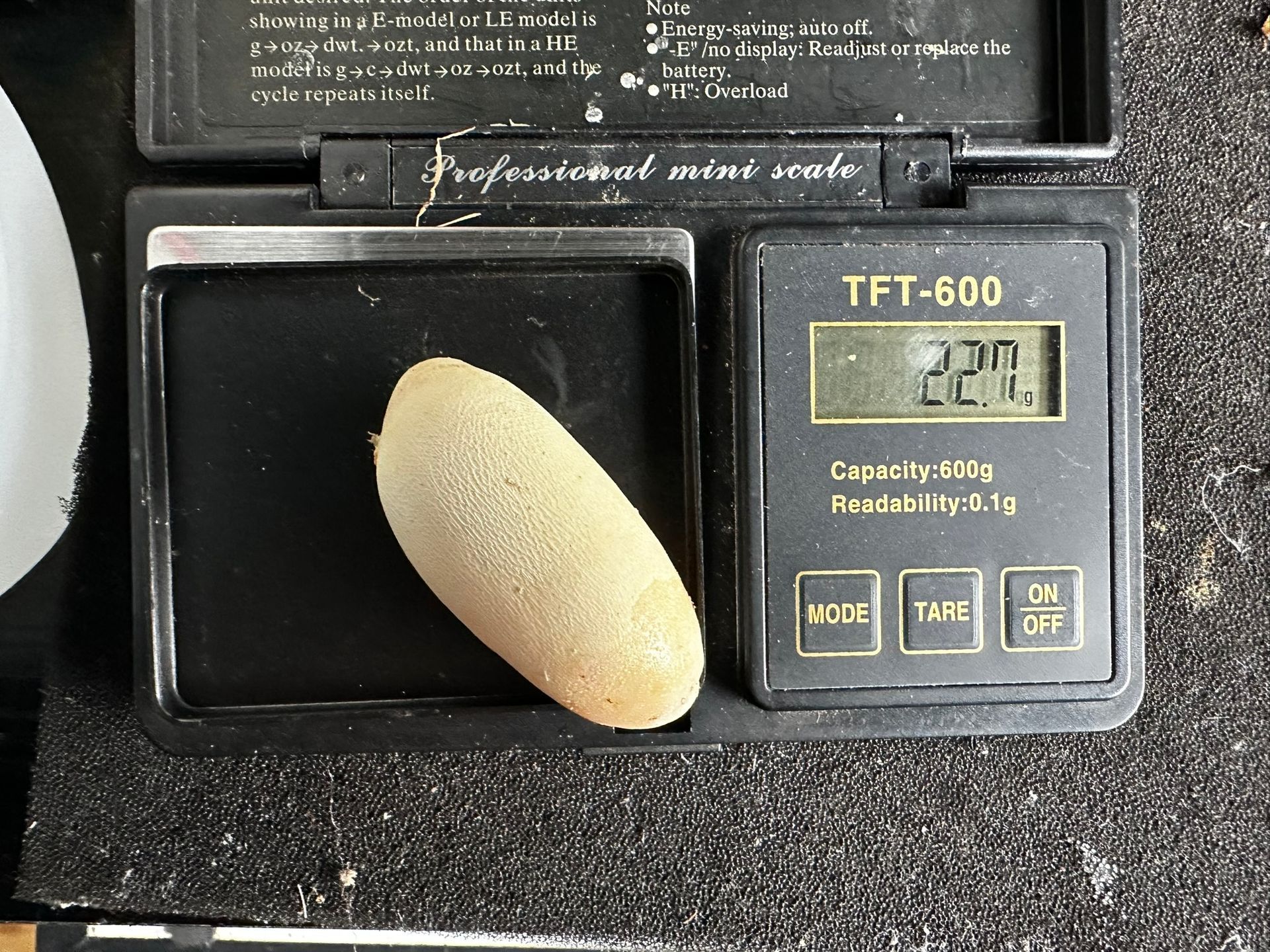
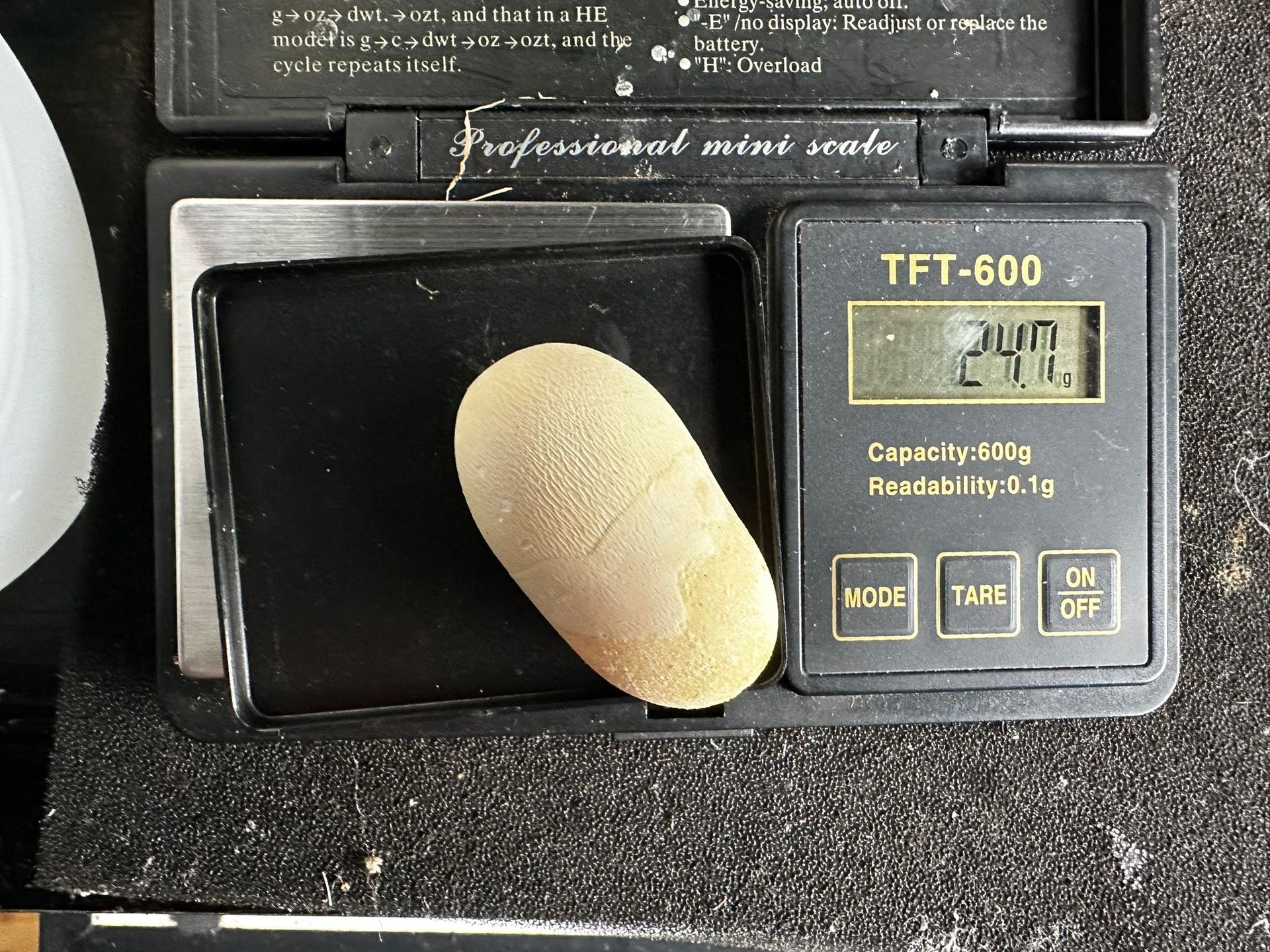
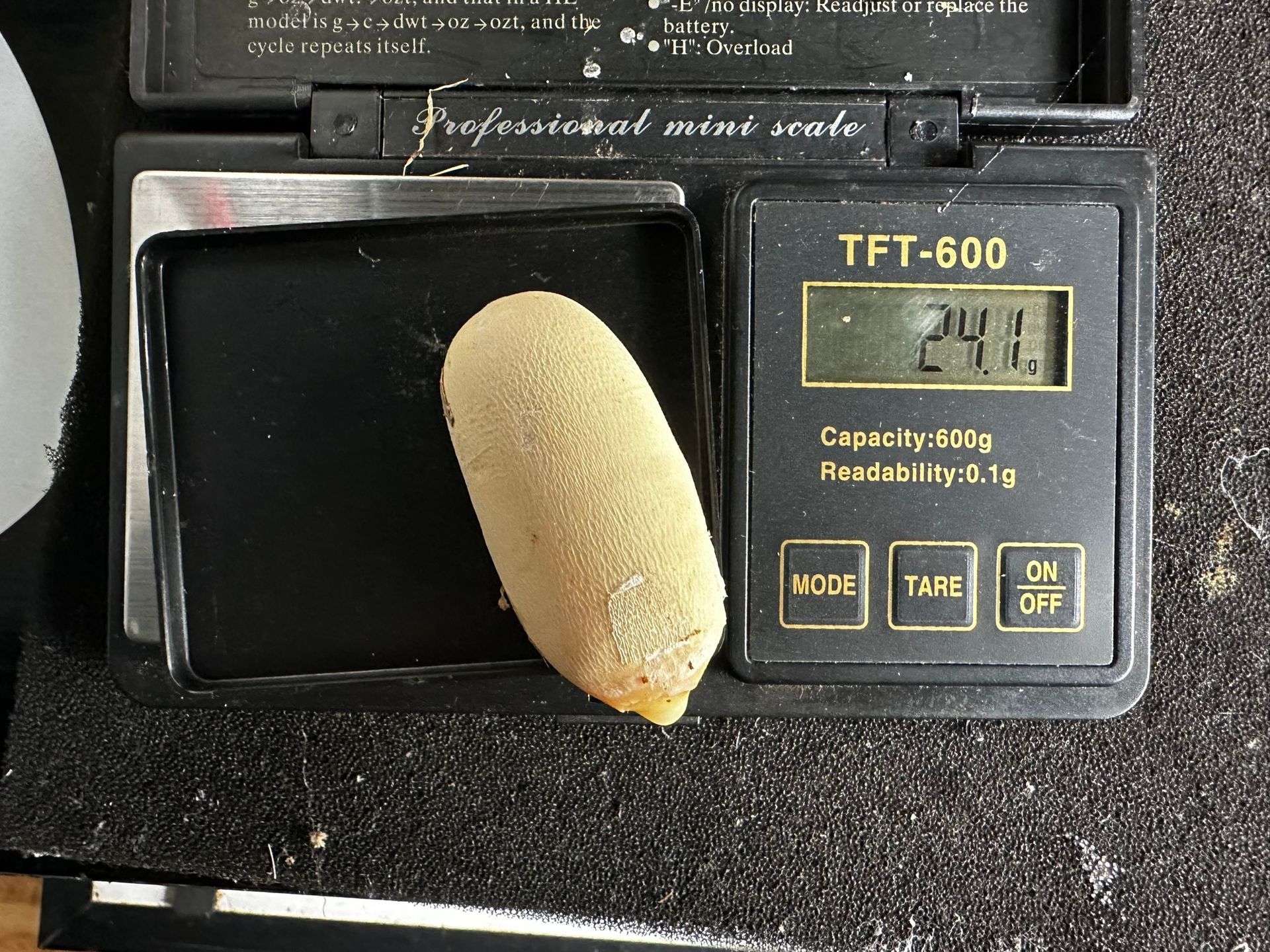
Total weight: 181 g
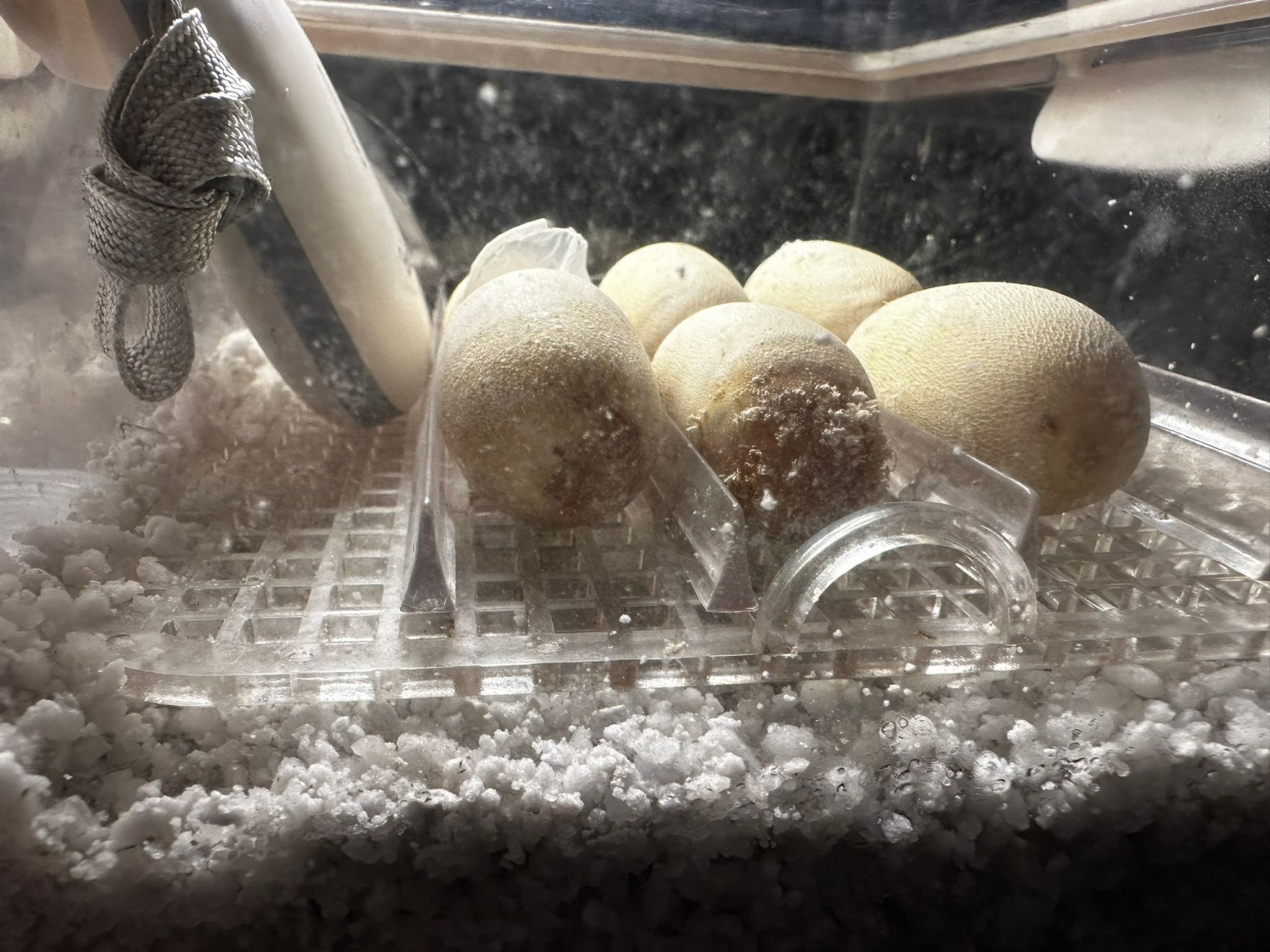
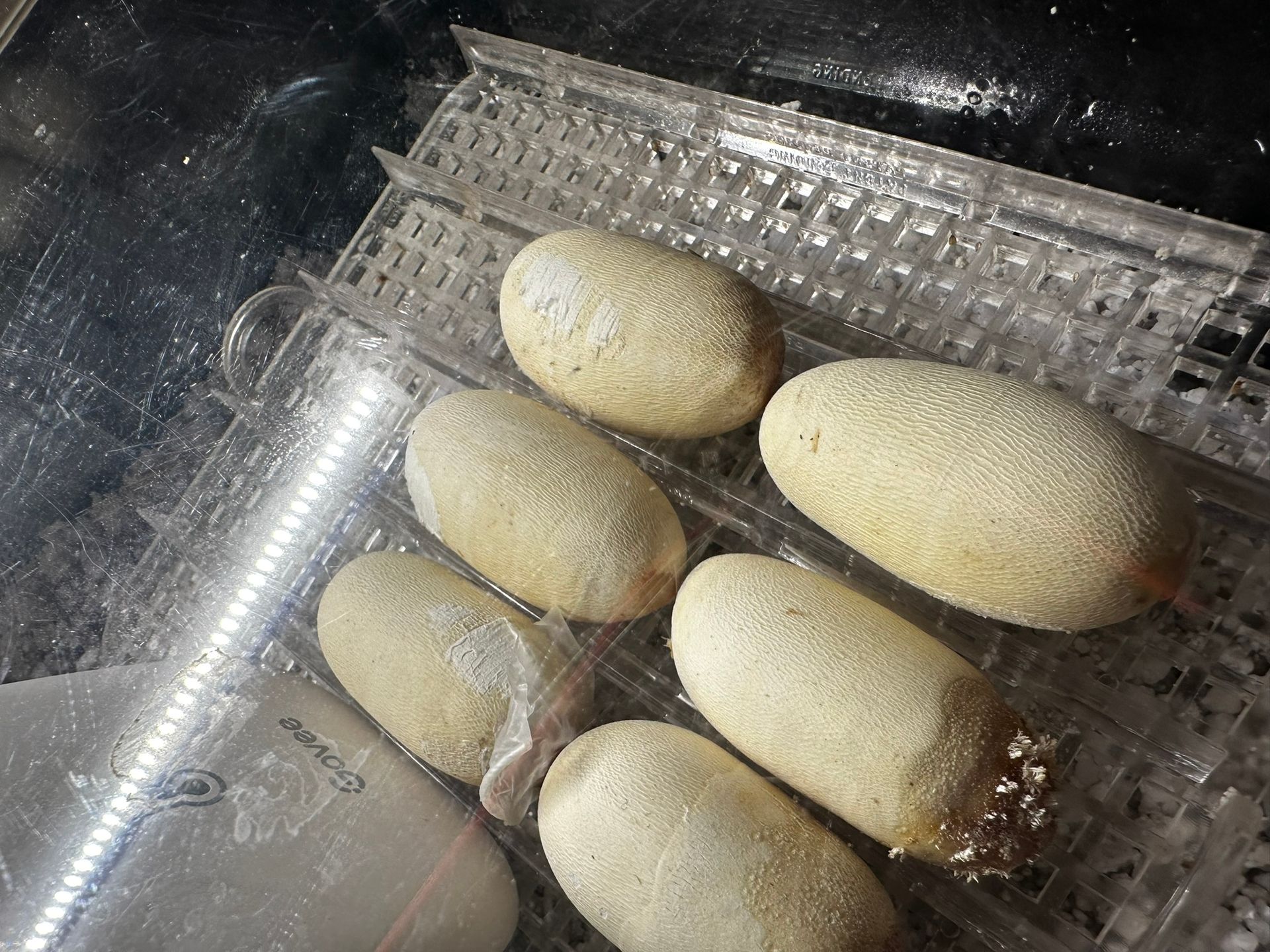
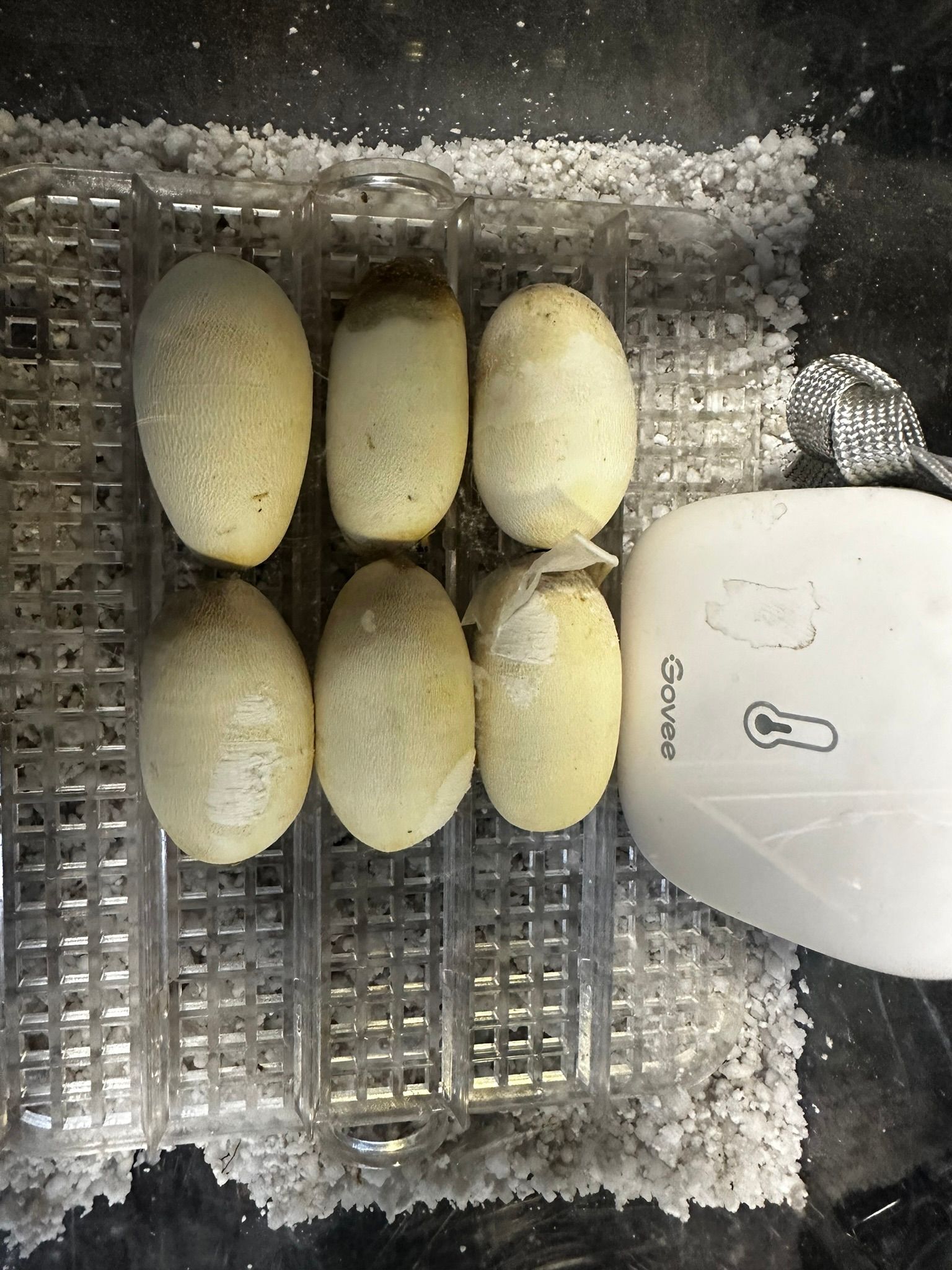
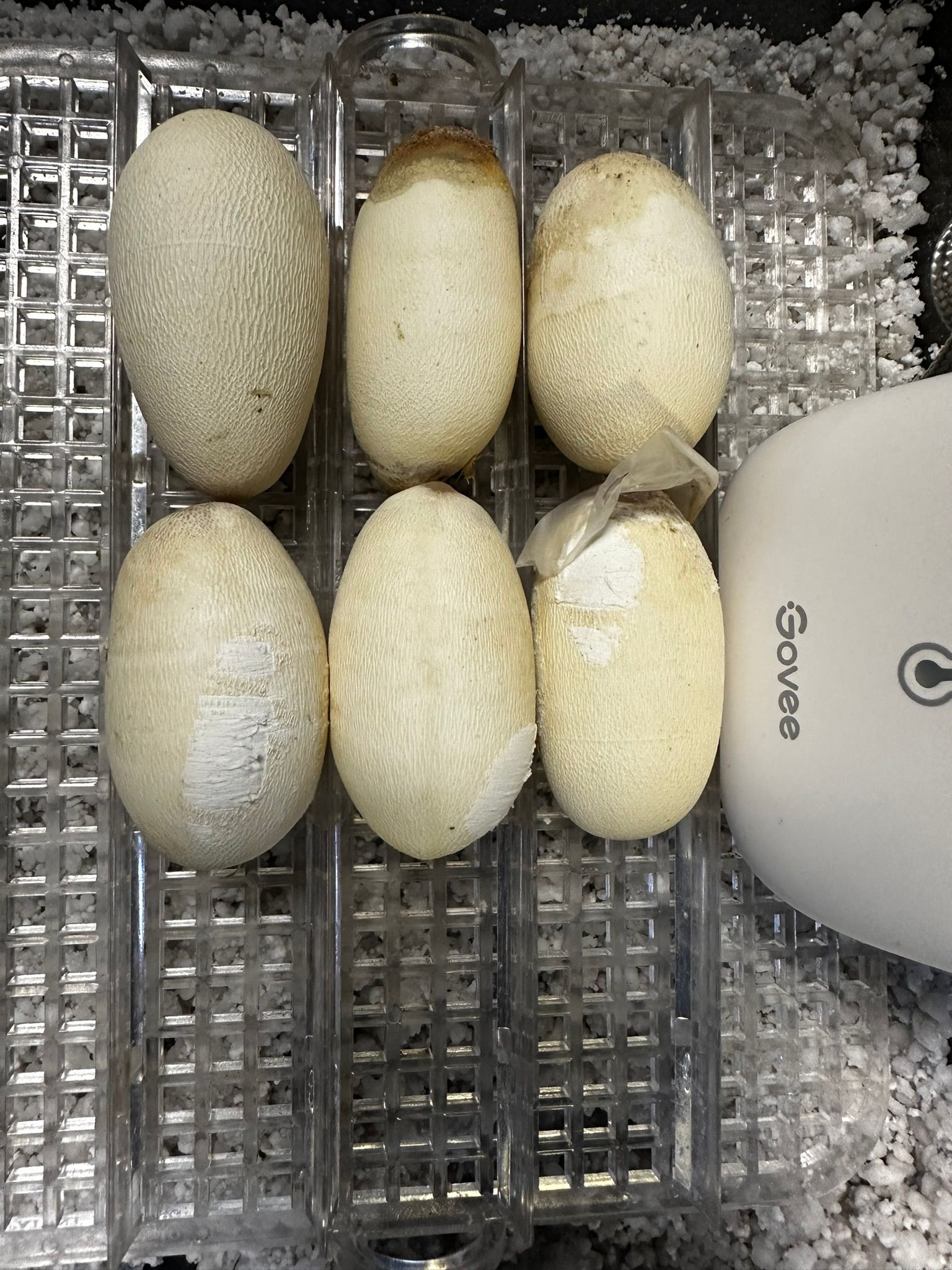
Number of eggs: 8
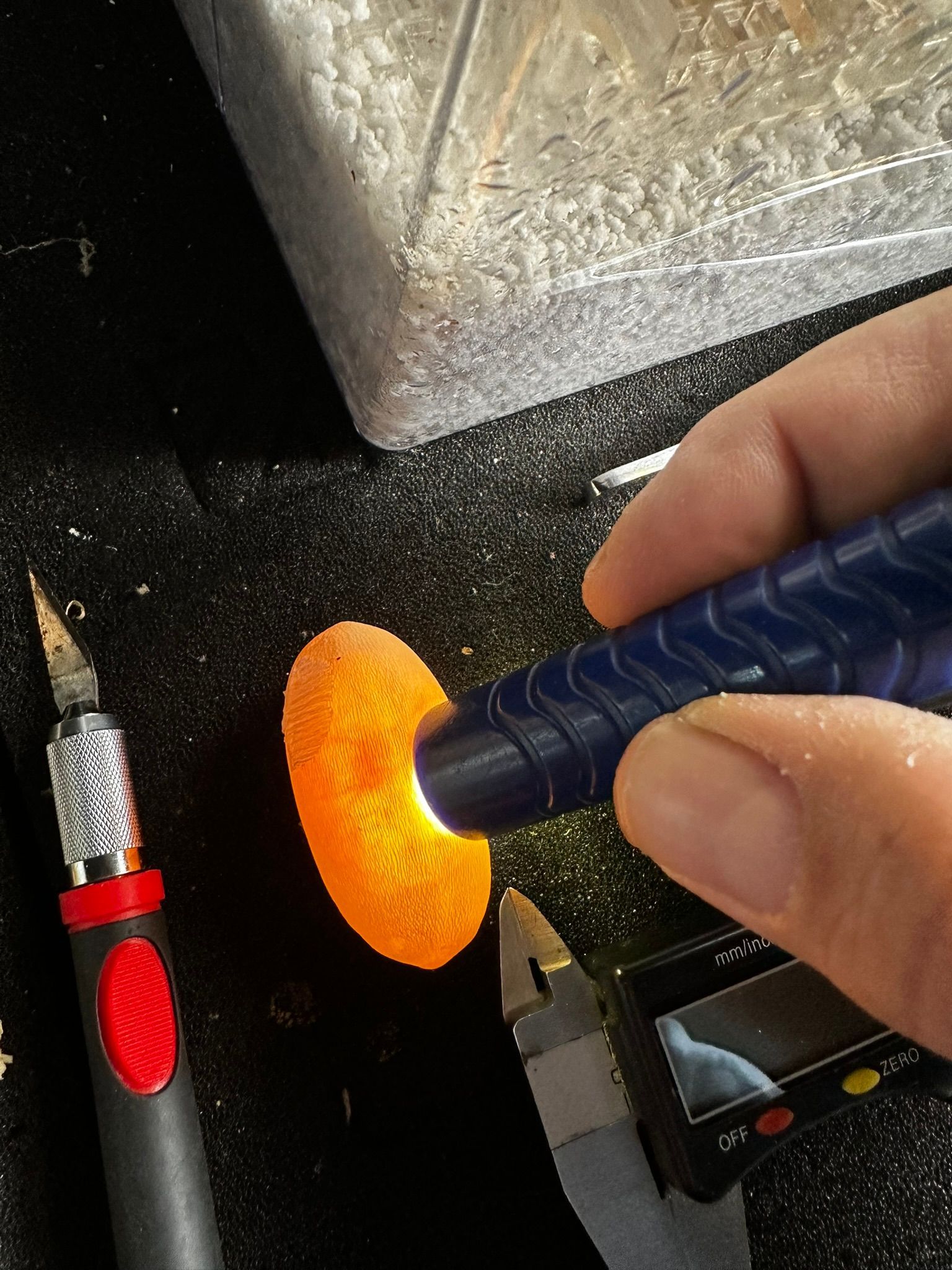
Fertilization: 6 fertile, 1 infertile, 1 partially developed slug
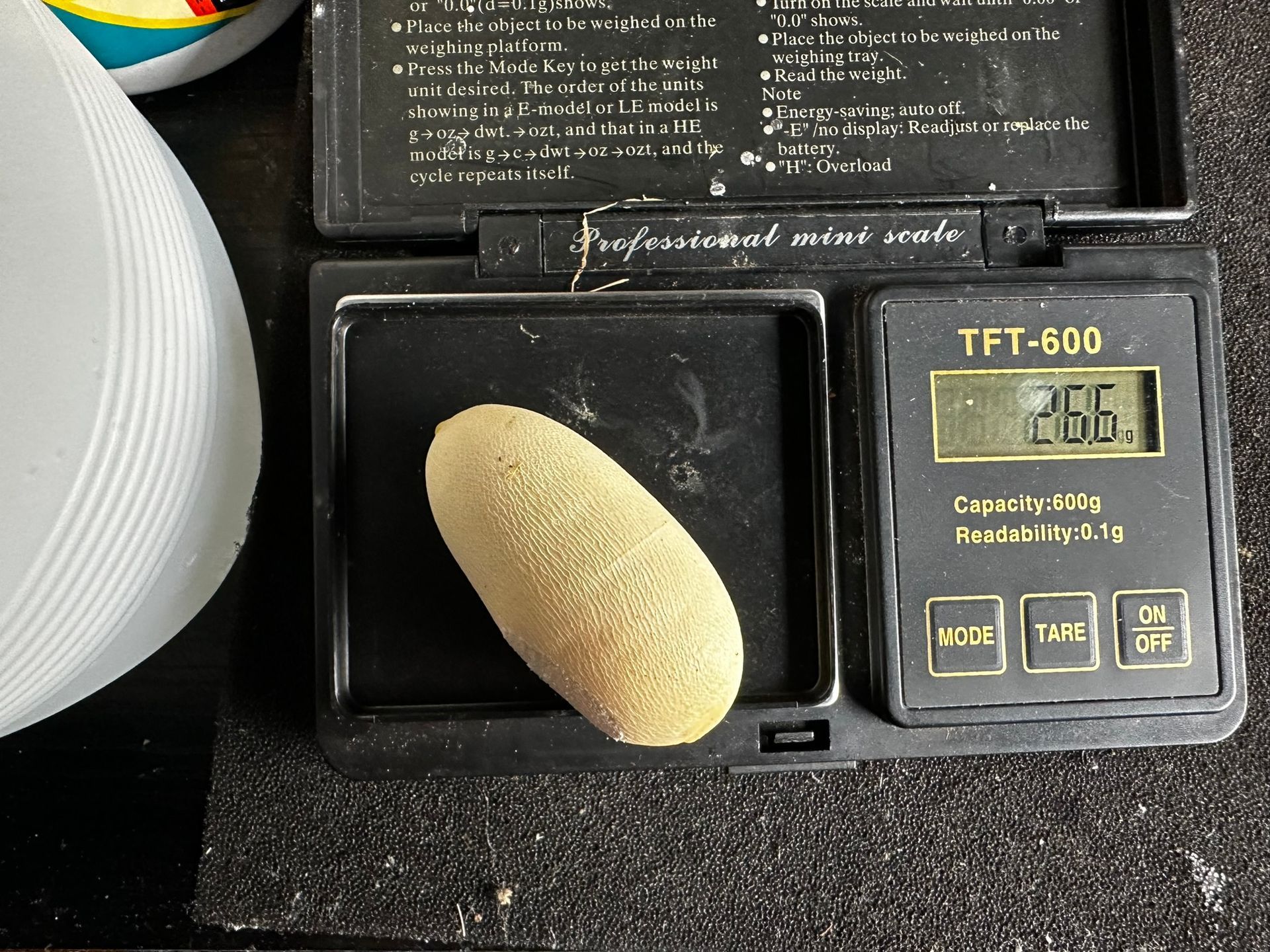
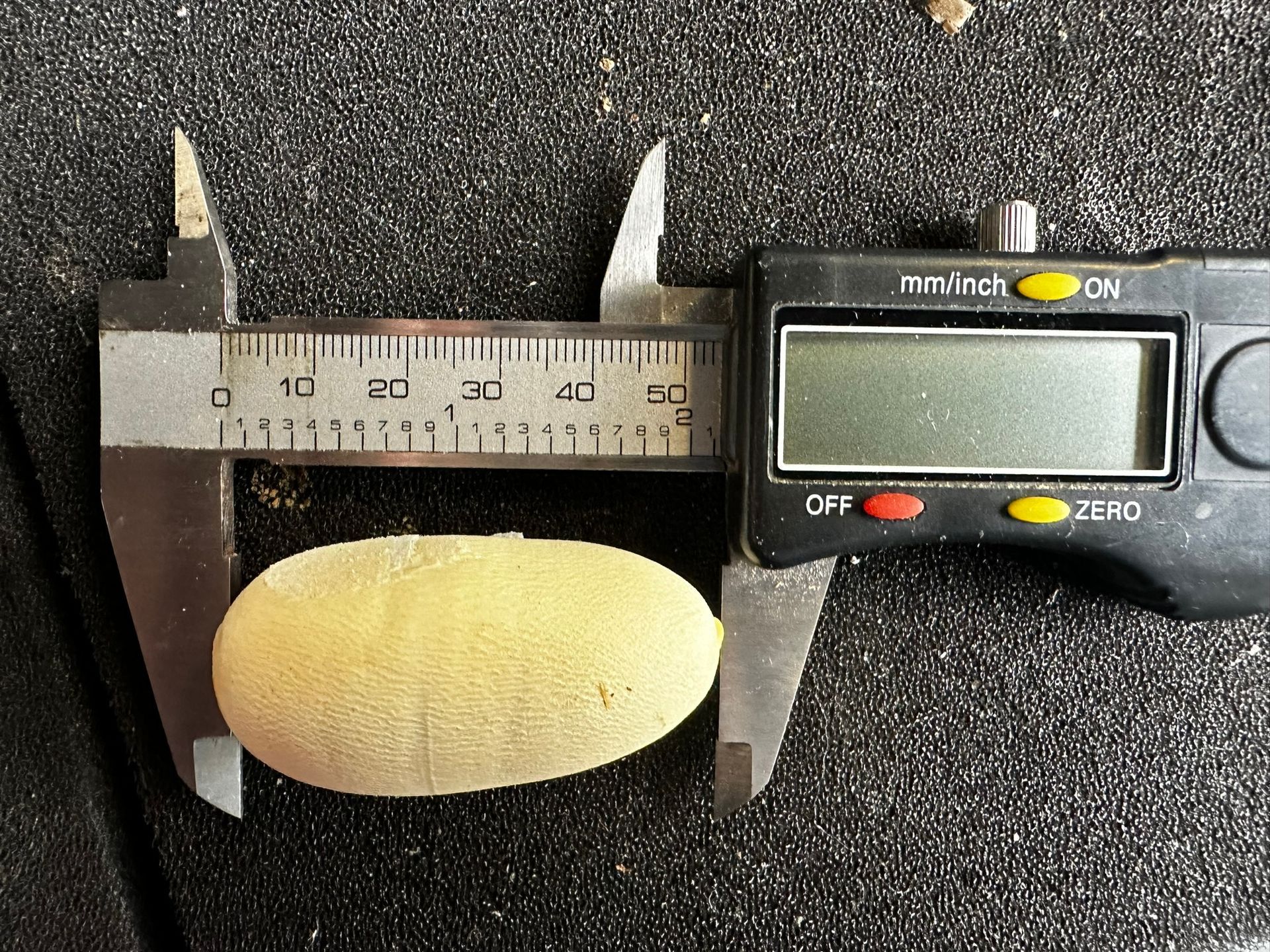
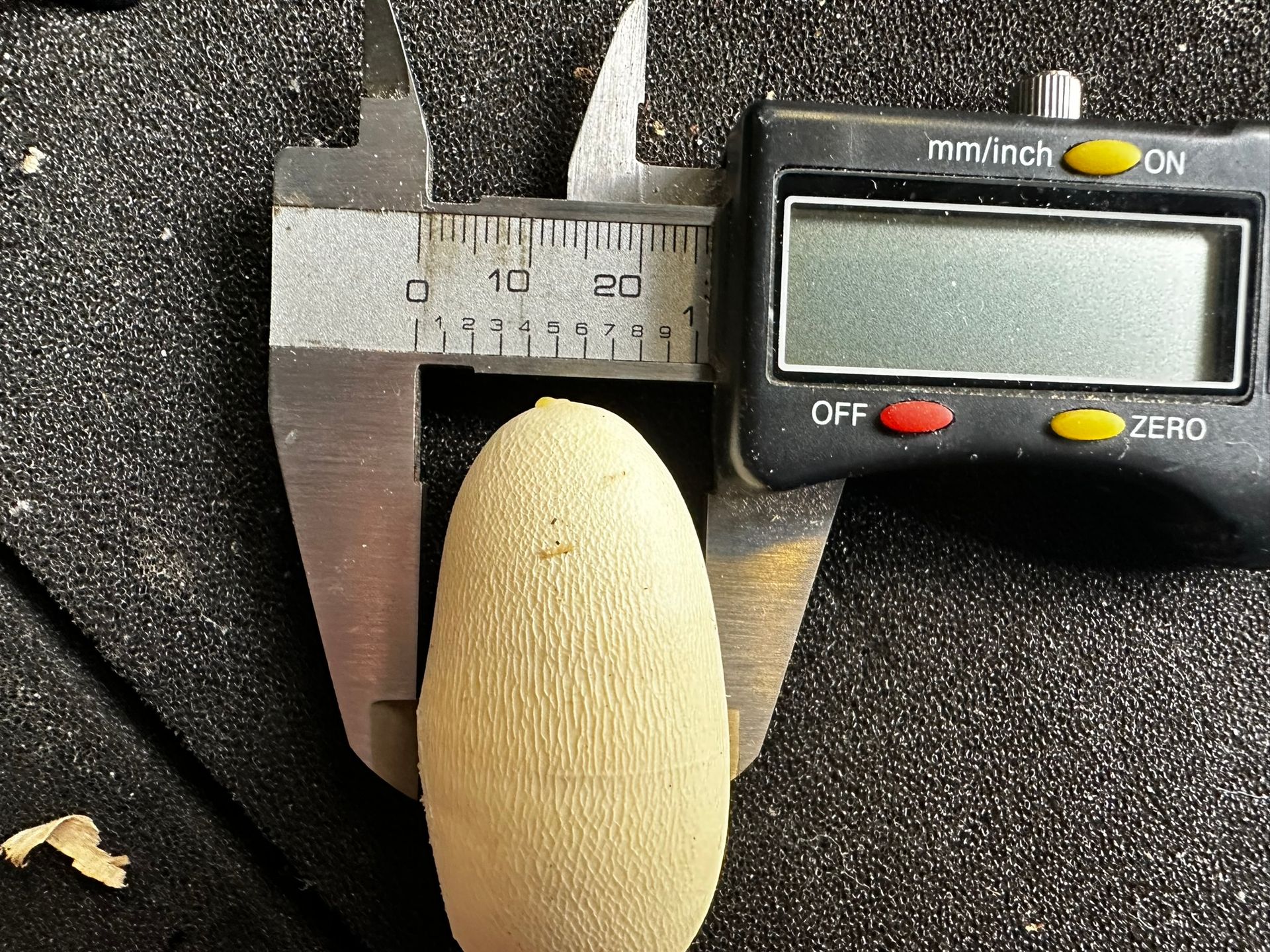
Weight per egg: 22–26 g
Dimensions: approx. 5.5 cm × 2.5 cm
⸻
Incubation
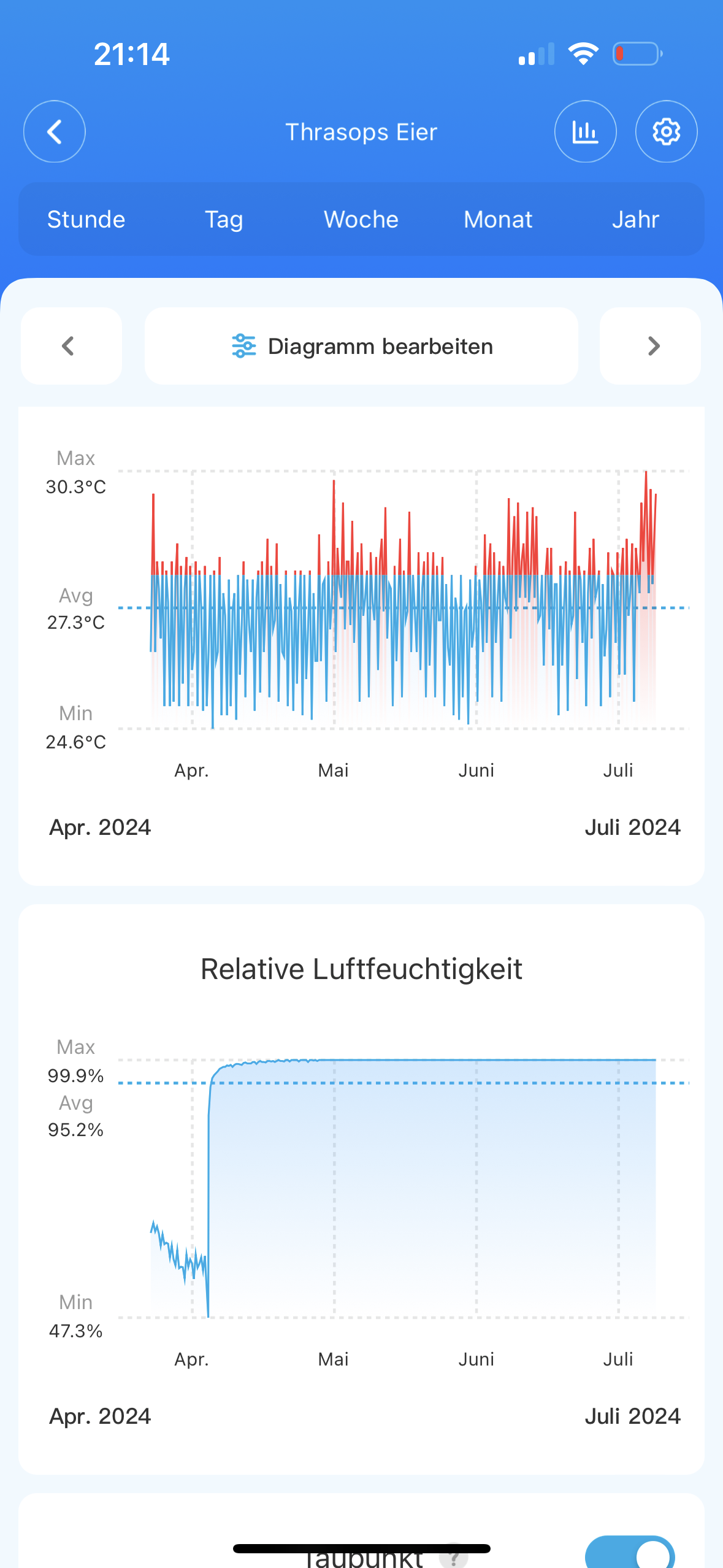
Incubator: Forced-air incubator with day/night temperature control
Day: 28 °C
Night: 24.5 °C
measured maximum temperature: 30.3 °C
Average: 27.8 °C
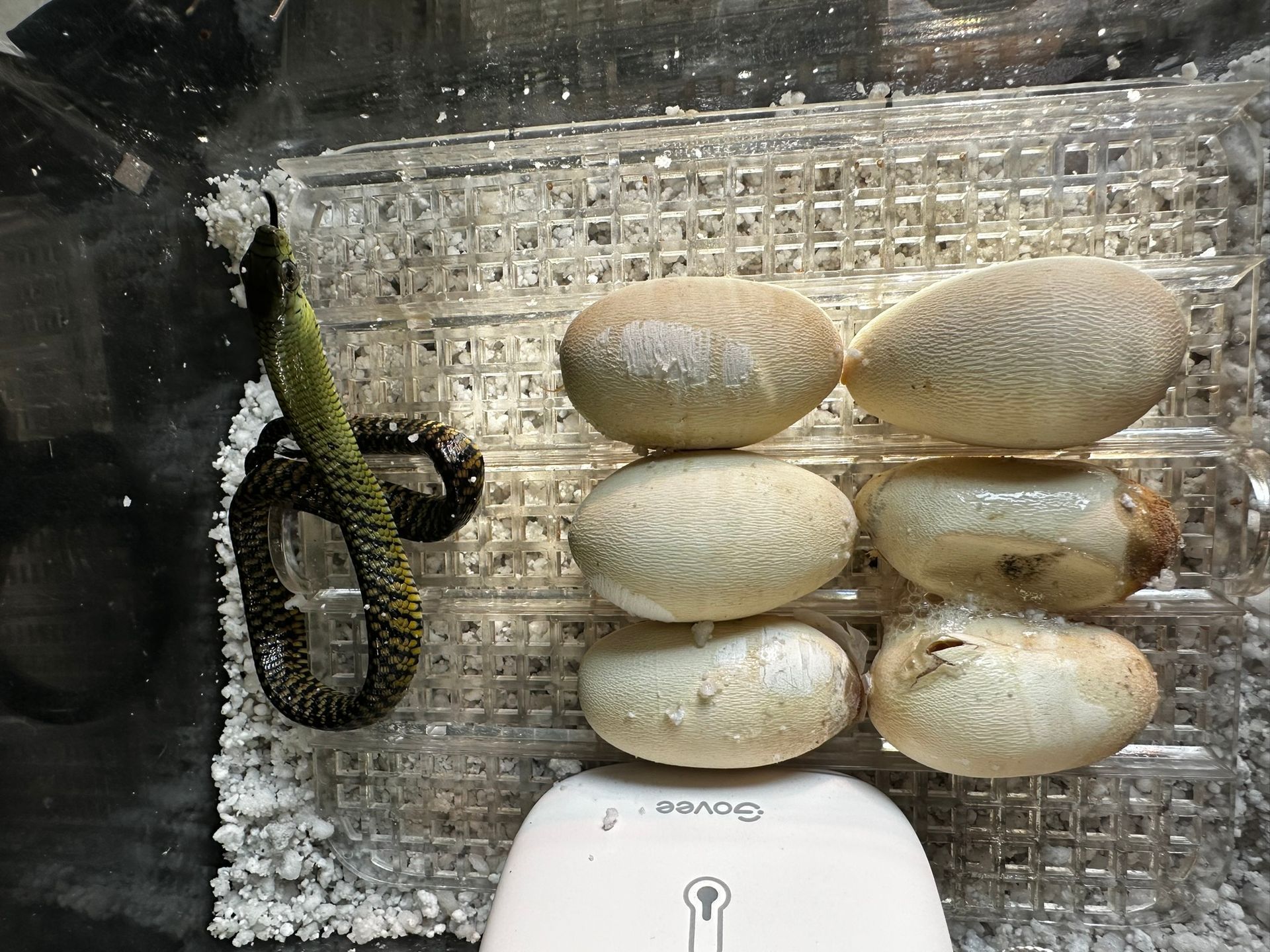
Substrate: Perlite with Squamata mesh
From day 85 onward, heavy “sweating” of the incubation box was observed.
⸻
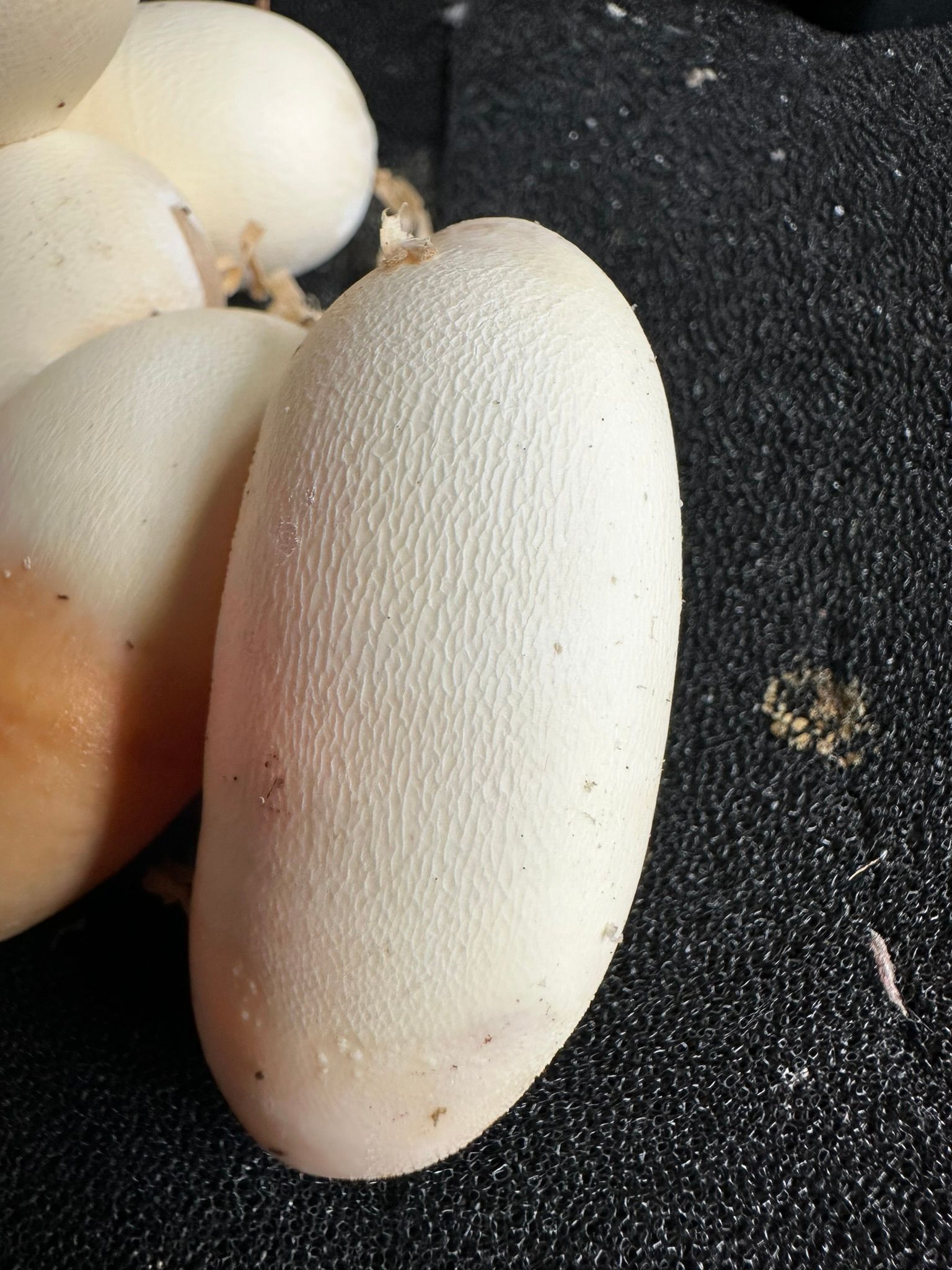
Hatching process
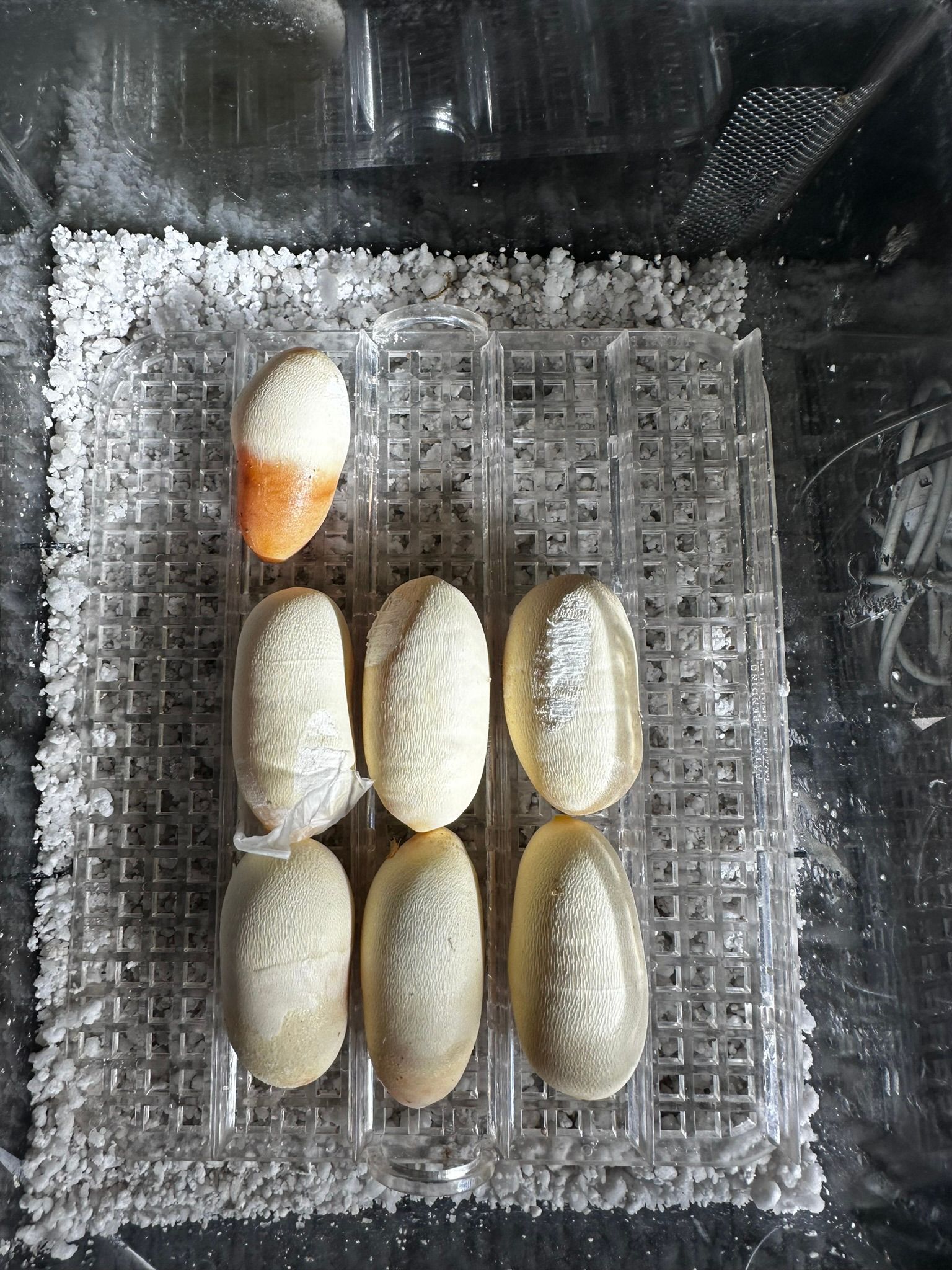
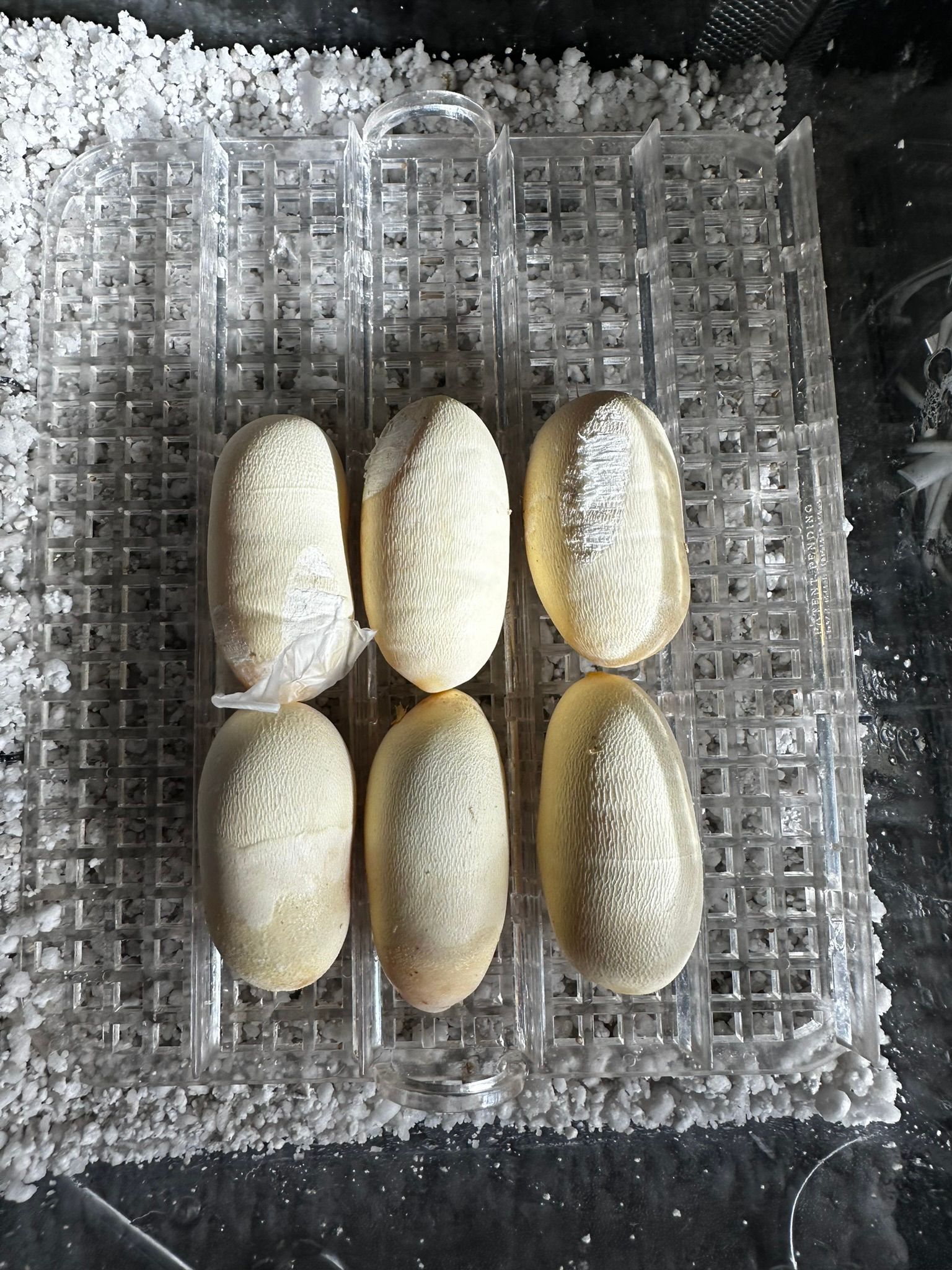
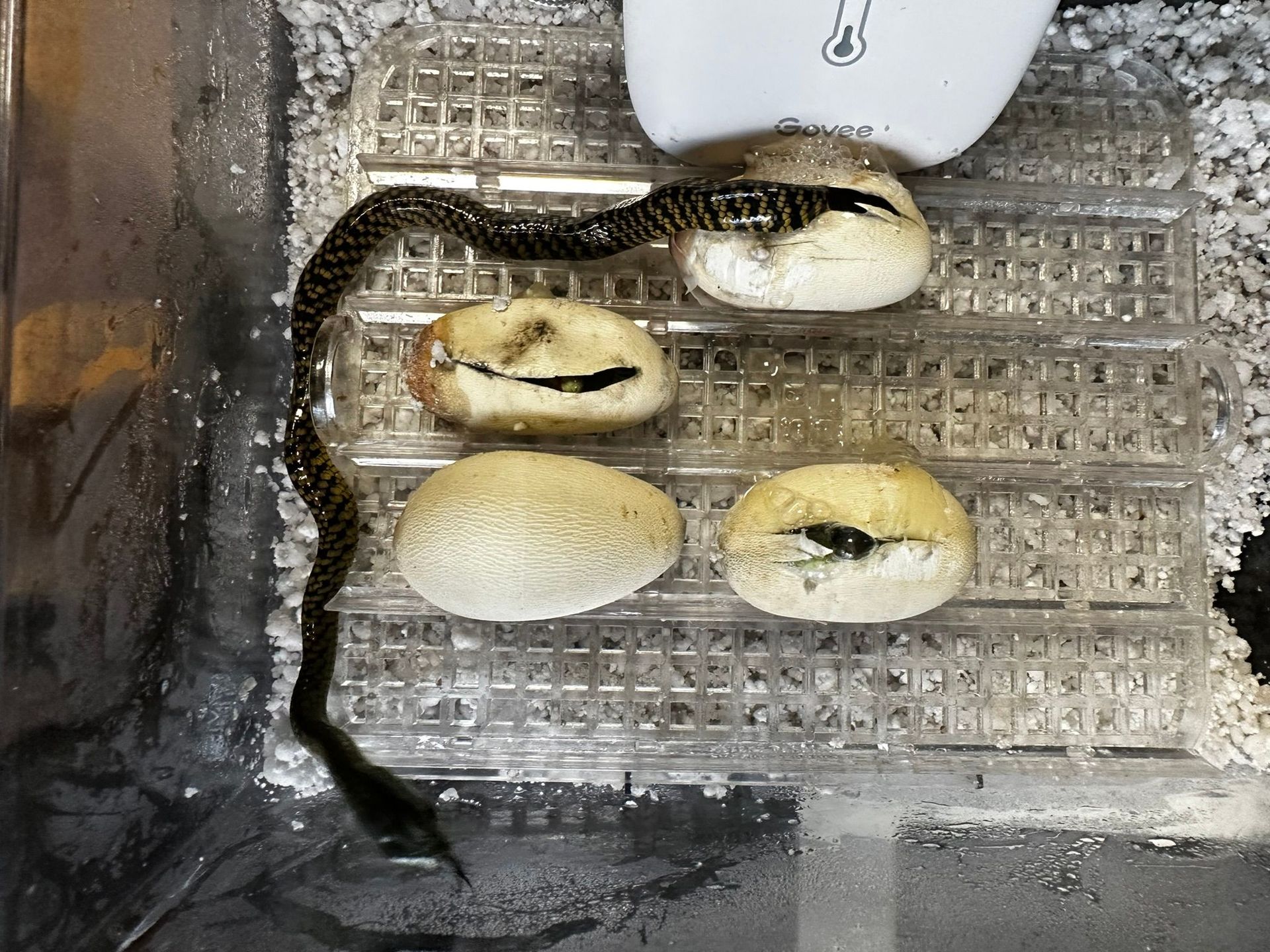
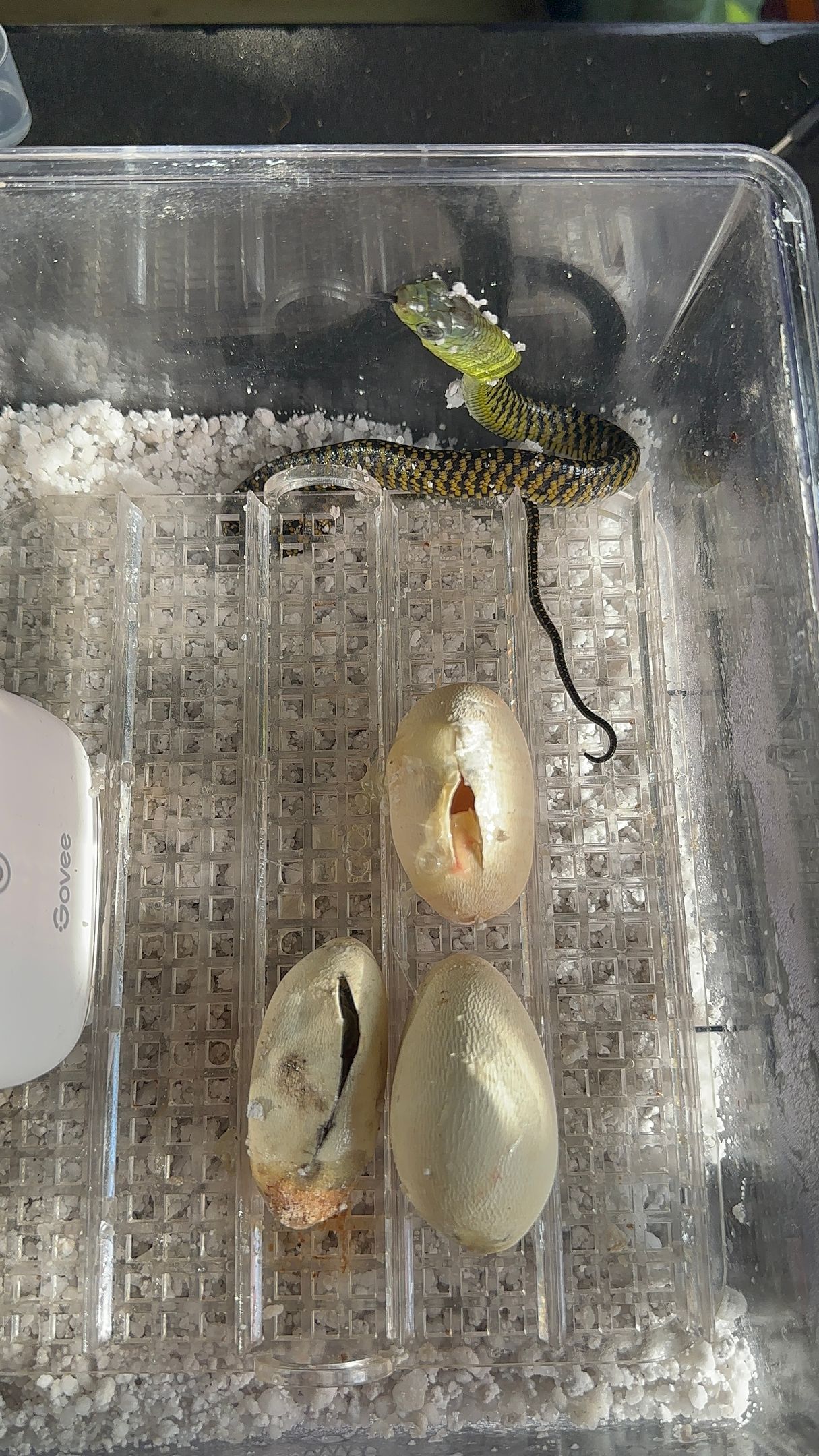
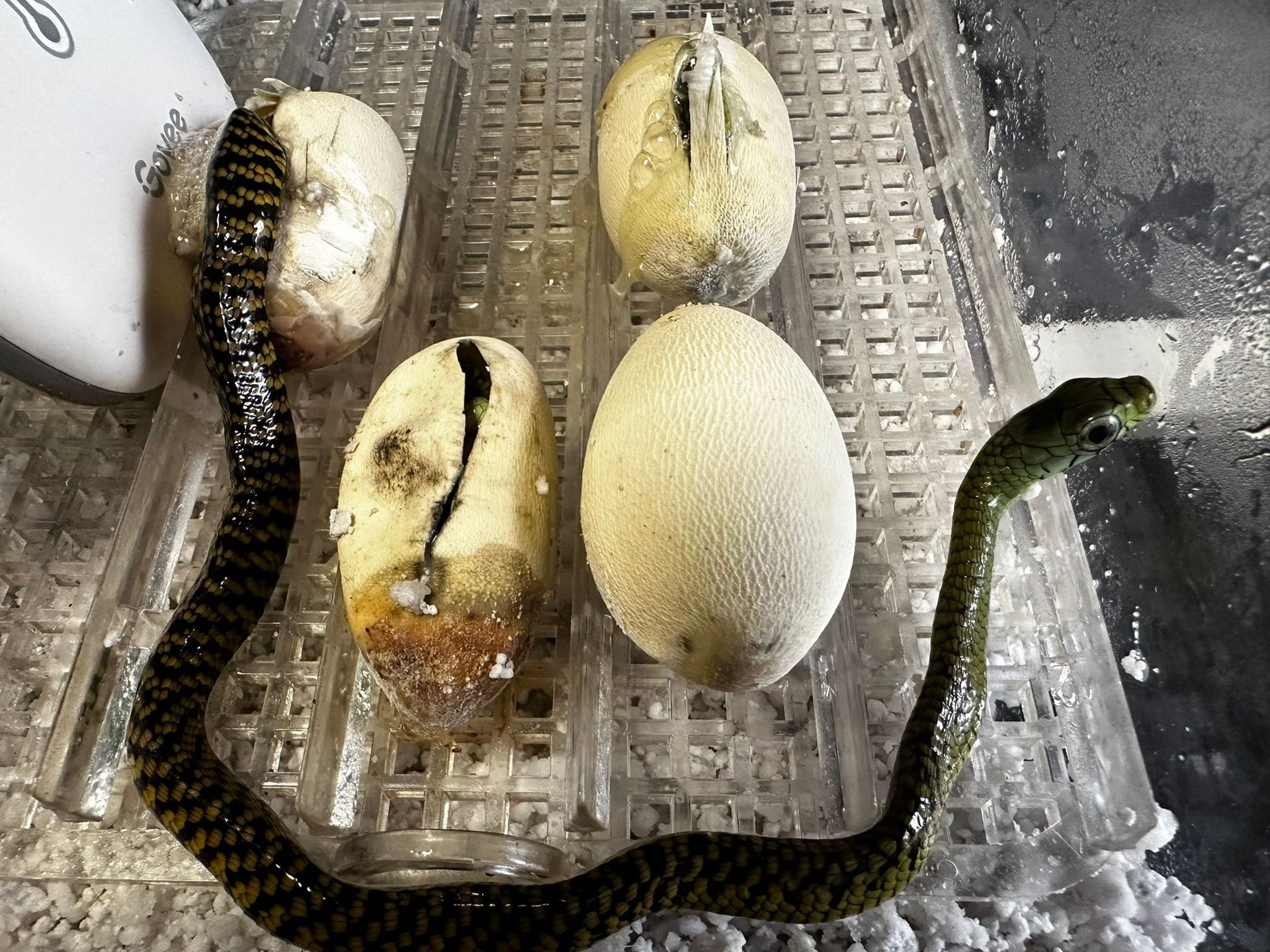
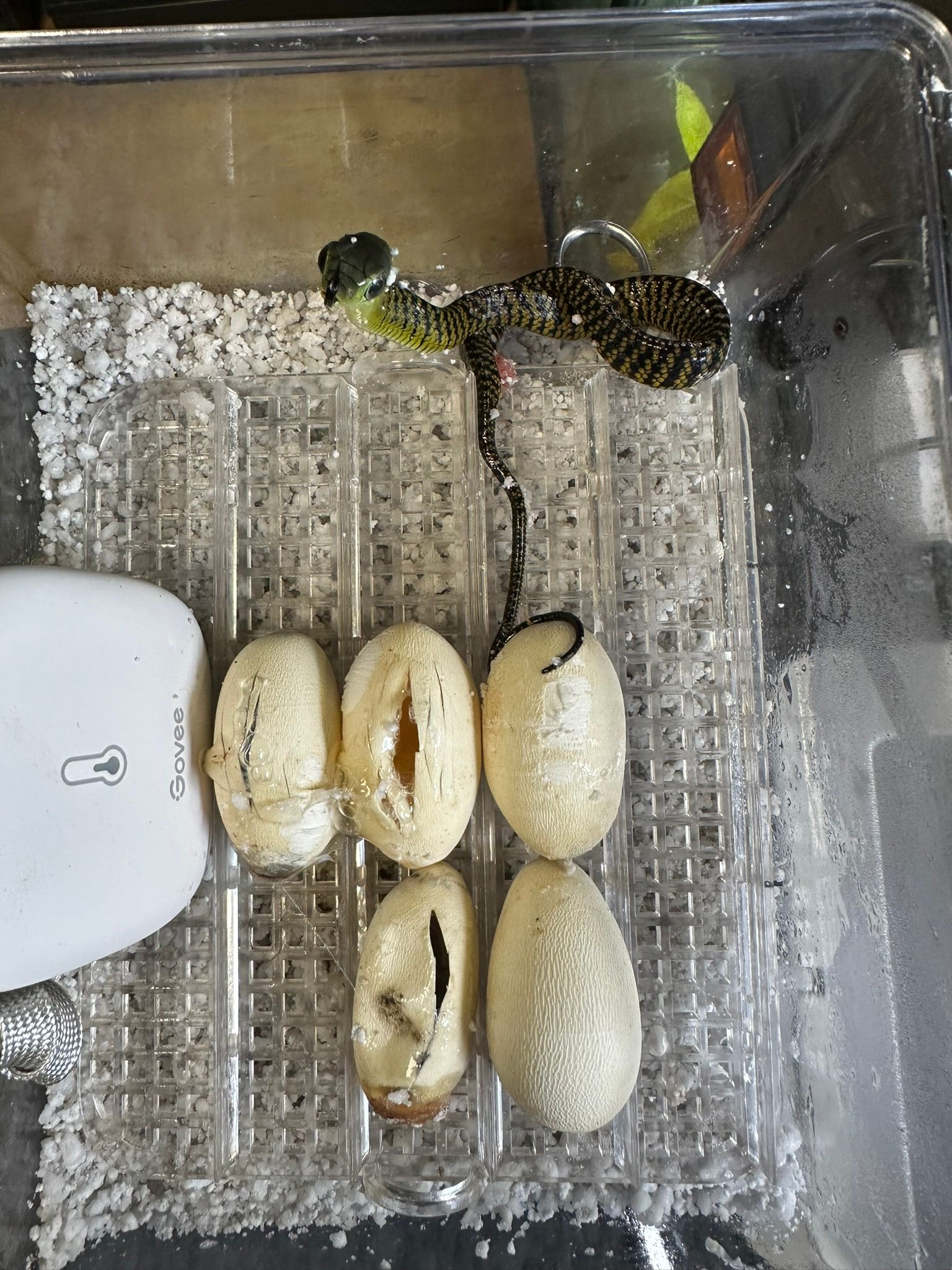
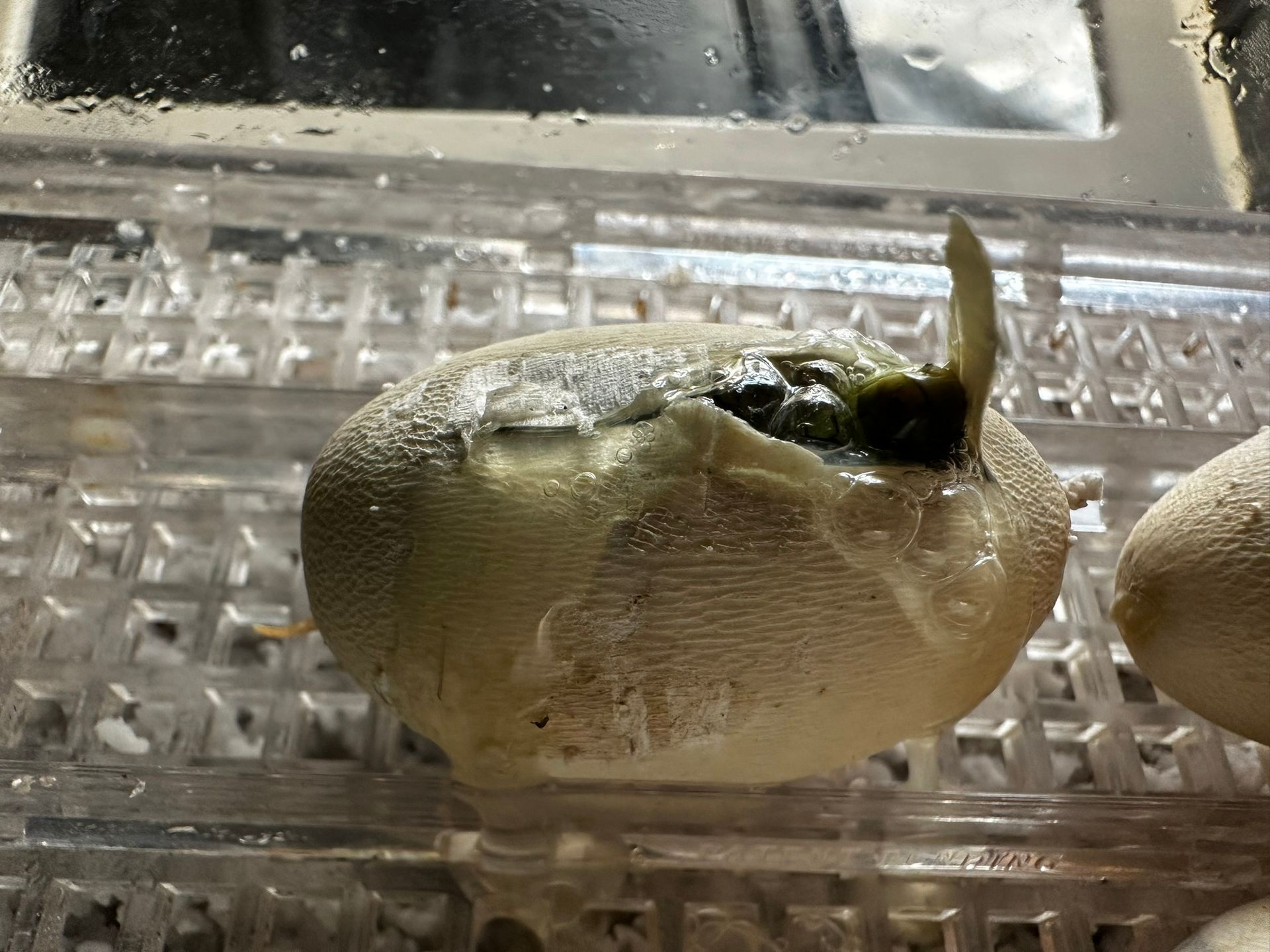
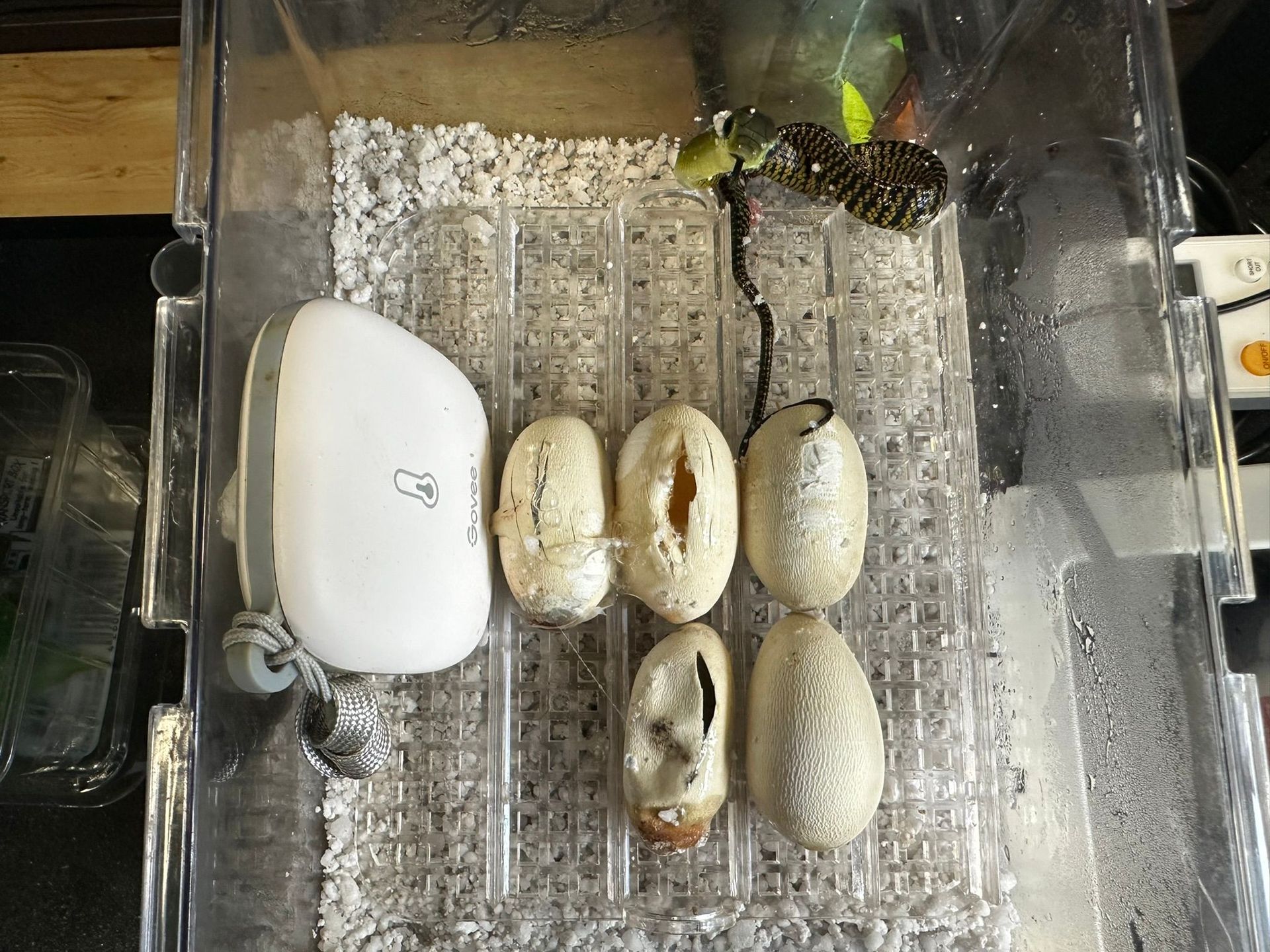
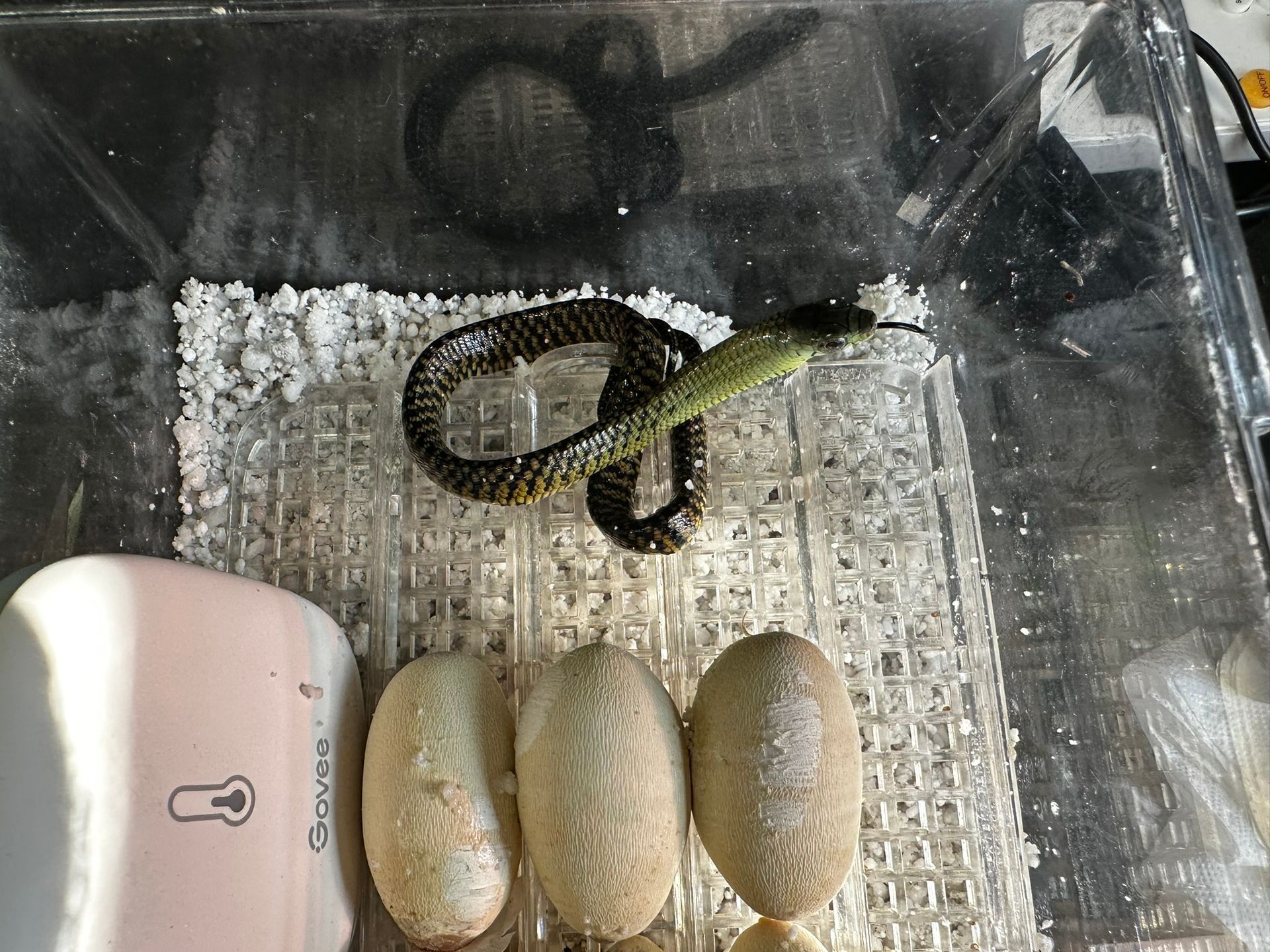
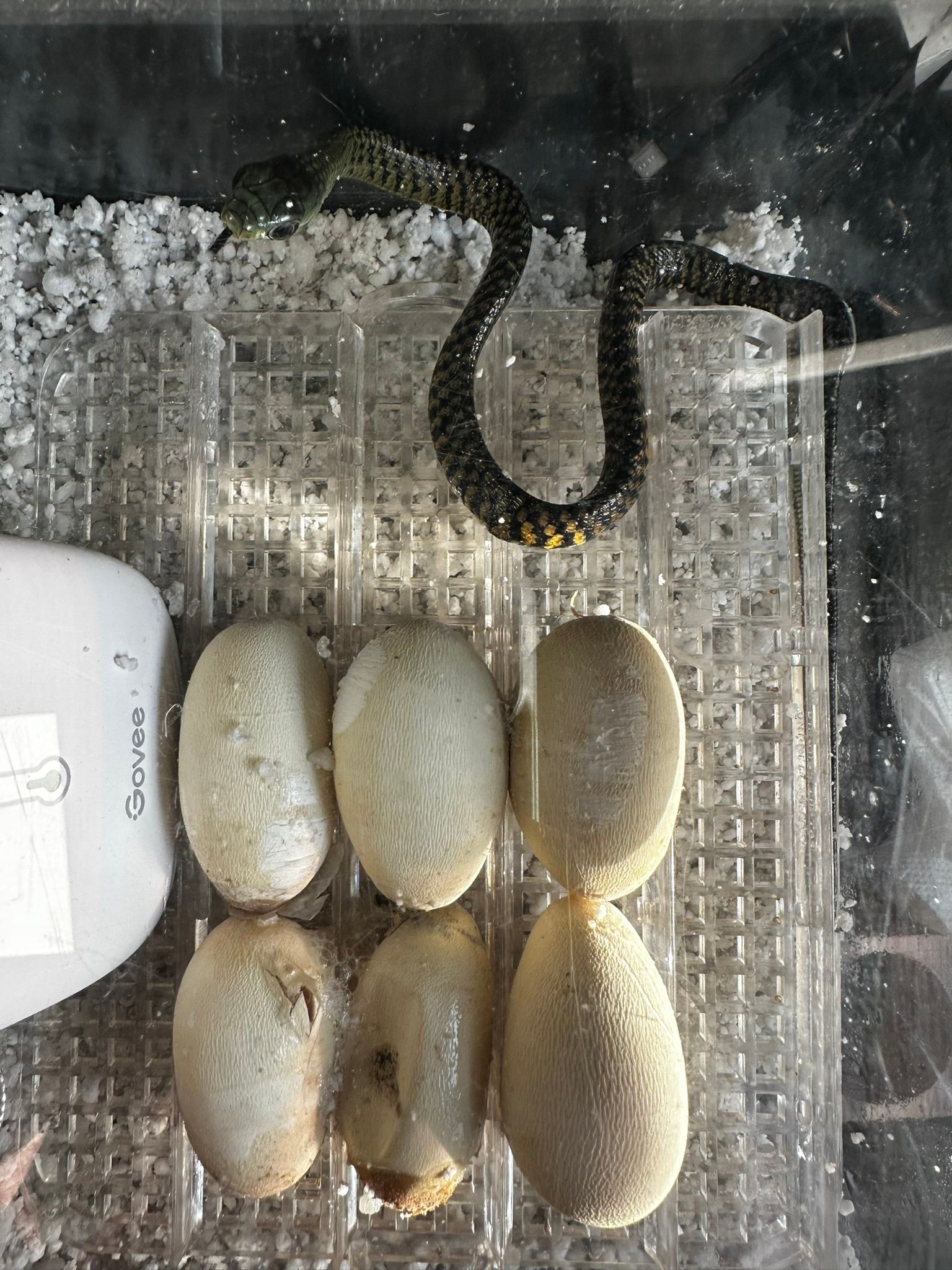
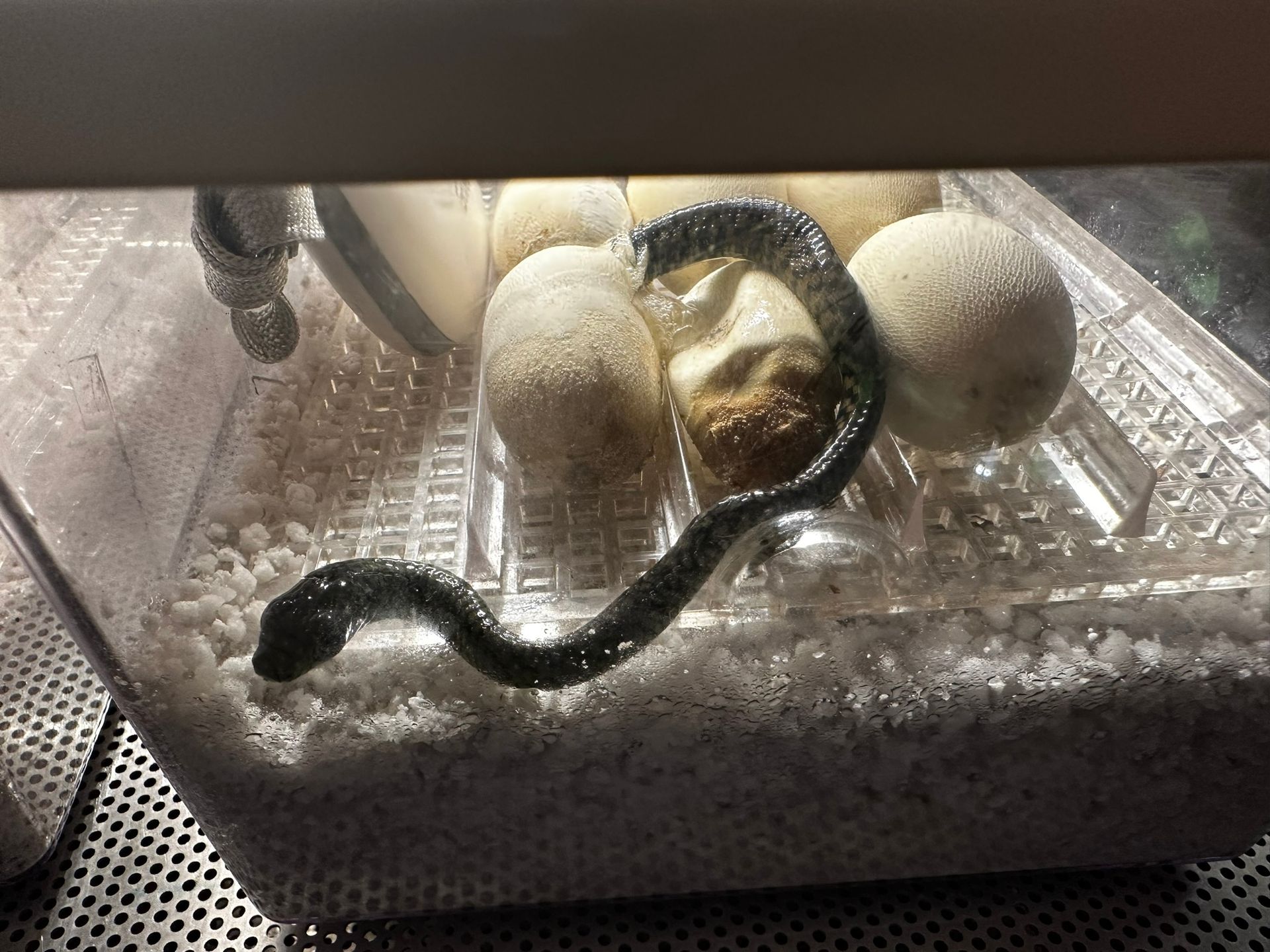
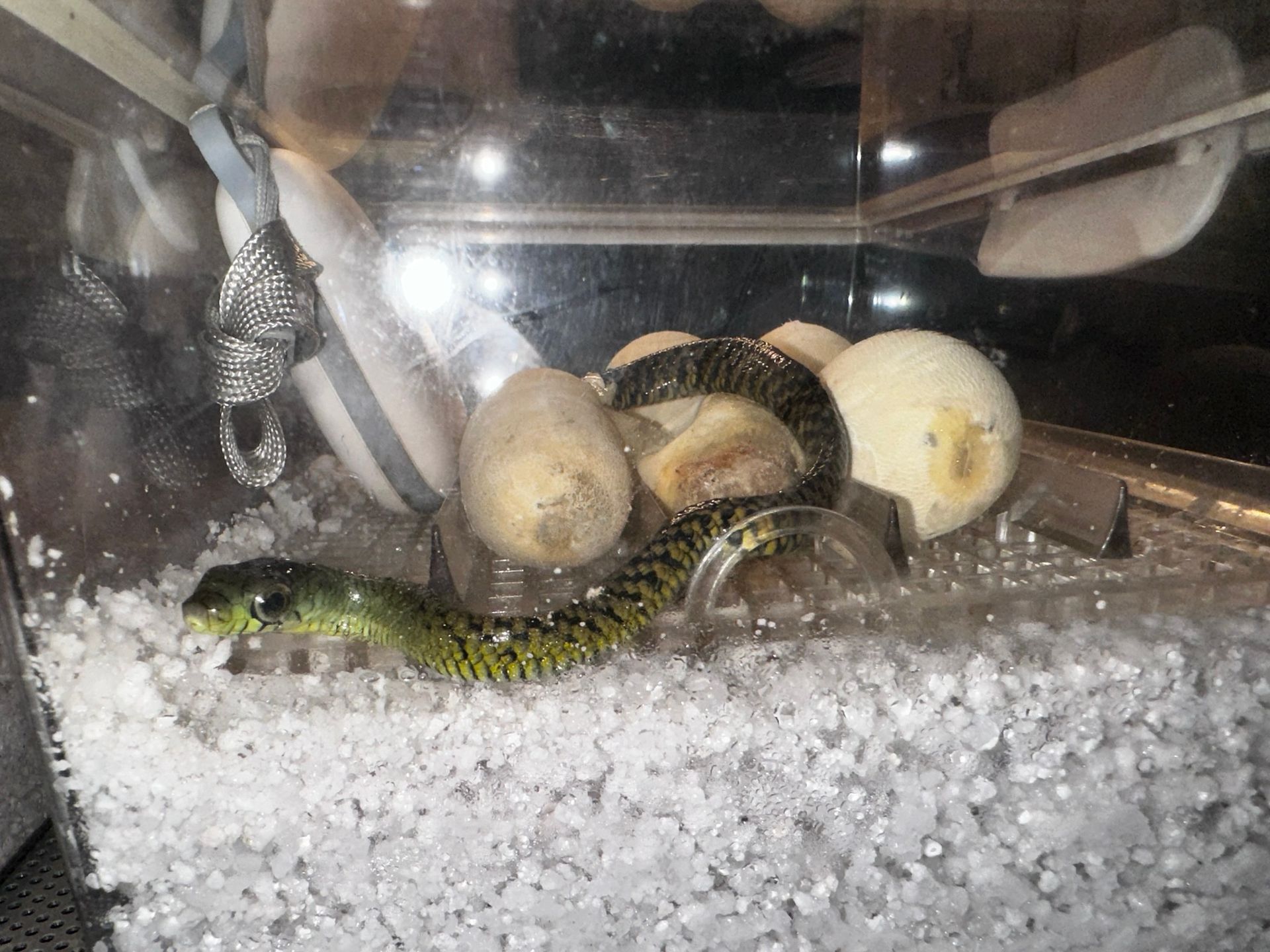
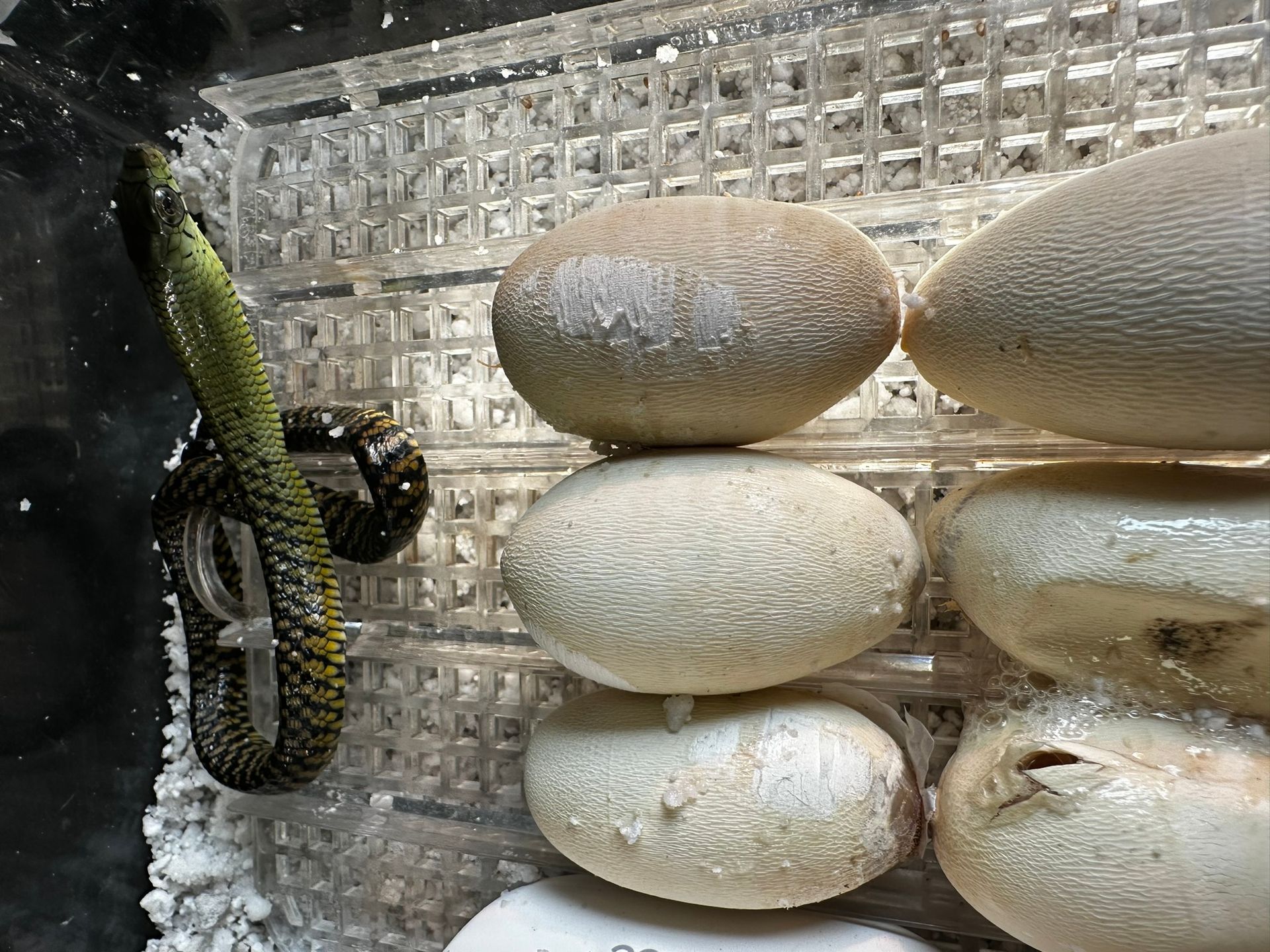
On day 91, the first hatchlings began to hatch.
The hatchlings cut along the upper line of the egg, first making small openings through which only the nose protruded, followed by larger cuts. After pipping, the hatchlings usually remained in the egg for about 24 hours.
⸻
Hatch dates
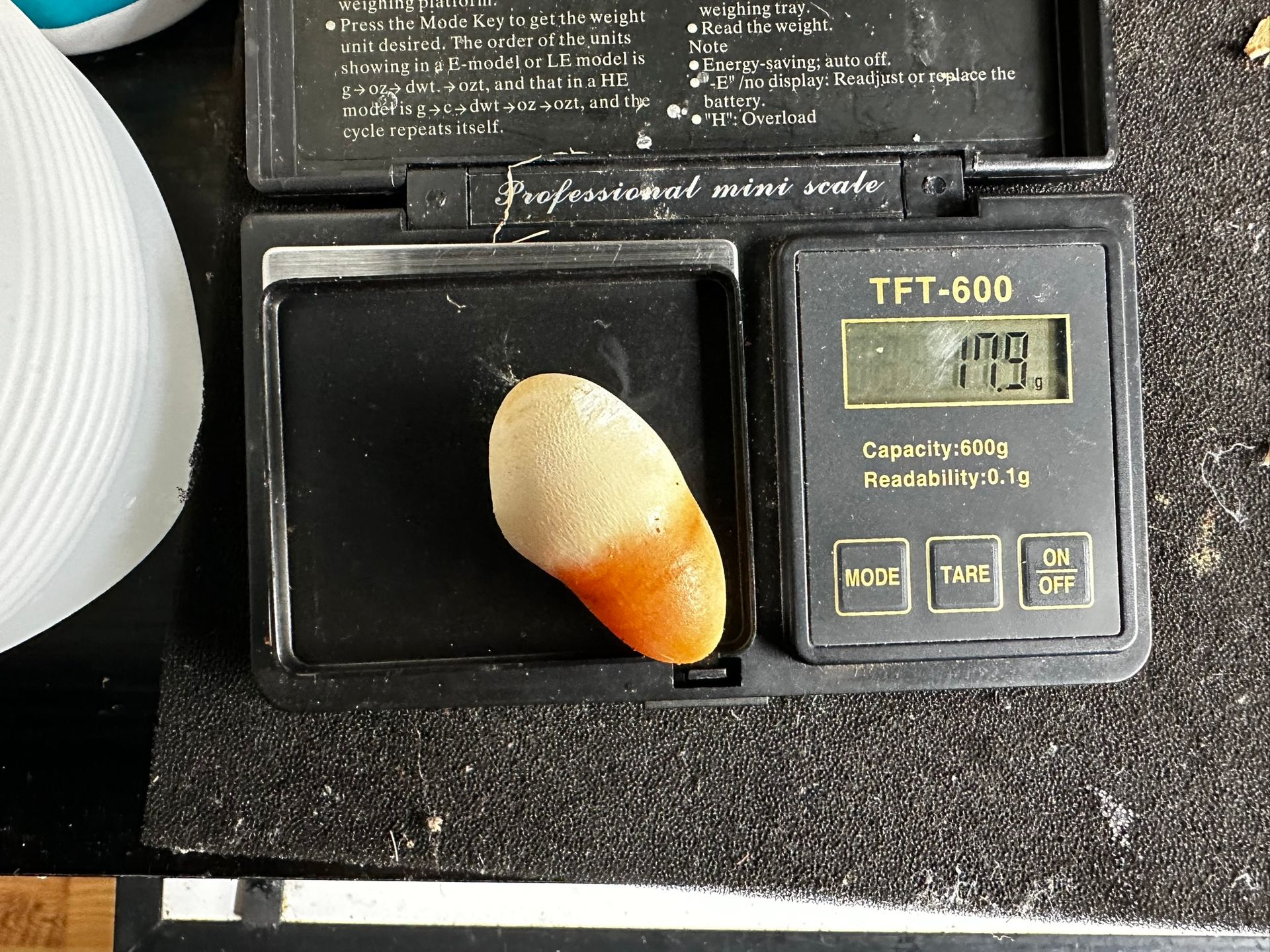
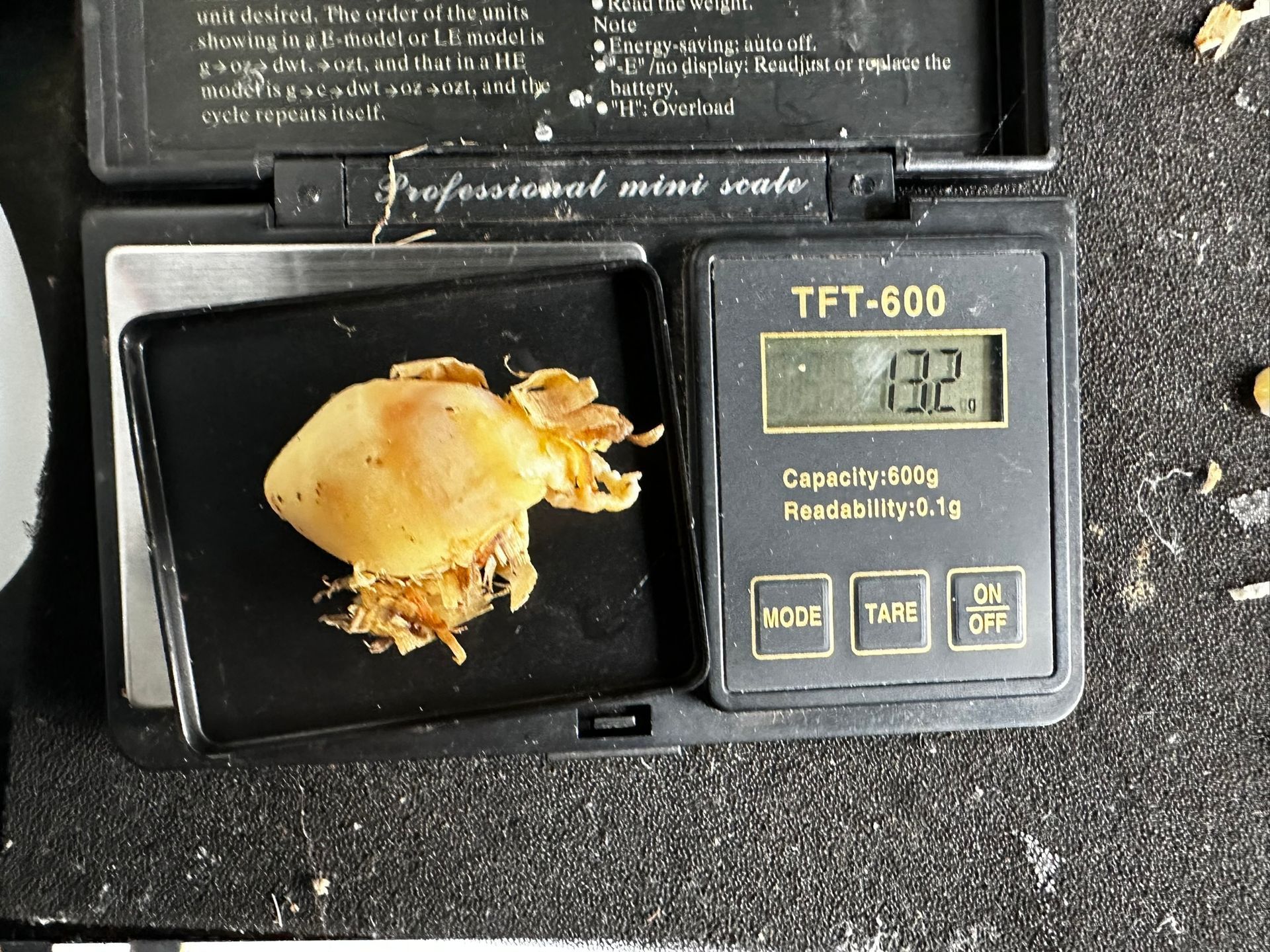
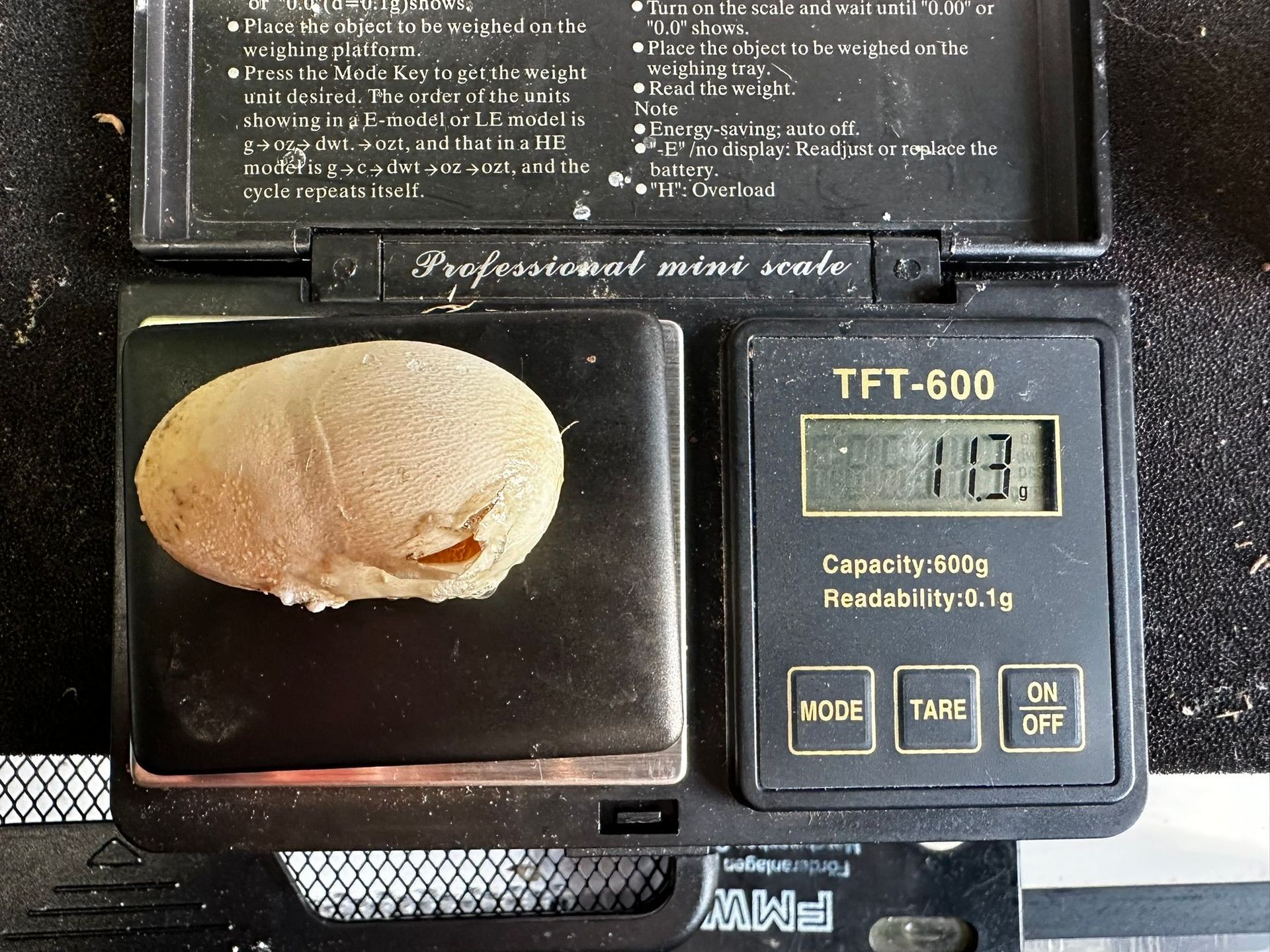
- Day 91: first hatchling pips; leaves the egg on day 92, approx. 12 g, with yolk remnant
- Day 92: no further hatching
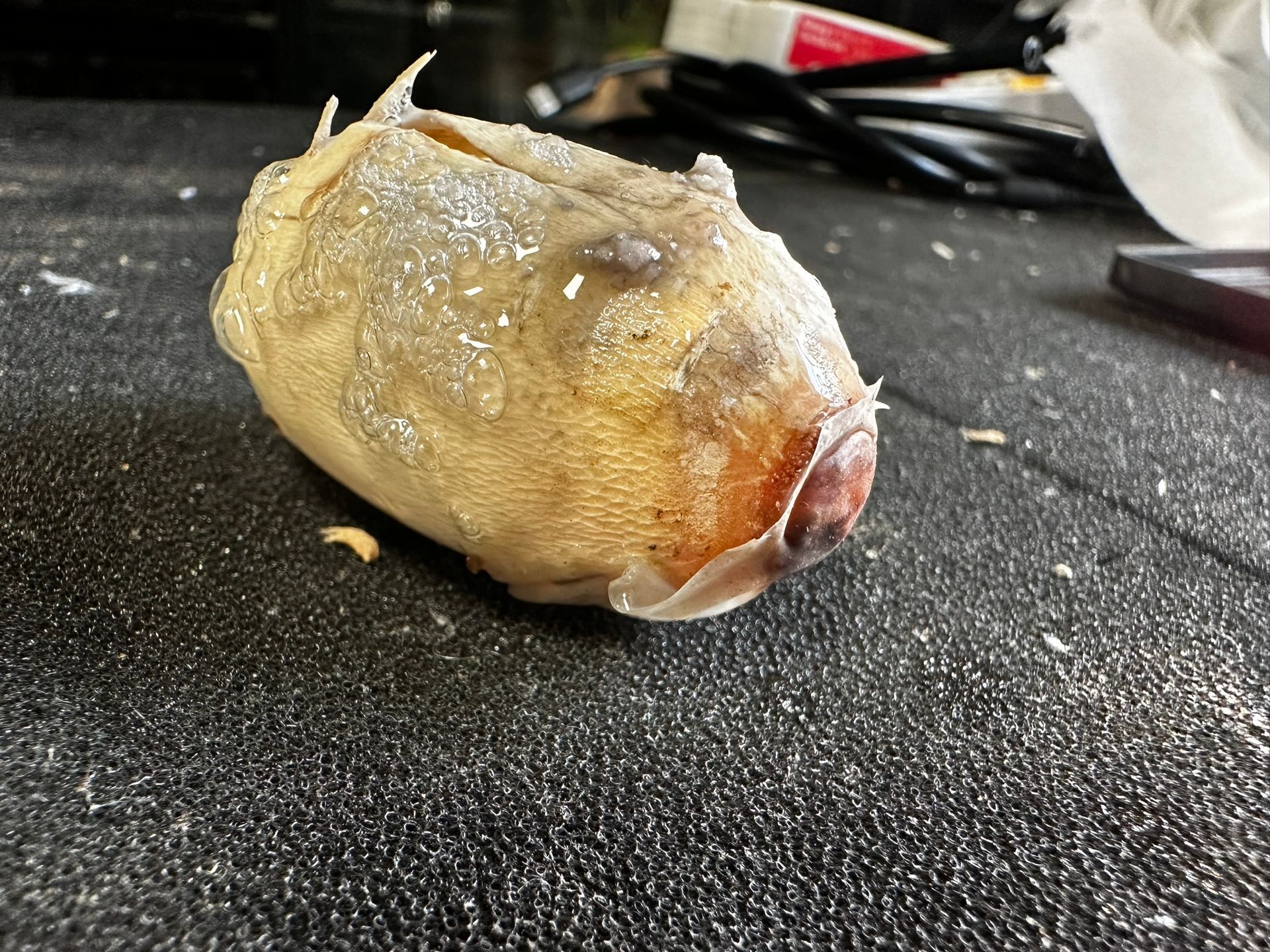
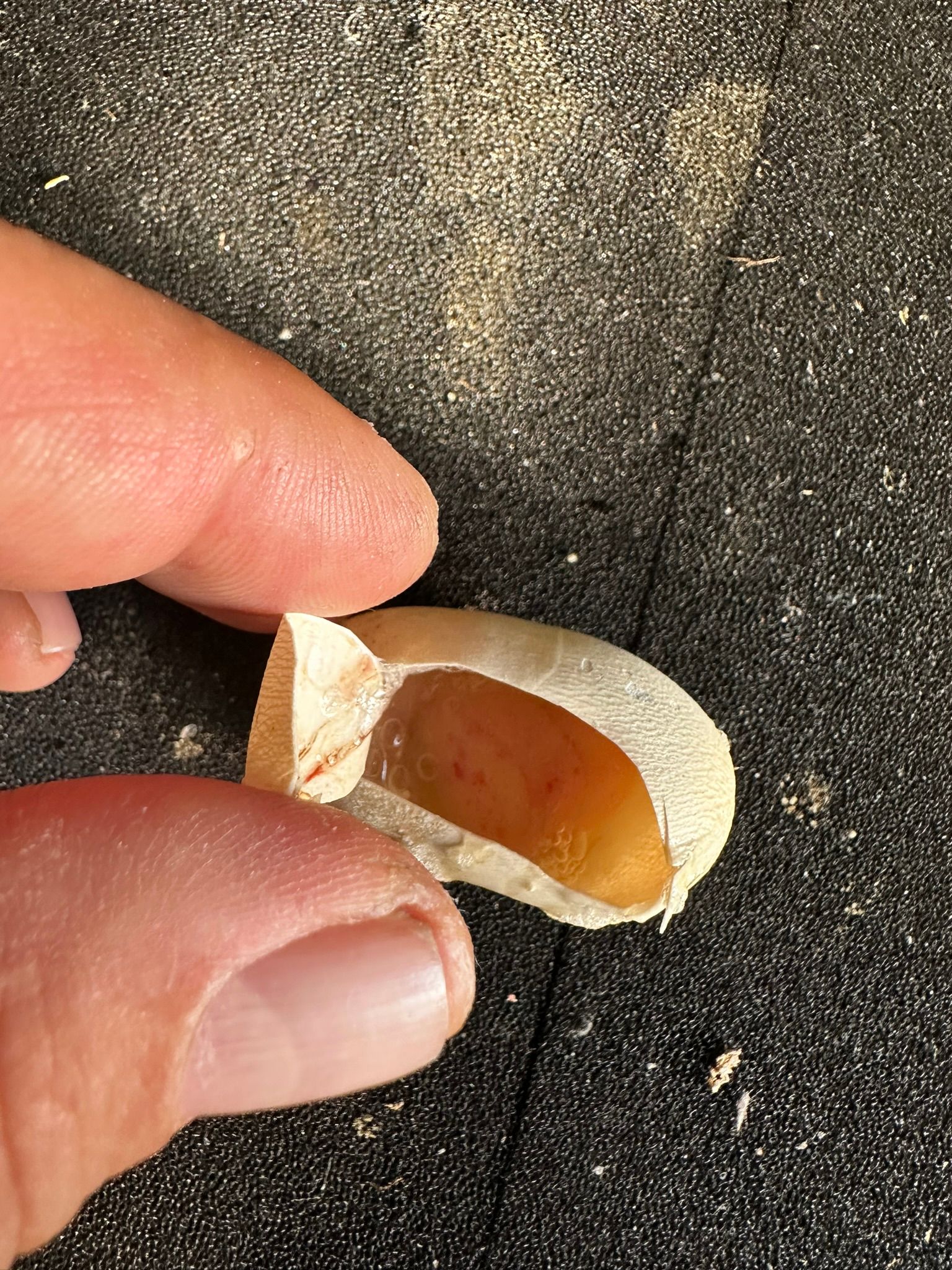
- Day 93: one egg had collapsed significantly; opened manually — hatchling alive, less pigmented
- Day 93, evening: another hatchling emerges on its own, approx. 17 g, with the yolk sac fully absorbed
- Day 94: two more hatchlings emerge
- Day 96: Manually opened egg hatches after three days, approx. 7.5 g
- Day 96: last hatchling emerges, approx. 13.5 g
⸻
Behaviour of the juveniles
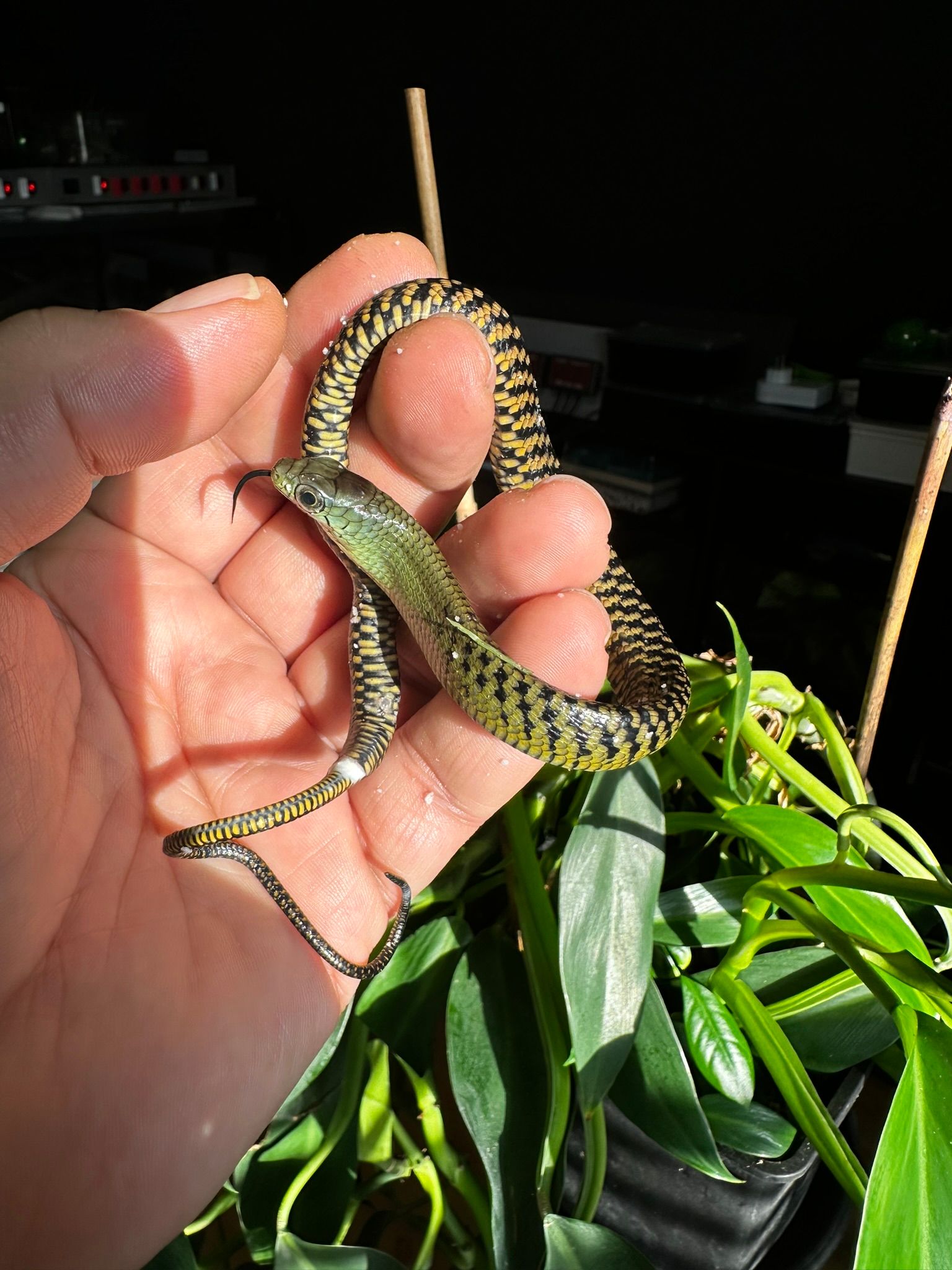
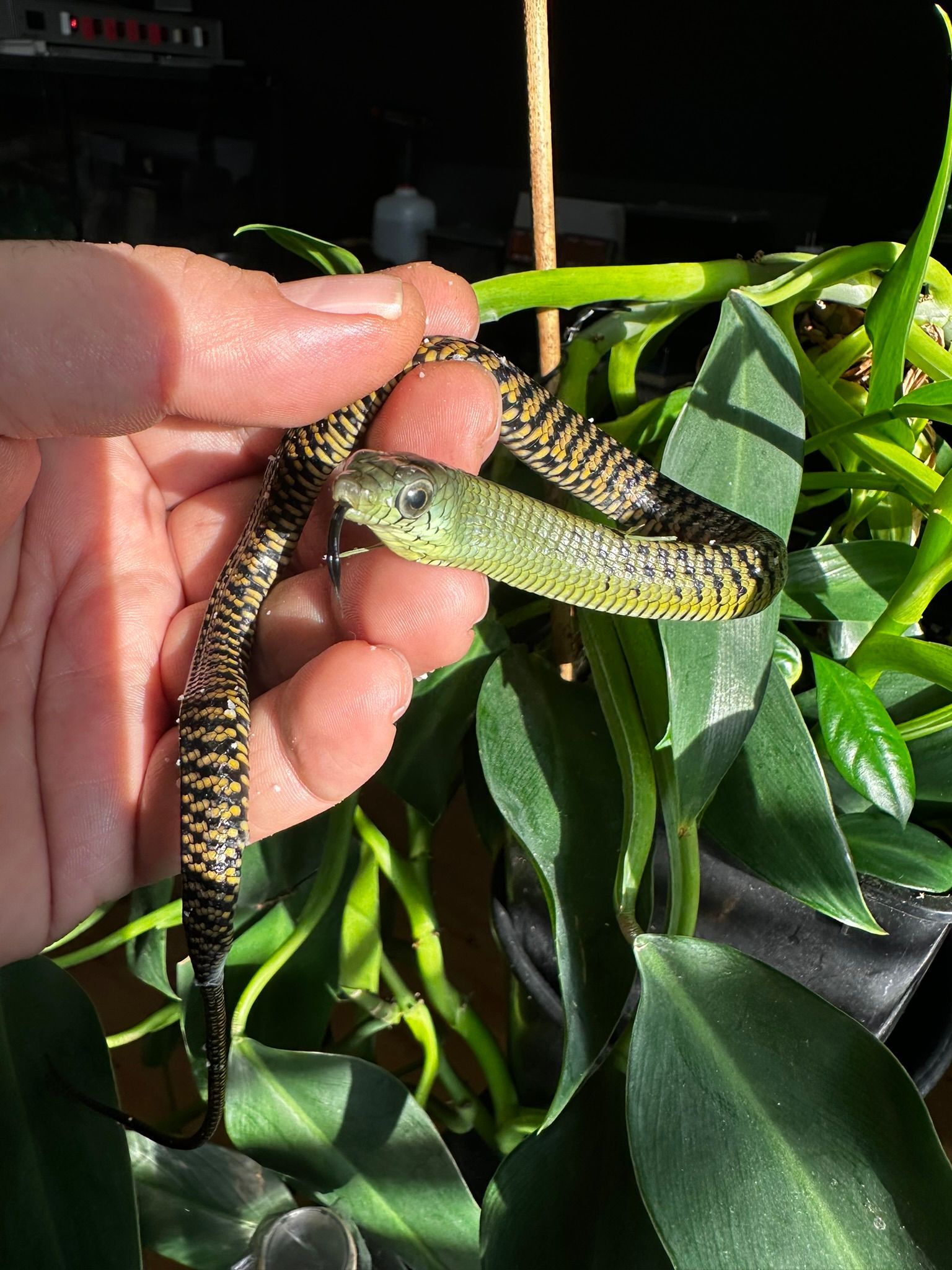
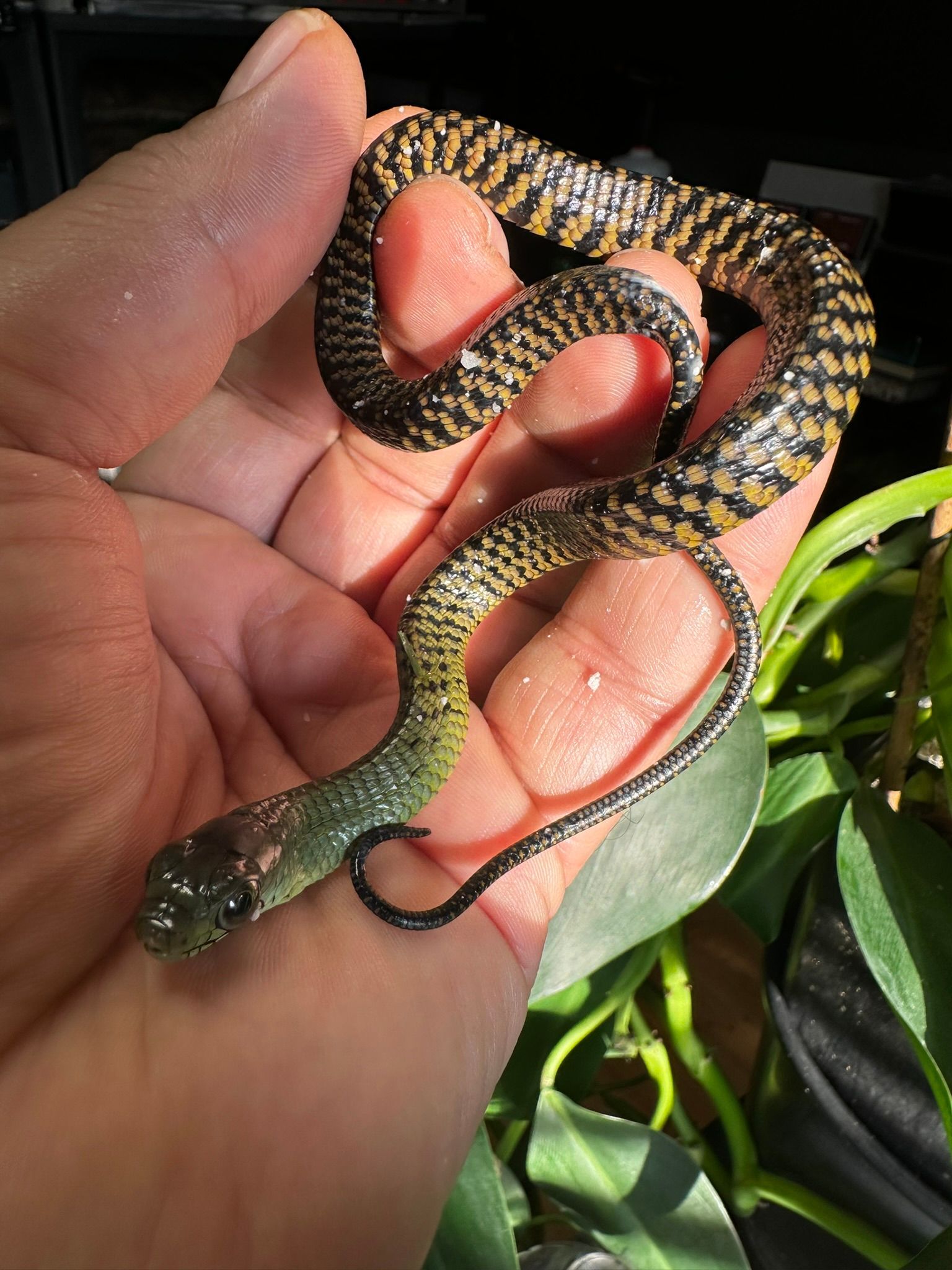
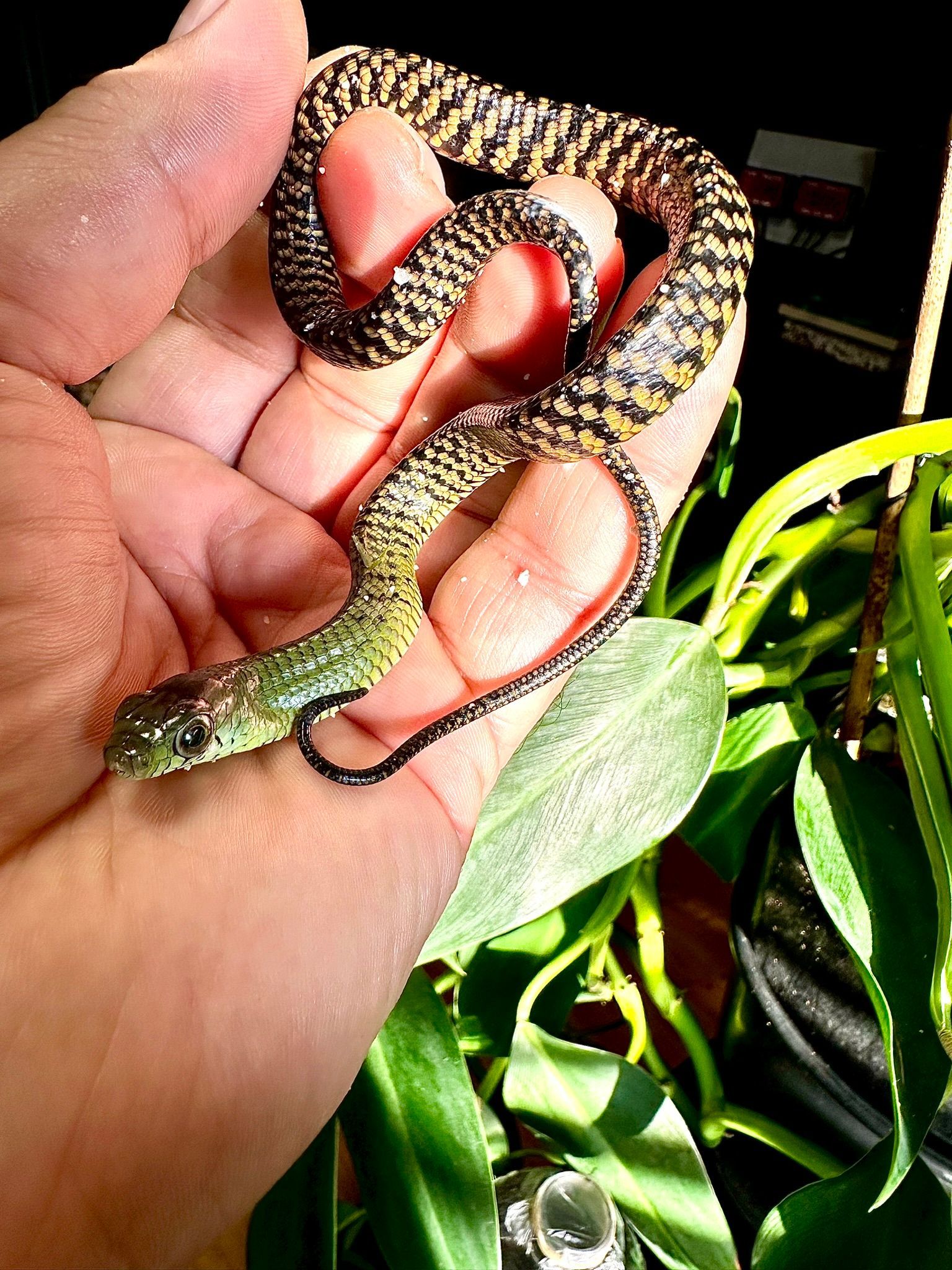
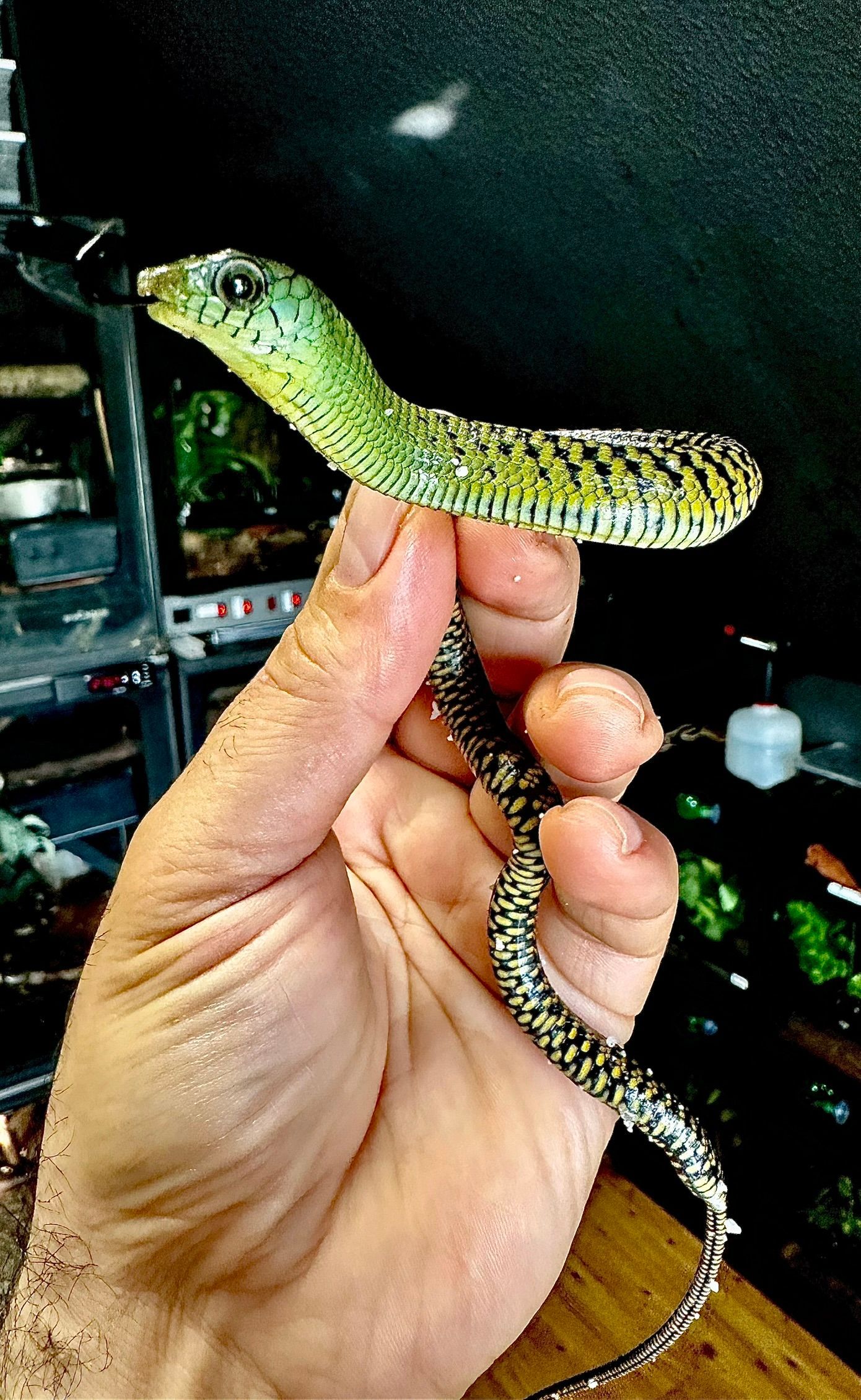
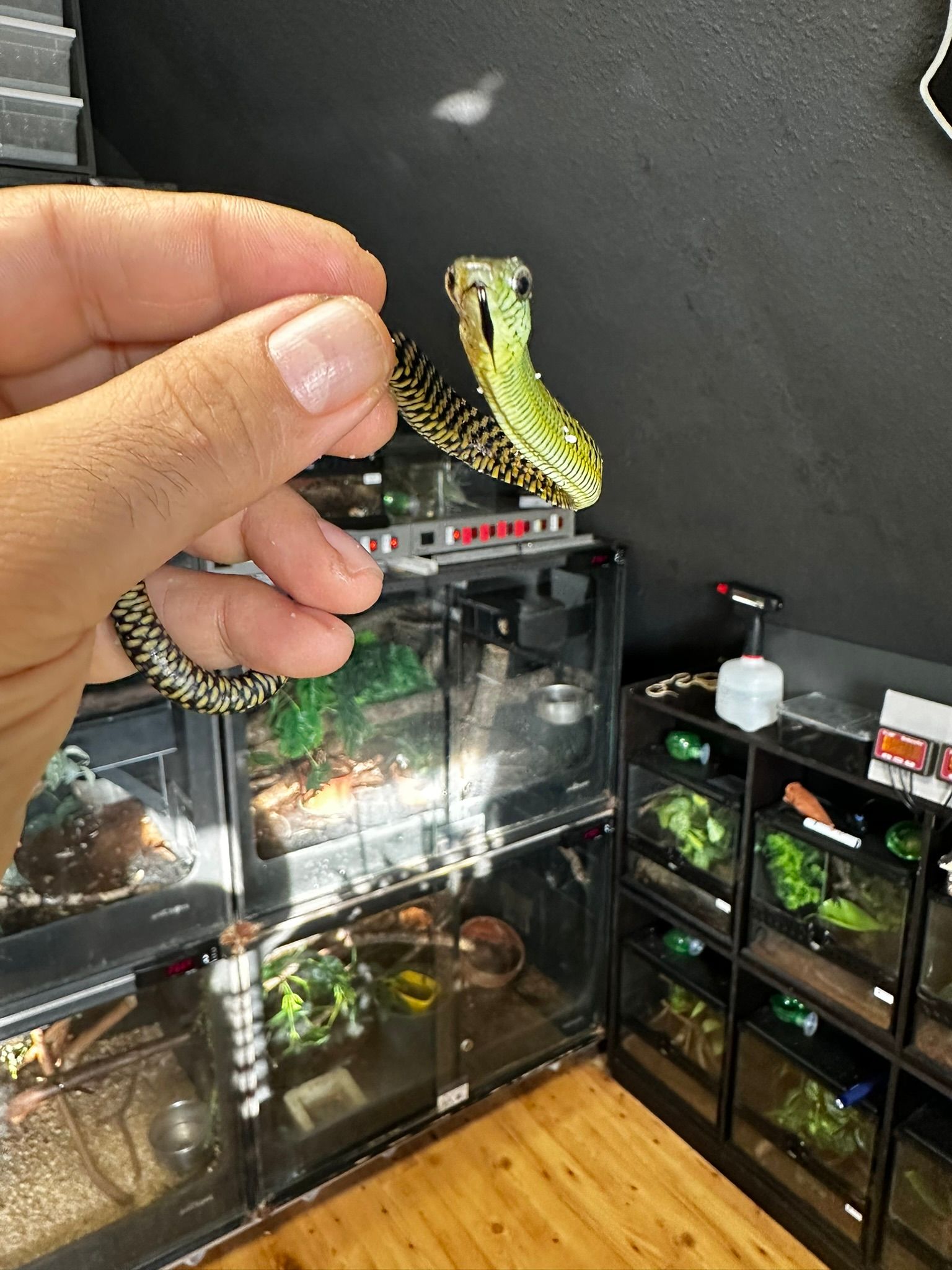
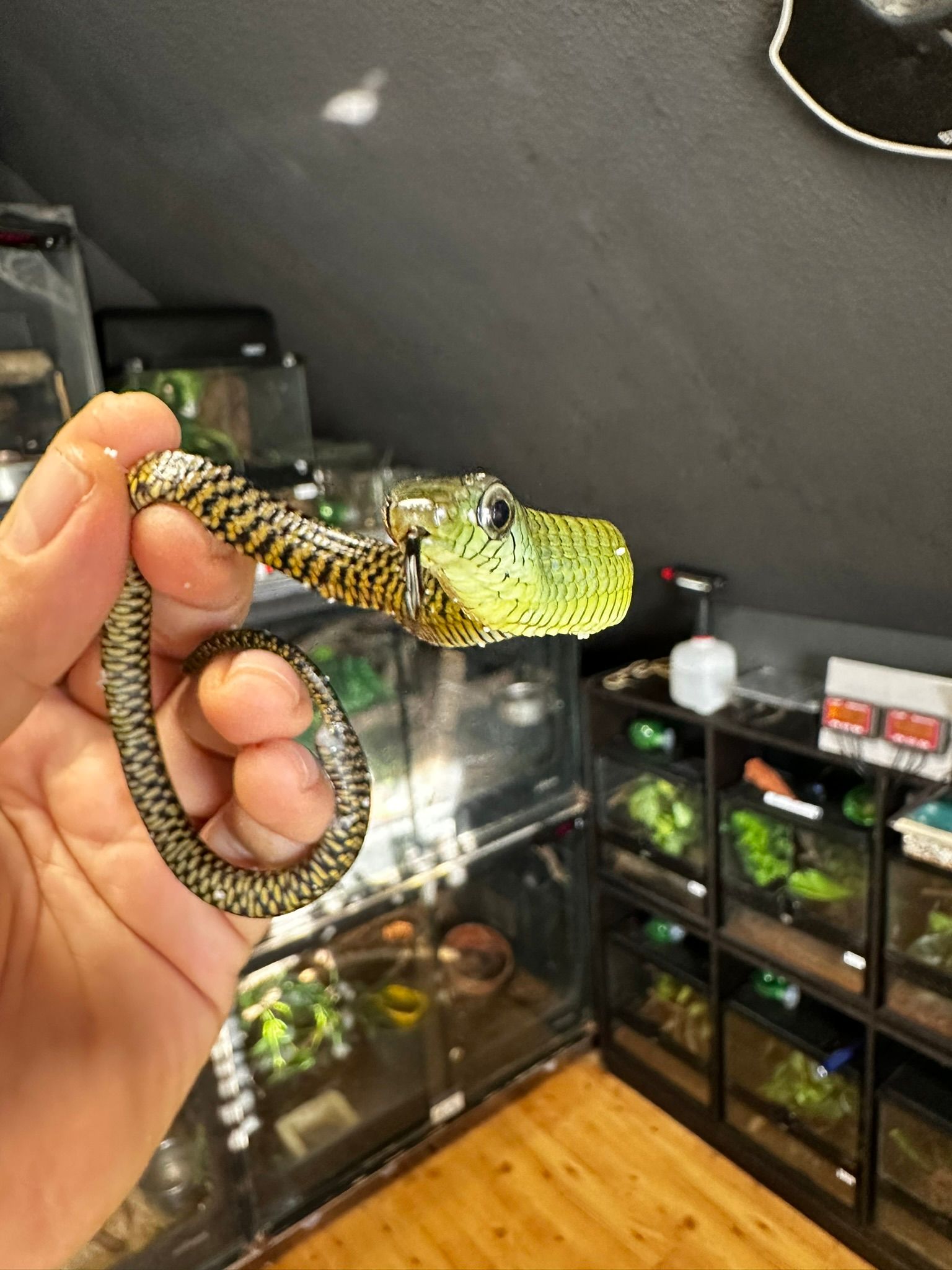
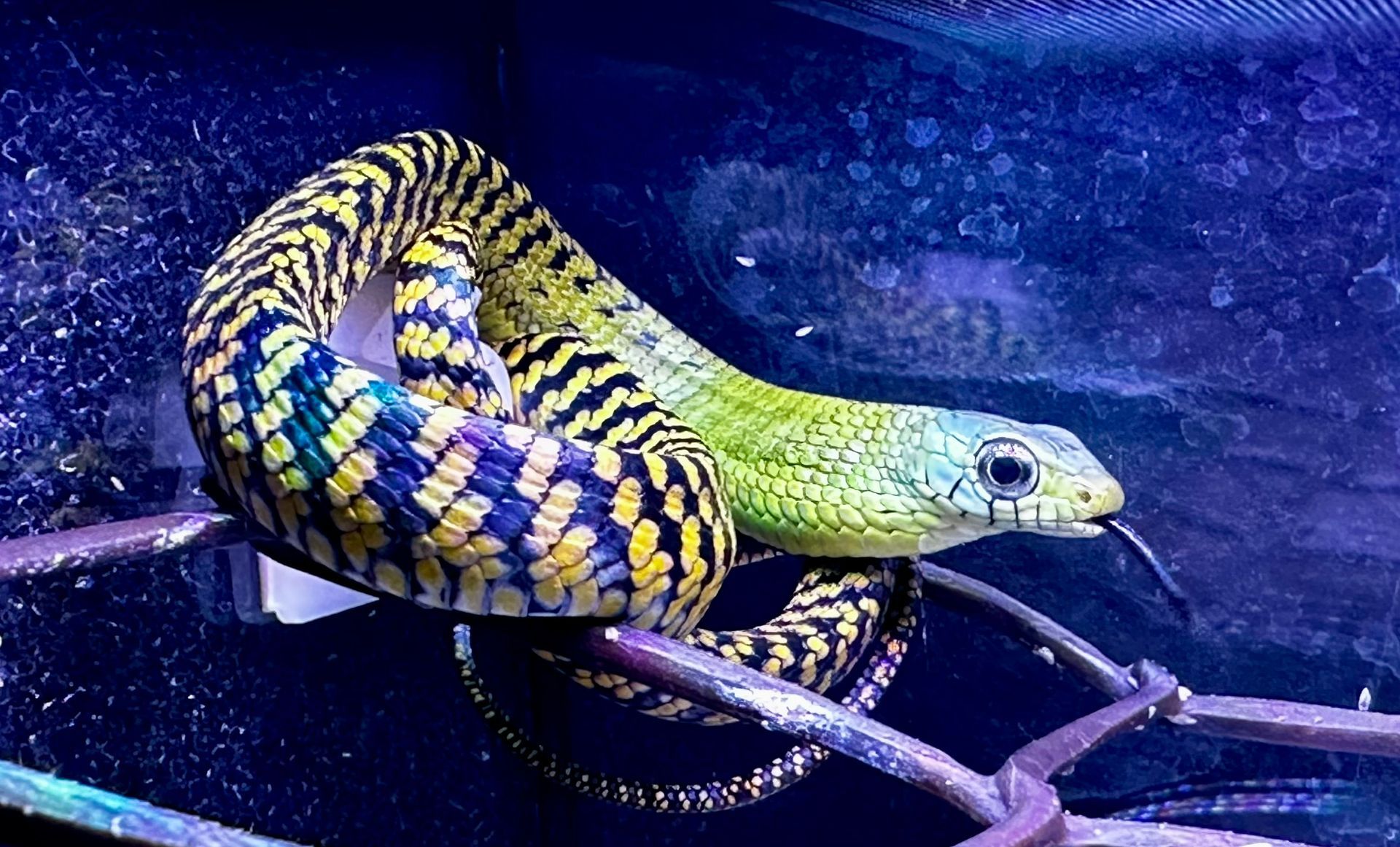
The juveniles appear healthy and stable, are curious and alert, and show mildly aggressive behavior.
They actively explore their surroundings.
Notable features included:
- Significant increase in egg volume
- large amount of egg fluid
- The incision is almost always made from pole to pole
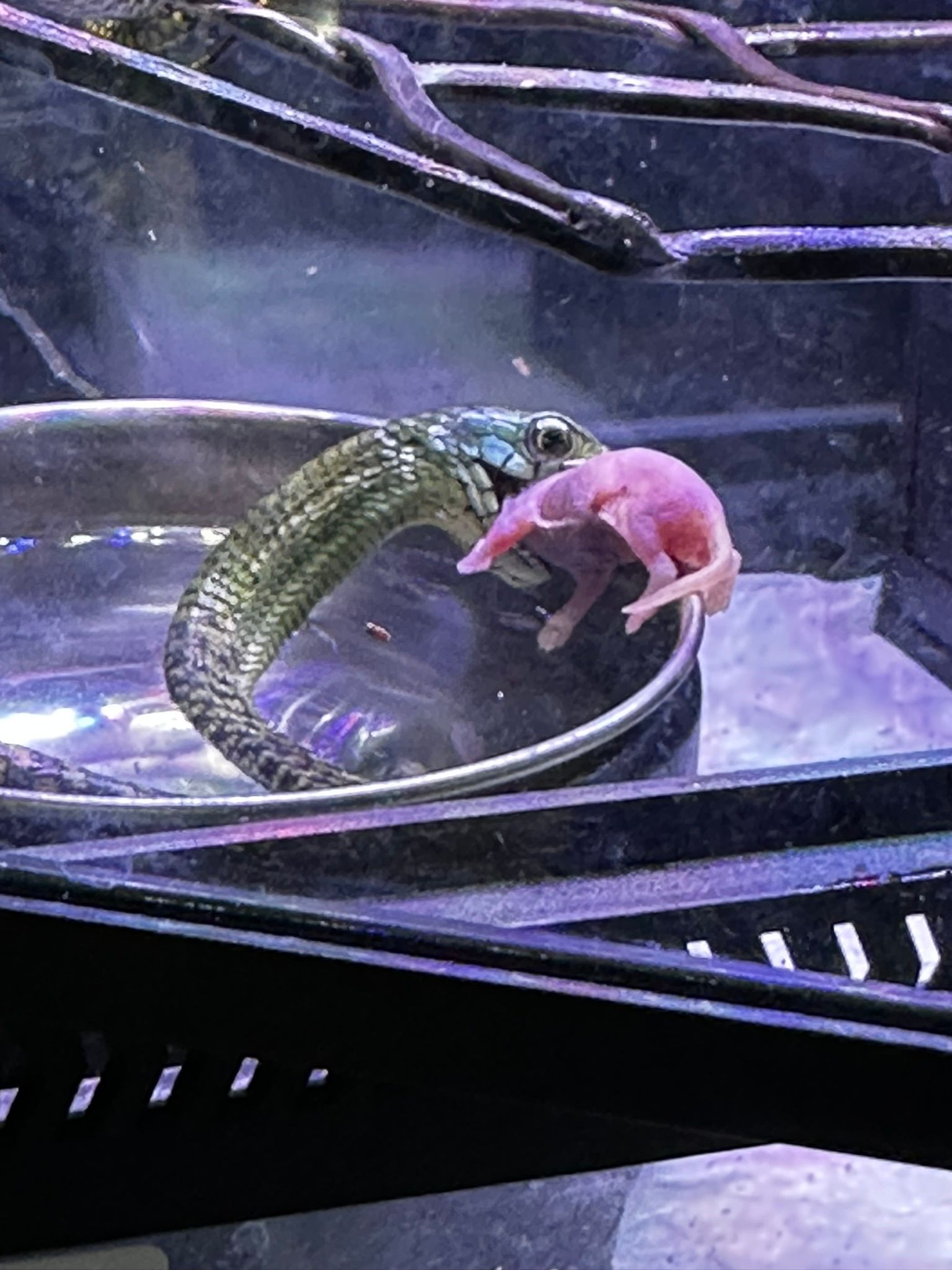
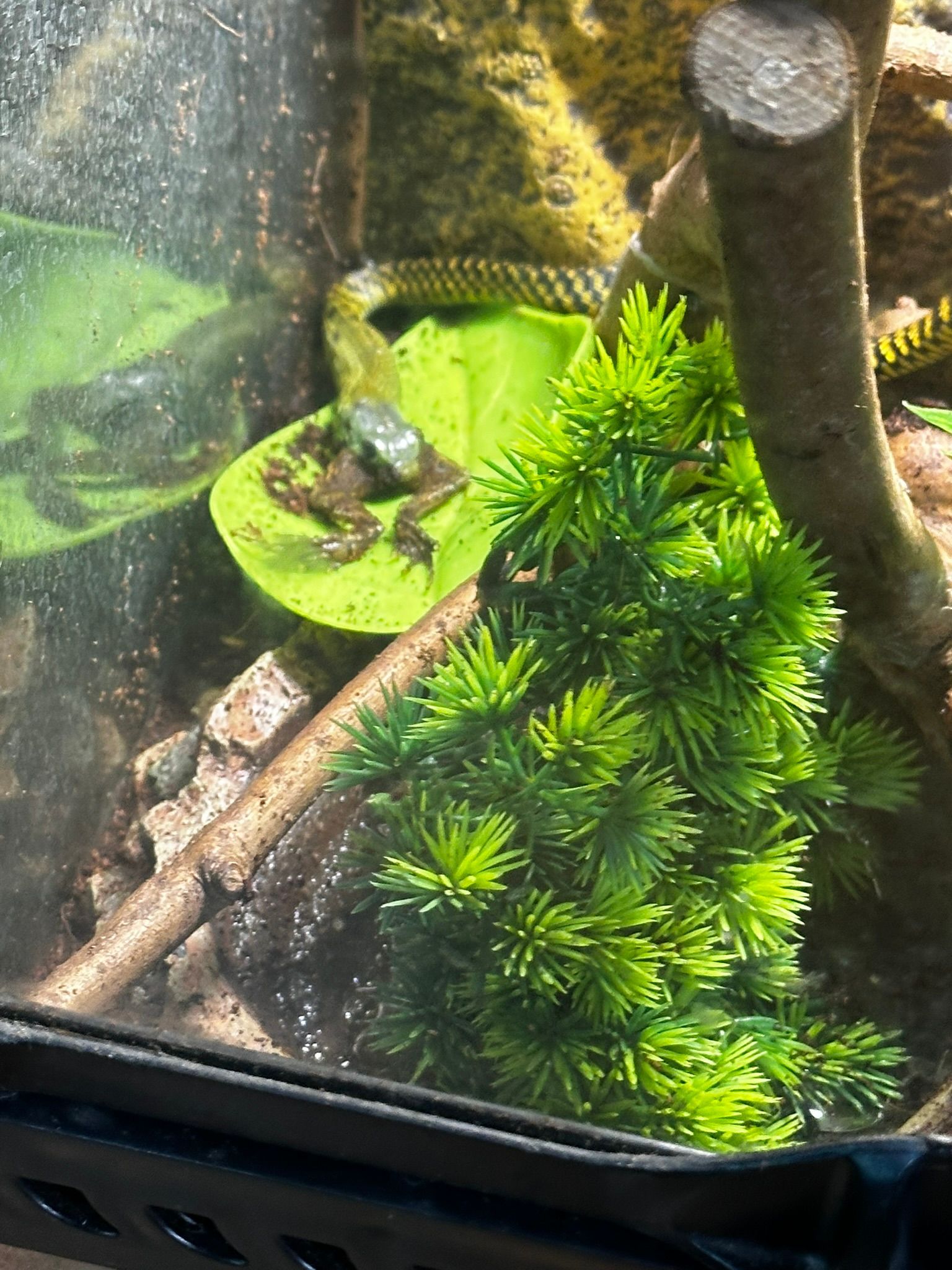
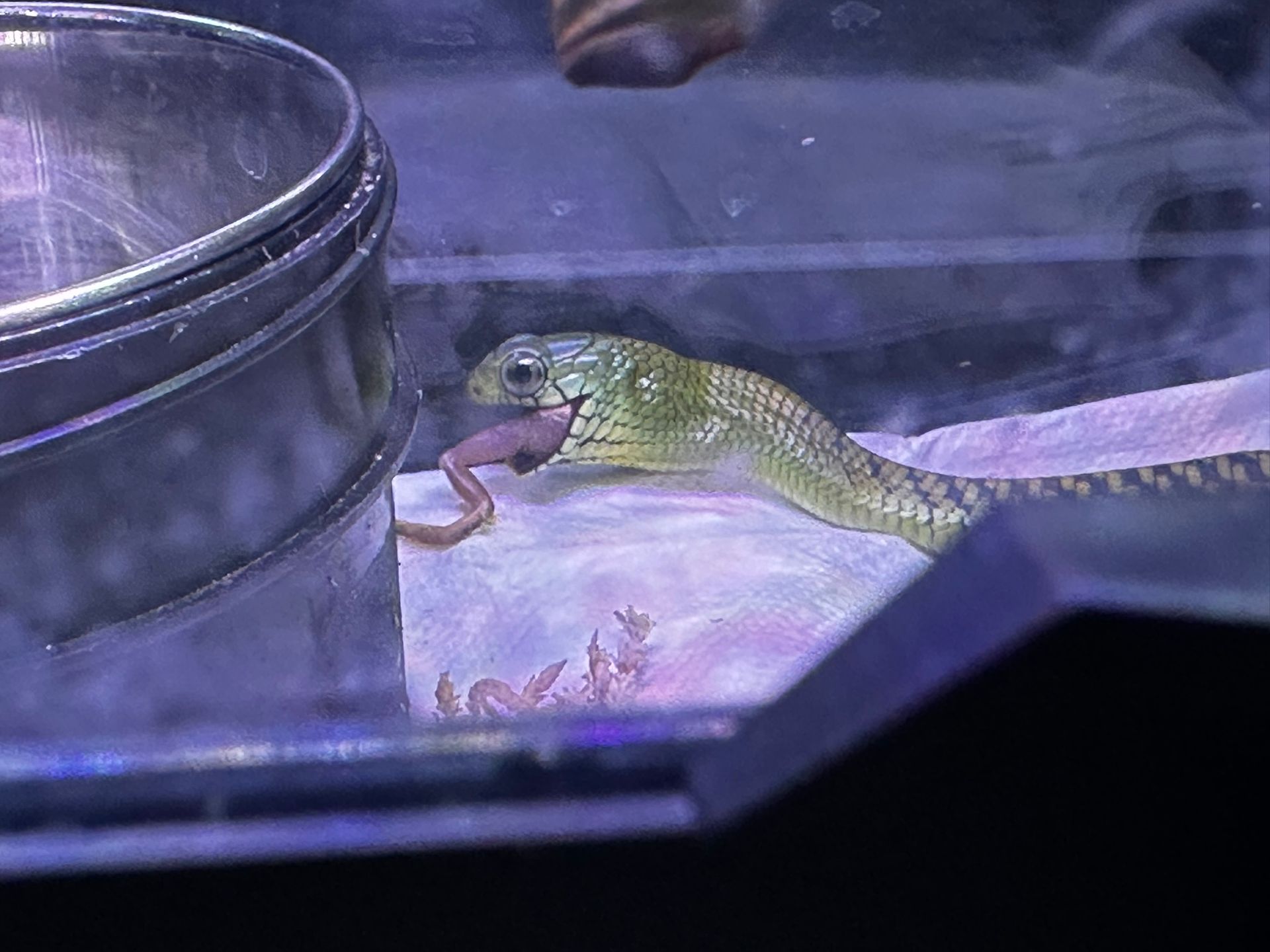
The juveniles are housed individually in small terrariums, as are the adults. They began accepting food about 10–12 days after hatching, immediately after their first shed. Their food consisted of lizards and live frogs; two of them also accepted chicken heart. Attempts to feed rodents, fish, and pieces of frog tissue were unsuccessful. From the age of eight months, the snakes began accepting rodents.
⸻
Summary
- Temperature: 21–32 °C (21–27 °C for breeding)
- Humidity: low, 1–2 misting sessions per week
- Pairings: 04.11 / 11.11 / 23.11 / 21.02
- PLS: 07.04 (47 days after last pairing)
- Oviposition: 20.04 (59 days after last mating, 13 days after PLS)
- Incubation: 91–96 days
- Incubator: 28/24.5 °C day/night (actual 24.5–30.3 °C)
- Incubation Setup: Perlite on Squamata Grid
⸻
Personal observations
According to online sources, the eggs can hatch in around 80 days at 30 °C. However, keepers’ groups often describe day/night temperature drops.
Egg laying took place at a relatively low 23–24 °C, although warmer areas were also available in the terrarium.
Based on observations, the actual gestation period and the identification of the mating appear to be variable, and may not be attributable to a single mating alone.
Other factors, such as temperature control and equipment, may have an influence.
⸻
Addendum
The female was in good condition during the second stage of pregnancy, ate regularly, and showed normal behaviour.
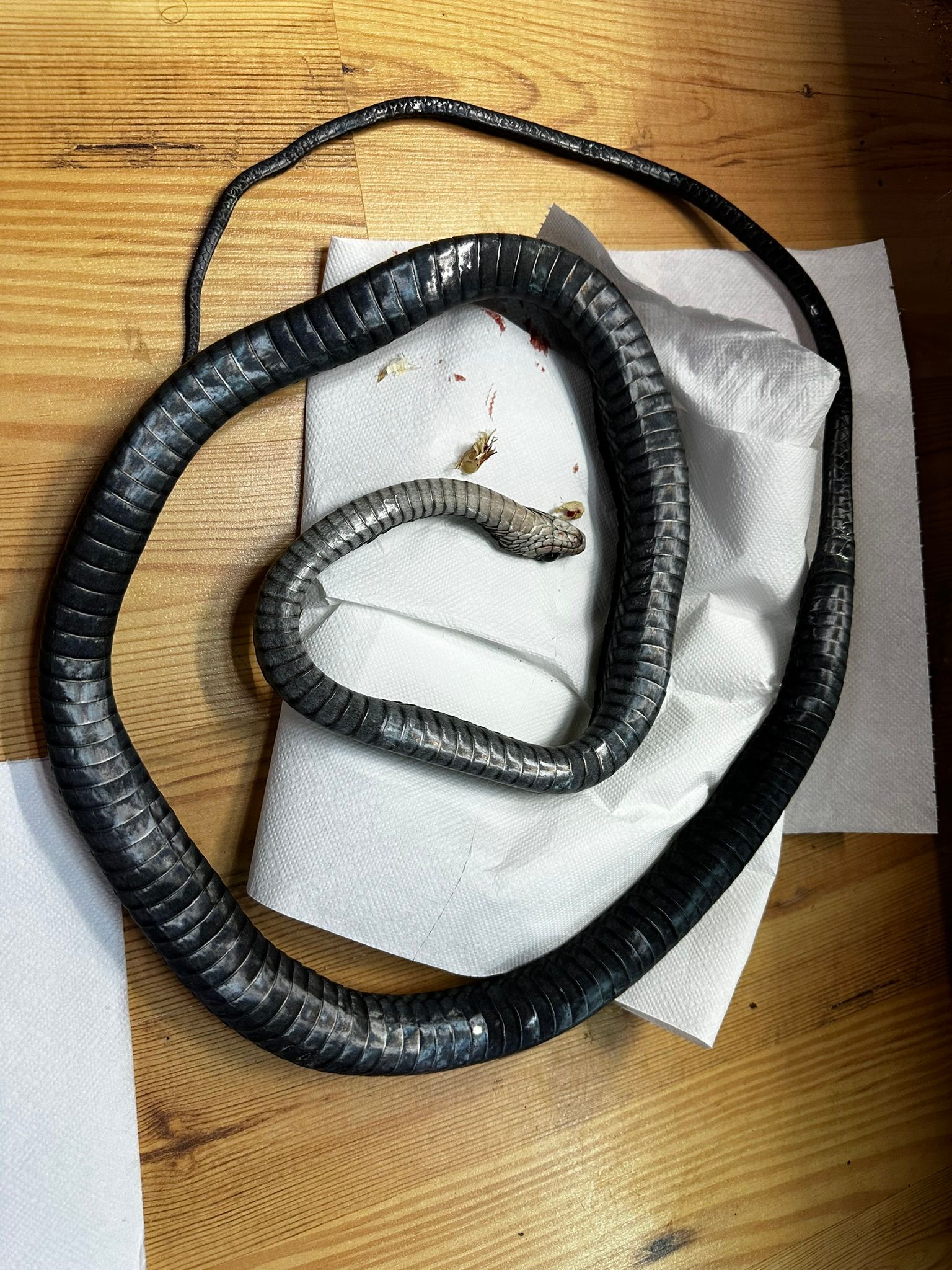
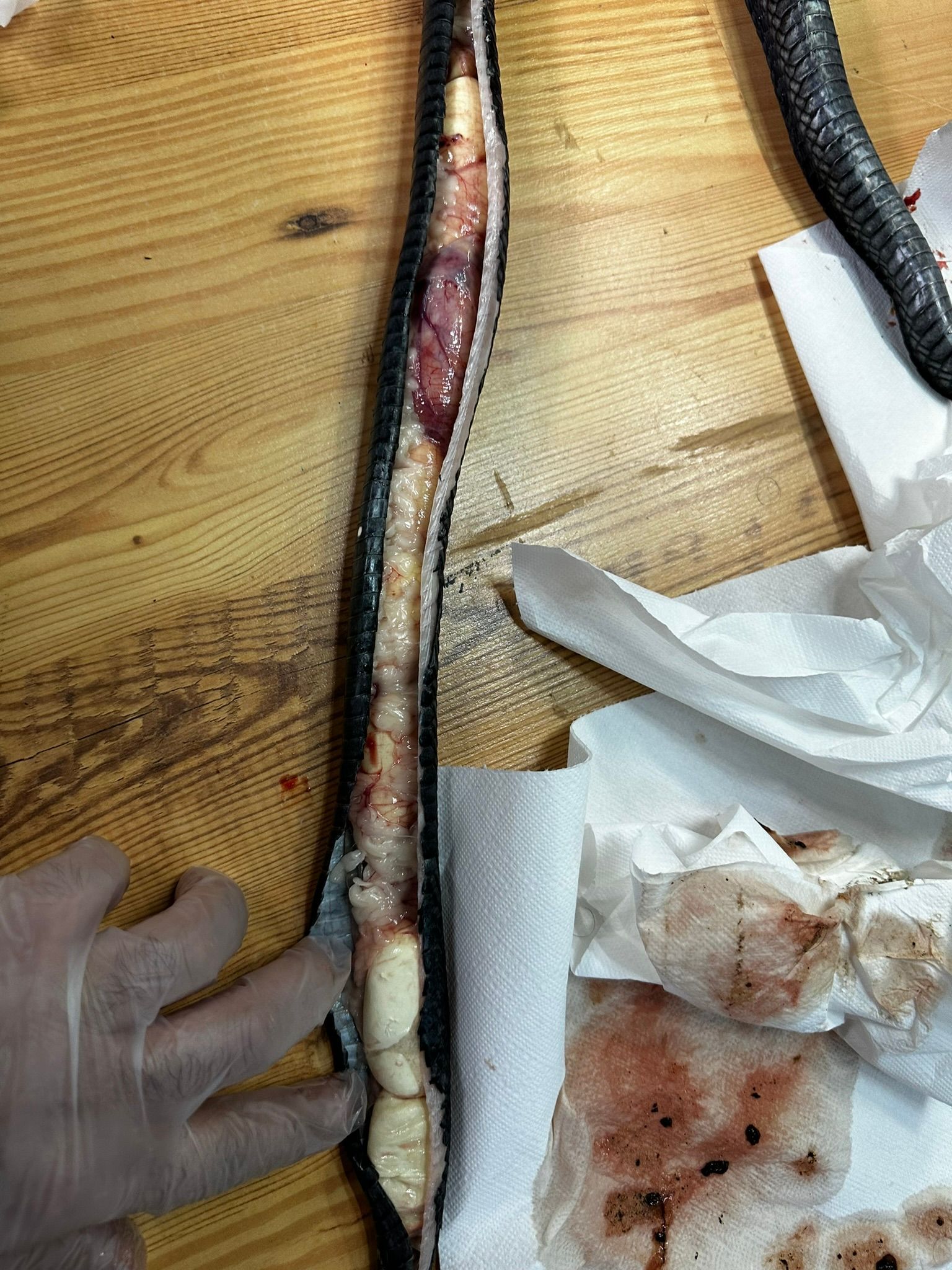
On 15 July, it shed shortly before the expected egg-laying date. Two days later, it was found dead in the terrarium.
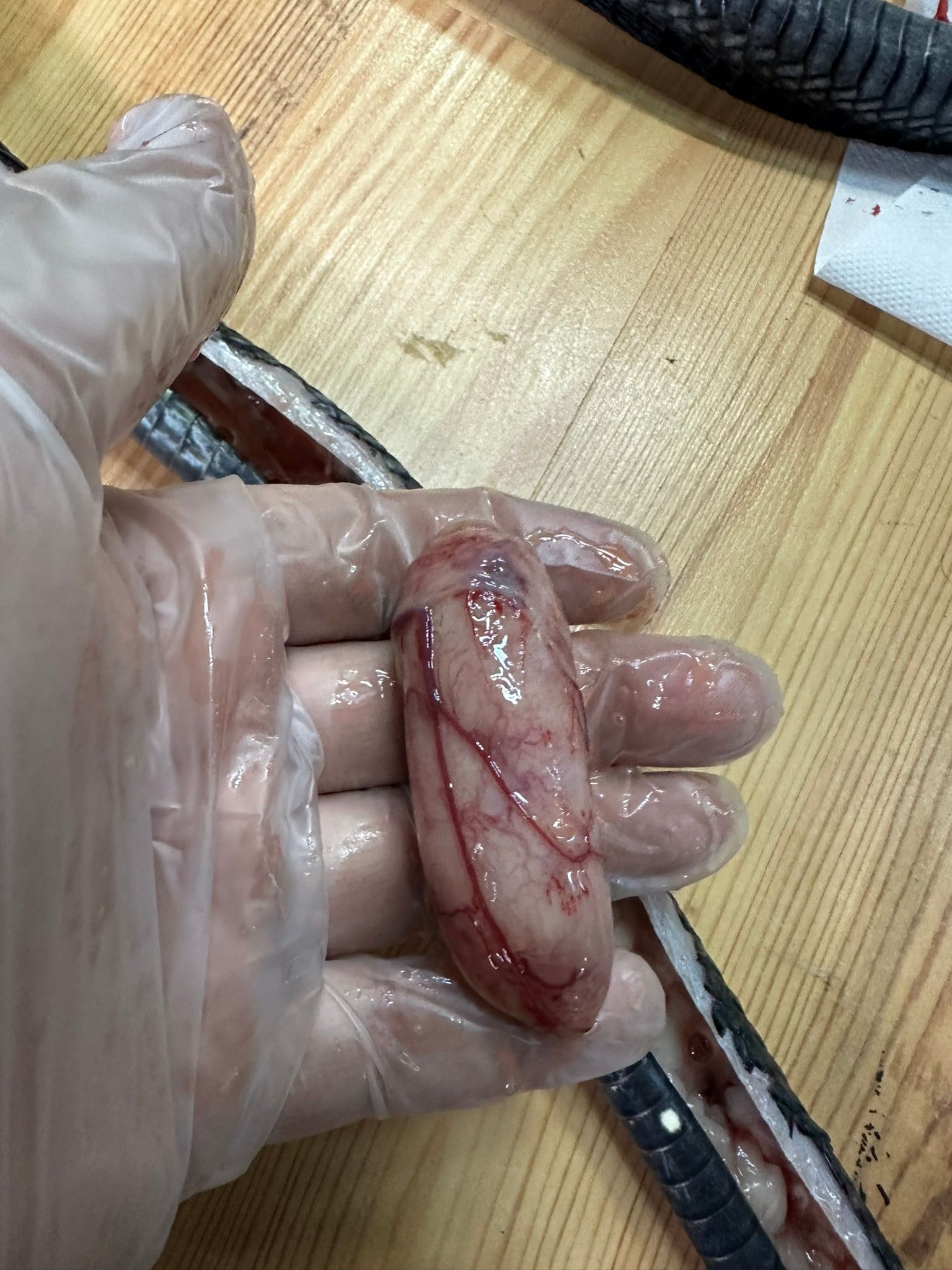
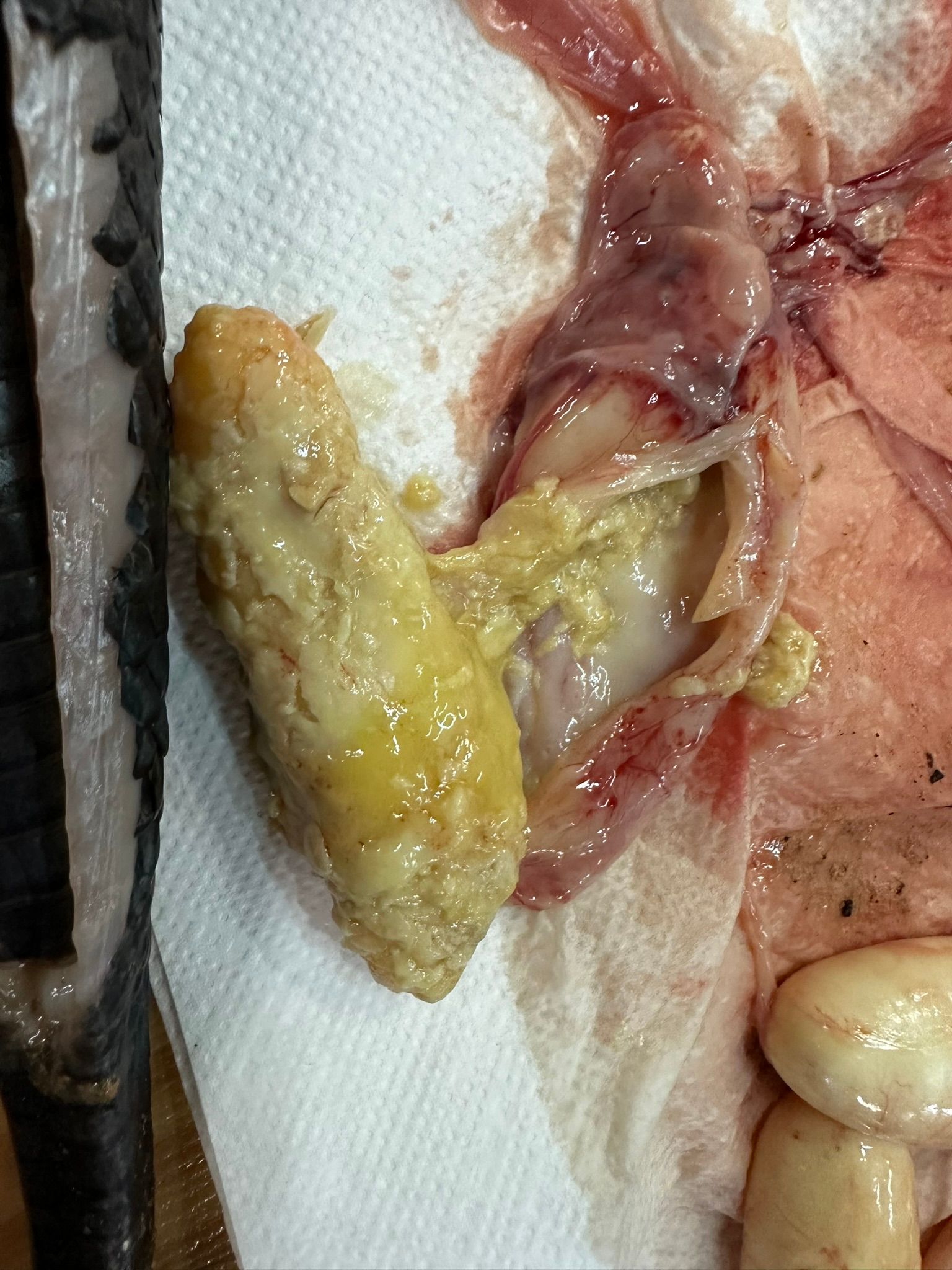
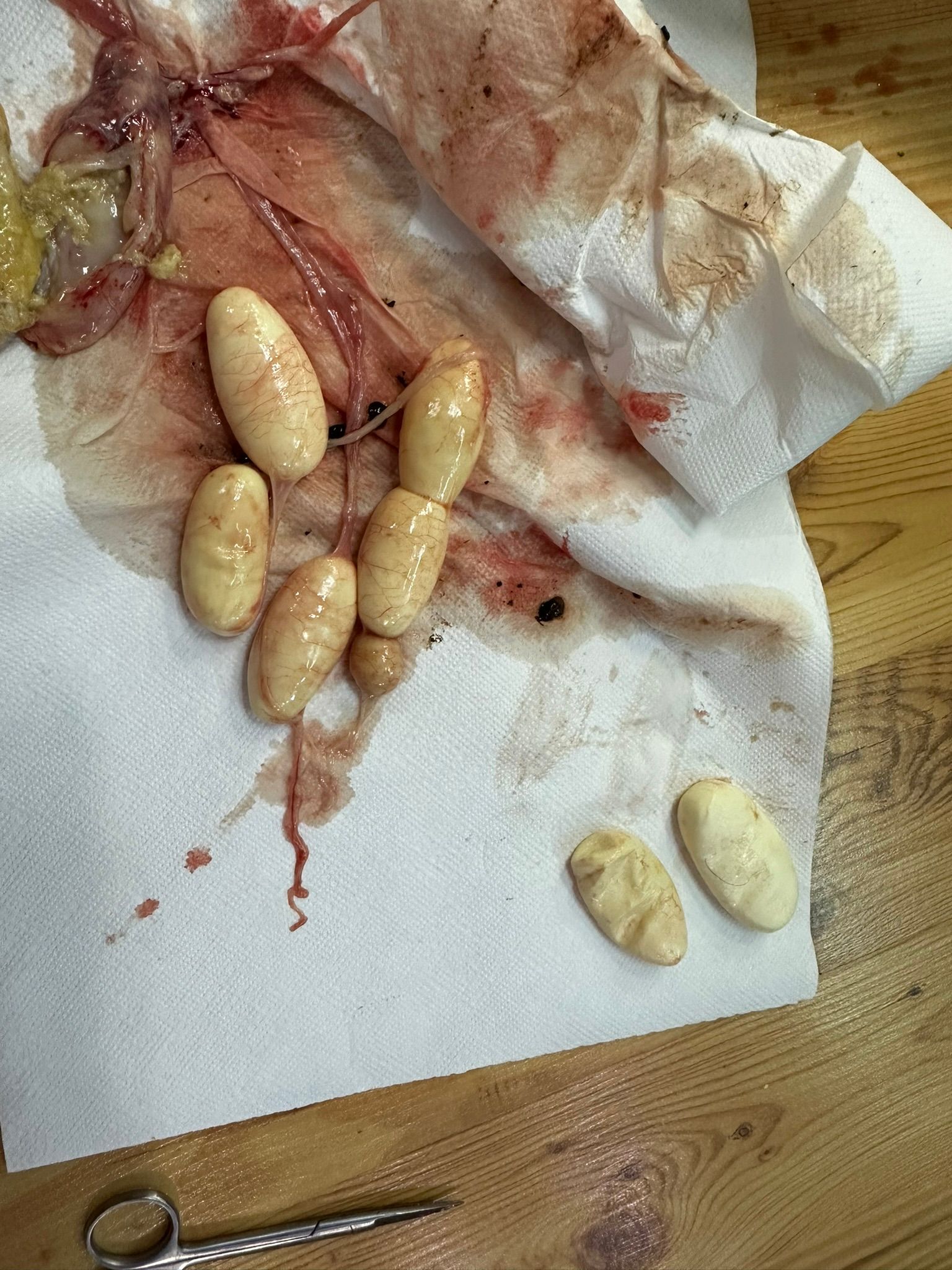
It contained six incompletely developed eggs as well as an abscess larger than the normal eggs.
In recent days, it has once again shown typical searching behaviour for a laying site.
⸻