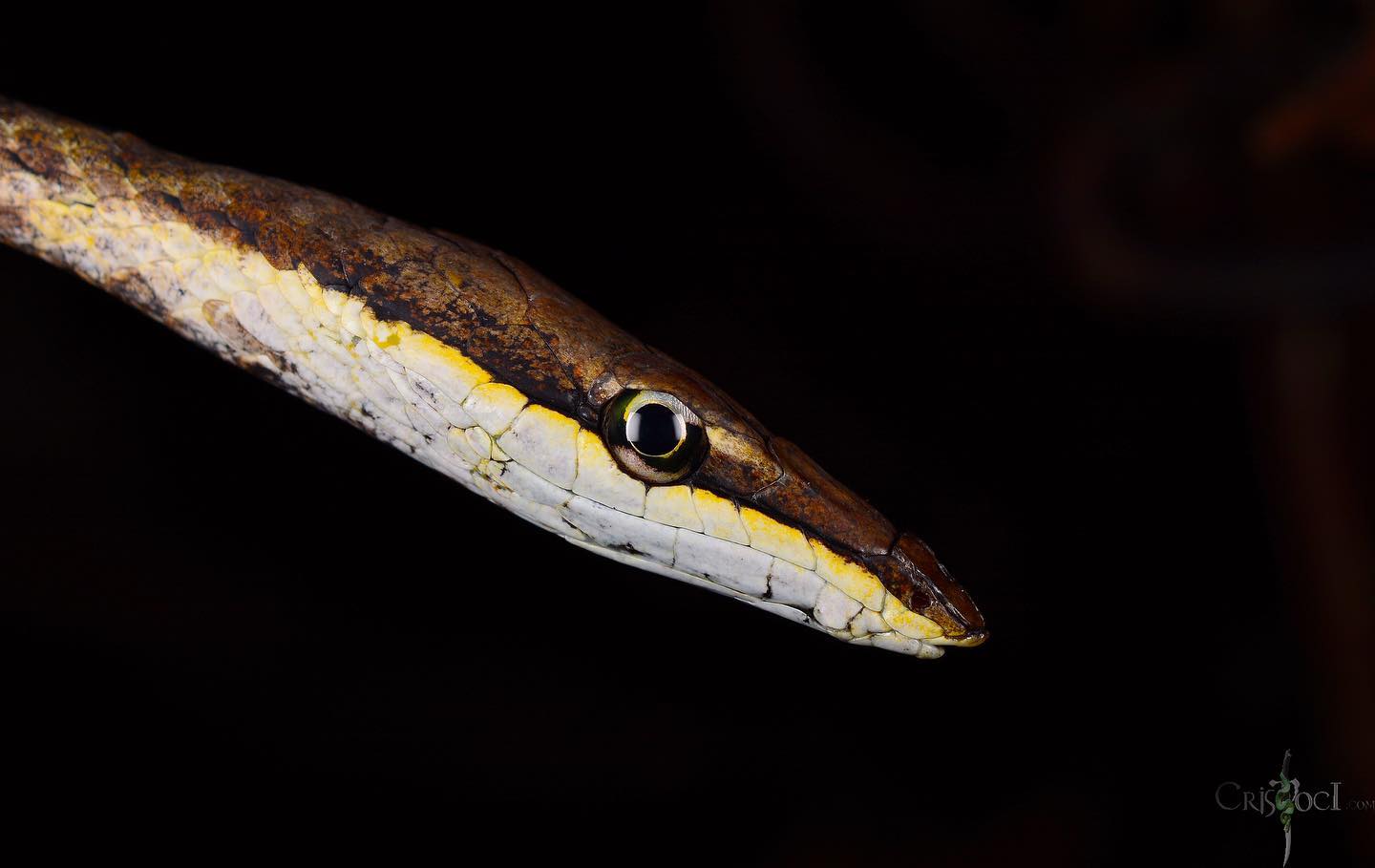
Oxybelis aeneus
– 2022 Breeding Report
Husbandry and breeding data
| Parameters | Value |
|---|---|
| Acquiring the Animals | March 2022 |
| Gruppe | 1.2 |
| PLS to oviposition | 12 days |
| Clutch size | 3 eggs |
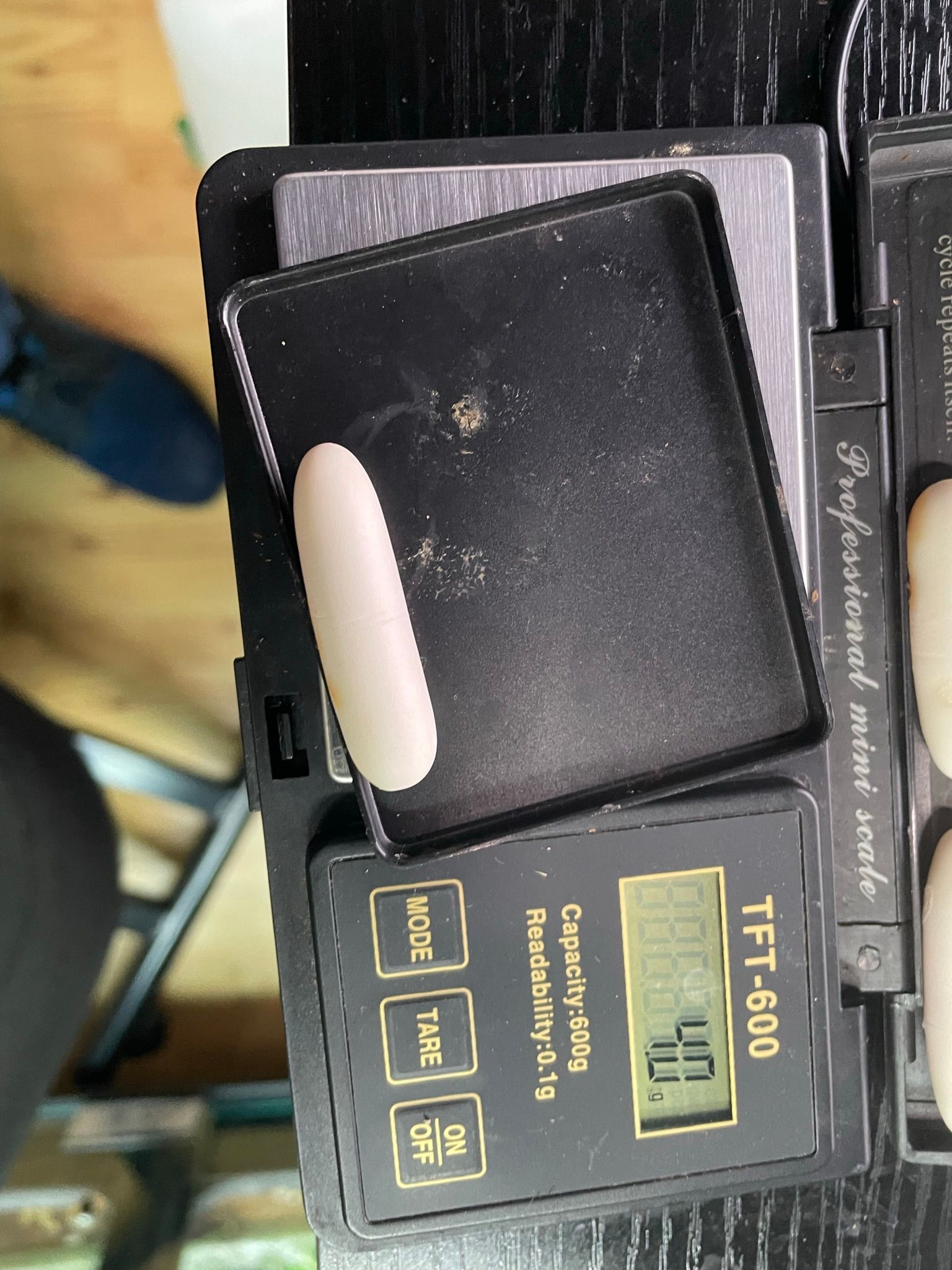
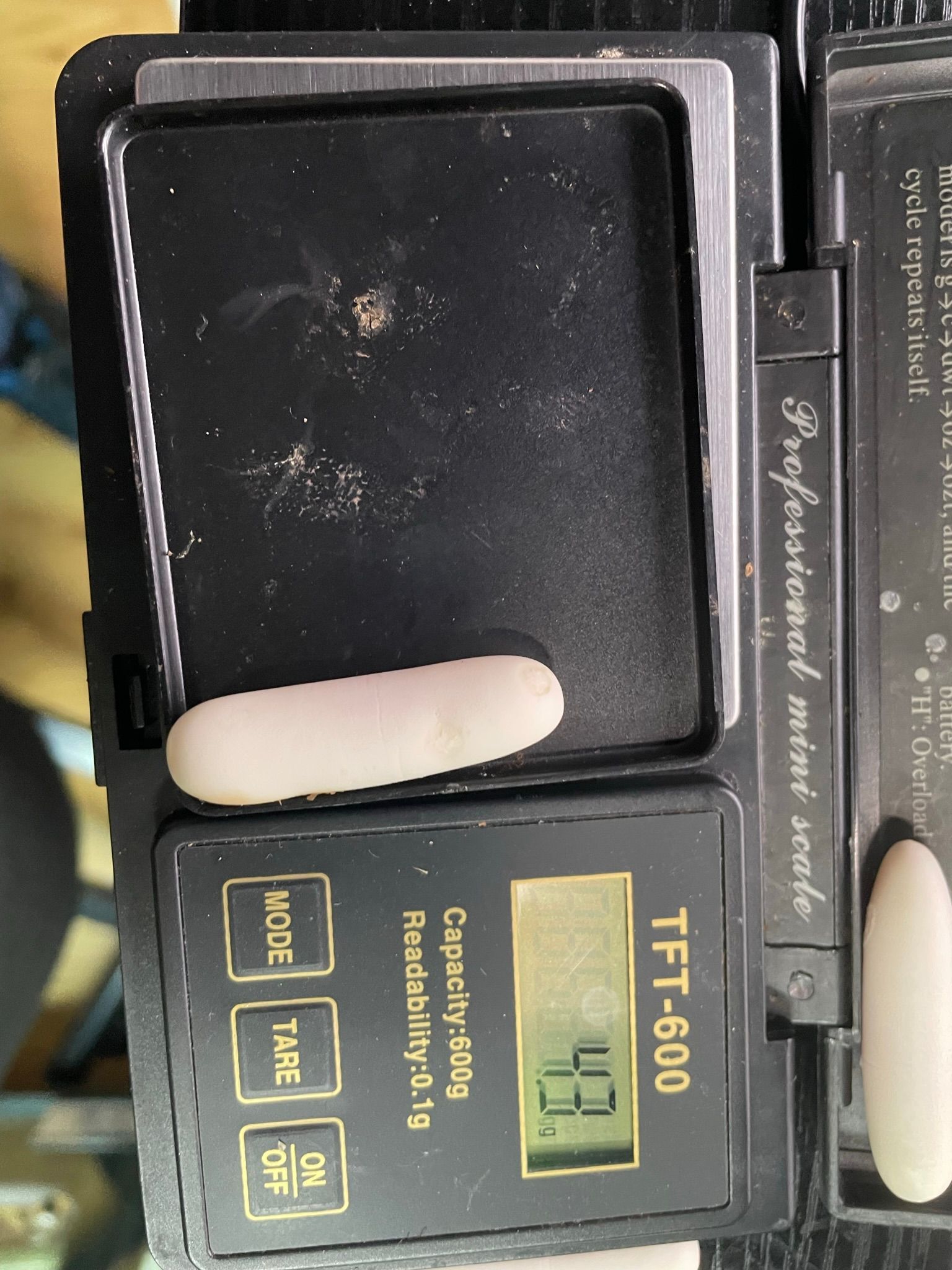
| Gelegegröße | 4.0–4.3 g |
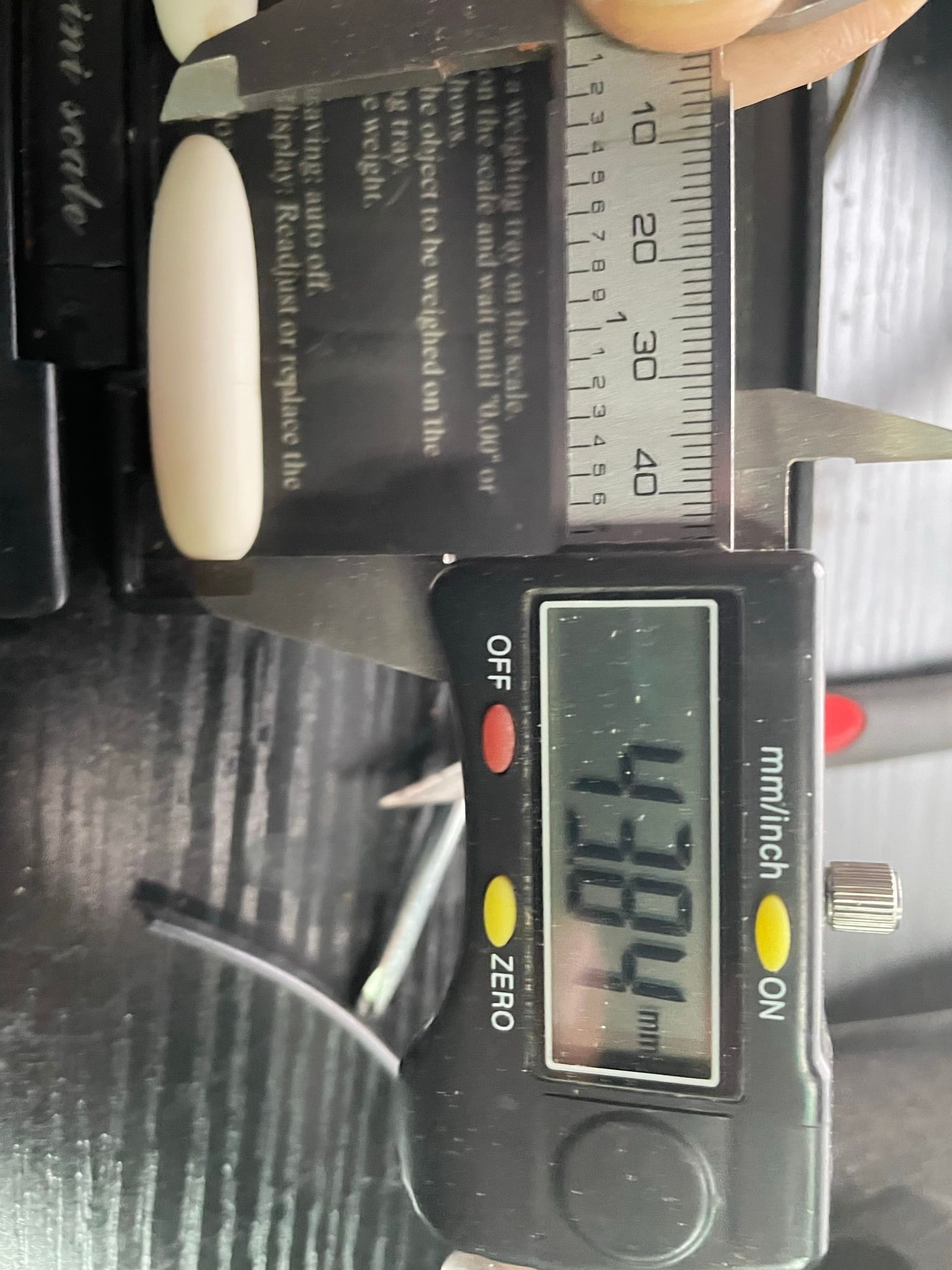
| Egg length | 40–44 mm |
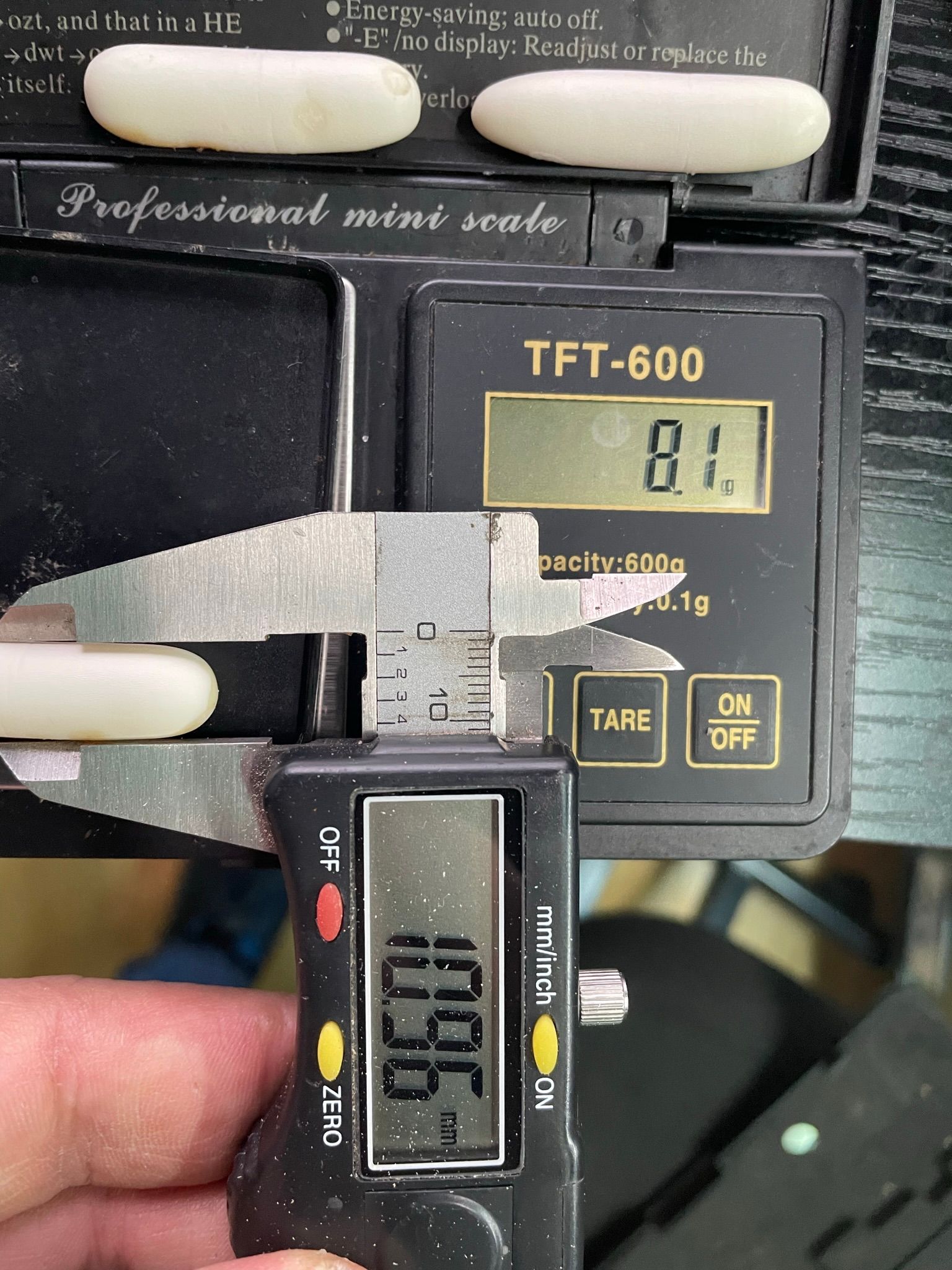
| Egg Diameter | 10.9 mm |
| Incubation temperature | 29.5 °C |
| Incubation period | 59–60 days |
| Hatchling weight | 3.6 g |
| Hatchling length | 31.5 cm |
| Female feeding | 4 days after laying |
| First shed of the juveniles | 12 days after hatching |
Introduction
In March 2022, I acquired a trio (1.2) of Oxybelis aeneus from LS-Reptiles.
When determining the sex, I noticed that the animals differed considerably from my Oxybelis fulgidus. During probing, the probe advanced about four to six subcaudal scales in the females, while it reached six to nine scales in the males.
For comparison: with my Oxybelis fulgidus, the probe can barely be inserted more than two scales deep in females. This difference initially surprised me and made me somewhat uneasy.
Ein Video vom Auspacken und der ersten Begutachtung der Tiere findet sich im entsprechenden Blogbeitrag.
⸻
First signs of pregnancy
While unpacking, I noticed that one of the females had a noticeably swollen area of the body.
After moving in, the animal accepted geckos as food twice more and shed on 18.03.2022. By then, the eggs were already clearly visible.
After shedding, the female stopped eating completely.
During the following week, it displayed unusually restless behavior. Since the eggs were clearly visible and positioned very low in the body, I was occasionally concerned about possible egg binding.
The female was often at the terrarium's front panels and repeatedly tried to get between the glass and the front frame. To reduce this stimulus, I temporarily covered the front panel with dark fabric.
⸻
Preparing the laying site
To give the female different options for laying her eggs, I installed several hide boxes and egg-laying sites at different heights in the enclosure.
During my research, I found indications that Oxybelis aeneus often lay their eggs close to the ground in the wild. Interestingly, my second female and the male regularly stayed in the lower part of the enclosure.
However, the gravid female never displayed this behaviour.
In the end, a shallow plastic box was accepted as a resting place. It was set up at a height where temperatures were approximately 28–29 °C.
⸻
Egg Laying
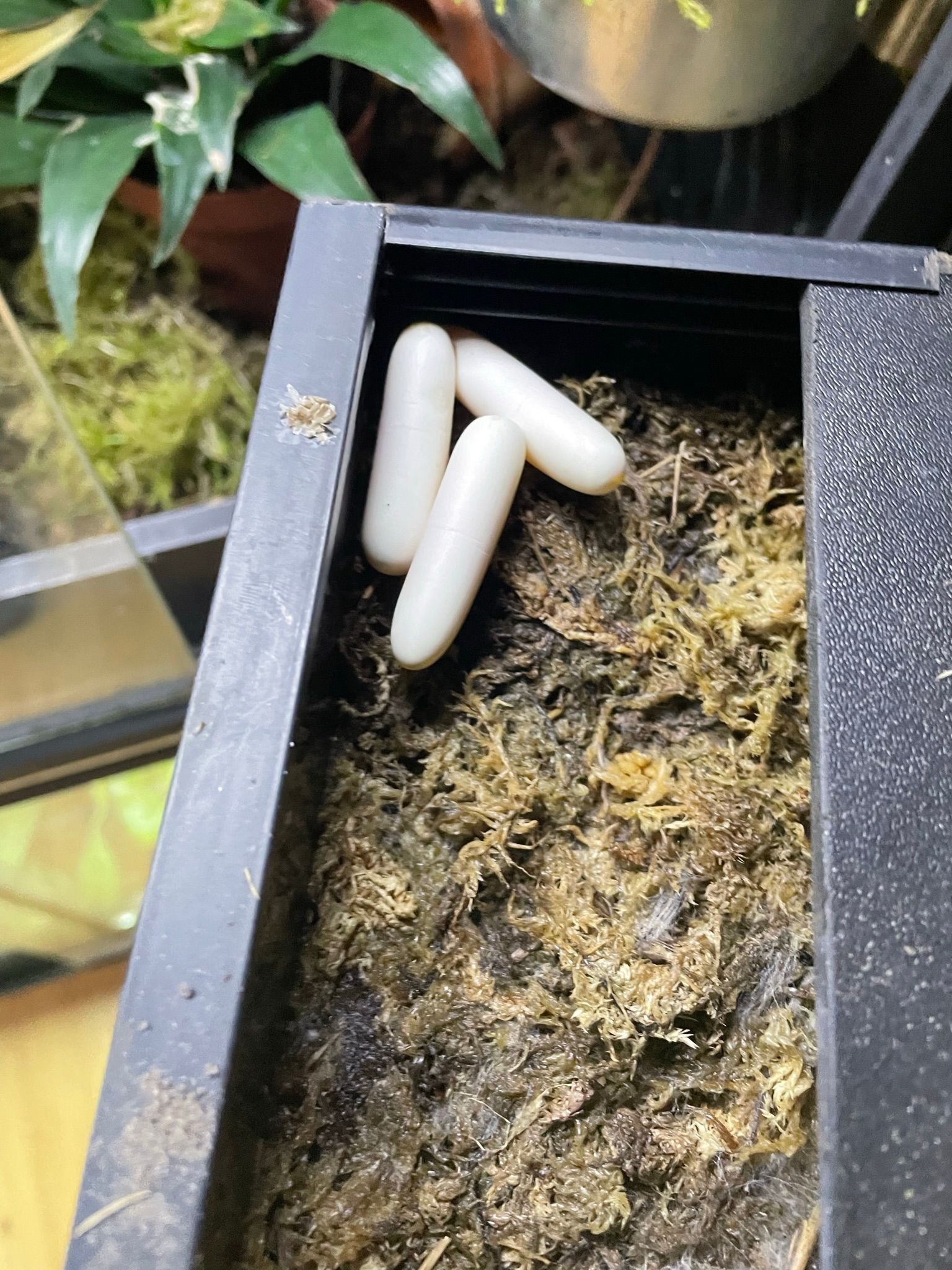
On 30.03.2022, twelve days after the PLS shed, the female successfully laid three eggs.
The eggs were laid directly in the prepared laying box.
The shape of the eggs is very similar to that of Leptophis eggs and is noticeably more elongated than that of many other colubrids.
The eggs measured as follows:
- Weight: 4.0–4.3 g
- Length: 40–44 mm
- Diameter: 10.9 mm
The female resumed feeding just four days after laying her eggs, on 03.04.2022.
⸻
Incubation
The eggs were incubated at a constant 29.5 °C.
The incubation period was 59 to 60 days.
The eggs developed without any problems throughout the incubation period.
⸻
Hatching
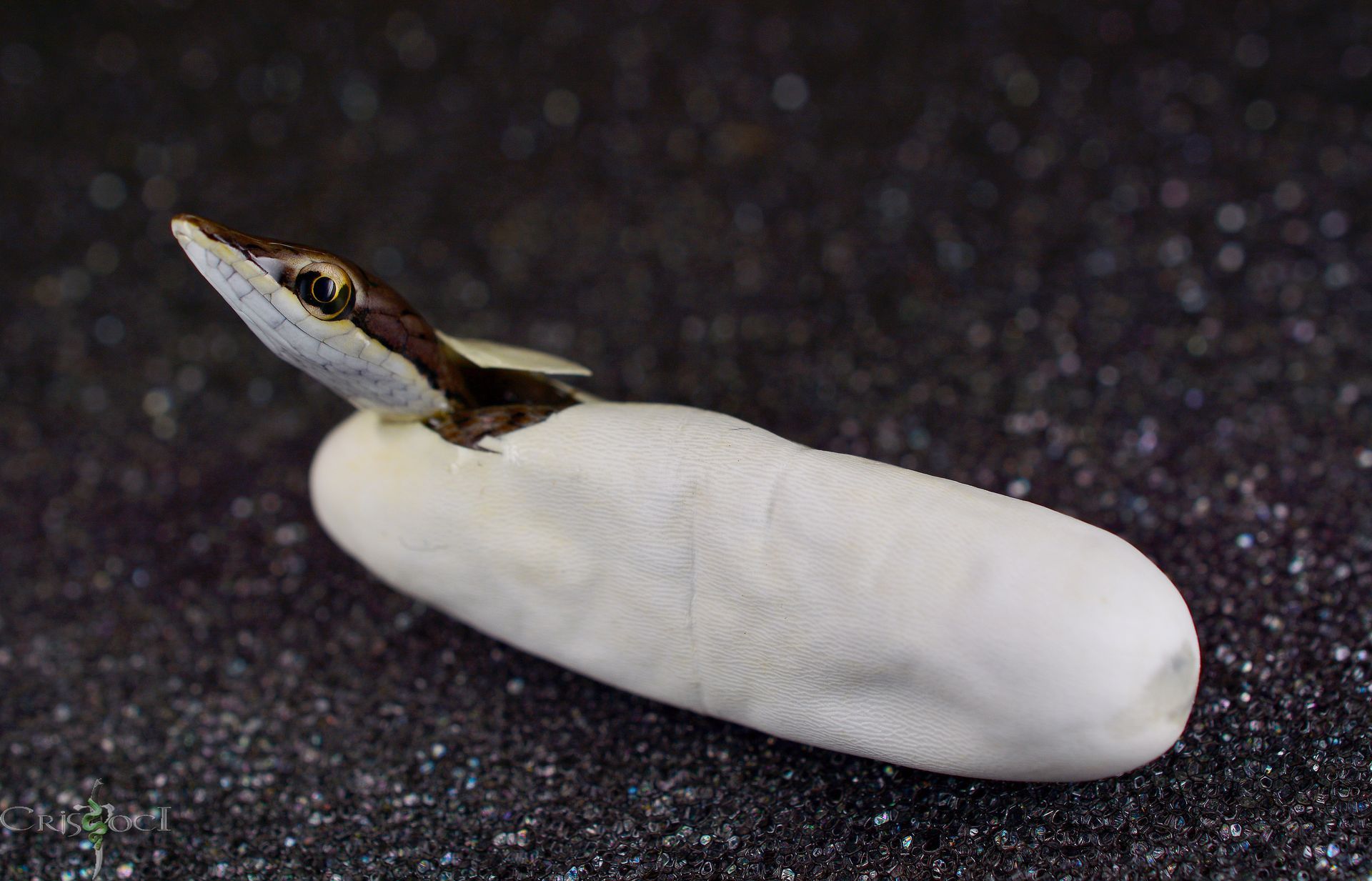
All the juveniles hatched successfully after 59 to 60 days.
The hatchlings already looked very similar to their parents and displayed the species’ typical appearance.
Hatchling data:
- Weight: 3.6 g
- Length: 31.5 cm
⸻
Rearing
The juveniles were housed individually in 40 cm cube terrariums under semi-tropical conditions.
The first shed occurred twelve days after hatching.
Afterwards, all the juveniles readily accepted young mourning geckos as their first food.
The animals continued to develop without difficulty.
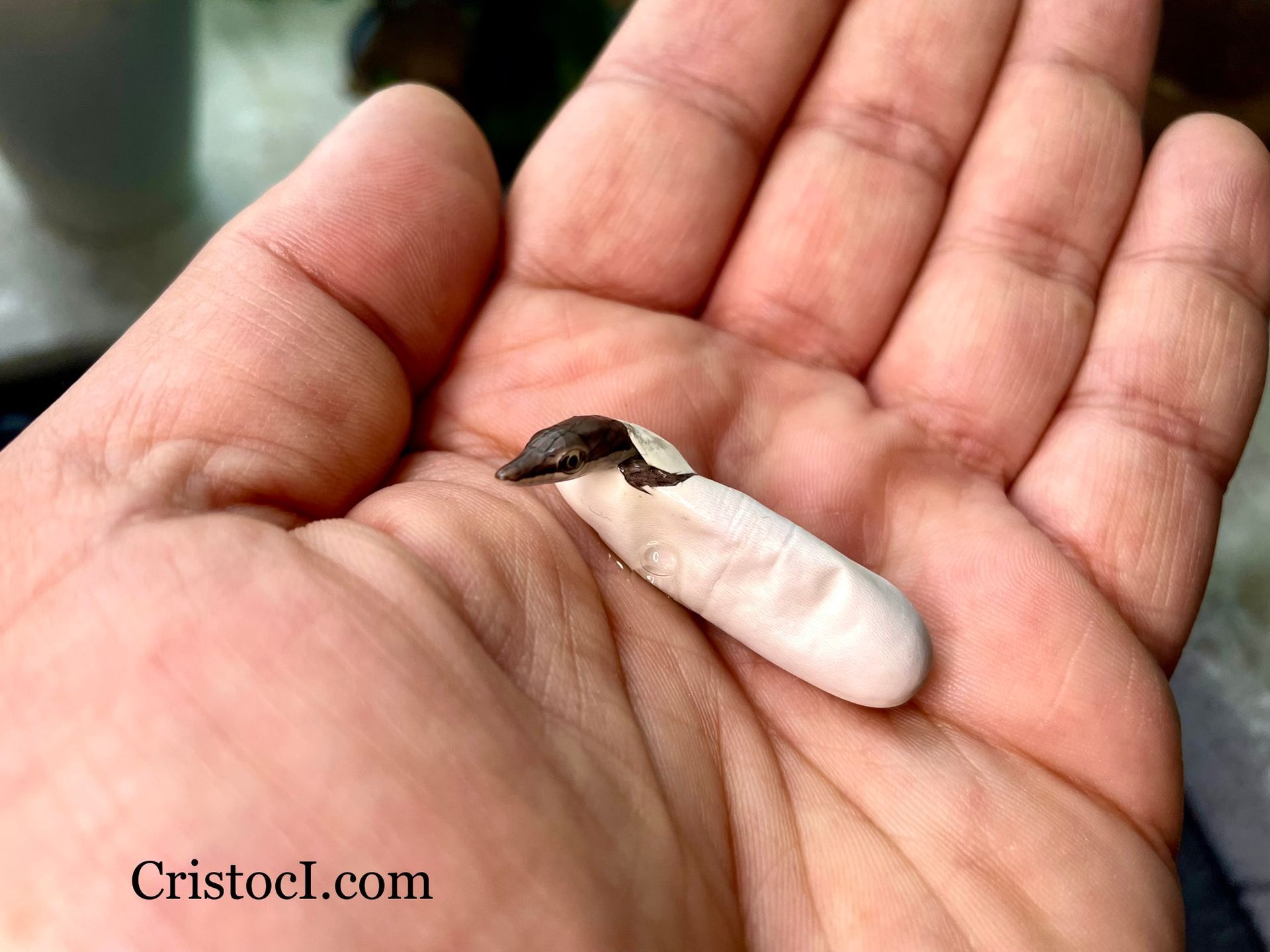
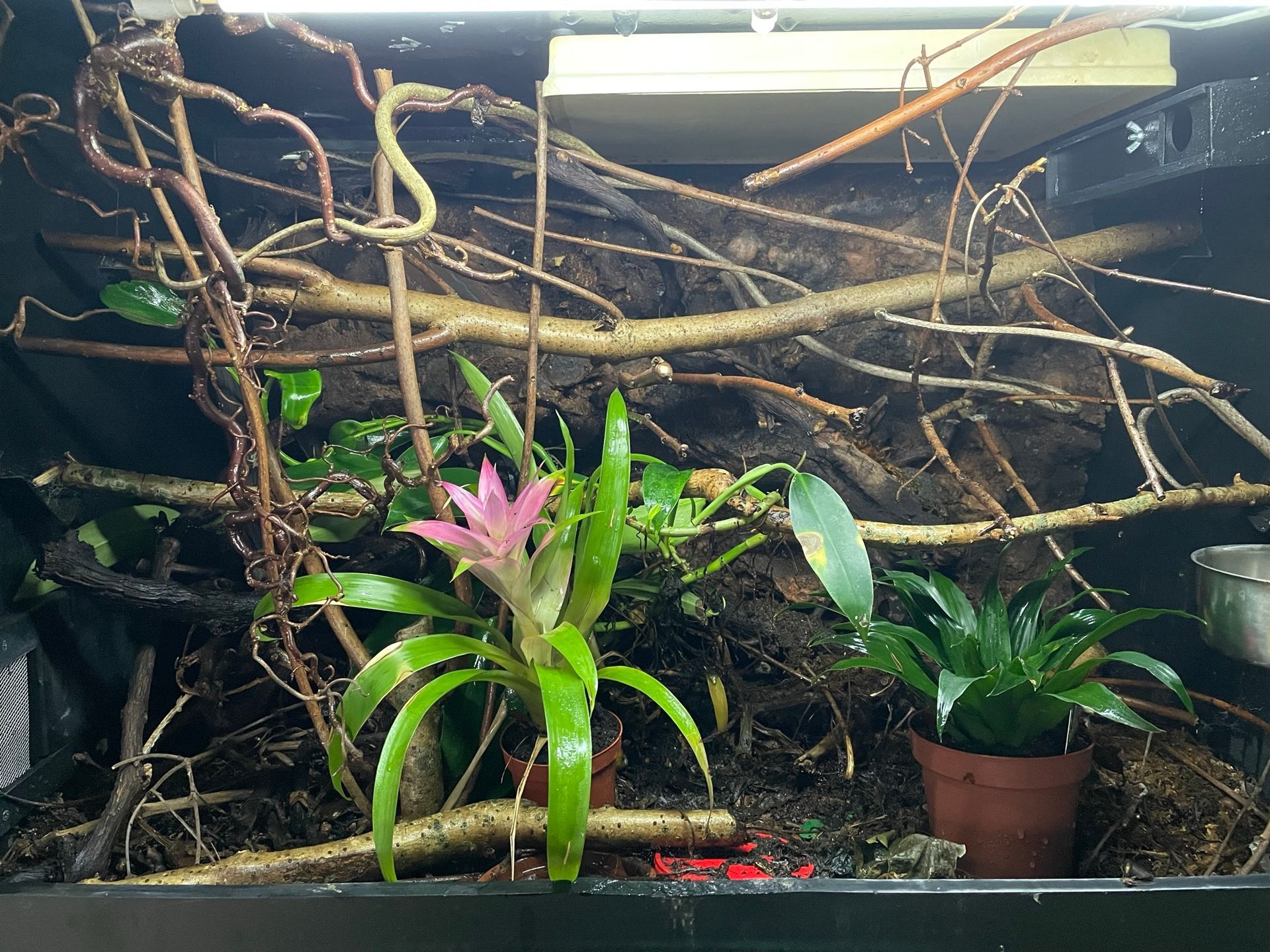
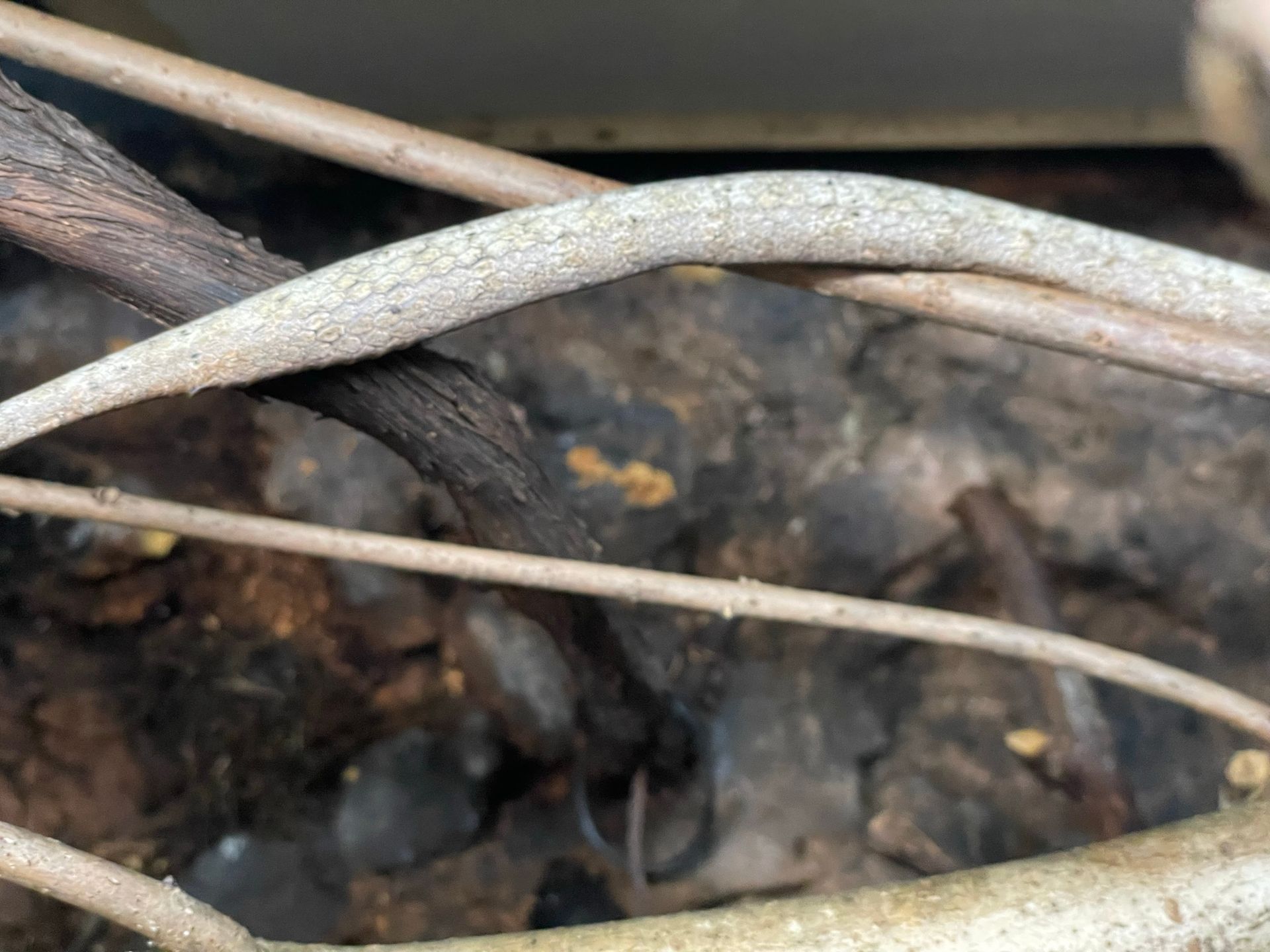
Photo above: Terrarium with 1.2 Oxybelis aeneus.
Photo below: Gravid female with 3 eggs
Oxybelis aeneus eggs in laying box
Various data on Oxybelis aeneus eggs