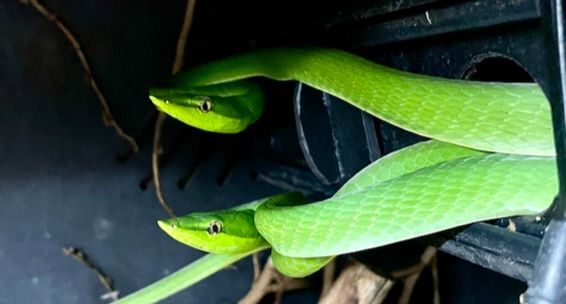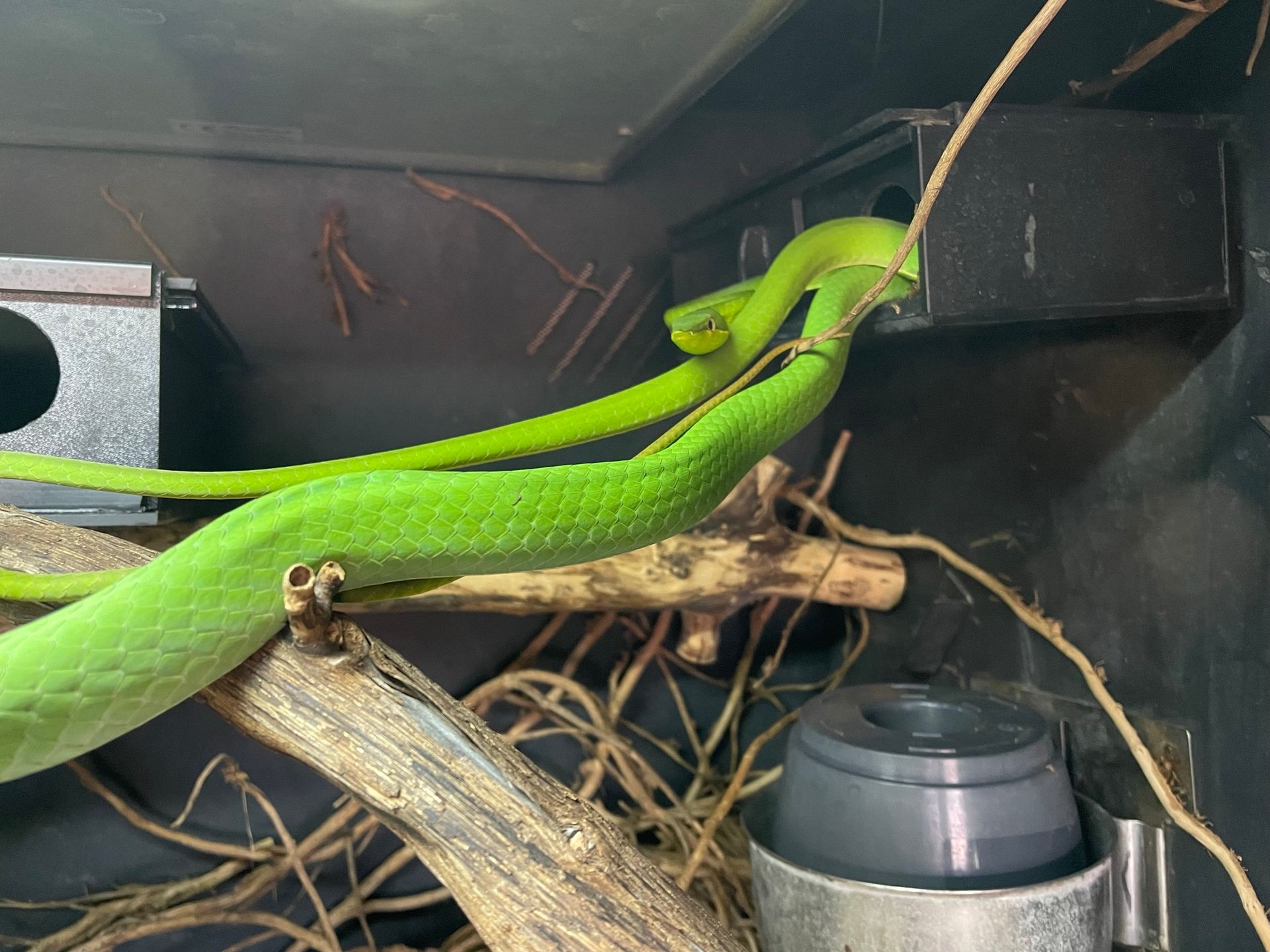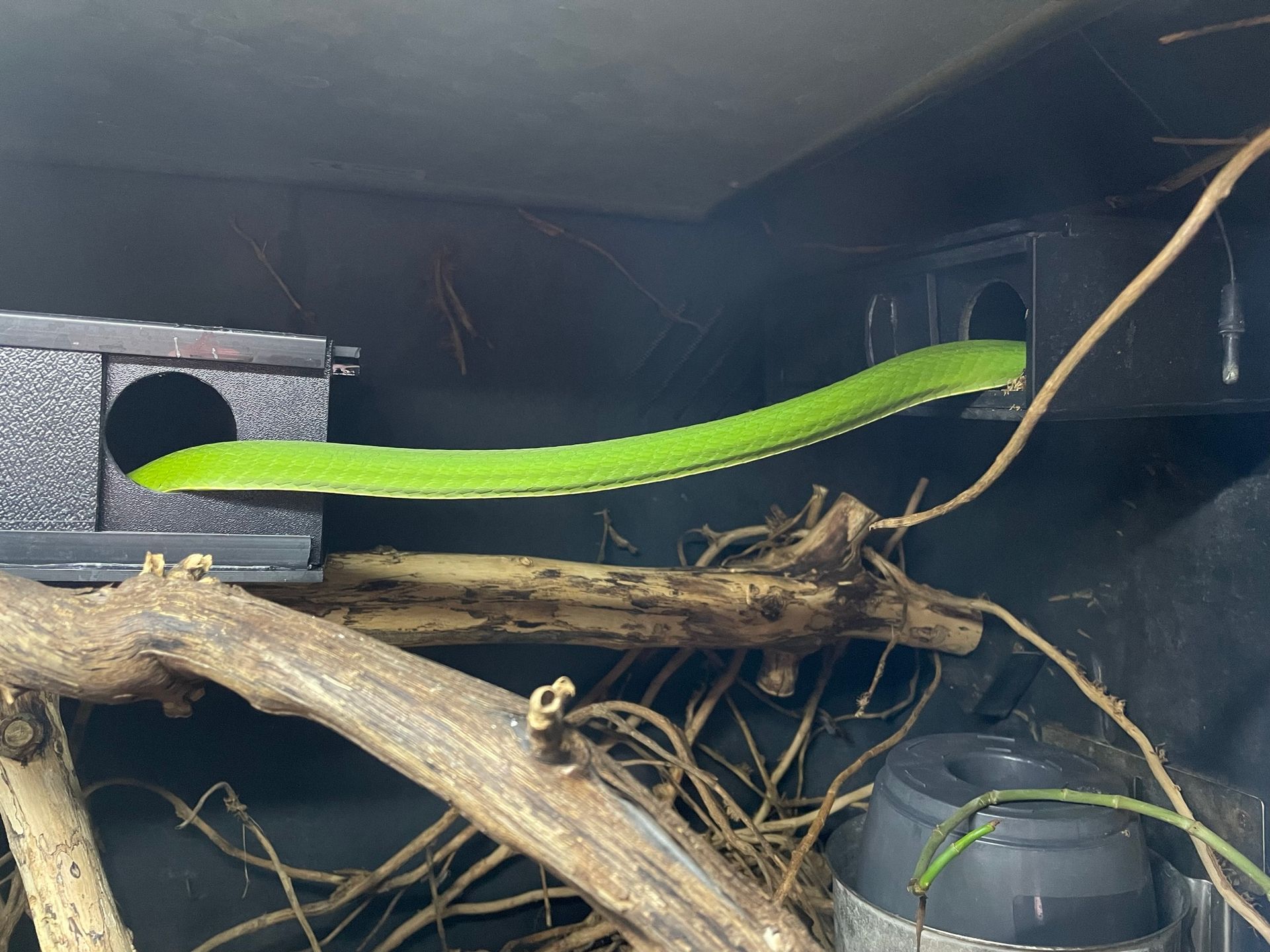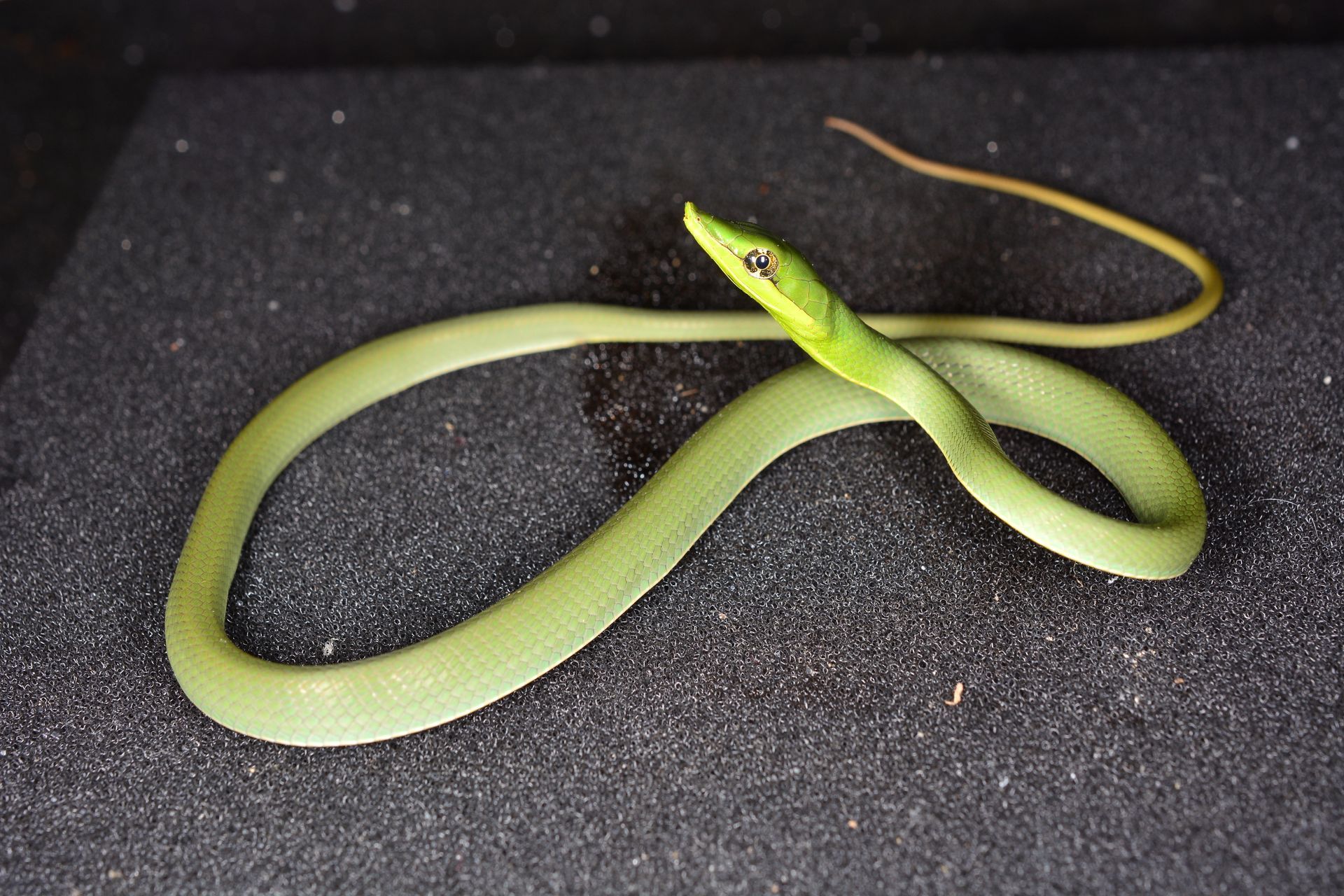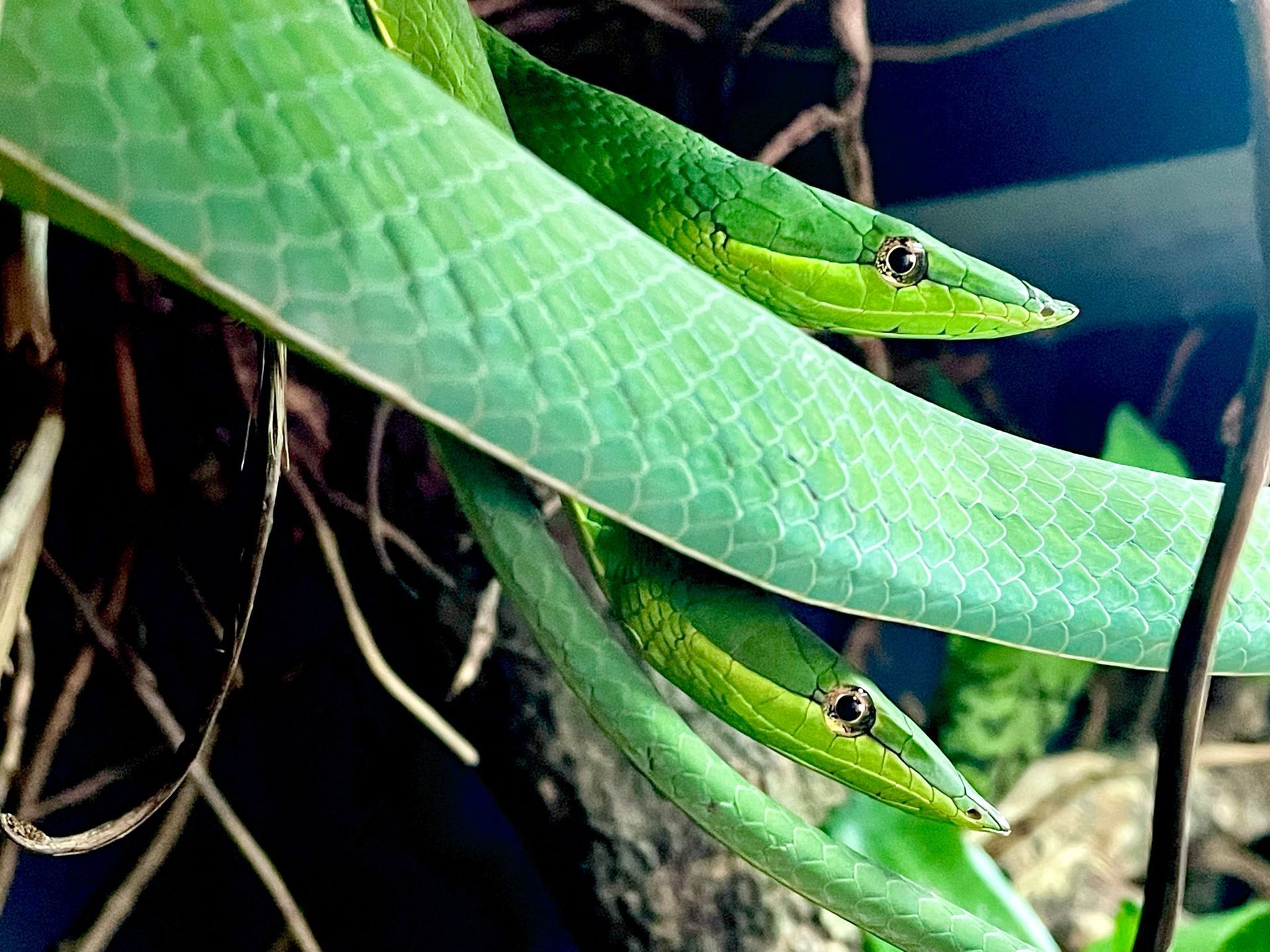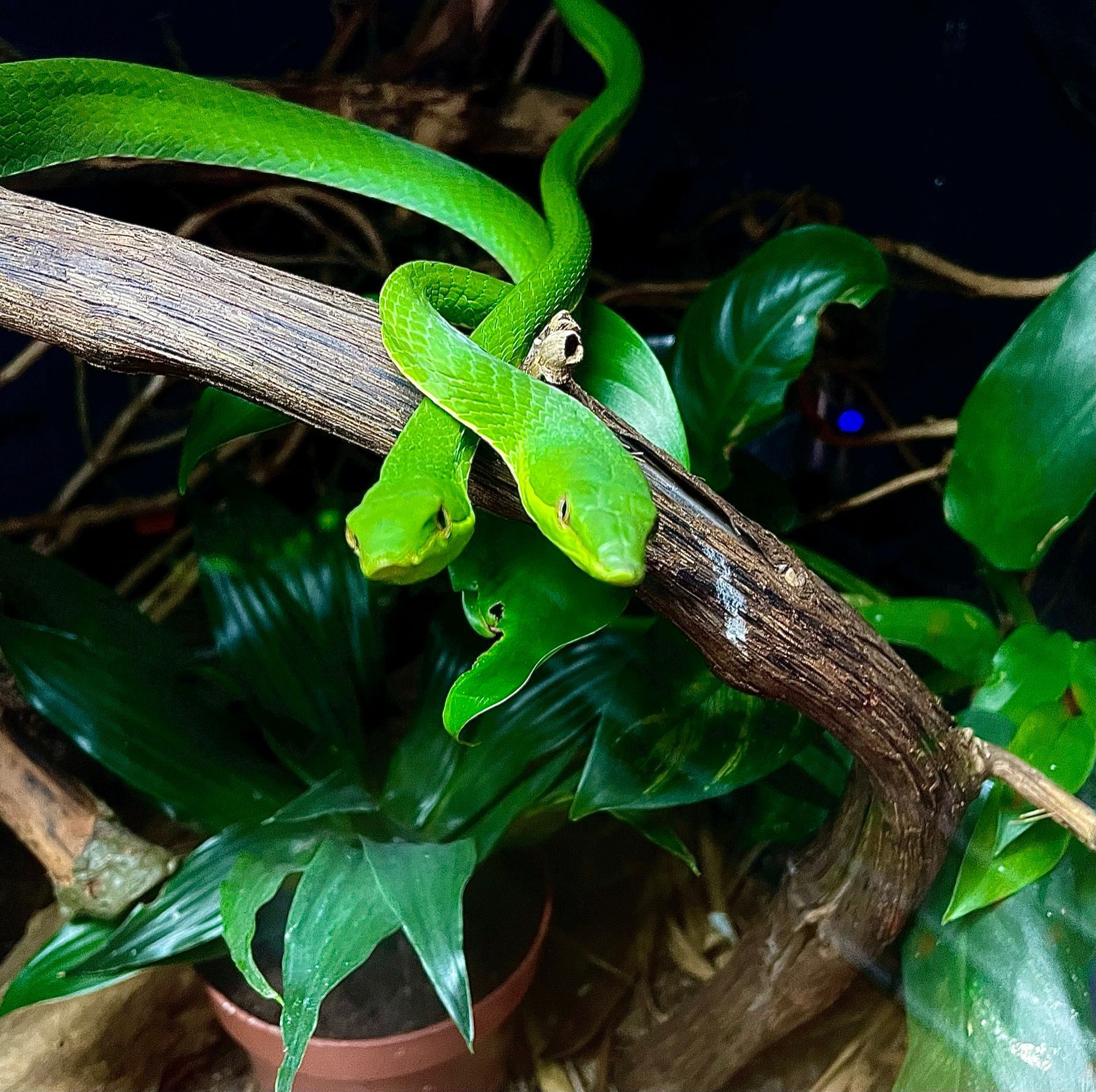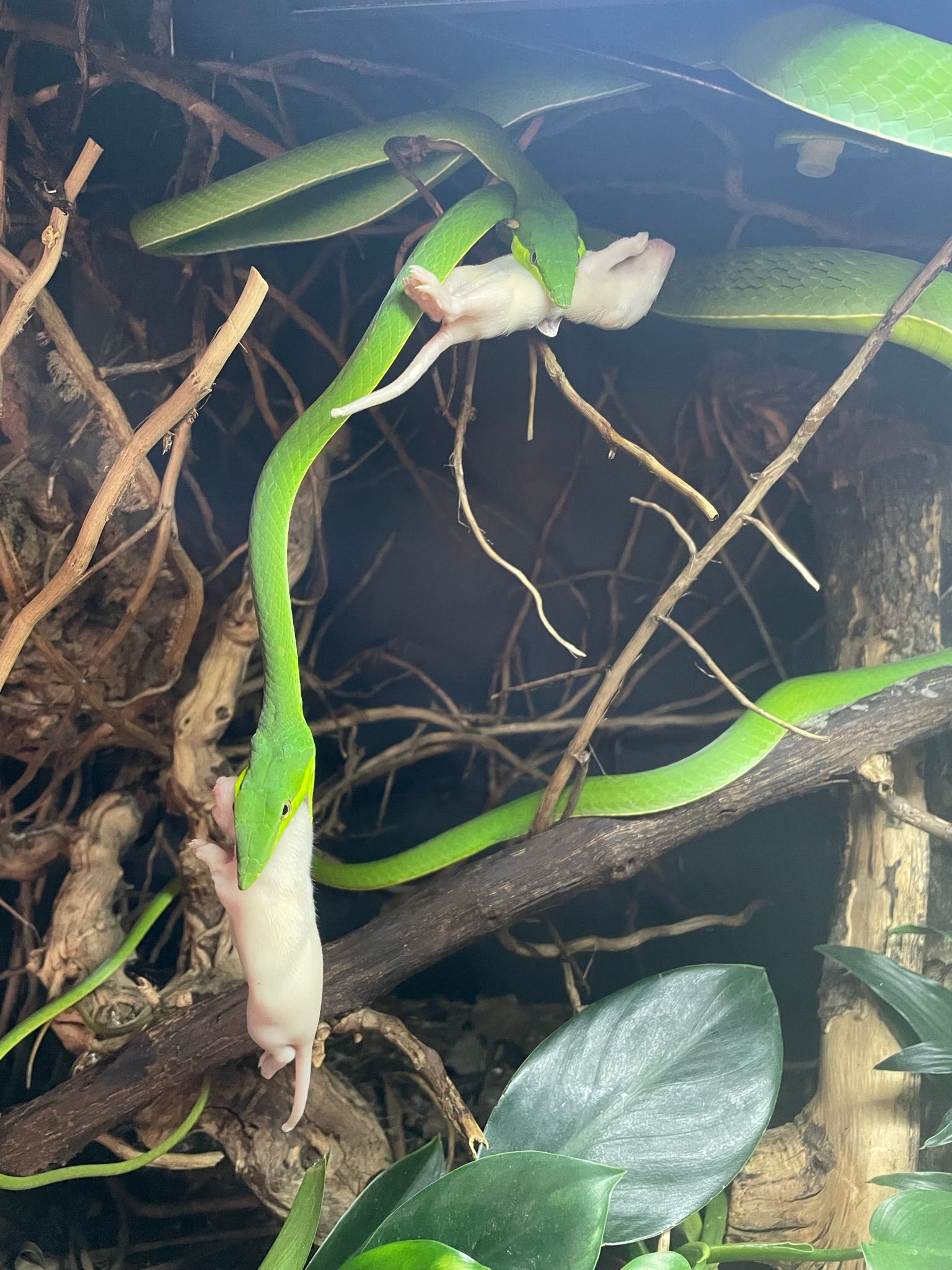
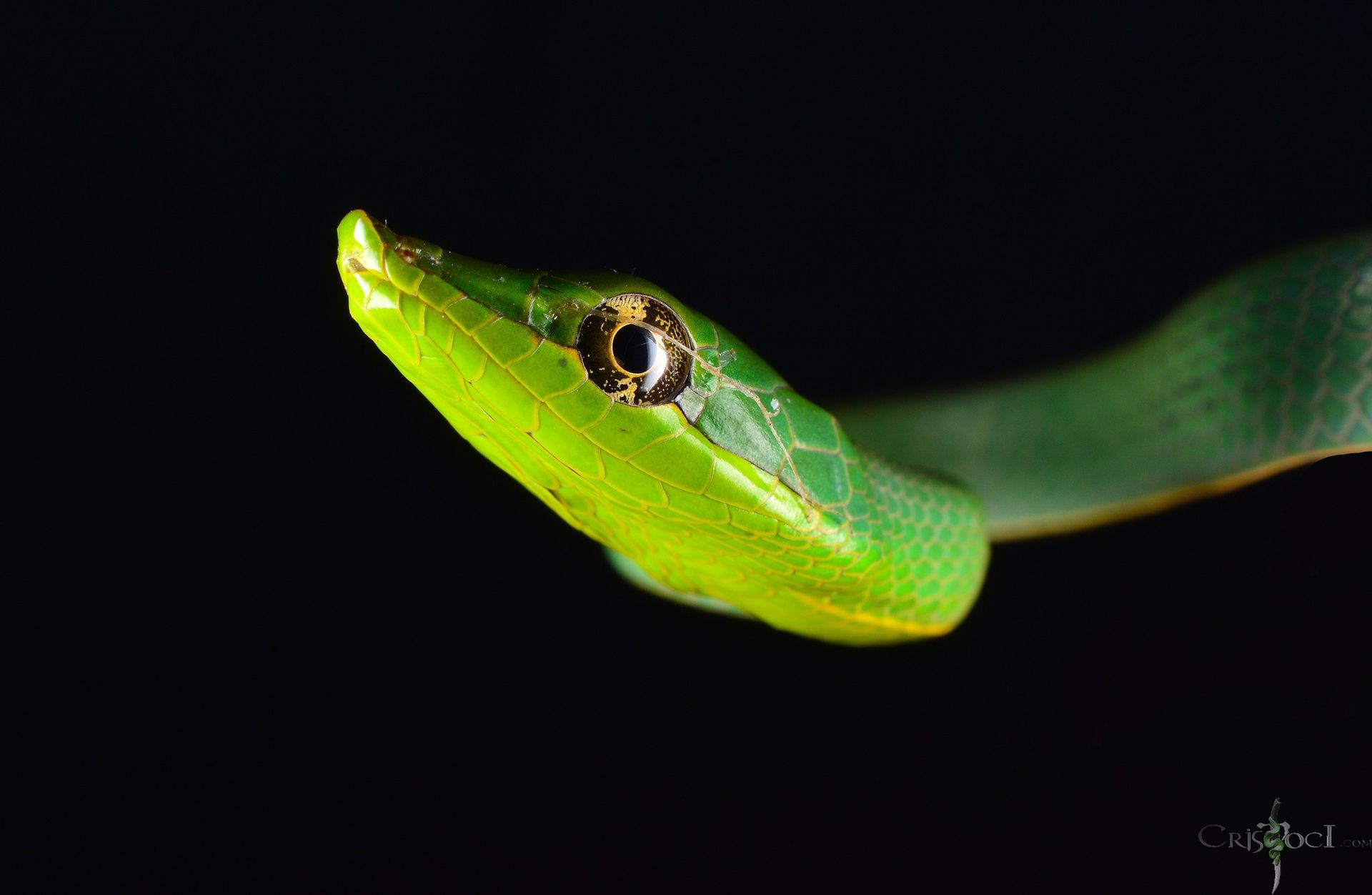
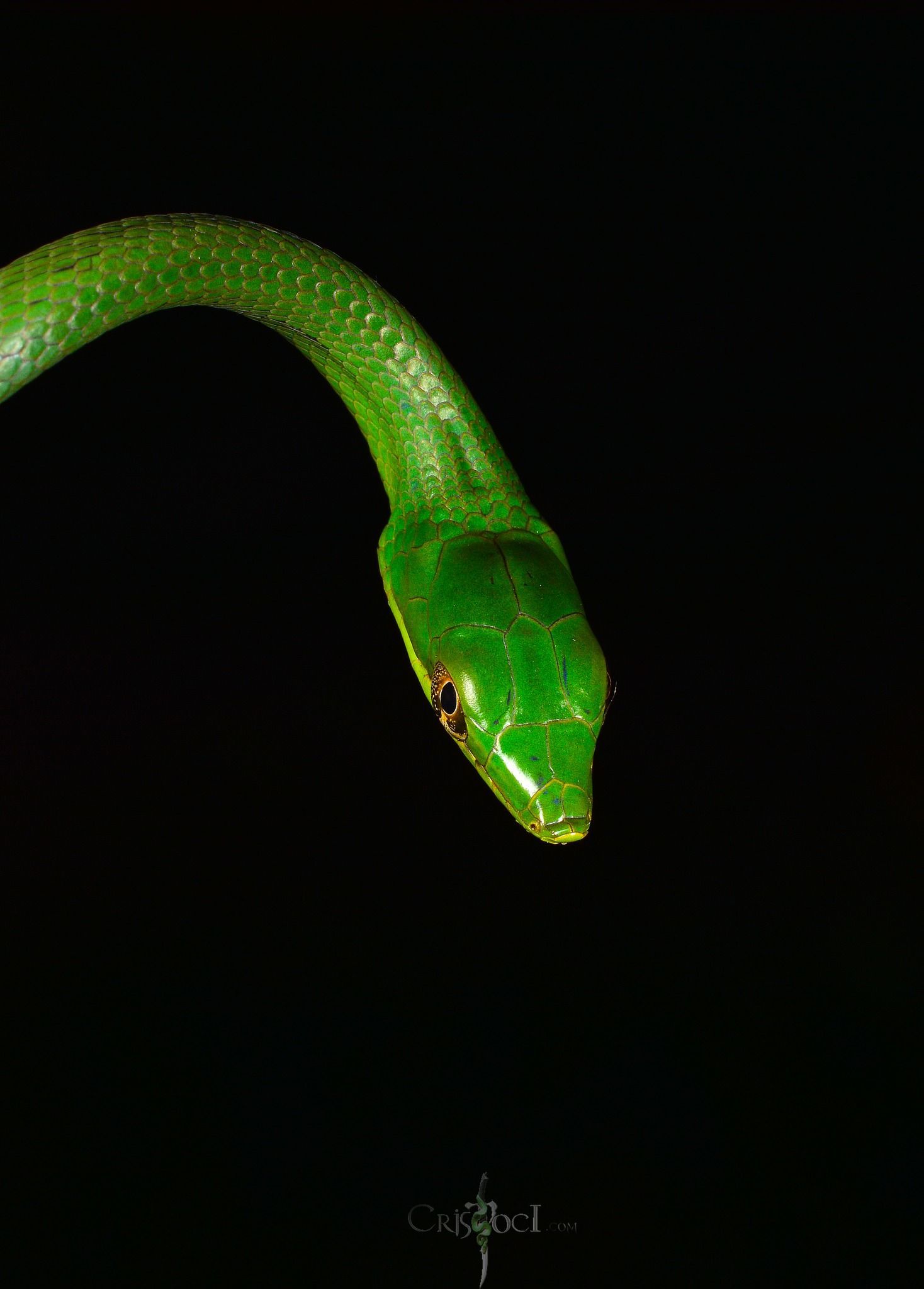
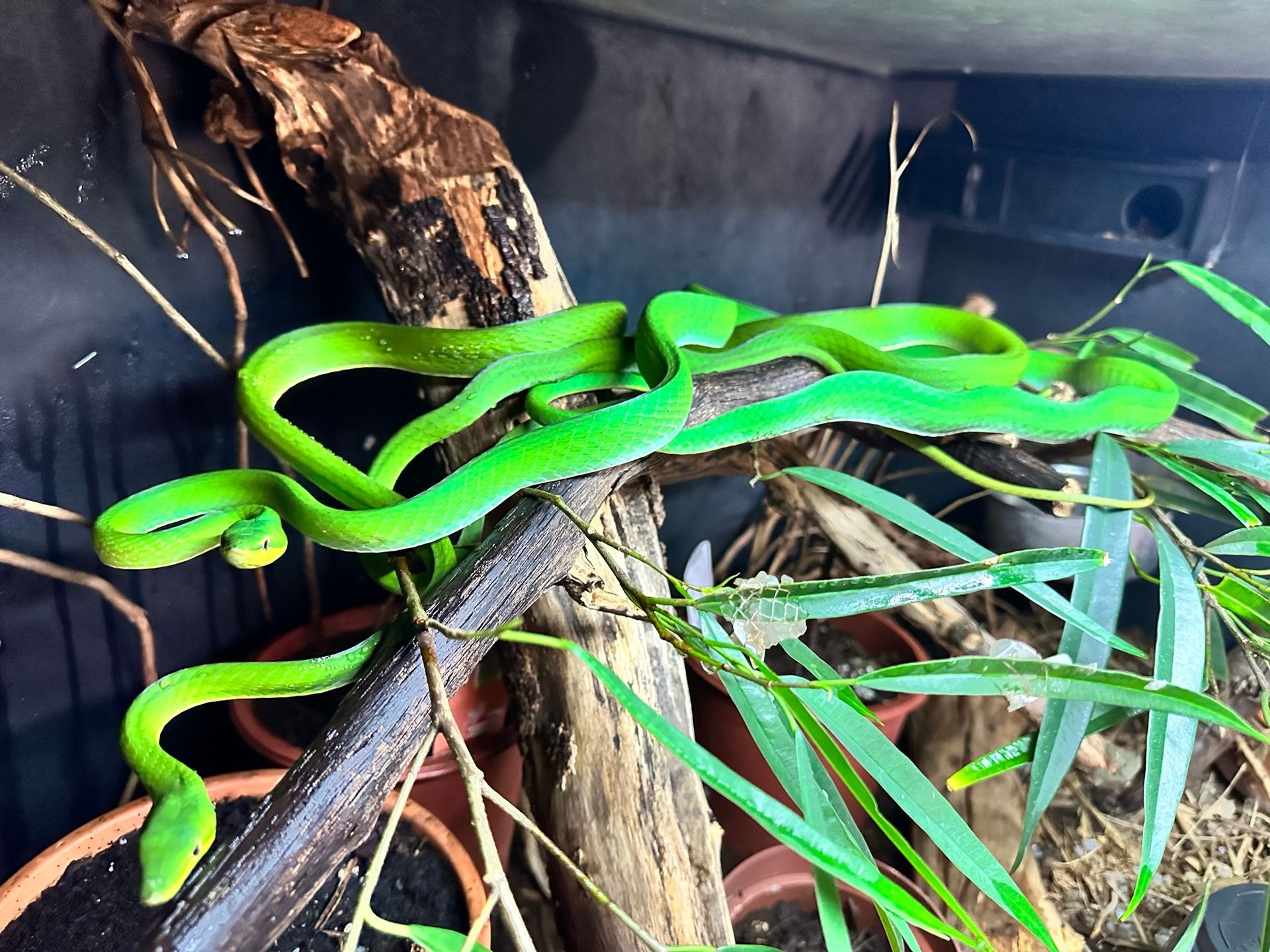
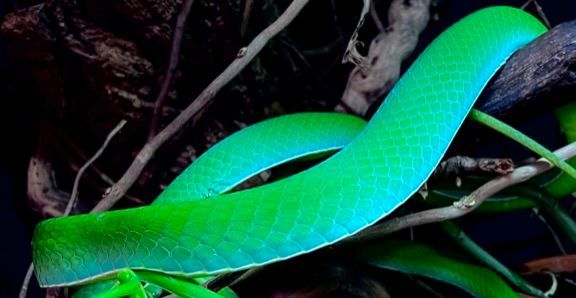
Oxybelis fulgidus pair
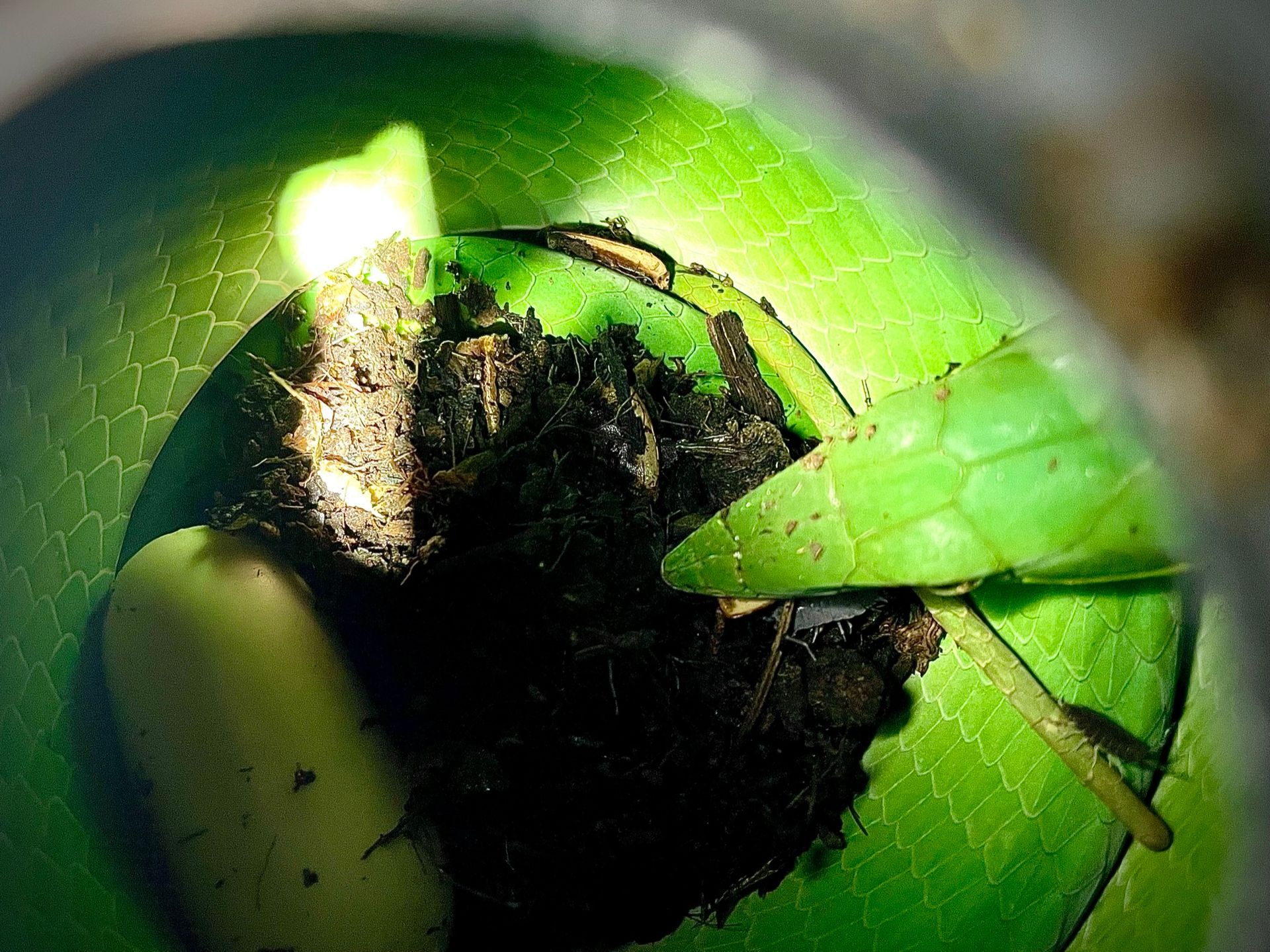
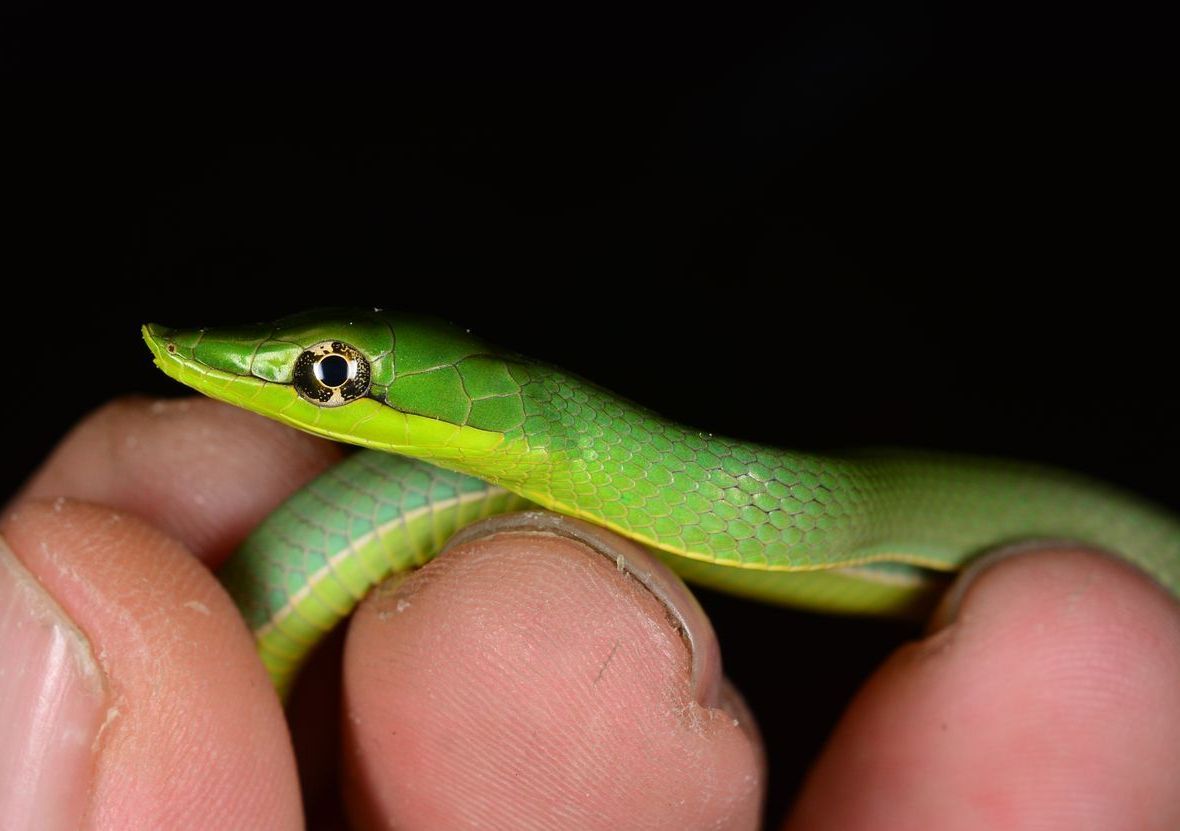
Oxybelis fulgidus – Breeding report 2023
Husbandry
| Parameters | Value |
|---|---|
| In my care since | 30.05.2021 |
| Daytime temperature | 26–29 °C |
| Night temperature | 21–22 °C |
| Humidity | 65–90 % |
| First egg-laying | 29.05.2023 |
| Clutch size 1 | 2 eggs |
| Clutch size 2 | 8 eggs |
| Incubation | 27–28 °C |
| Incubation Humidity | 99 % |
| Hatching | Day 87–90 |
| Hatchling weight | 7–7.9 g |
| Hatchling length | 35–36.5 cm |
⸻
Introduction
I have been keeping Oxybelis fulgidus since May 30, 2021.
The animals are housed in PVC terrariums by ProCages. The climate is kept tropical, with temperatures between 21 and 29 °C and humidity levels of 65–90%. Heating is provided by heat panels. I use UVA/UVB lamps for lighting. Depending on the season, the terrariums are also misted once or twice a day using an automated misting system. The entire setup is controlled by a Biotherm 2 thermostat.
⸻
The First Animals
Just a few days after acquiring my first pair, I suspected that the female might be gravid. Unfortunately, the animal died a short time later without any apparent warning signs. An examination revealed that she did indeed have several partially developed eggs inside her.
The male presented no problems and was quickly switched to rodents.
On 26 November 2021, I had the opportunity to acquire another female. This animal was considerably smaller than my first female and also smaller than the male I already had.
This female also readily accepted rodents. Both animals fed reliably, shed regularly, and thrived. The female in particular grew rapidly, surpassing the male in both length and weight.
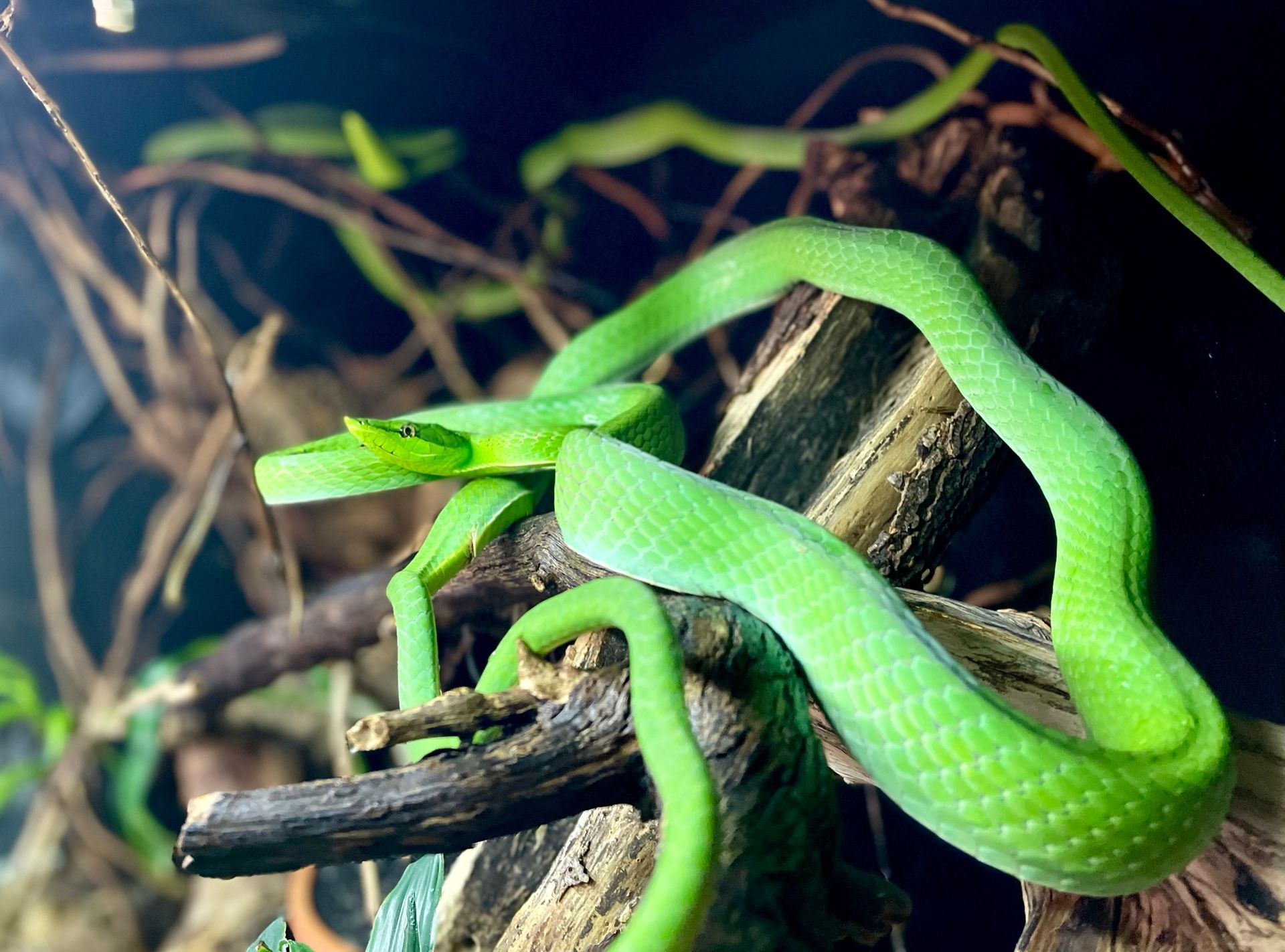
As she aged, the female developed a noticeably broader head and more blue colouring along her flanks.
⸻
Mating activity
The animals continued to be kept under climatic conditions as close as possible to those of their natural range. This also included simulating the rainy season.
From November 2022 onward, I observed a significant increase in activity in the enclosure. I did not witness a mating, but the behavior strongly suggested reproductive activity.
In late February 2023, this activity subsided. At that point, I first began to think that the female might be gravid, or at least showing pronounced follicular development.
⸻
Fasting period and parasite discovery
The female stopped feeding completely for approximately 56 days. At first, I suspected this was related to a parasite infestation.
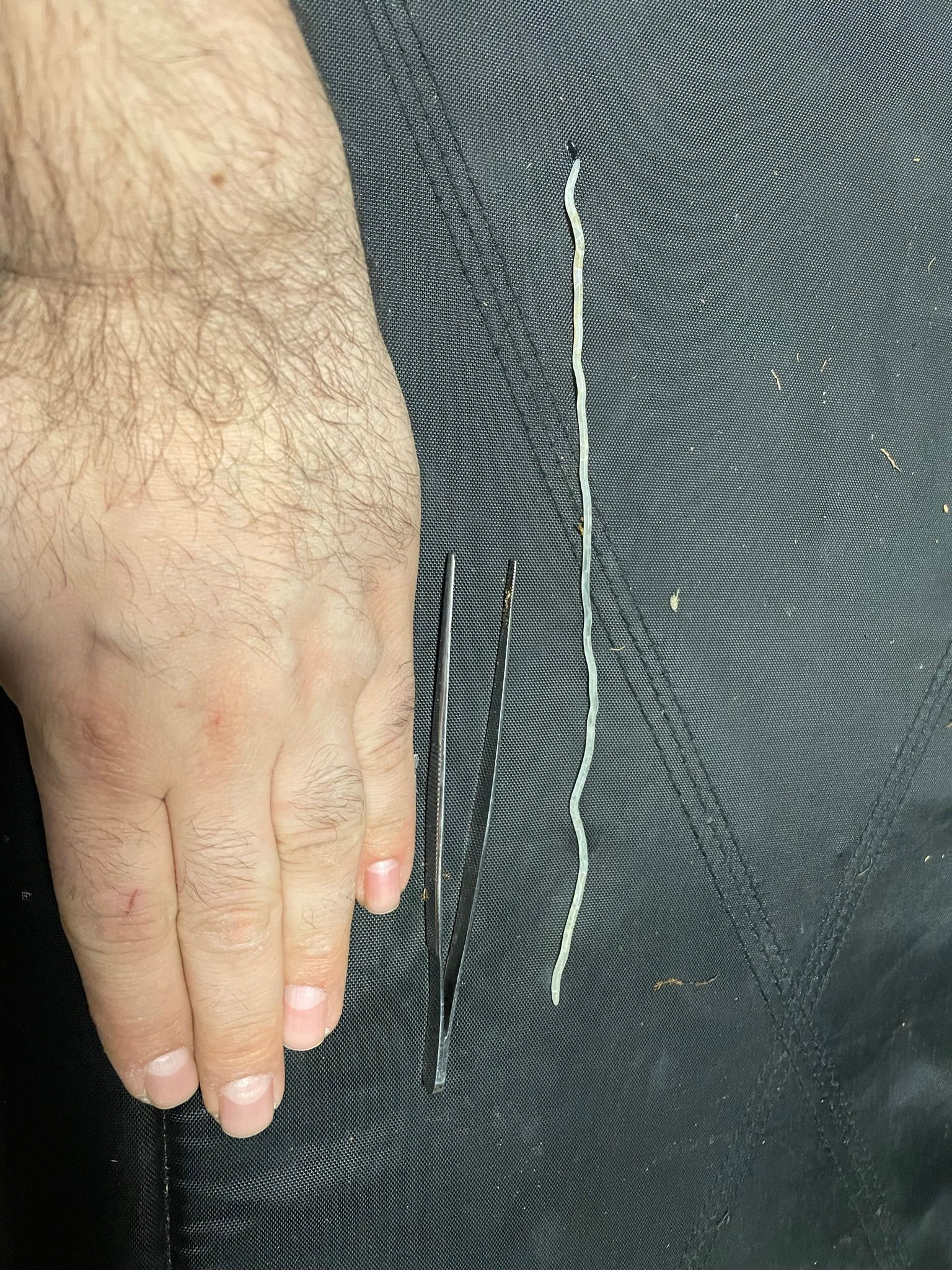
One evening, I happened to notice a large worm protruding from the snake’s mouth. I carefully removed the still-living parasite. The female then took food three more times before beginning another prolonged fasting period.
This second fast lasted another 65 days and only ended with egg-laying on 29 May 2023.
During this time, the female gained only slightly in girth. This initially left me unsure whether she was actually gravid or whether health problems were causing the changes.
When I gently palpated her, I was eventually able to feel two or three eggs, situated relatively deep in the body. As they already seemed quite large, I increasingly suspected she was gravid.
⸻
Behaviour before egg-laying
During the last two weeks before laying, the female’s behavior changed noticeably. She spent more time on the ground and regularly dug into the substrate with the tip of her snout.
She no longer used her previously preferred resting spot among the branches. Perhaps temperatures there had become too high by then. Instead, she spent most of her time in areas with temperatures between 26 and 27 °C. Daytime temperatures in the upper part of the terrarium reached 28 to 29 °C. At night, temperatures were between 21 and 22 °C.
While the male resumed feeding regularly after a 46-day fast, the female continued to refuse all food.
On May 9, 2023, the female shed. I recorded this shed as PLS (Post-Laying Shed).
Since there are few documented reports of breeding Oxybelis fulgidus, I was unsure how much time would pass between the PLS and egg-laying. With most of my colubrids, eggs are laid about six days after shedding.
Last year, my Oxybelis aeneus laid three eggs twelve days after shedding. The clutch was laid high up in the enclosure, directly beneath the heat panel.
During my research, however, I found reports that Oxybelis fulgidus also sometimes lay their eggs on the ground beneath leaf litter or other cover.
Since the female had been regularly visiting the bottom of the enclosure for weeks, even resting there at night, I added several more hiding places on the floor.
⸻
Egg Laying
About 20 to 21 days after the PLS, the female accepted an inverted plastic pot as an egg-laying site. It was only about 15 cm high and just under 12 cm in diameter.
She had briefly inspected this spot the day before. She finally laid her eggs during the night of May 29–30, 2023.
The female was tightly coiled, much like a tree python. The two eggs lay between the coils, near the middle of her body.
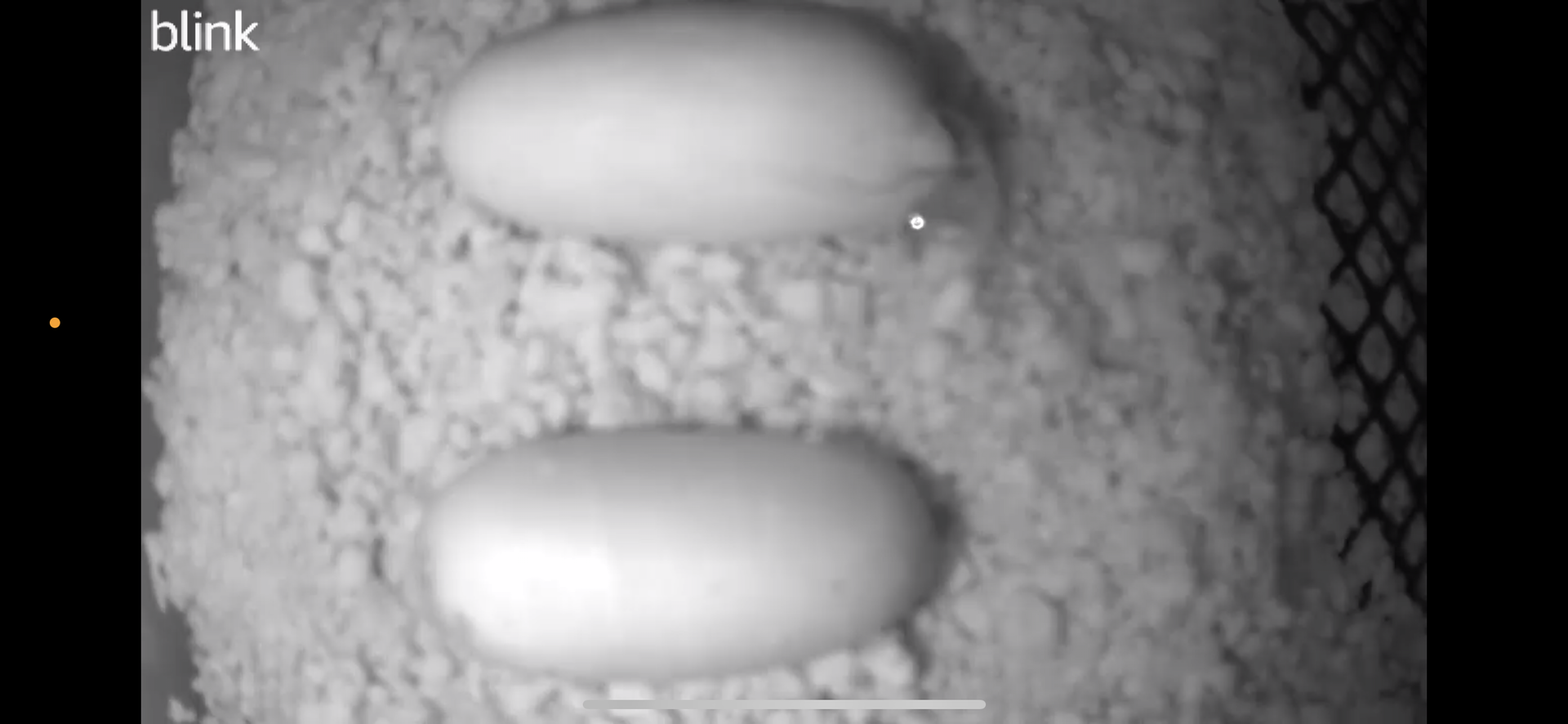
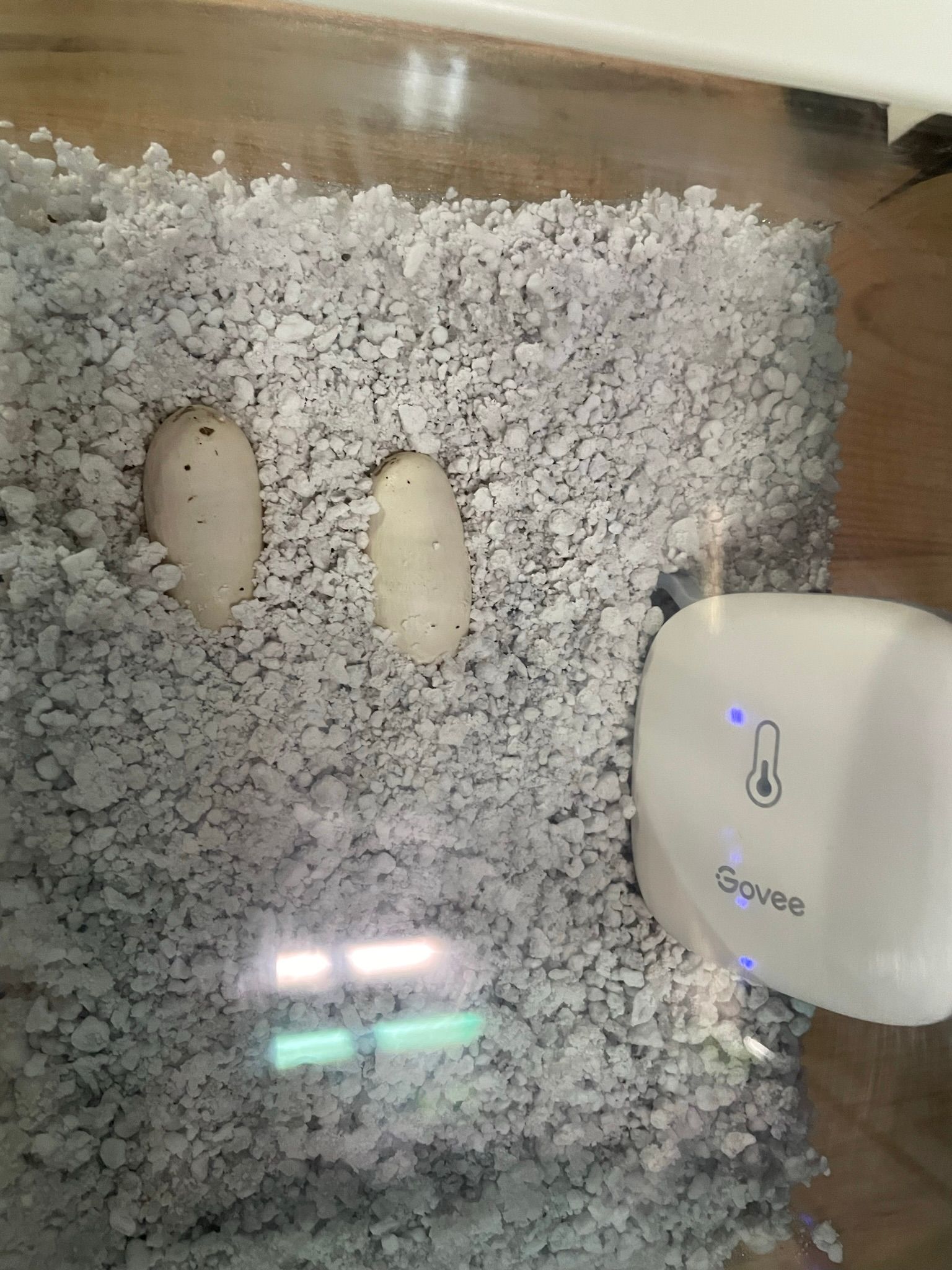
The substrate consisted of loose soil. The eggs were partly buried and were not stuck together. I suspect this was due to the soft substrate.
The female initially did not leave the laying site, was in very good condition, and continued to appear remarkably robust.
After removing the eggs, I could not feel any more eggs. To be sure, I nevertheless had the animal examined using imaging by Ralf Michling in the Wilhelmshaven area.
Fortunately, the examination confirmed that no eggs had been retained.
Two eggs may initially seem few for this species, as the literature often reports clutch sizes of five to twelve eggs. However, since this was probably the female's first clutch, the small clutch size may well have been normal.
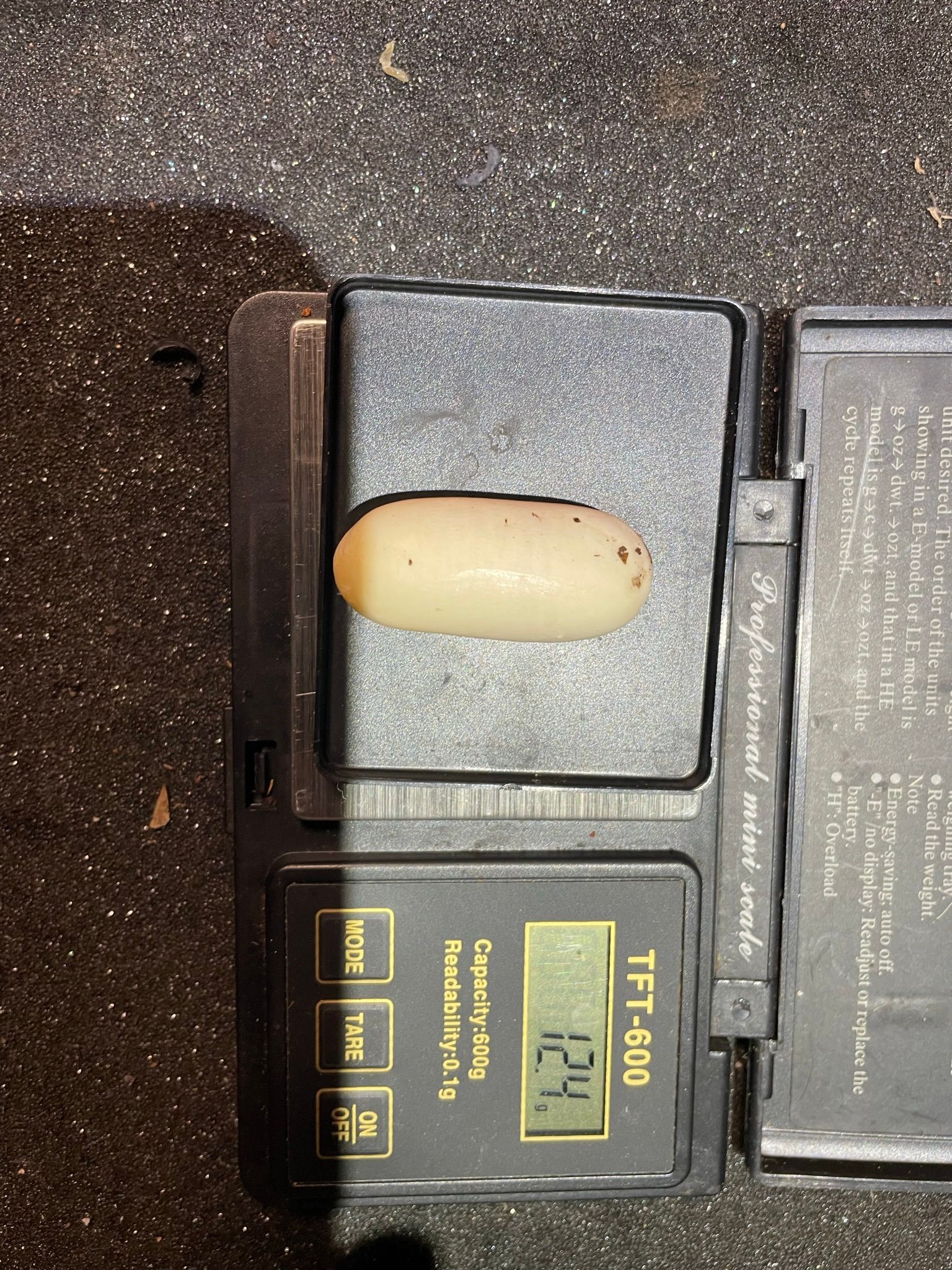
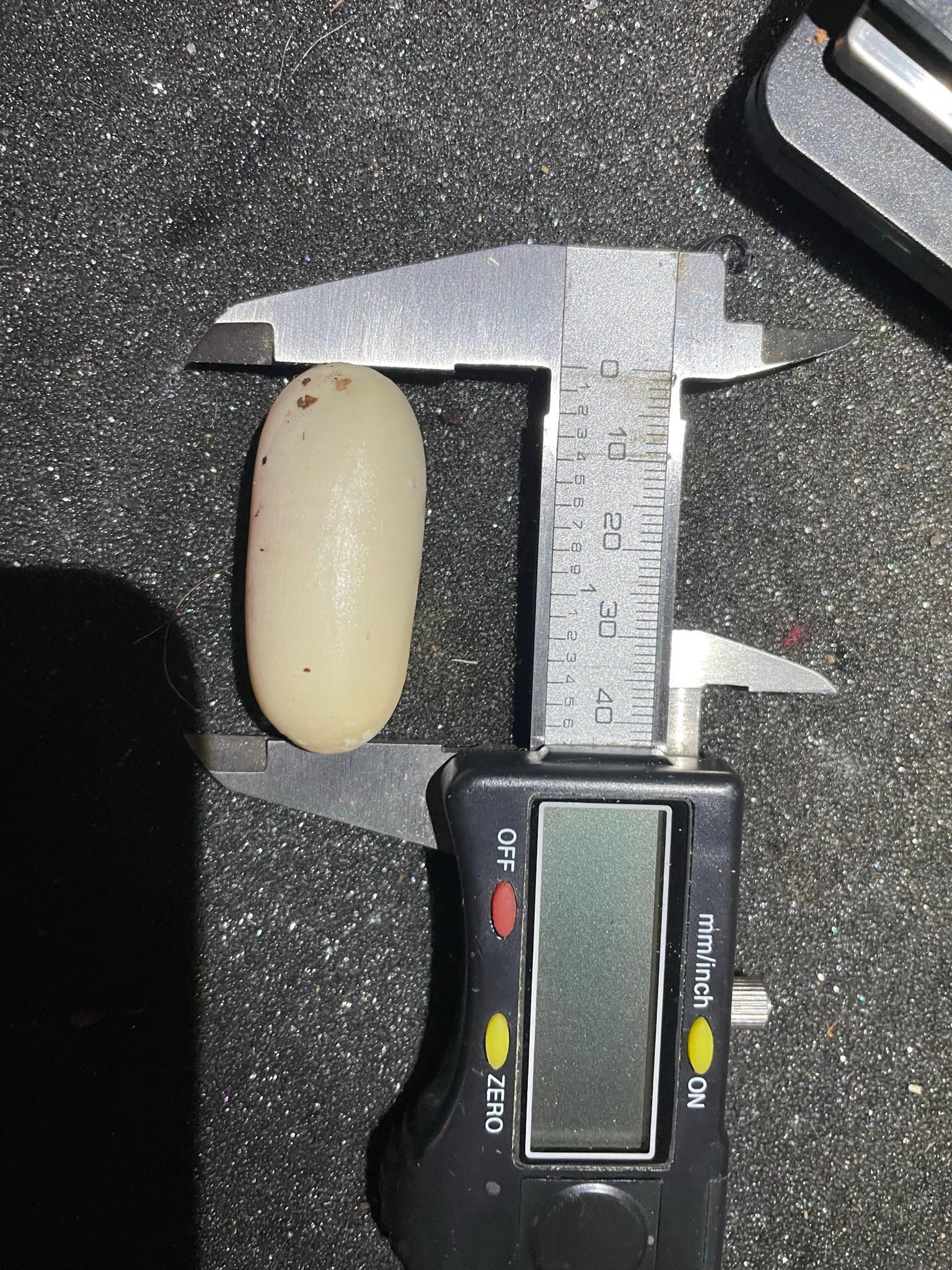
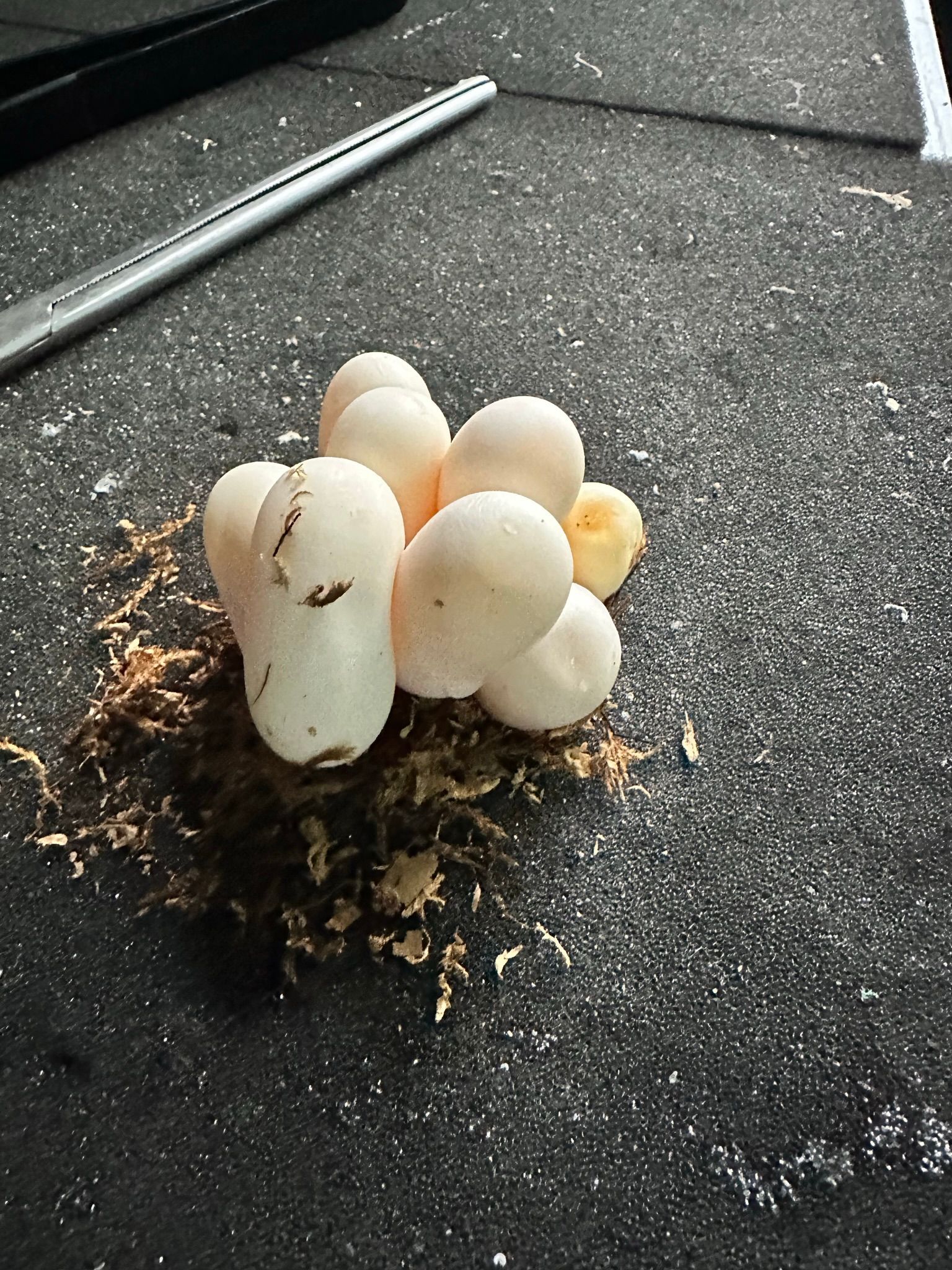
The eggs weighed approximately 12.4 to 13 g and measured about 44 mm long and 20 mm in diameter.
⸻
Incubation
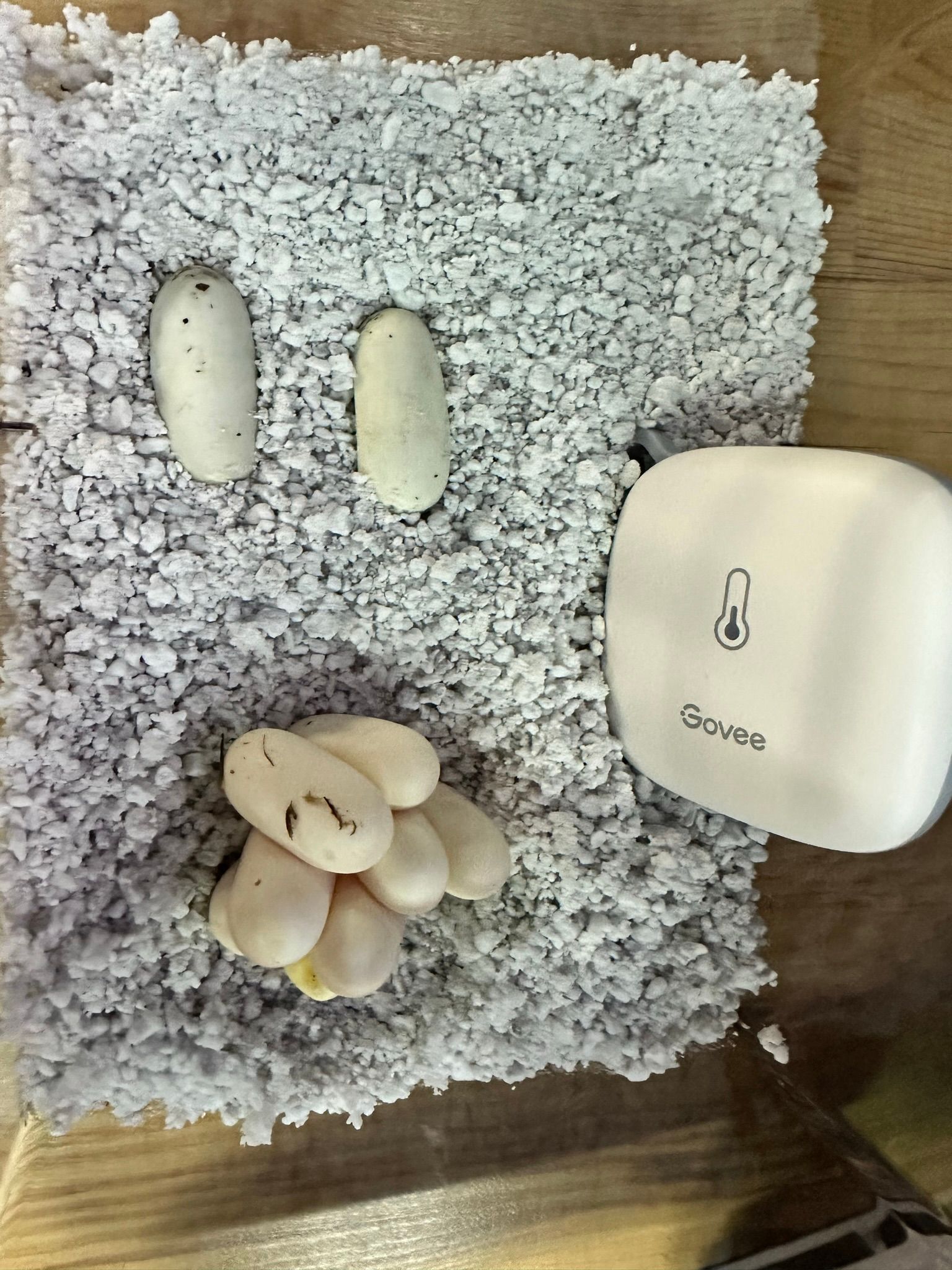
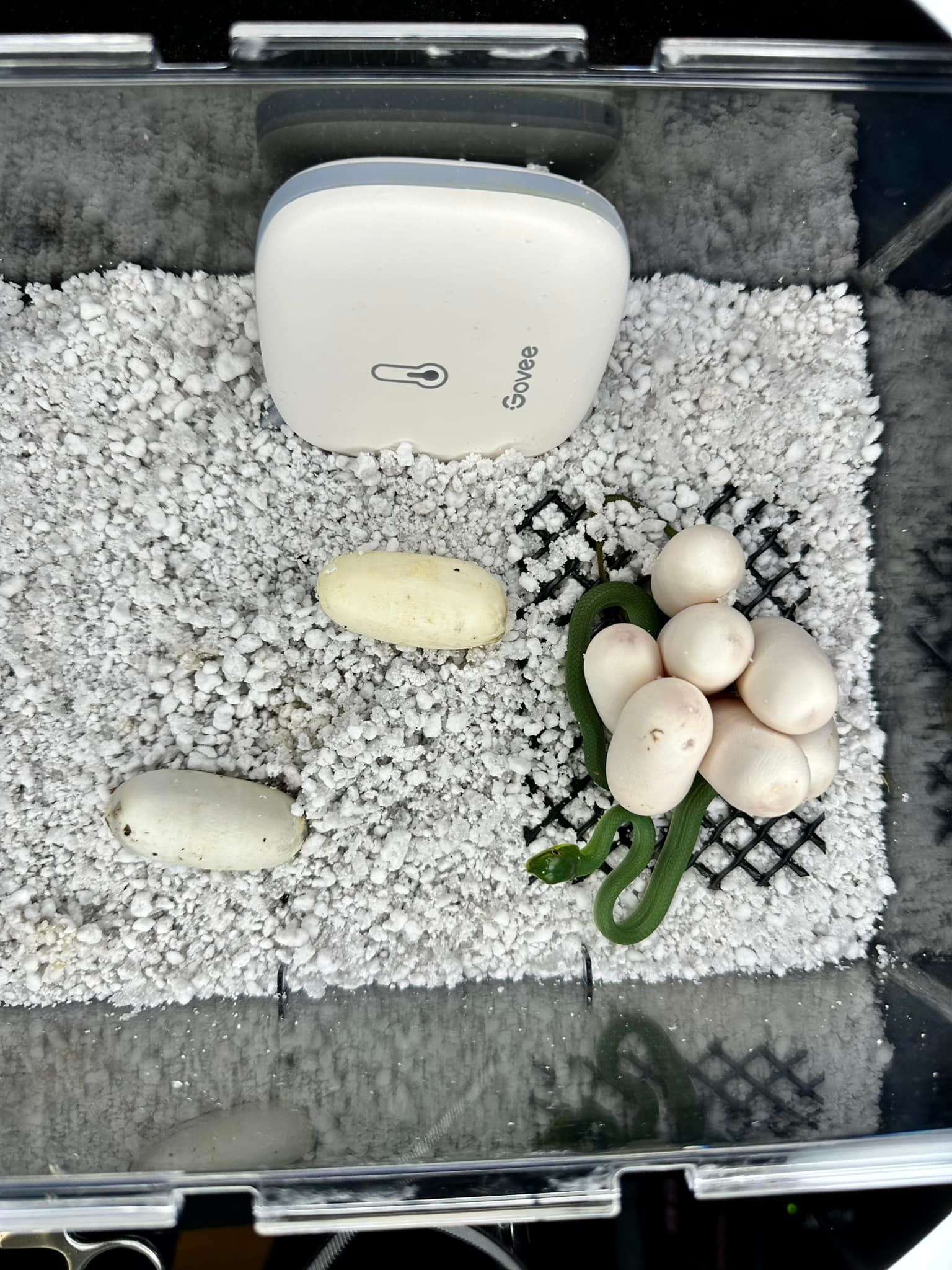
Because of the way the eggs were laid, I decided to embed them halfway in perlite and incubate them at 27 to 28 °C.
I normally prefer contact-free incubation without direct contact with the substrate. Both my Oxybelis aeneus and the first clutch of my Leptophis ahaetulla were laid suspended and were ideally suited to this method.
Humidity remained constant at around 99%. The enclosure was ventilated every two weeks.
Temperatures were monitored using a data logger.
- Minimum: 26.6 °C
- Maximum: 28,8 °C
- Average: 27,8 °C
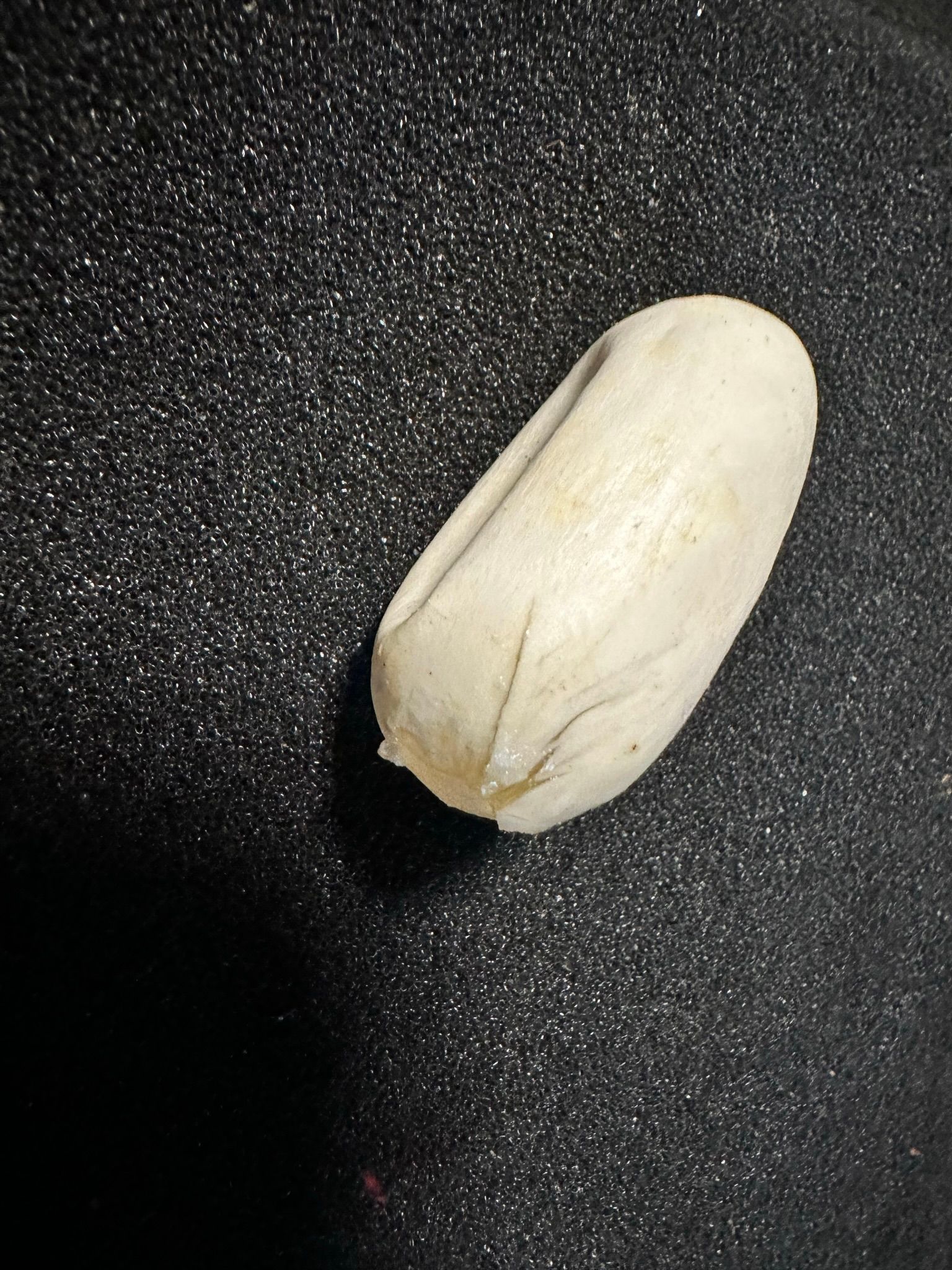
On day 80 of incubation, the eggs began to dent slightly. At the same time, damp spots appeared at the poles of the eggs, presumably caused by the hatchlings' first internal cuts.
As these spots became discolored and appeared somewhat mold-like, I inspected the eggs particularly carefully on day 83. I then made sure that both ends of the eggs were exposed.
⸻
Hatching
Juvenile 1
On day 87 of incubation, at 22:36, the first slit appeared in the egg.
About twelve hours later, the hatchling had completely emerged from the egg.
Data:
- Weight: 7.9 g
- Length: 36.5 cm
The animal already showed a pronounced temperament and was particularly bitey immediately after hatching.
In colour, it appeared noticeably greyer and less blue than its parents.
Hatchling 2
The second hatchling pipped on 26.08.2023, the 89th day of incubation, at around 10:00.
The slits were also all located at the end of the egg.
The hatchling remained in the egg for another 22 hours, showing only the tip of its nose.
It emerged from the egg completely at 07:40 on 27 August 2023.
Data:
- Weight: 7 g
- Length: approx. 35 cm
A separate report on raising the hatchlings will follow.
⸻
Second Clutch of 2023
During a family vacation in Greece, the female entered another shedding cycle.
Based on the recordings from my security camera, I date the shed to 01.08.2023.
After our return on 07.08.2023, I checked all the terrariums and technical equipment. At first, I didn't notice anything unusual.
On 11 August, I noticed that the originally assumed laying site had been moved and overturned. Since the female had already laid eggs about 75 days earlier and I had found no reports of multiple clutches within a single season, I initially paid little attention to it.
On 13 August, the female unexpectedly refused food. At the same time, she once again showed increased restlessness, similar to how she behaved before laying her first clutch.
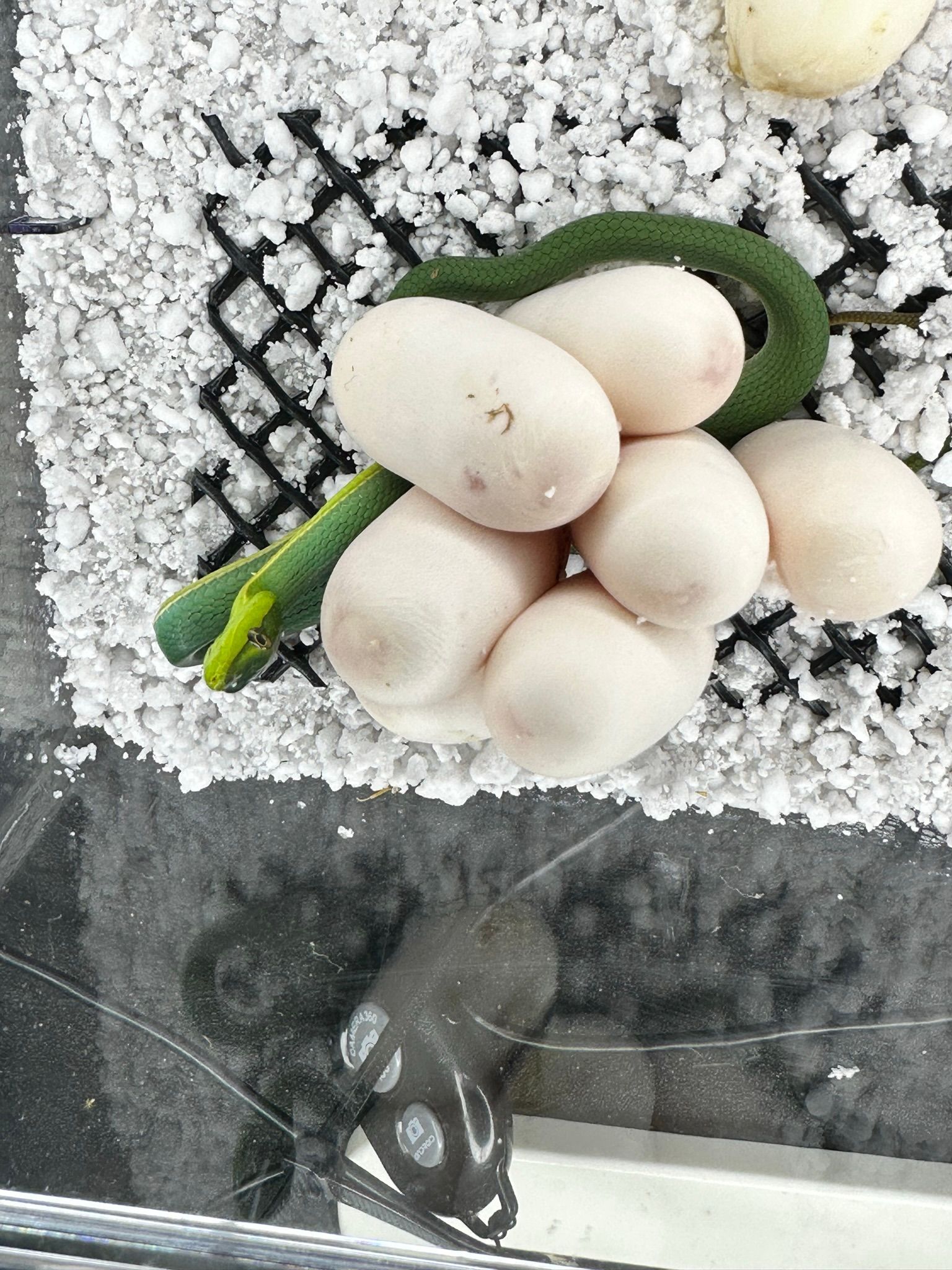
I then checked a hide in the upper part of the terrarium and found eight freshly laid eggs, which were probably no more than two days old.
The eggs were transferred to the incubator immediately.
For the first time, I was able to observe in my animals that Oxybelis fulgidus can produce several clutches in a single season.
The second clutch was laid approximately 75 days after the first. Overall, the eggs were slightly smaller than those in the first clutch. One egg was considerably smaller than the others, but did not have the typical appearance of a slug.
During the subsequent inspection of other enclosures, I also discovered an unexpected clutch of Leptophis ahaetulla.
Several clutches per season also seem possible in this species.
The female had laid four eggs under a flowerpot on the ground. One had already been largely destroyed by isopods. The three remaining eggs had collapsed to varying degrees, but were also transferred to perlite and incubated.
The small egg from the second Oxybelis clutch later began to mould and was removed as a precaution.
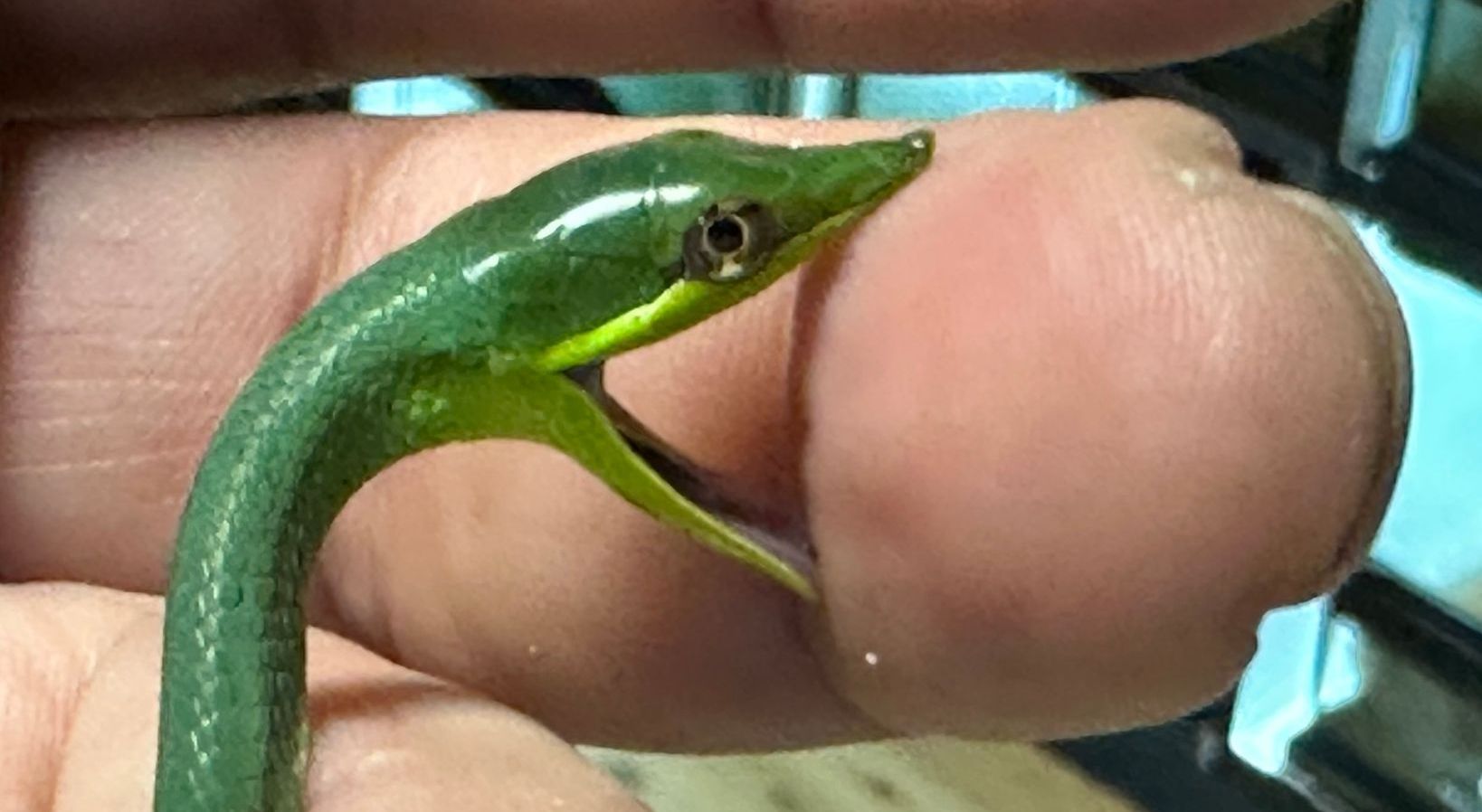
More pictures of Oxybelis fulgidus