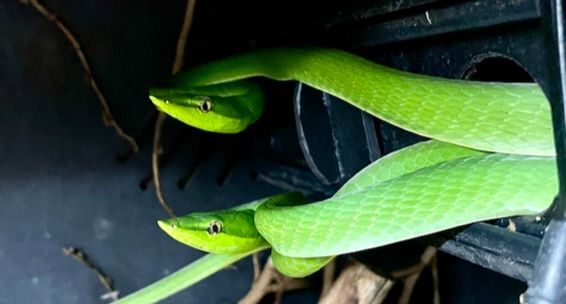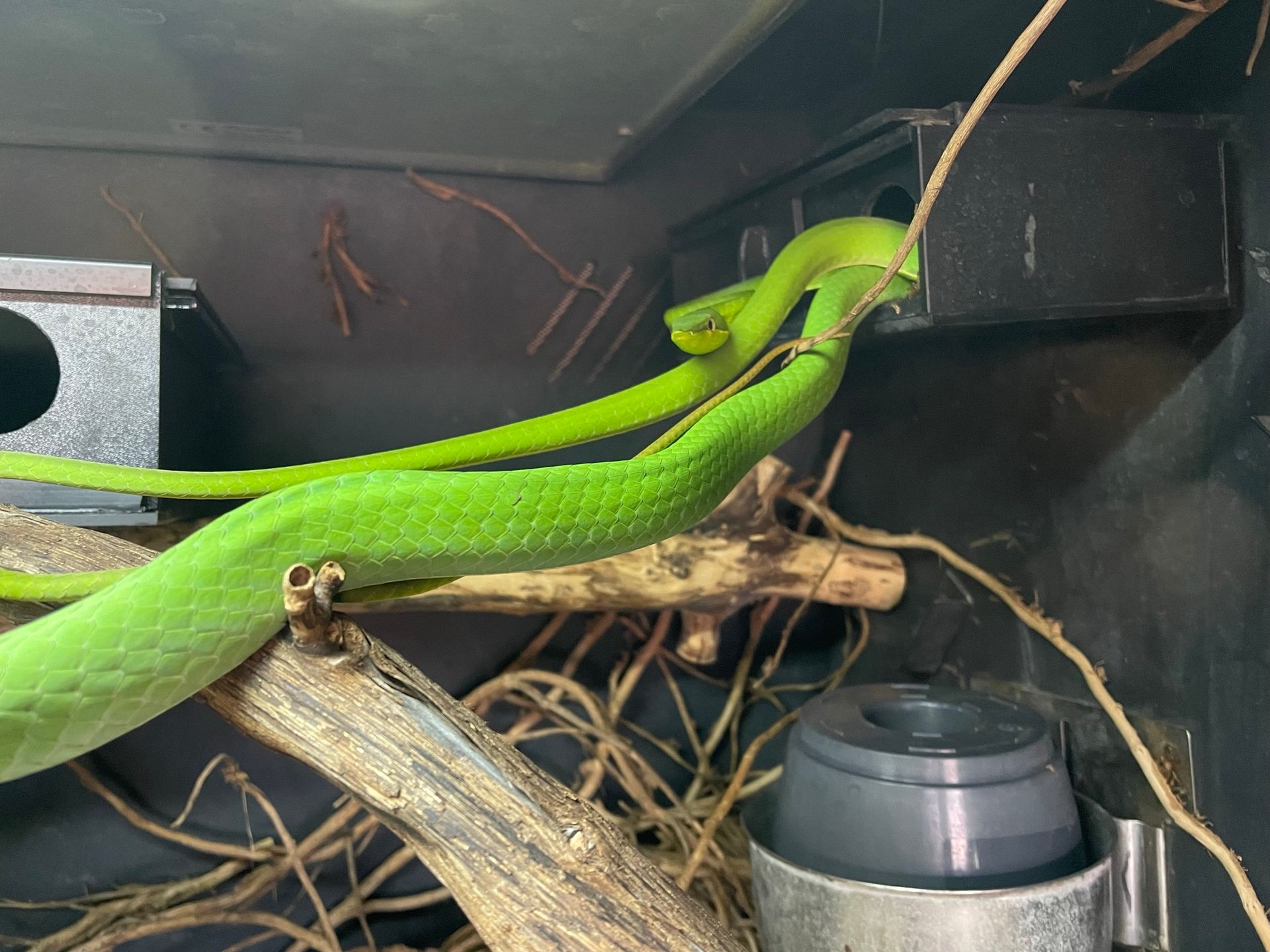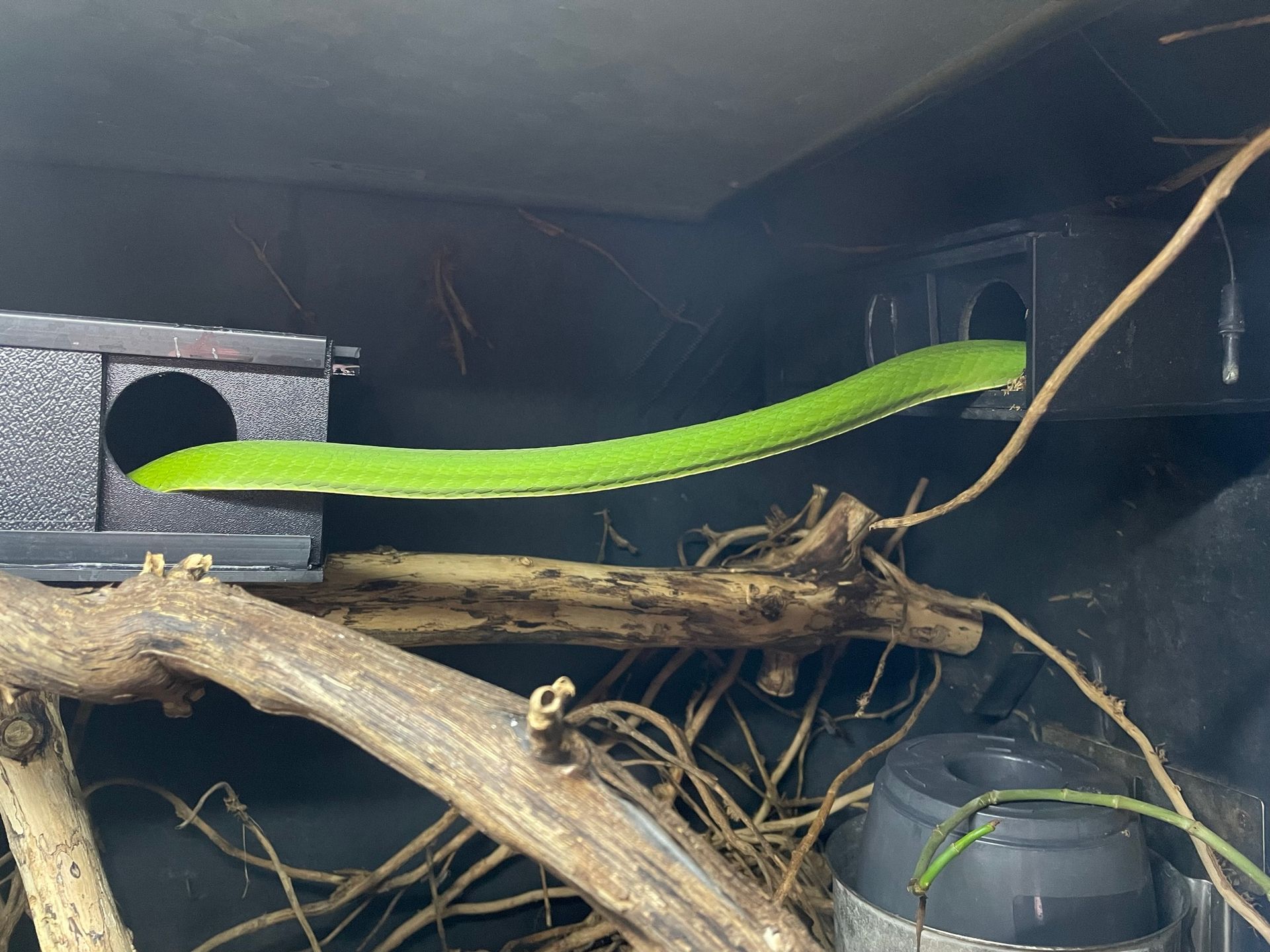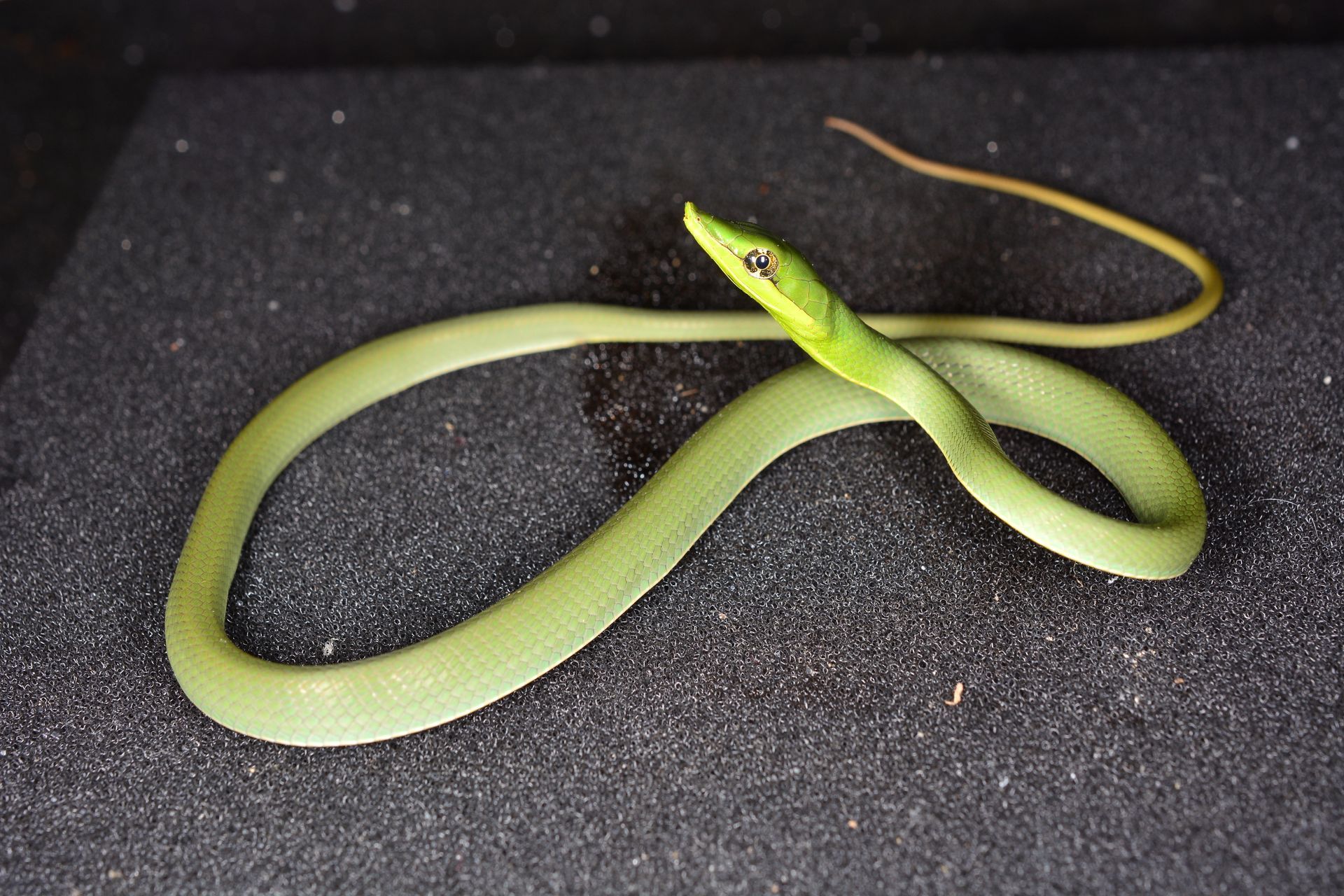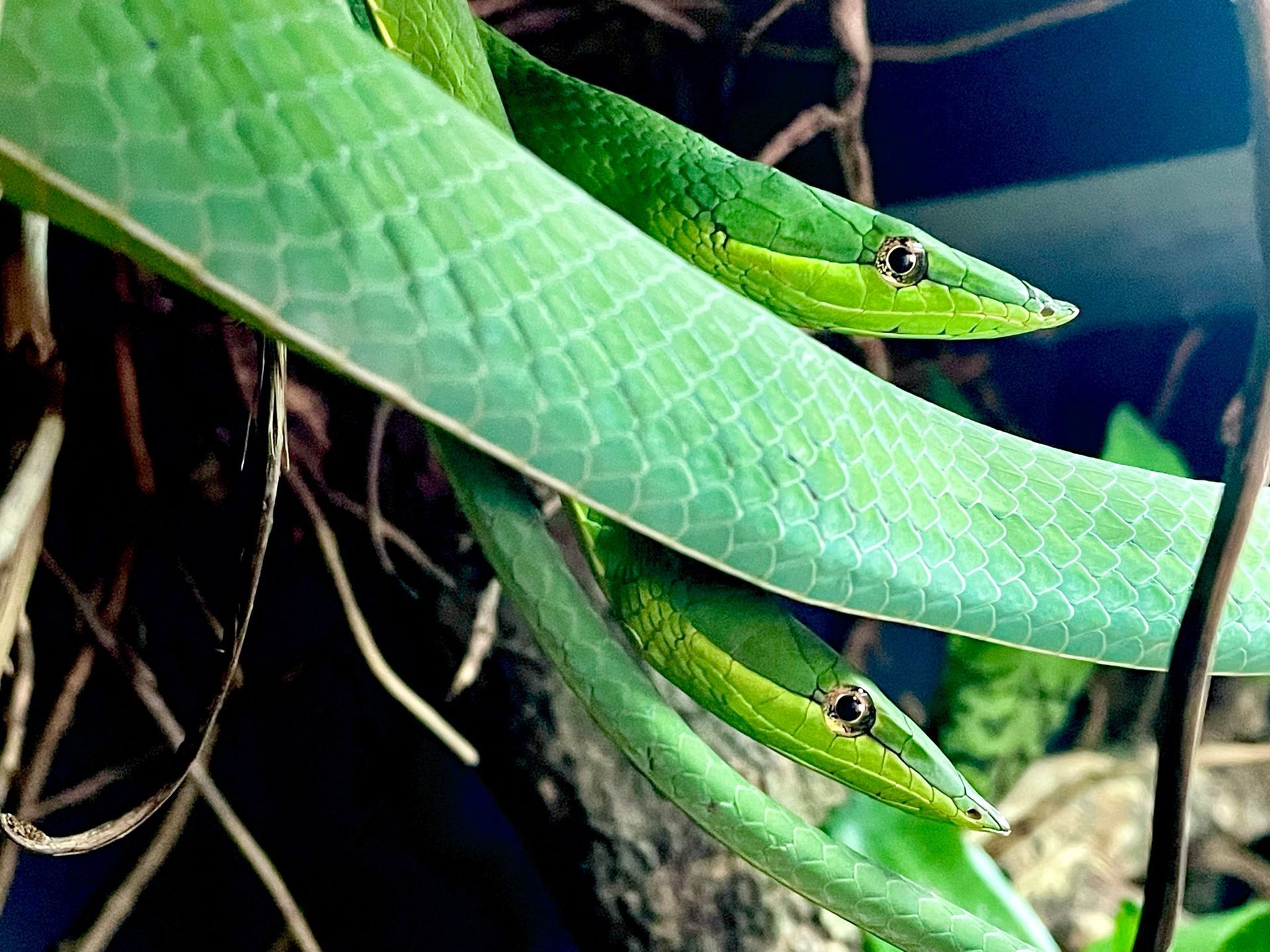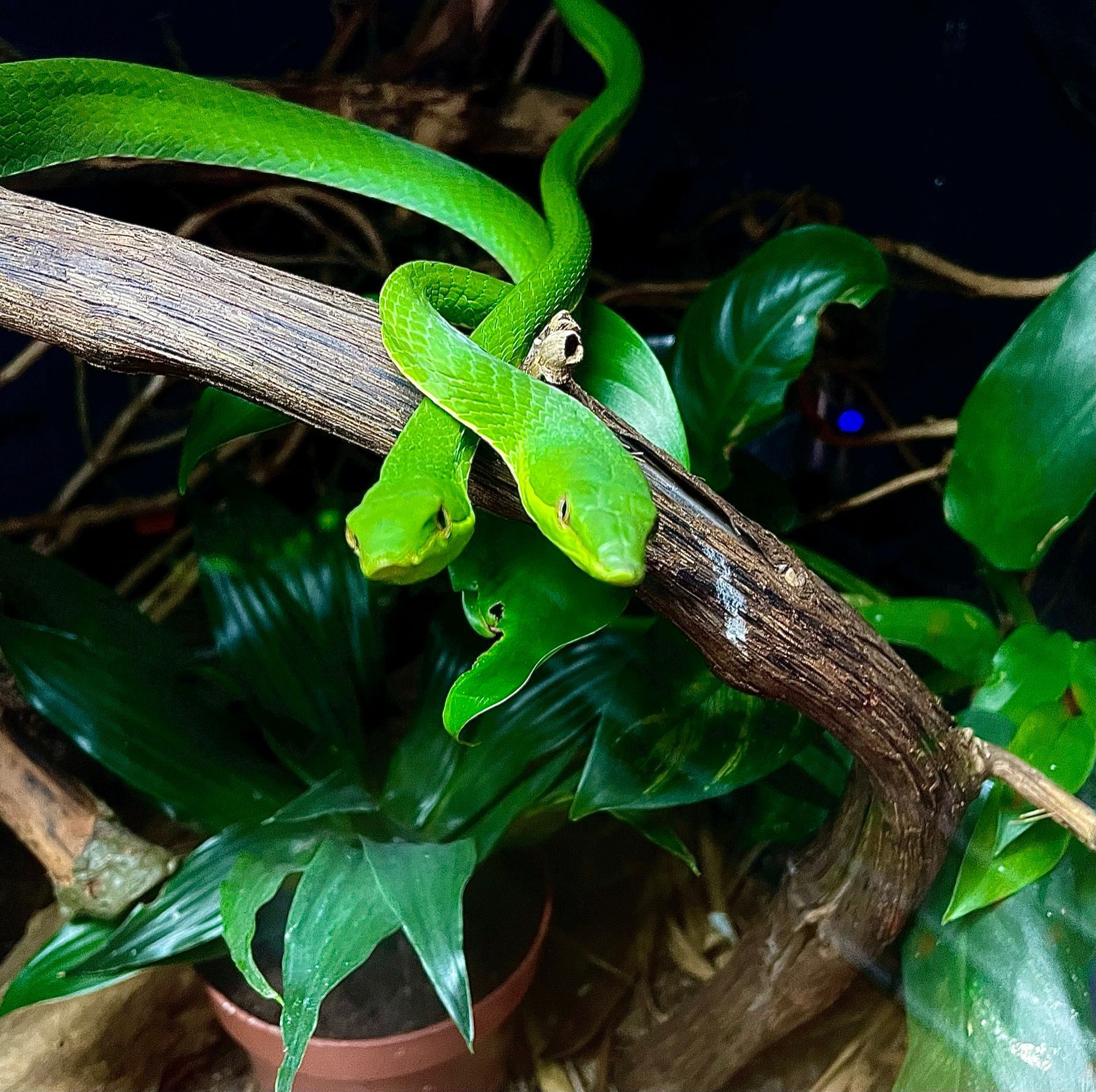
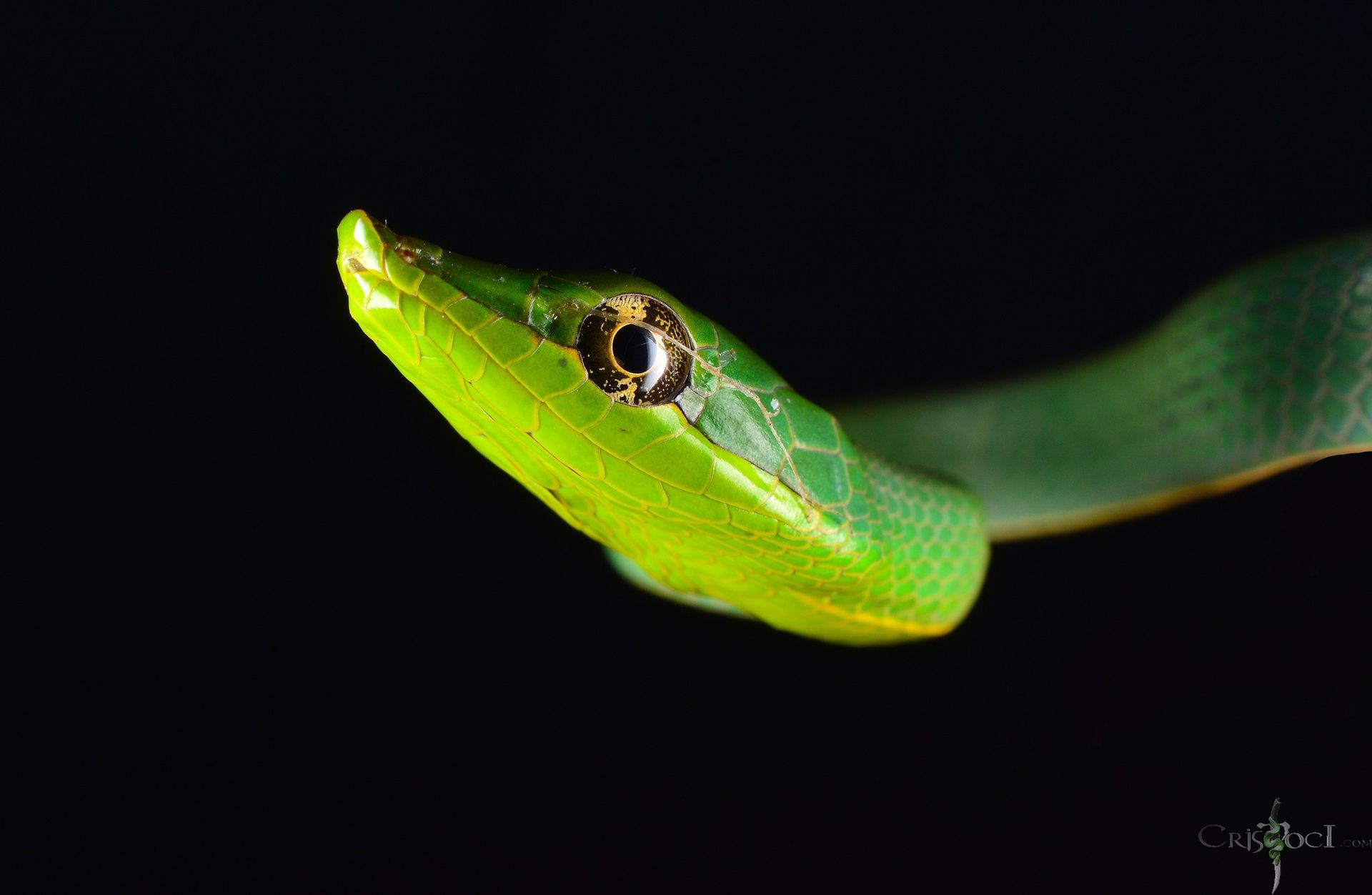
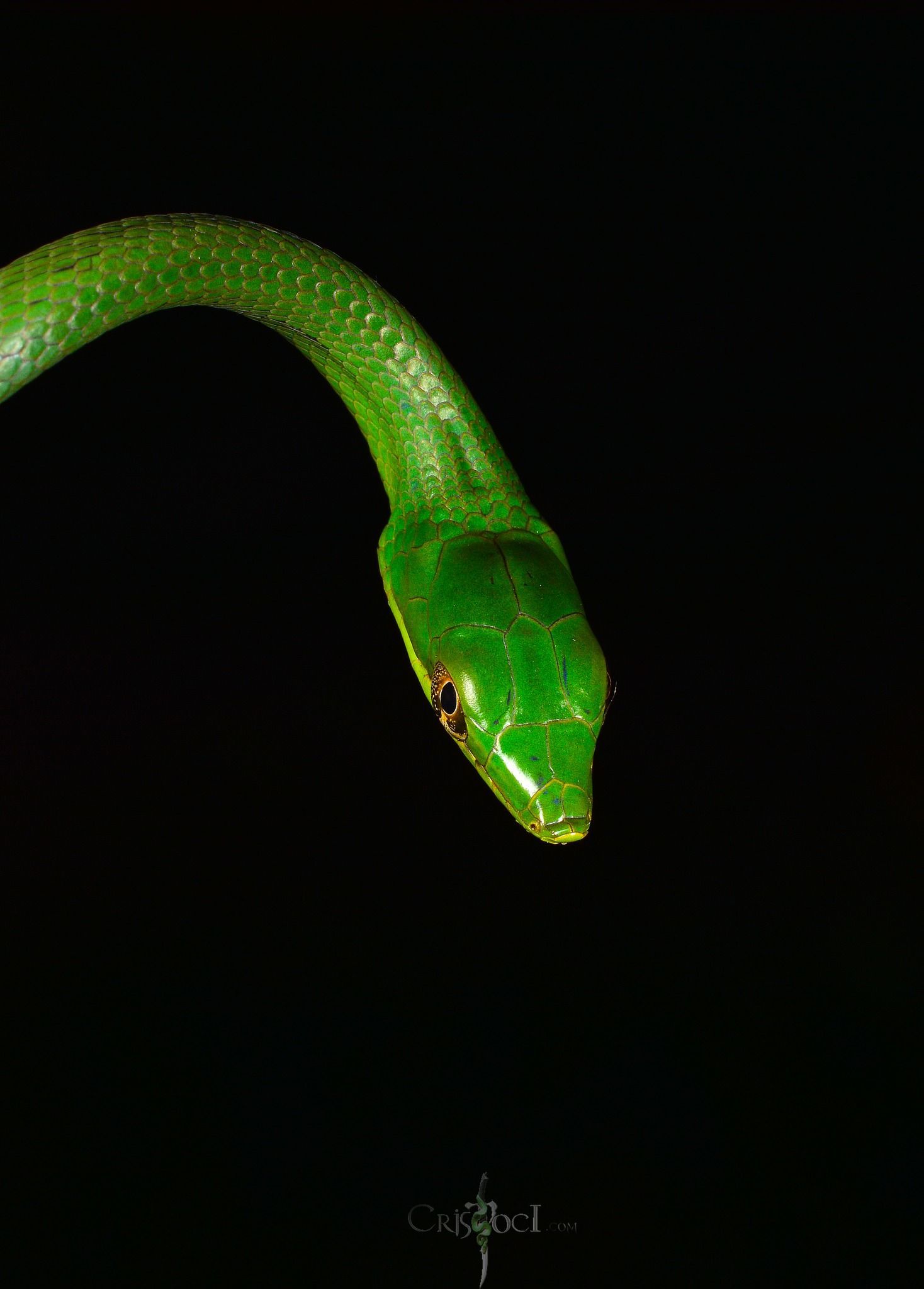
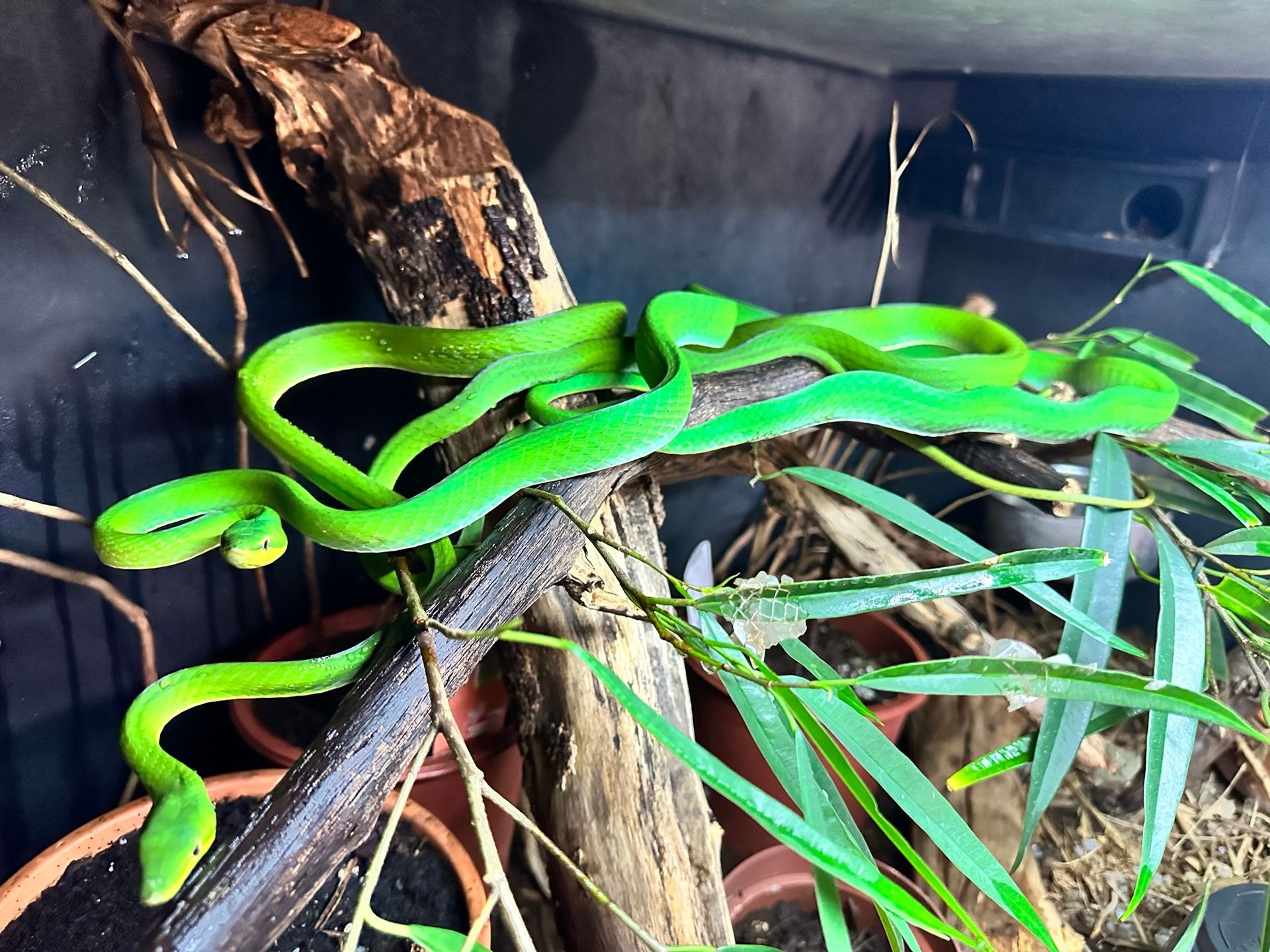
Oxybelis fulgidus Pärchen
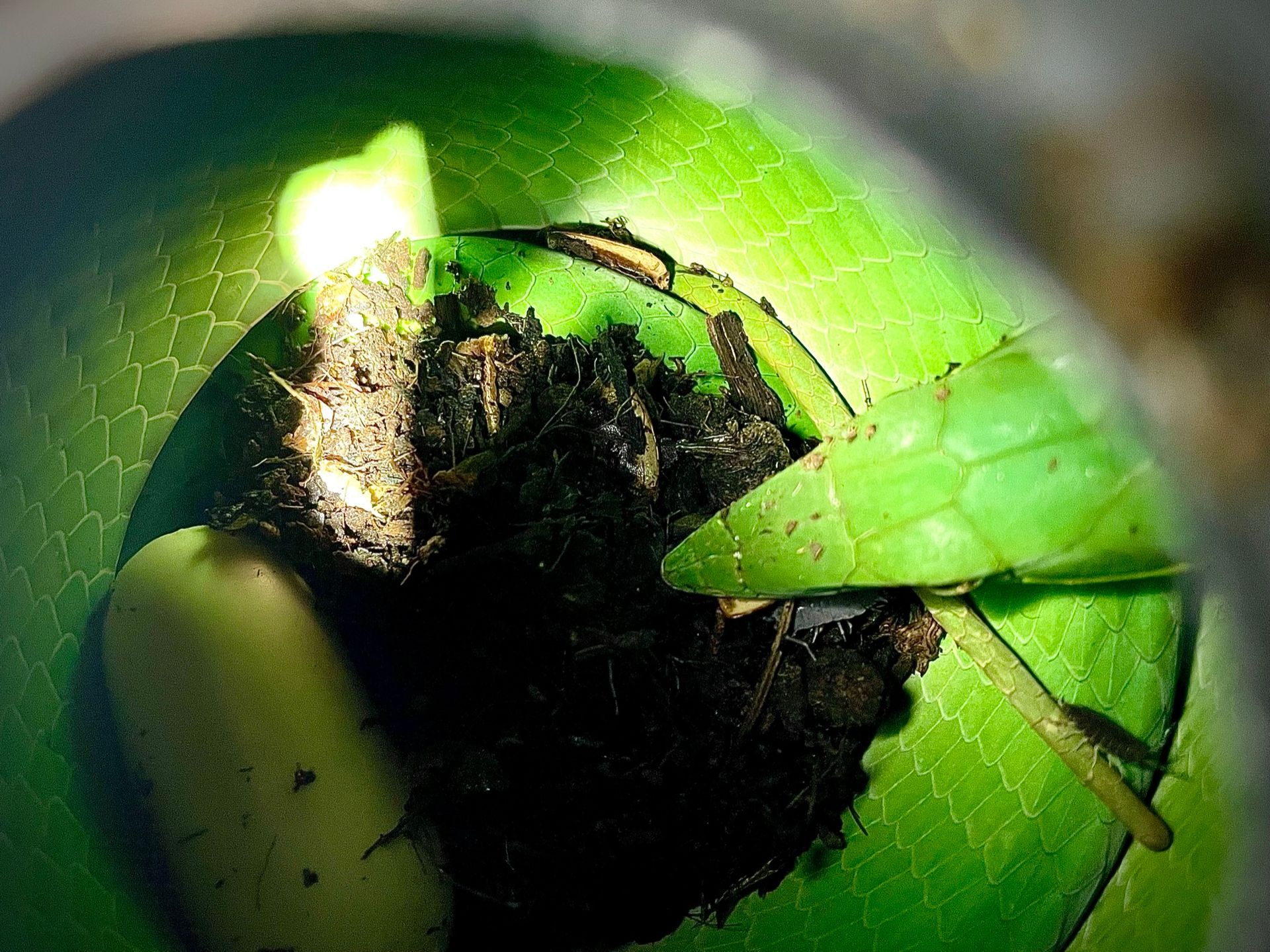
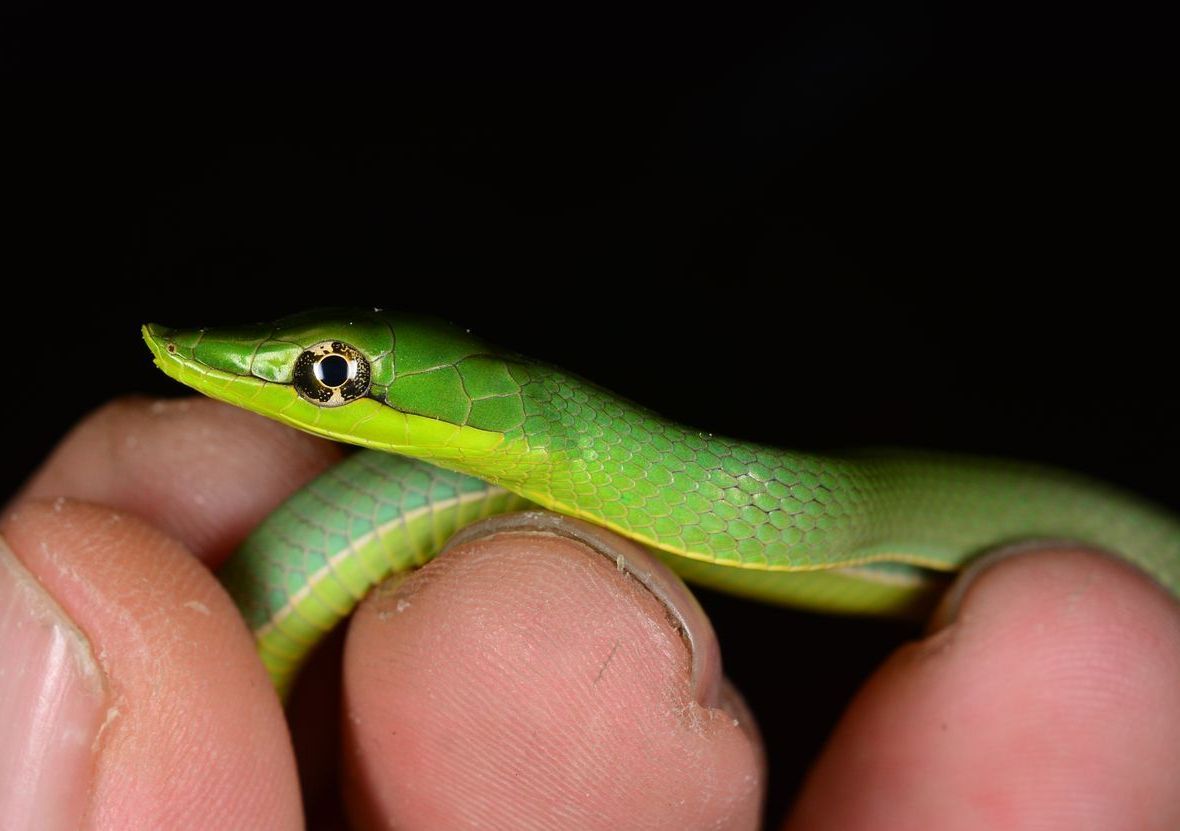
Oxybelis fulgidus – Breeding Report 2023
Husbandry
| Parameters | Value |
|---|---|
| In captivity since: | 30.05.2021 |
| Daytime temperature | 26–29 °C |
| Nighttime temperature | 21–22 °C |
| Relative humidity | 65–90 % |
| First oviposition | 29.05.2023 |
| Clutch size 1 | 2 Eier |
| Clutch size 2 | 8 Eier |
| Incubation | 27–28 °C |
| Incubation humidity | 99 % |
| Hatching | Tag 87–90 |
| Hatchling weight | 7–7,9 g |
| Schlupflänge | 35–36,5 cm |
Captive Husbandry and Breeding of Oxybelis fulgidus
Introduction
I have kept Oxybelis fulgidus since May 30, 2021.
The animals are housed in PVC enclosures manufactured by ProCages. Environmental conditions are maintained to replicate a tropical climate, with temperatures ranging from 21–29 °C (69.8–84.2 °F) and relative humidity between 65–90%. Heating is provided by overhead heat panels, while lighting consists of full-spectrum UVA/UVB lamps. Depending on the season, the enclosures are automatically misted once or twice daily. The entire system is controlled by a Biotherm 2 thermostat.
The First Animals
Only a few days after acquiring my first pair, I suspected that the female might already be gravid. Unfortunately, she died unexpectedly shortly afterward without showing any obvious clinical signs. A post-mortem examination revealed several partially developed eggs.
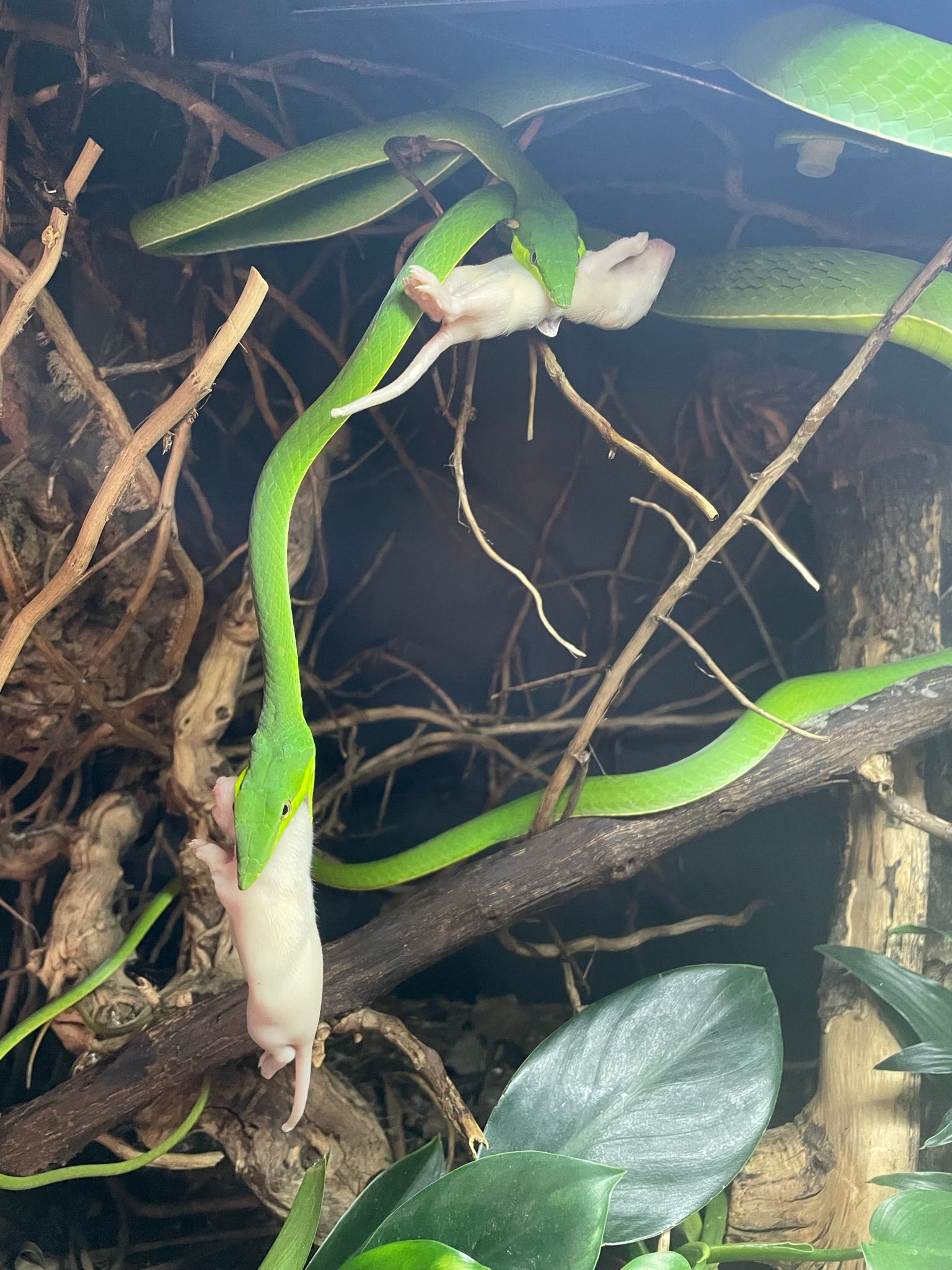
The male adapted readily to a rodent-based diet without any difficulties.
On November 26, 2021, I had the opportunity to acquire another female. She was considerably smaller than my original female and also smaller than the resident male.
This female also accepted rodents without hesitation. Both animals fed consistently, shed regularly, and developed exceptionally well. The female, in particular, exhibited rapid growth and eventually surpassed the male in both body length and weight.
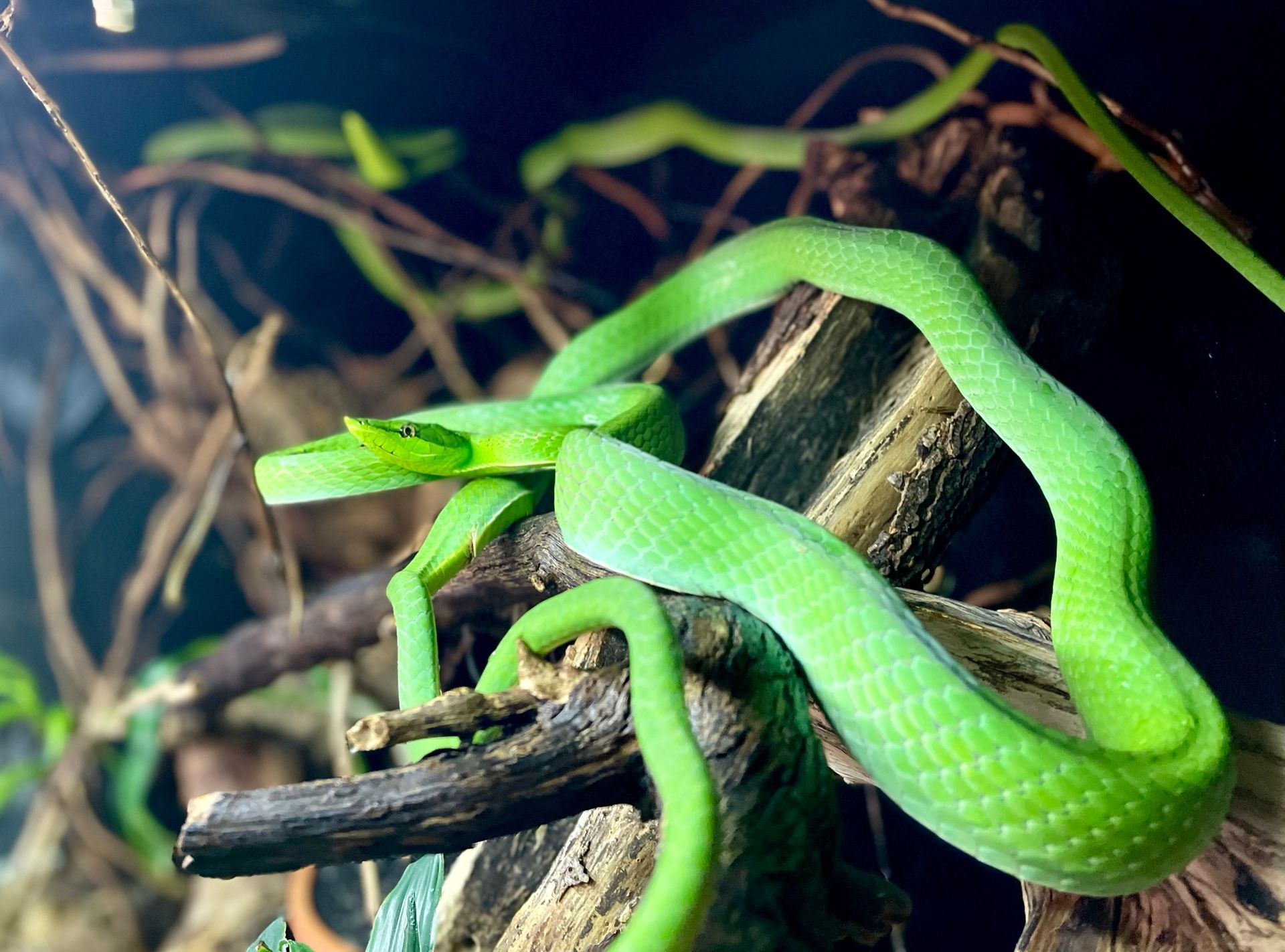
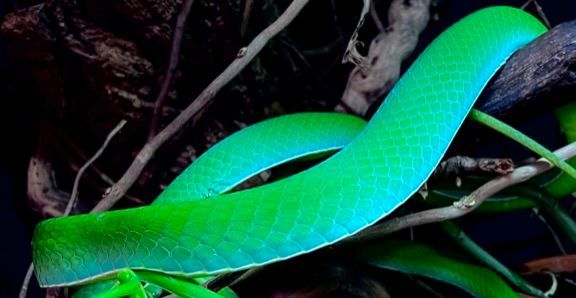
As she matured, the female developed a noticeably broader head and a stronger blue coloration along the lateral body.
Courtship Activity
The animals continued to be maintained under environmental conditions closely resembling those of their natural habitat, including the simulation of a rainy season.
Beginning in November 2022, I observed a marked increase in activity within the enclosure. Although I did not directly witness copulation, the animals' behavior strongly suggested reproductive activity.
By the end of February 2023, this increased activity gradually declined. At that point, I began to suspect that the female was either gravid or developing enlarged ovarian follicles.
Fasting Period and Parasite Discovery
The female completely refused food for approximately 56 days. Initially, I suspected that the fasting might be related to a parasitic infection.
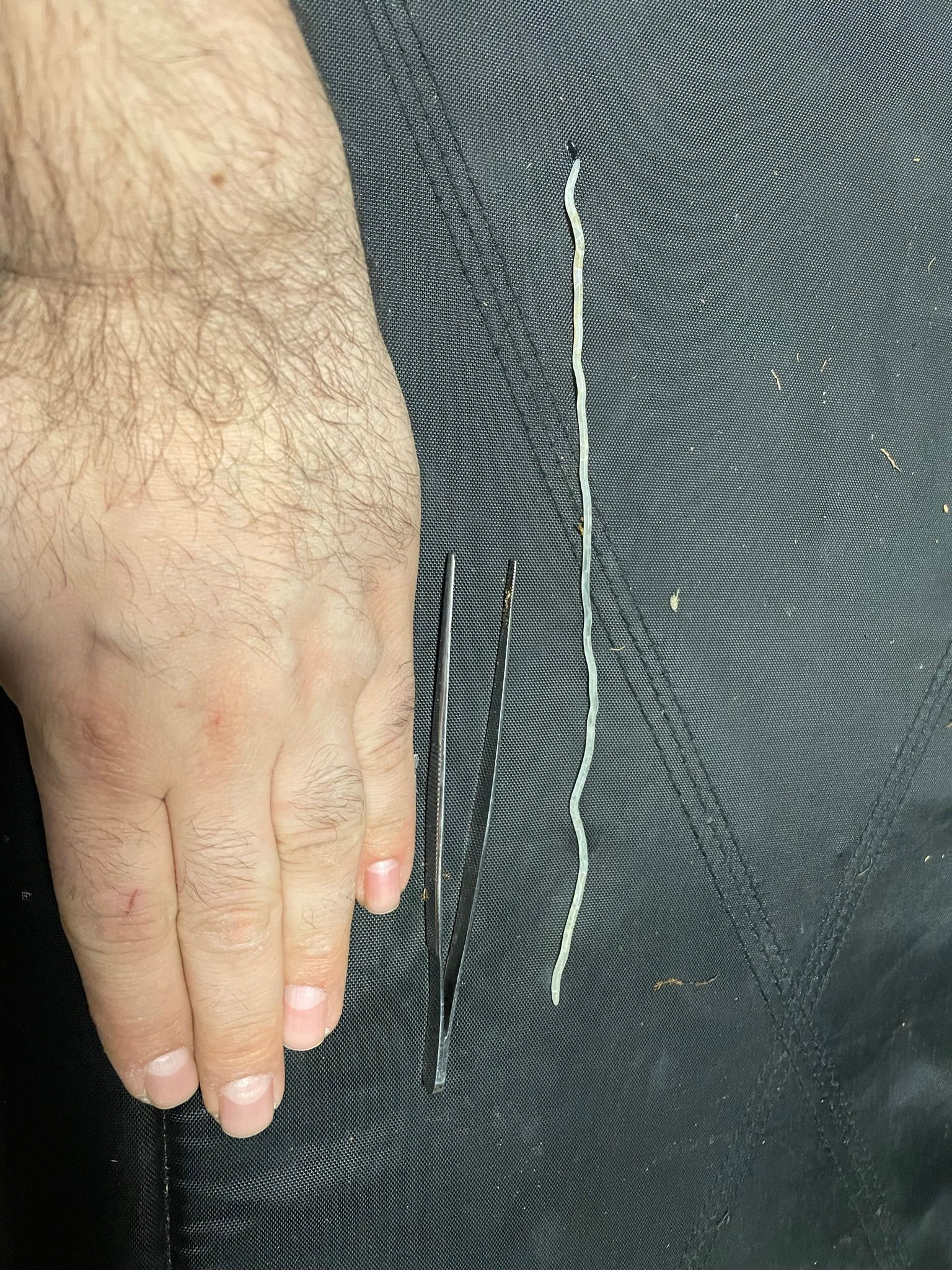
One evening, I noticed a large nematode protruding from the snake's mouth. I carefully removed the still-living parasite. Following its removal, the female accepted three meals before entering another prolonged fasting period.
This second fasting period lasted an additional 65 days and ended only with oviposition on May 29, 2023.
During this time, the female increased only slightly in body girth. Consequently, I remained uncertain whether she was truly gravid or whether an underlying health issue was responsible for the observed changes.
Careful palpation eventually revealed two to three eggs positioned relatively deep within the body cavity. As these appeared already well developed, I became increasingly confident that the female was indeed gravid.
Behavior Prior to Oviposition
During the final two weeks before oviposition, the female displayed a noticeable change in behavior. She spent increasing amounts of time on the enclosure floor and frequently probed the substrate with the tip of her snout as if searching for a suitable nesting site.
She completely abandoned her previously preferred resting place in the branches, possibly because temperatures there had become too high. Instead, she remained primarily in areas with temperatures between 26 and 27 °C. Daytime temperatures in the upper part of the enclosure reached 28–29 °C, while nighttime temperatures dropped to 21–22 °C.
Whereas the male resumed feeding after a 46-day fasting period, the female continued to refuse all food.
The female shed on May 9, 2023. I recorded this shed as a PLS (Pre-Laying Shed).
Because only very few documented breeding reports for Oxybelis fulgidus are available, I was uncertain how much time would elapse between the PLS and oviposition. Most of my colubrid species deposit eggs approximately six days after shedding.
The previous year, my Oxybelis aeneus deposited three eggs twelve days after shedding. Their clutch was laid high within the enclosure directly beneath the heat panel.
During my literature search, however, I found indications that Oxybelis fulgidus may also deposit eggs on the ground beneath leaf litter or other sheltered locations.
Since the female had already been spending considerable time on the enclosure floor, even resting there at night, I added several additional hiding places in the lower part of the enclosure.
Oviposition
Approximately 20–21 days after the PLS, the female selected an inverted plastic flower pot as her nesting site. The pot measured approximately 15 cm in height and just under 12 cm in diameter.
She had briefly inspected the site the previous day. During the night of May 29–30, 2023, oviposition took place.
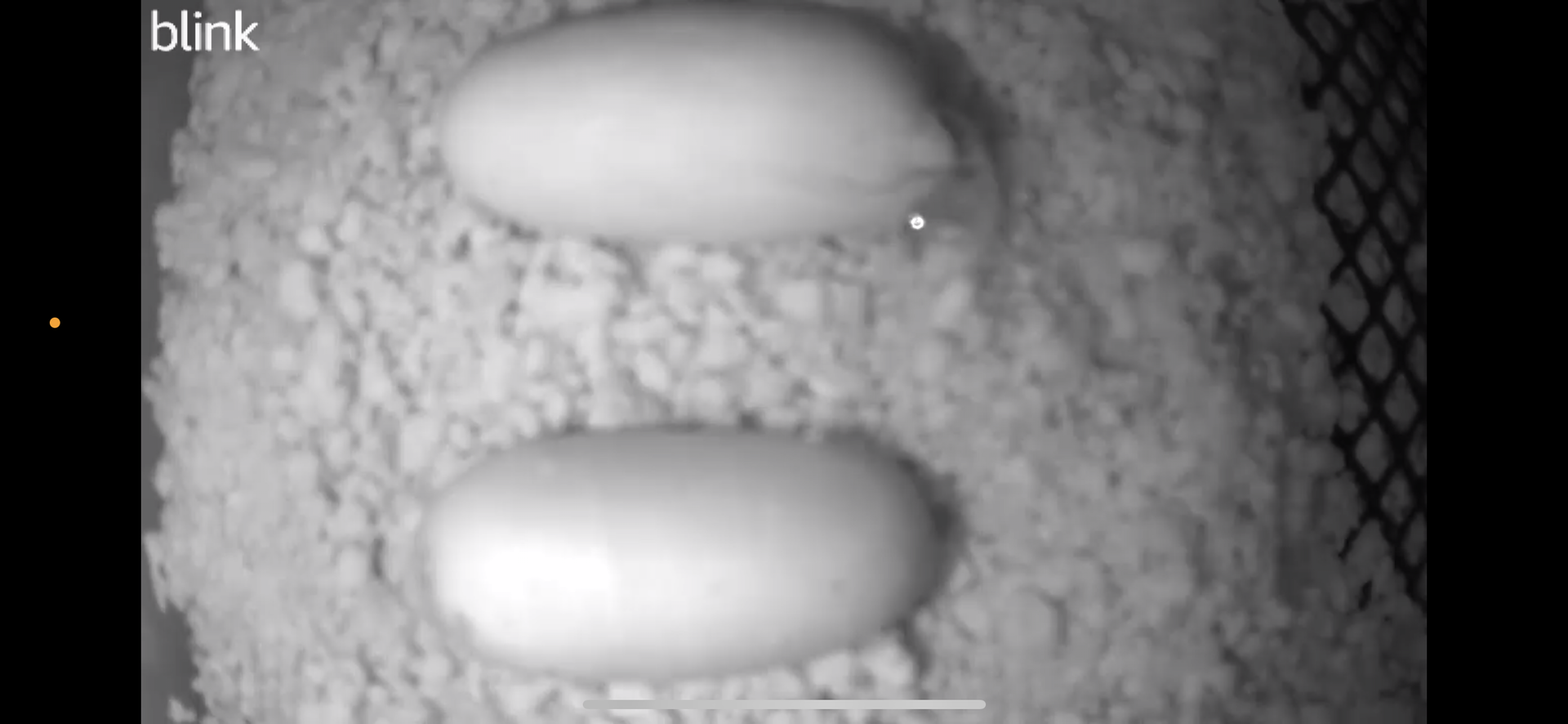
The female remained tightly coiled, similar to the posture commonly observed in arboreal pythons. The two eggs were positioned centrally within her body coils.
The substrate consisted of loose soil. The eggs were partially buried and were not adhered to one another, most likely because of the soft substrate.
The female initially remained at the nest site and appeared to be in excellent body condition, still remarkably robust despite laying.
After removing the eggs, I could detect no additional eggs by palpation. Nevertheless, to exclude retained eggs, I had the female examined radiographically by Ralf Michling near Wilhelmshaven.
Fortunately, diagnostic imaging confirmed that no eggs had been retained.
At first glance, a clutch of only two eggs appears unusually small for this species, as published reports commonly mention clutch sizes of five to twelve eggs. However, since this was presumably the female's first clutch, the small clutch size may have been entirely normal.
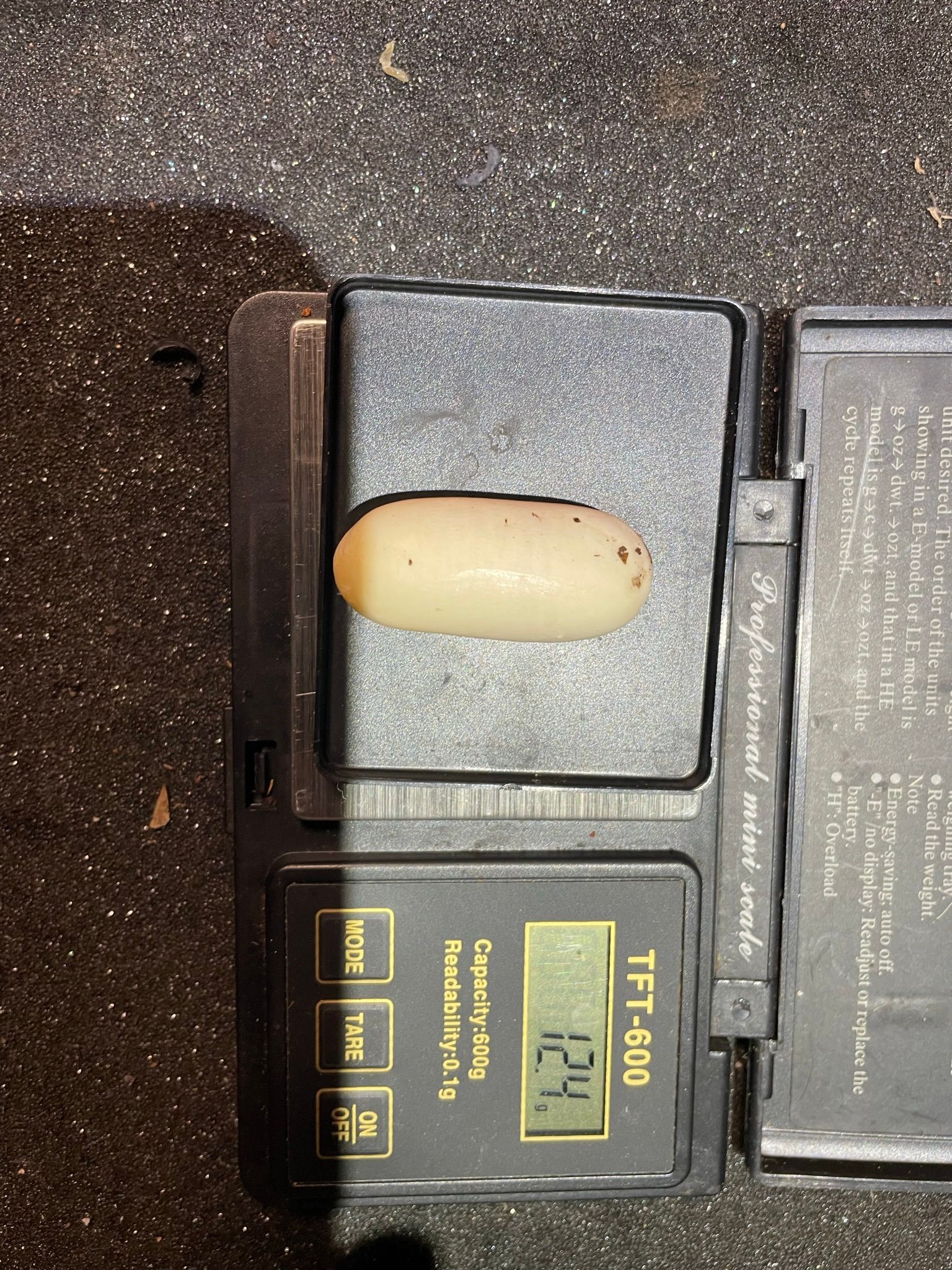
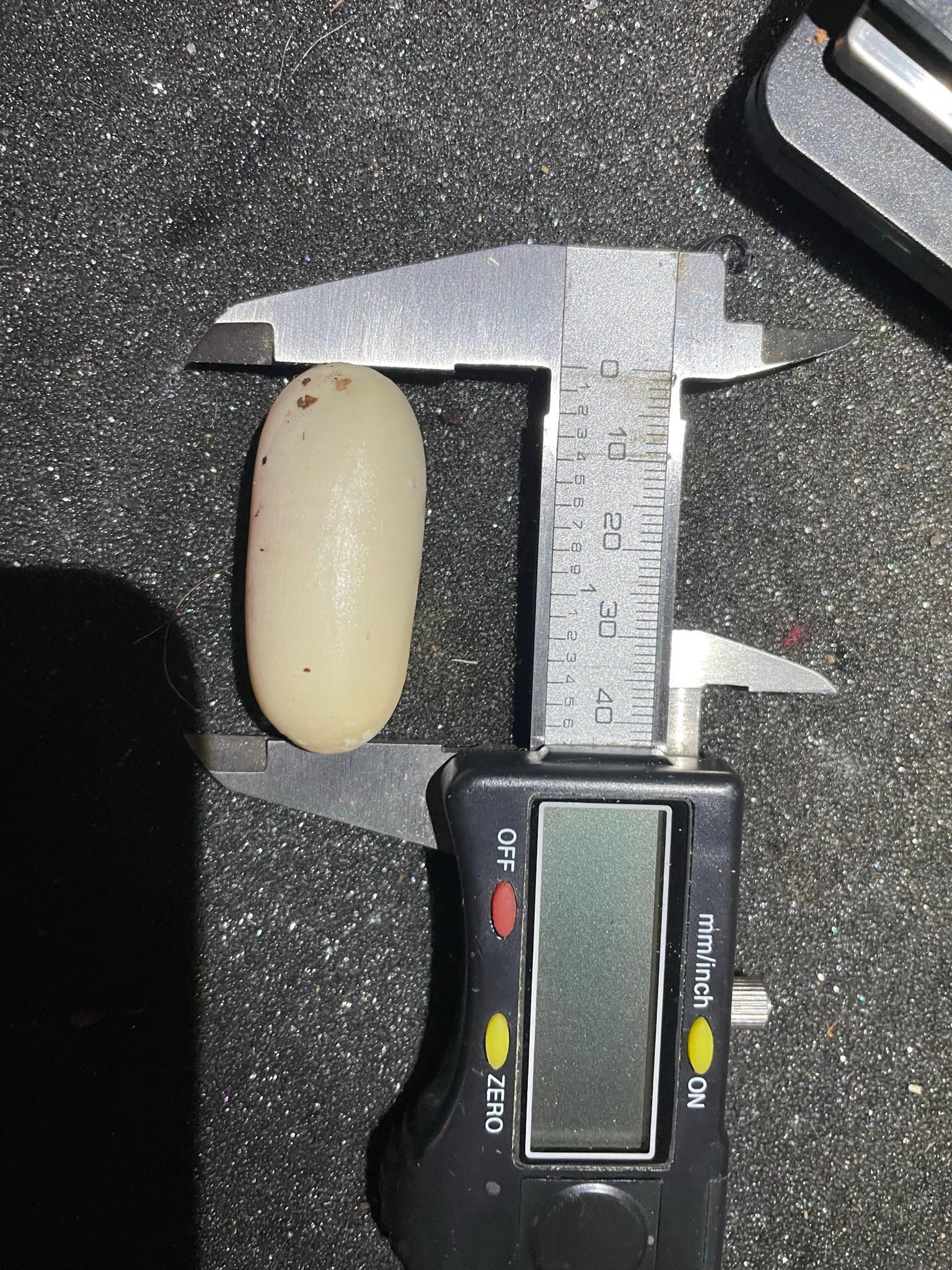
The eggs weighed approximately 12.4–13.0 g and measured about 44 mm in length by 20 mm in diameter.
Incubation
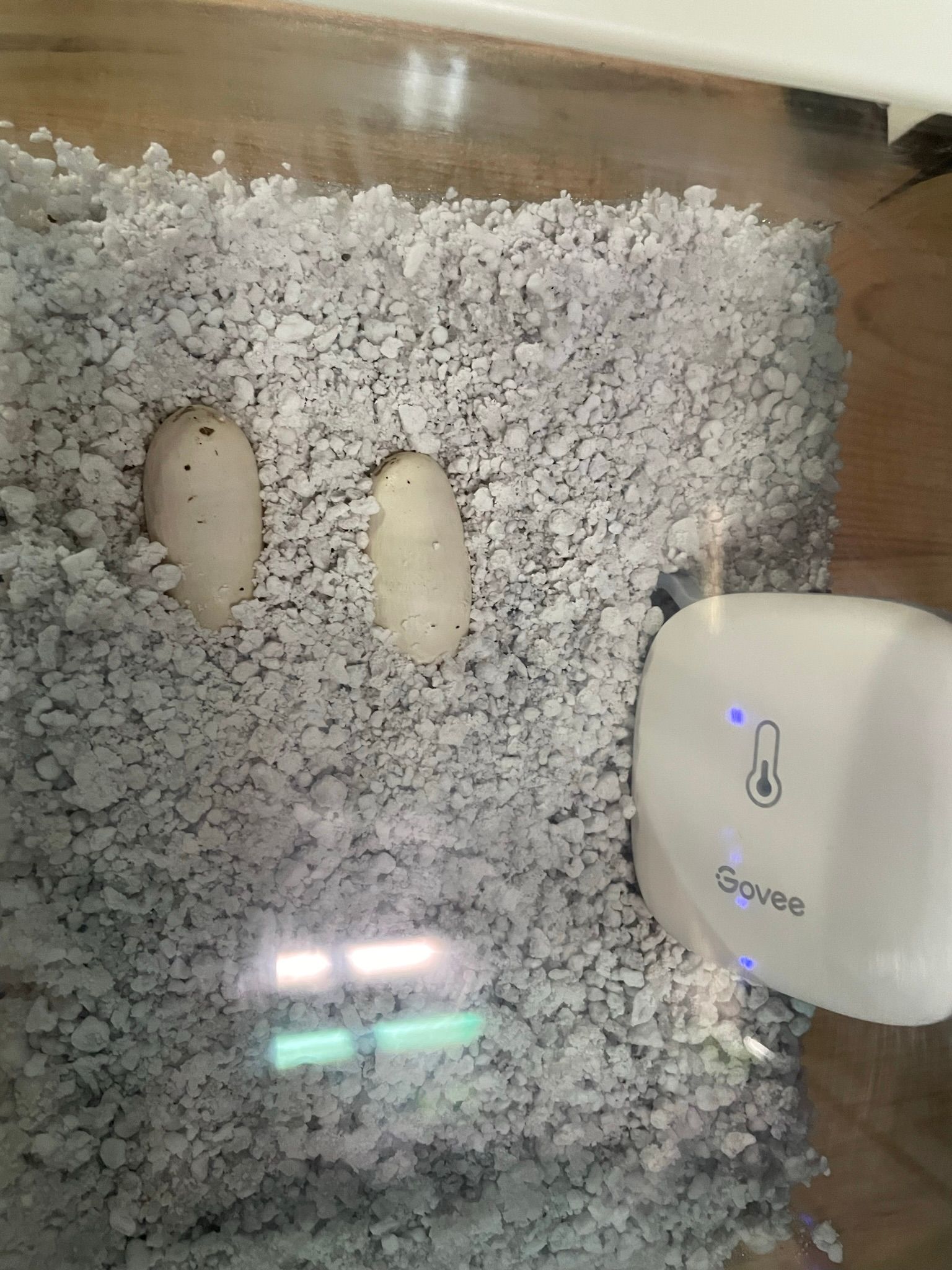
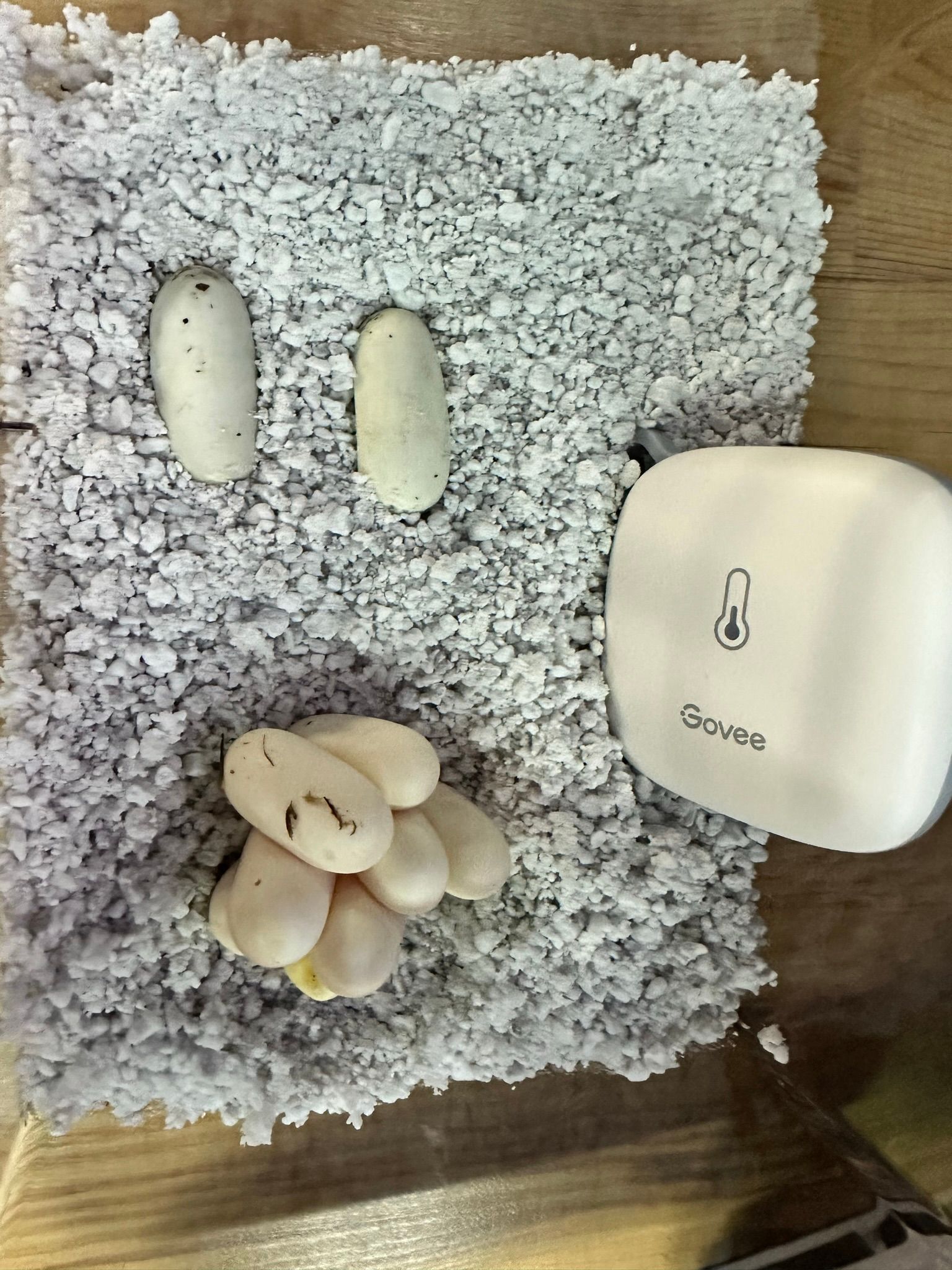
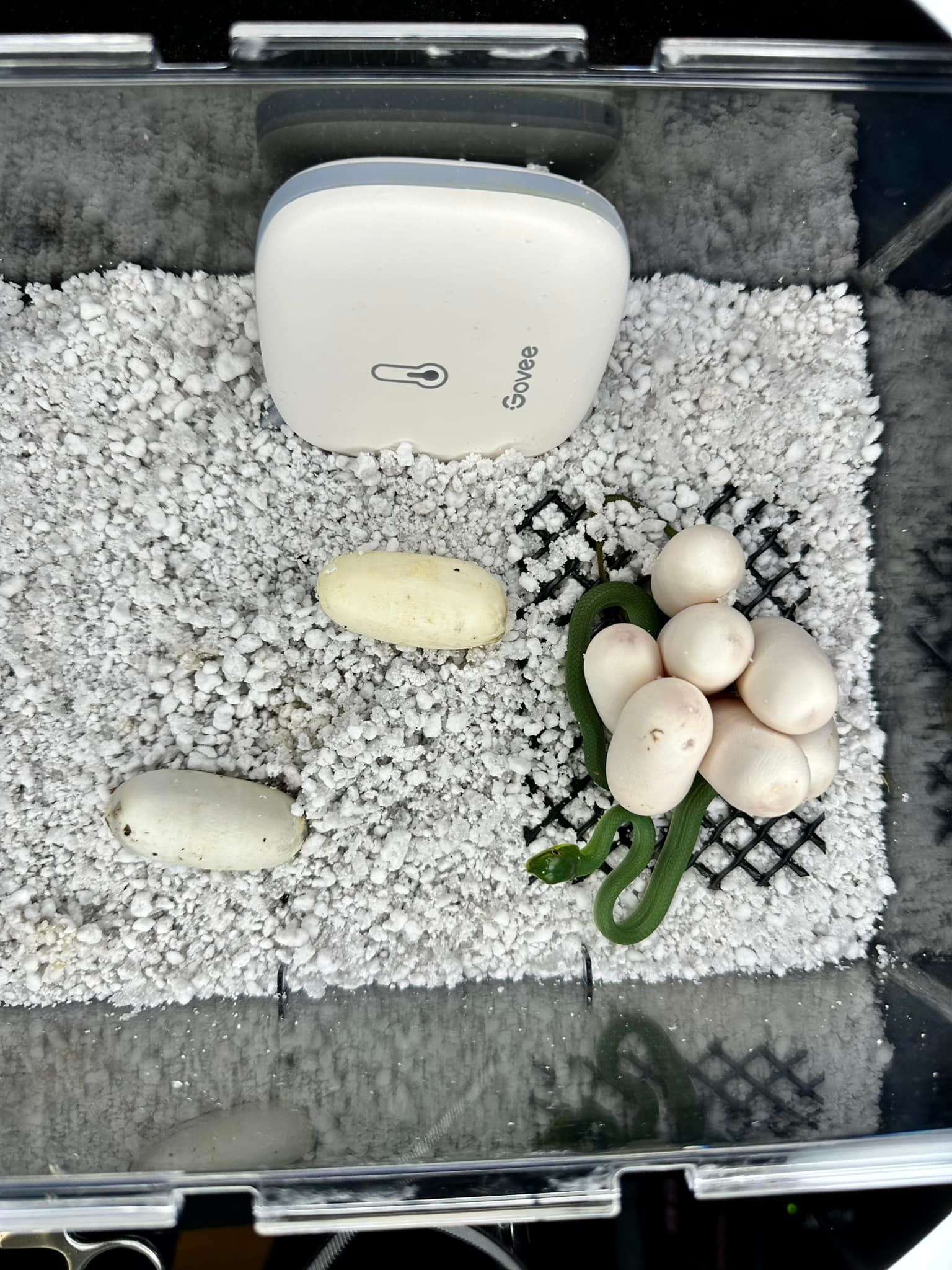
Because the eggs had been partially buried at oviposition, I chose to incubate them half-embedded in perlite at temperatures between 27 and 28 °C.
Under normal circumstances, I prefer suspended incubation without direct contact between the eggs and the substrate. Both my Oxybelis aeneus and the first clutch of Leptophis ahaetulla had been deposited in elevated positions and were ideally suited for this method.
Relative humidity remained consistently around 99%. Fresh air exchange was provided every two weeks.
Temperatures were monitored continuously using a data logger.
- Minimum: 26.6 °C
- Maximum: 28.8 °C
- Average: 27.8 °C
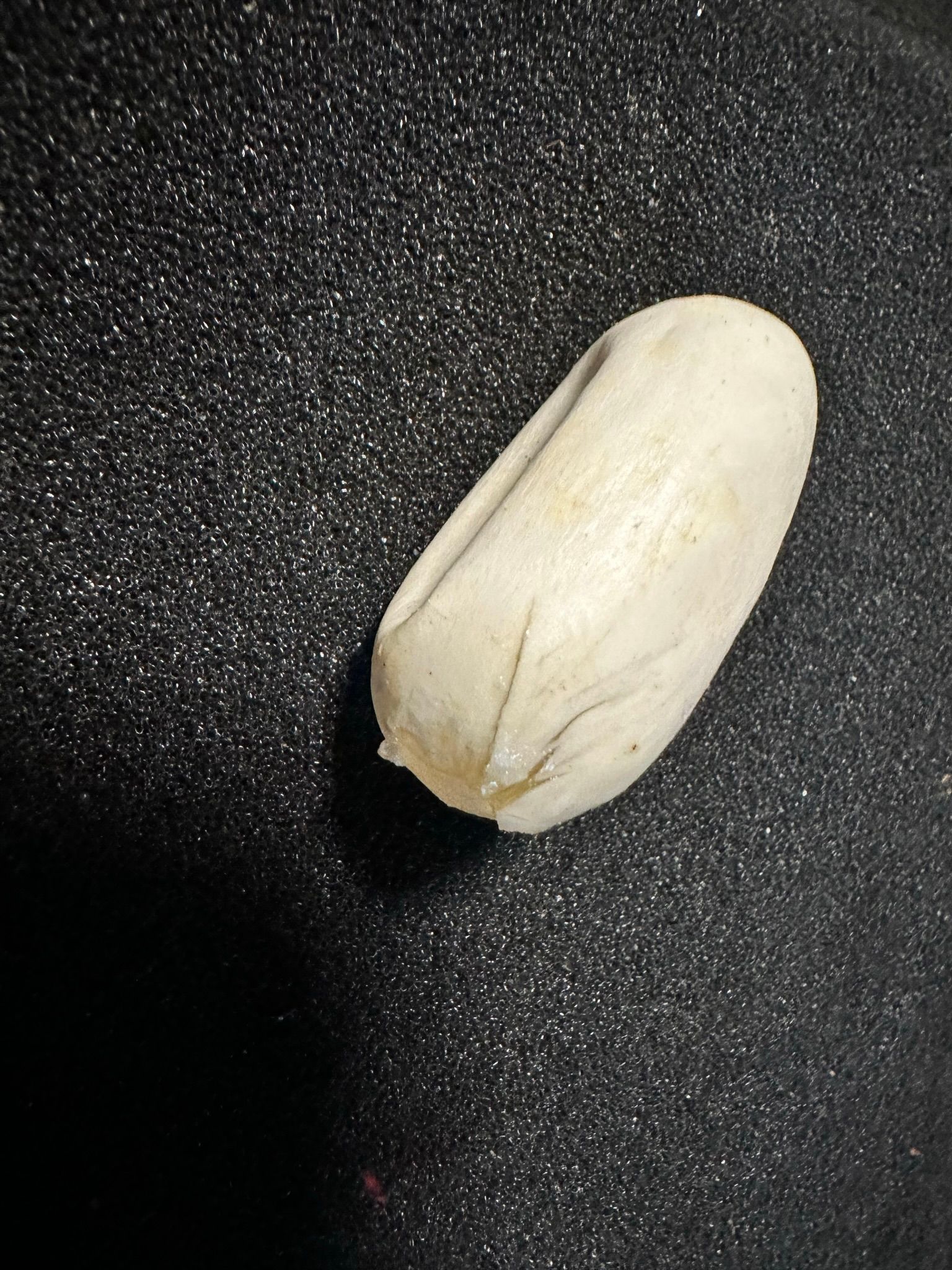
On day 80 of incubation, both eggs began to show slight dimpling. At the same time, damp areas became visible at the poles of the eggs, most likely caused by the hatchlings making their initial internal pips.
As these moist areas gradually became discolored and appeared somewhat mold-like, I inspected the eggs carefully on day 83. I then adjusted their position so that both ends of each egg remained fully exposed.
Hatching
Hatchling 1
On day 87 of incubation, at 22:36, the first external slit appeared in the egg.
Approximately twelve hours later, the hatchling emerged completely.
Measurements
- Weight: 7.9 g
- Total length: 36.5 cm
The hatchling displayed a strong defensive temperament immediately after emergence and readily attempted to bite.
Its coloration was noticeably grayer and considerably less blue than that of the adults.
Hatchling 2
The second hatchling slit its egg on August 26, 2023 (day 89 of incubation) at approximately 10:00.
As with the first egg, all cuts were located at one end of the egg.
The hatchling remained inside for another 22 hours, exposing only the tip of its snout.
It emerged completely on August 27, 2023, at 07:40.
Measurements
- Weight: 7.0 g
- Total length: approximately 35 cm
A separate report describing the rearing of the hatchlings will follow.
Second Clutch (2023)
During a family vacation in Greece, the female entered another shedding cycle.
Based on recordings from my enclosure surveillance camera, I estimate that she shed on August 1, 2023.
After returning home on August 7, I inspected all enclosures and life-support systems but noticed nothing unusual.
On August 11, I observed that the previously assumed nesting site had been displaced and overturned. Since the female had laid eggs only about 75 days earlier and I had found no reports describing multiple clutches within a single season, I initially paid little attention to this observation.
On August 13, however, the female unexpectedly refused food and once again exhibited the same heightened restlessness that had preceded the first clutch.
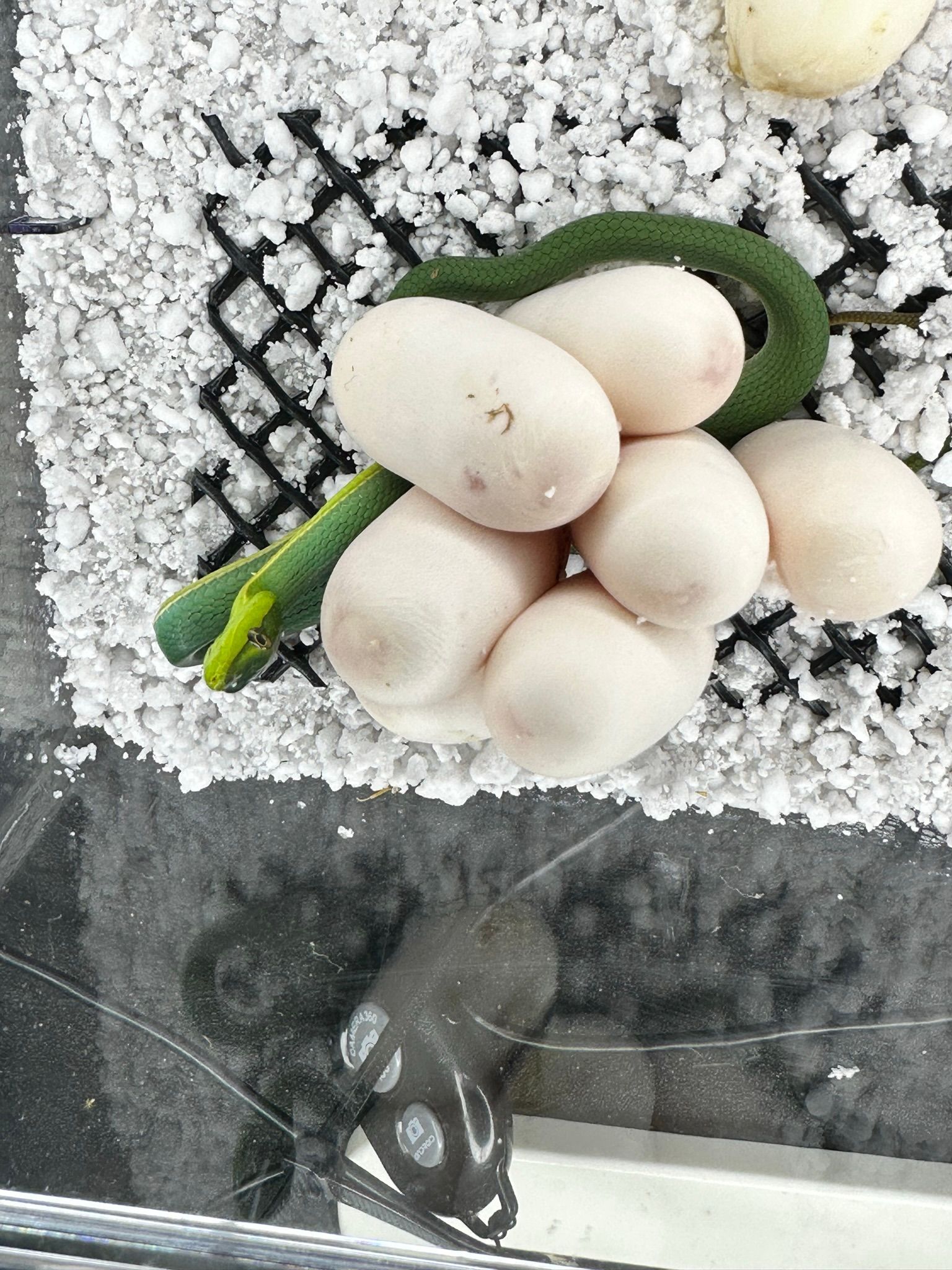
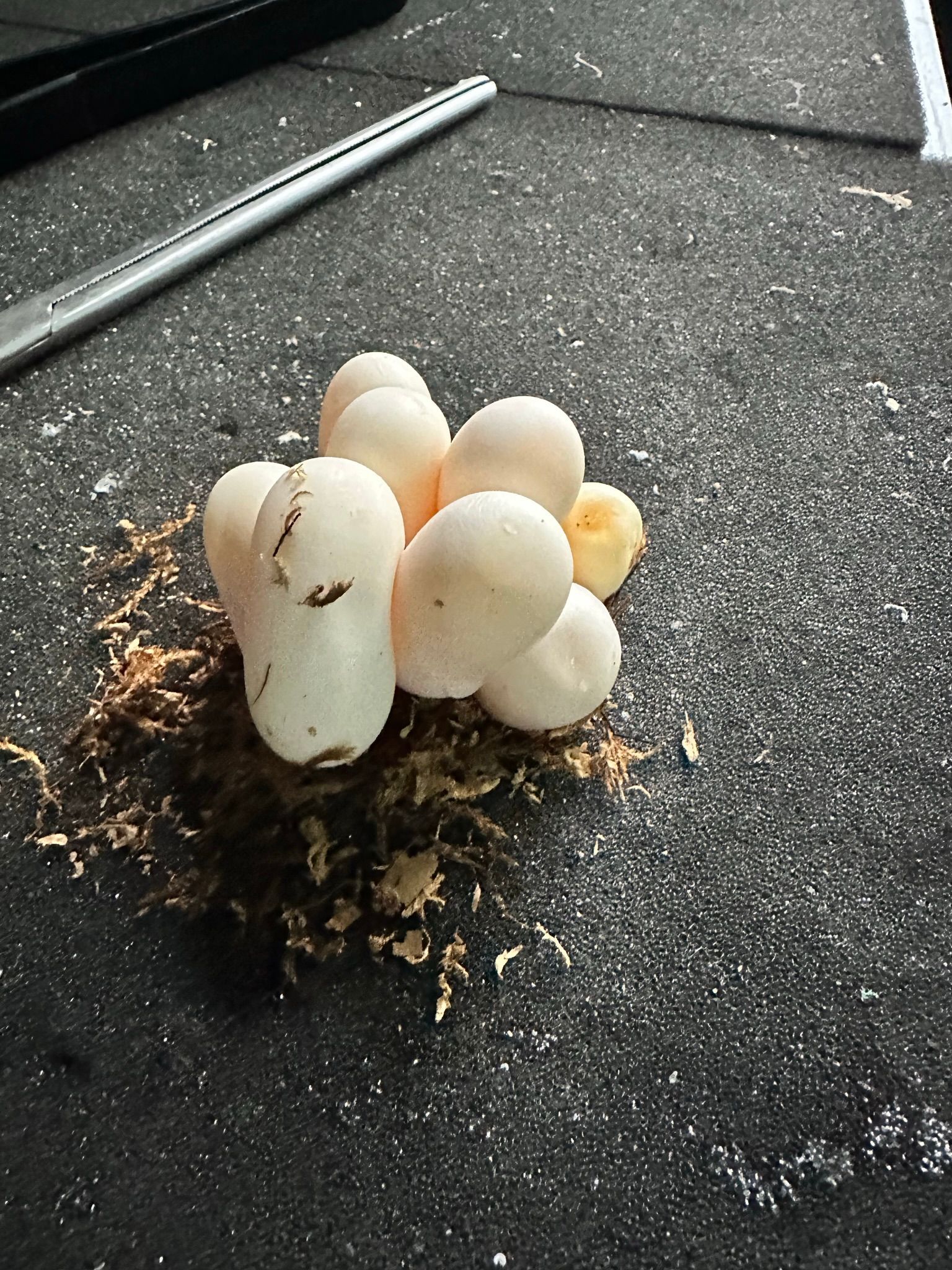
I therefore inspected a hide located in the upper part of the enclosure and discovered eight freshly laid eggs, which were probably no more than two days old.
The eggs were transferred immediately to the incubator.
This observation provided my first evidence that Oxybelis fulgidus is capable of producing multiple clutches within a single breeding season under captive conditions.
The second clutch was deposited approximately 75 days after the first. Overall, the eggs were somewhat smaller than those of the first clutch. One egg was noticeably smaller than the others but did not resemble a typical infertile slug egg.
While subsequently inspecting my remaining enclosures, I also discovered an unexpected clutch of Leptophis ahaetulla.
This observation likewise suggests that multiple clutches per breeding season may occur in this species.
The female had deposited four eggs beneath a flower pot on the enclosure floor. One egg had already been largely destroyed by isopods. The remaining three eggs were variably dimpled but were transferred to perlite and incubated.
The unusually small egg from the second Oxybelis clutch later developed fungal growth and was removed as a precaution.
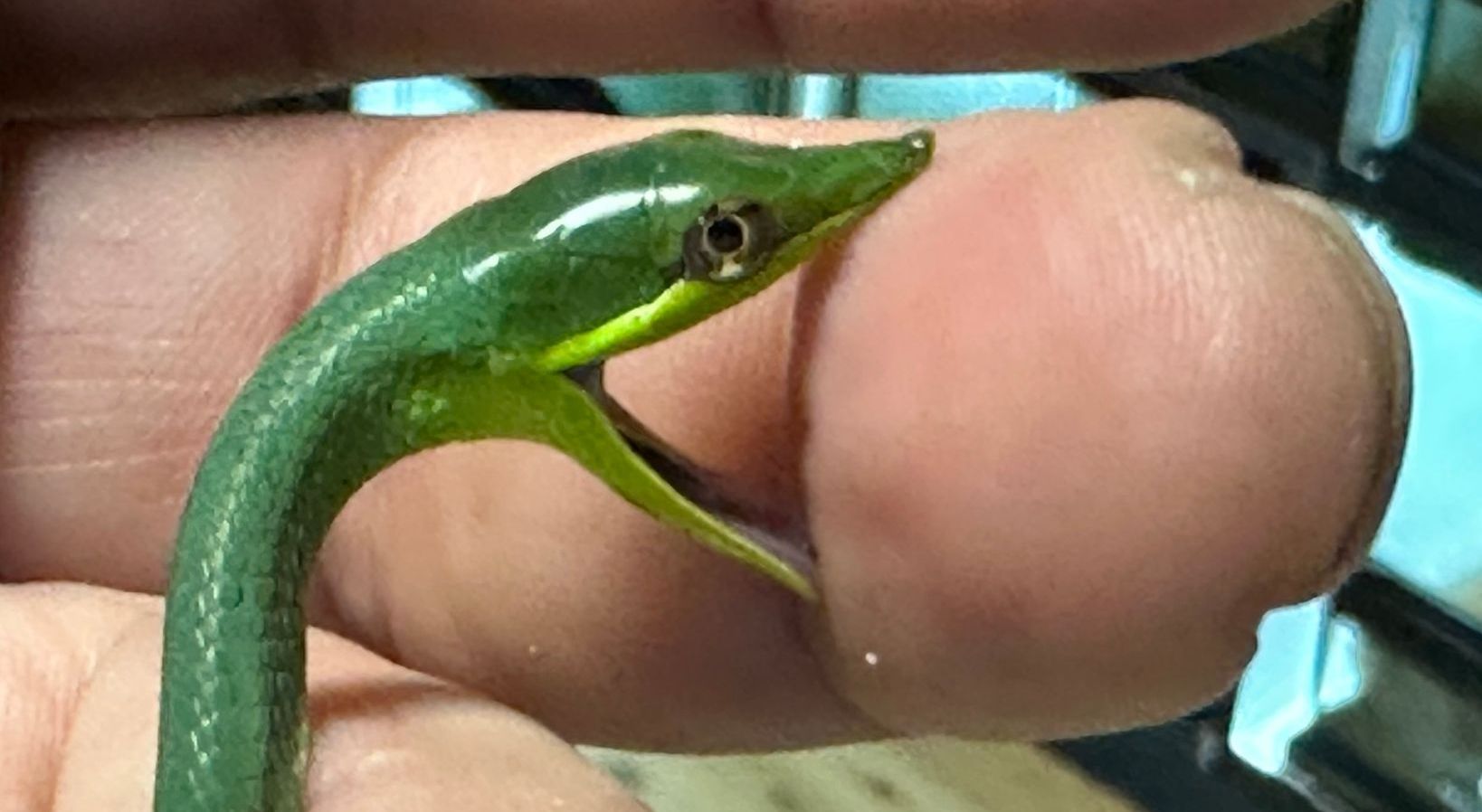
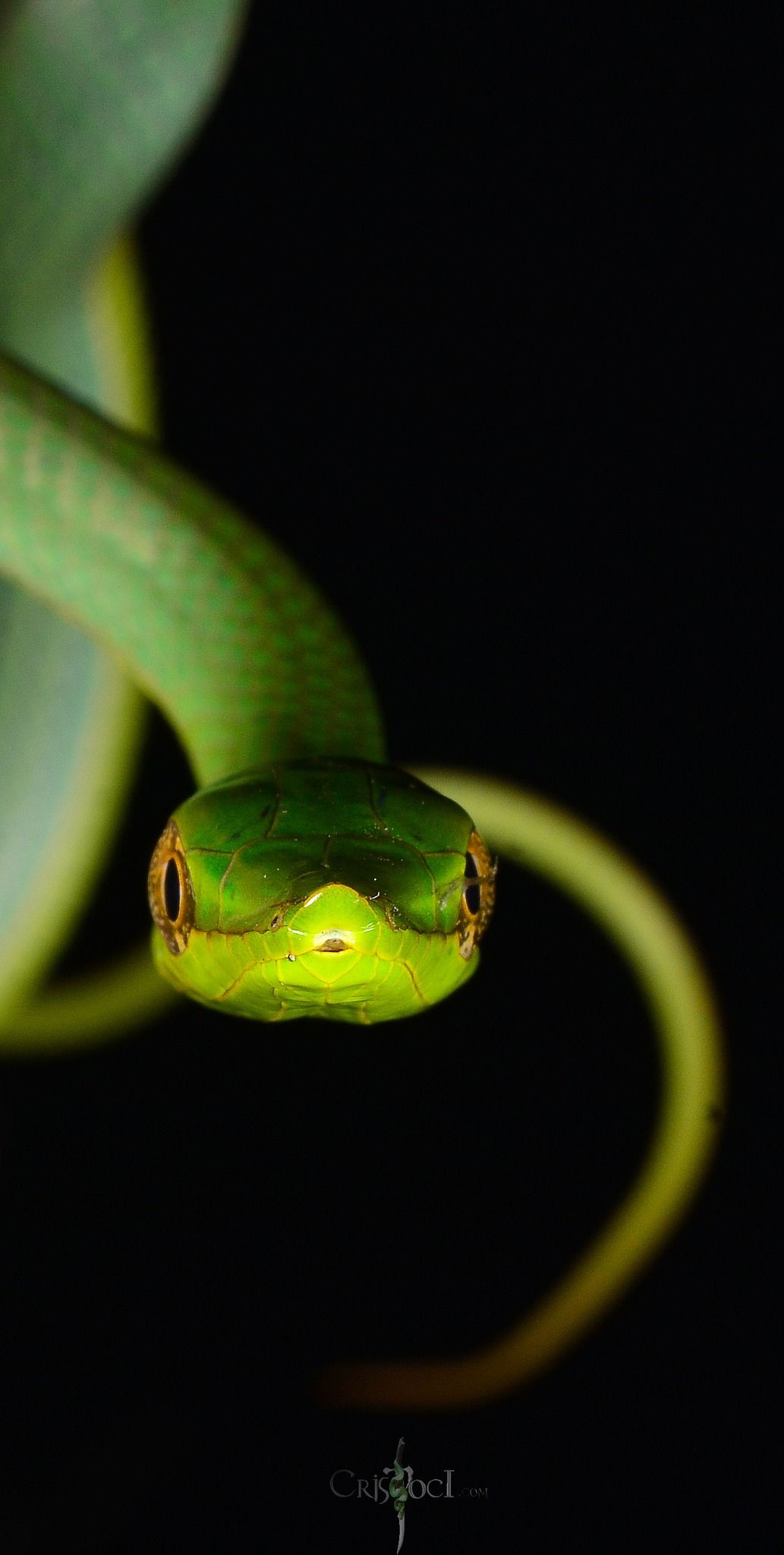
Weitere Bilder von Oxybelis fulgidus