🇩🇪 🇬🇧
Oxybelis aeneus – Breeding Report 2022
Captive Husbandry and Breeding Data
| Parameter | Value |
|---|---|
| Animals acquired | March 2022 |
| Group | 1.2 |
| PLS to oviposition | 12 days |
| Clutch size | 3 Eier |
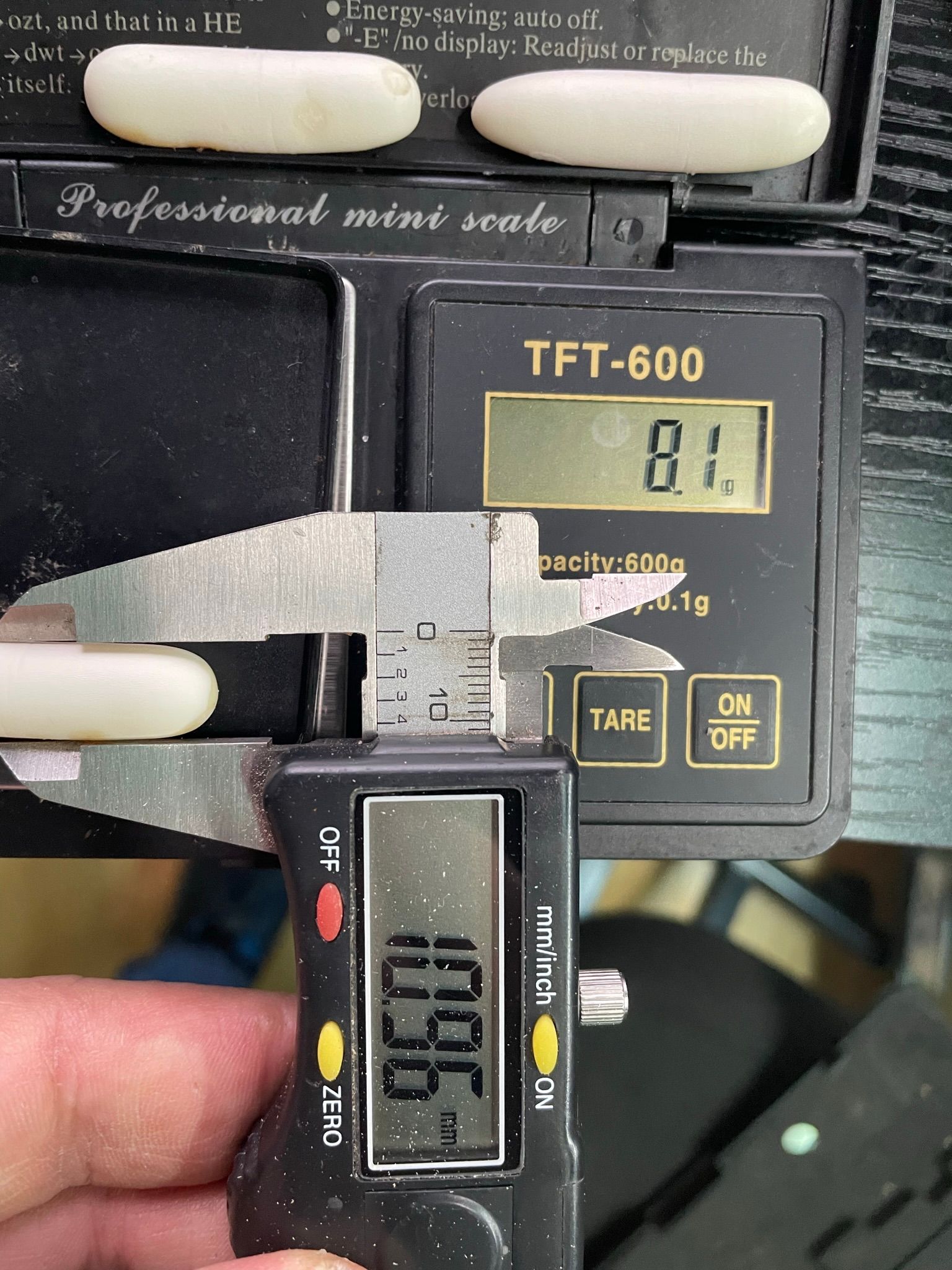
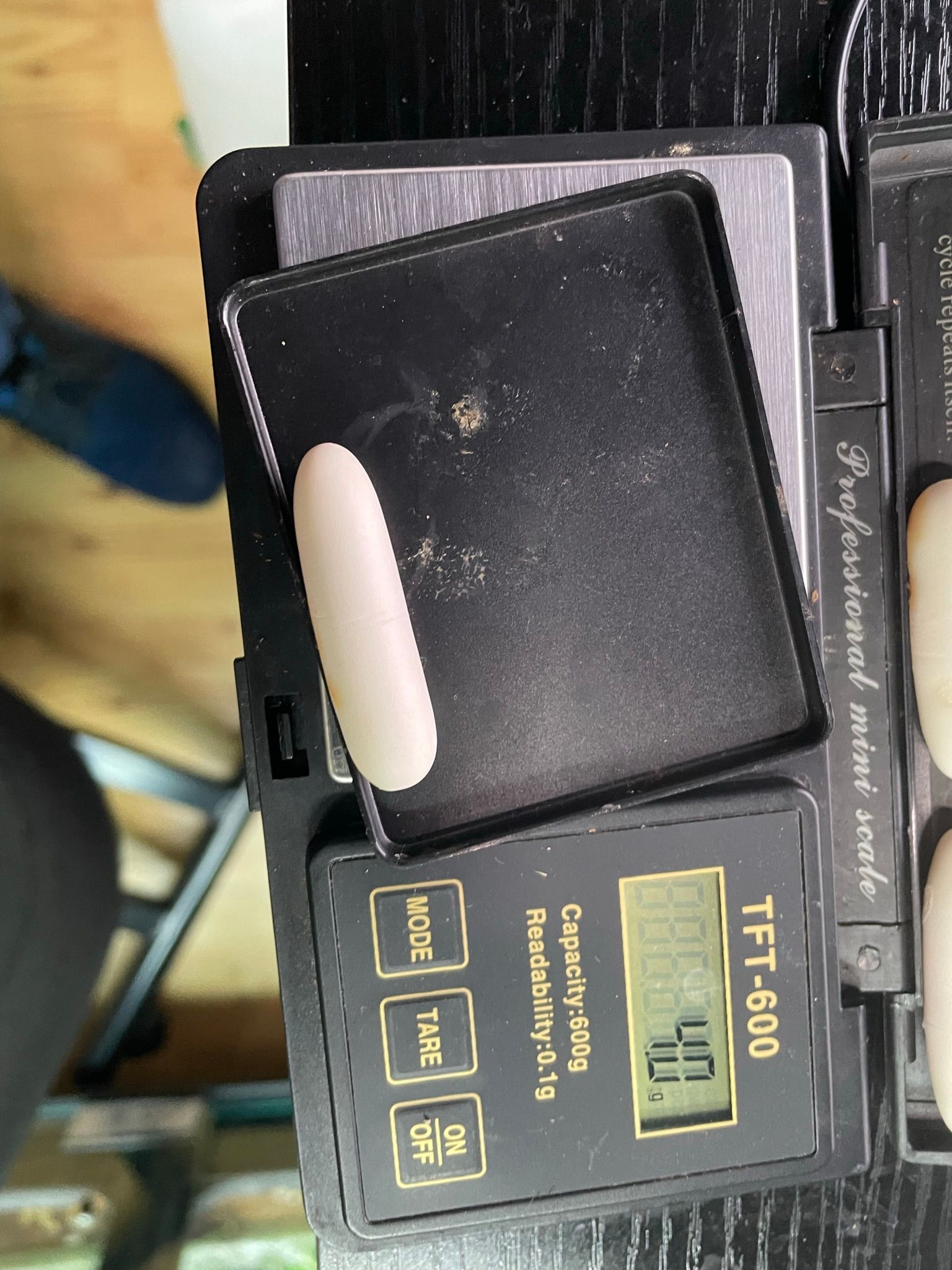
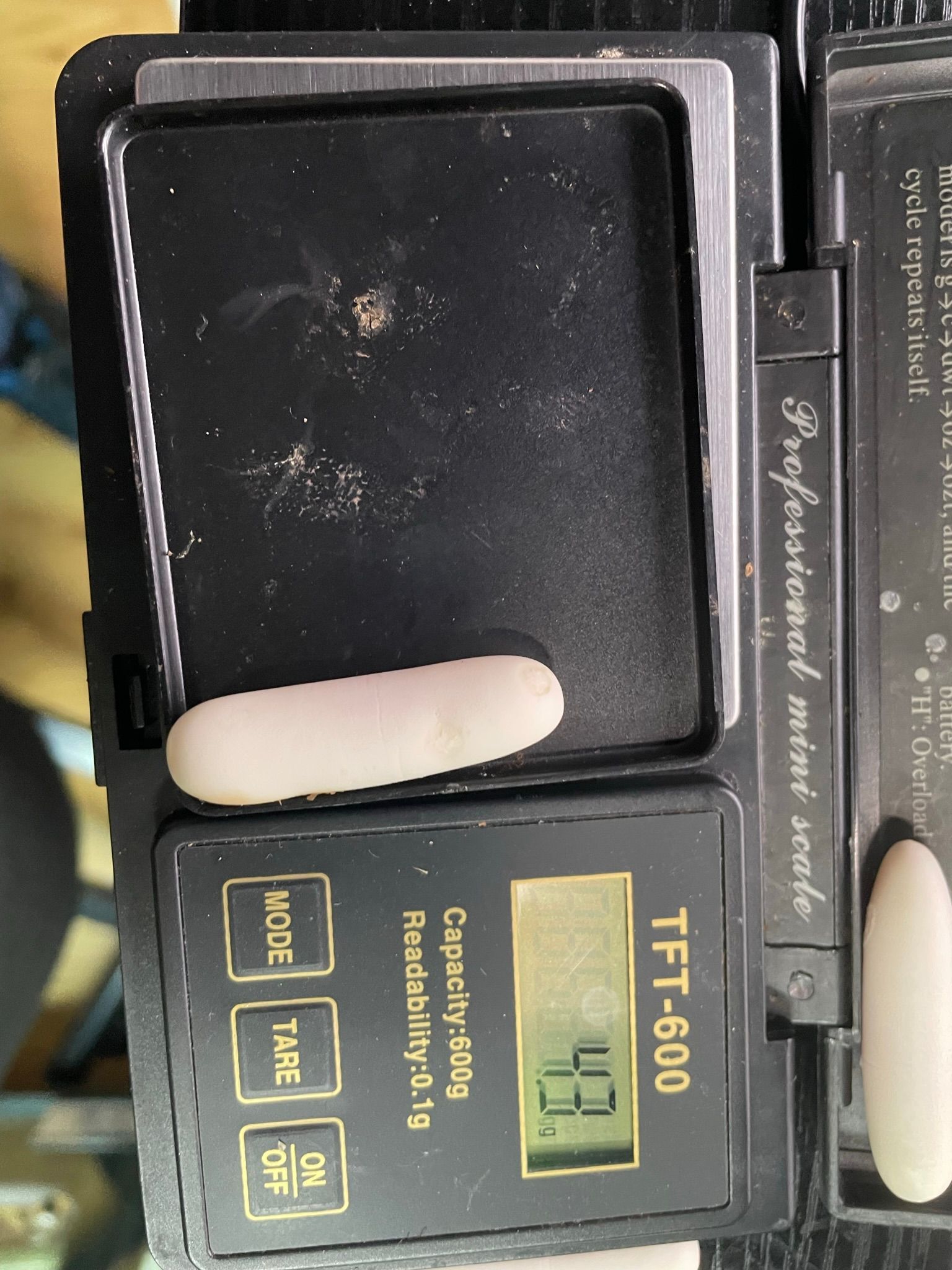
| Egg weight | 4,0–4,3 g |
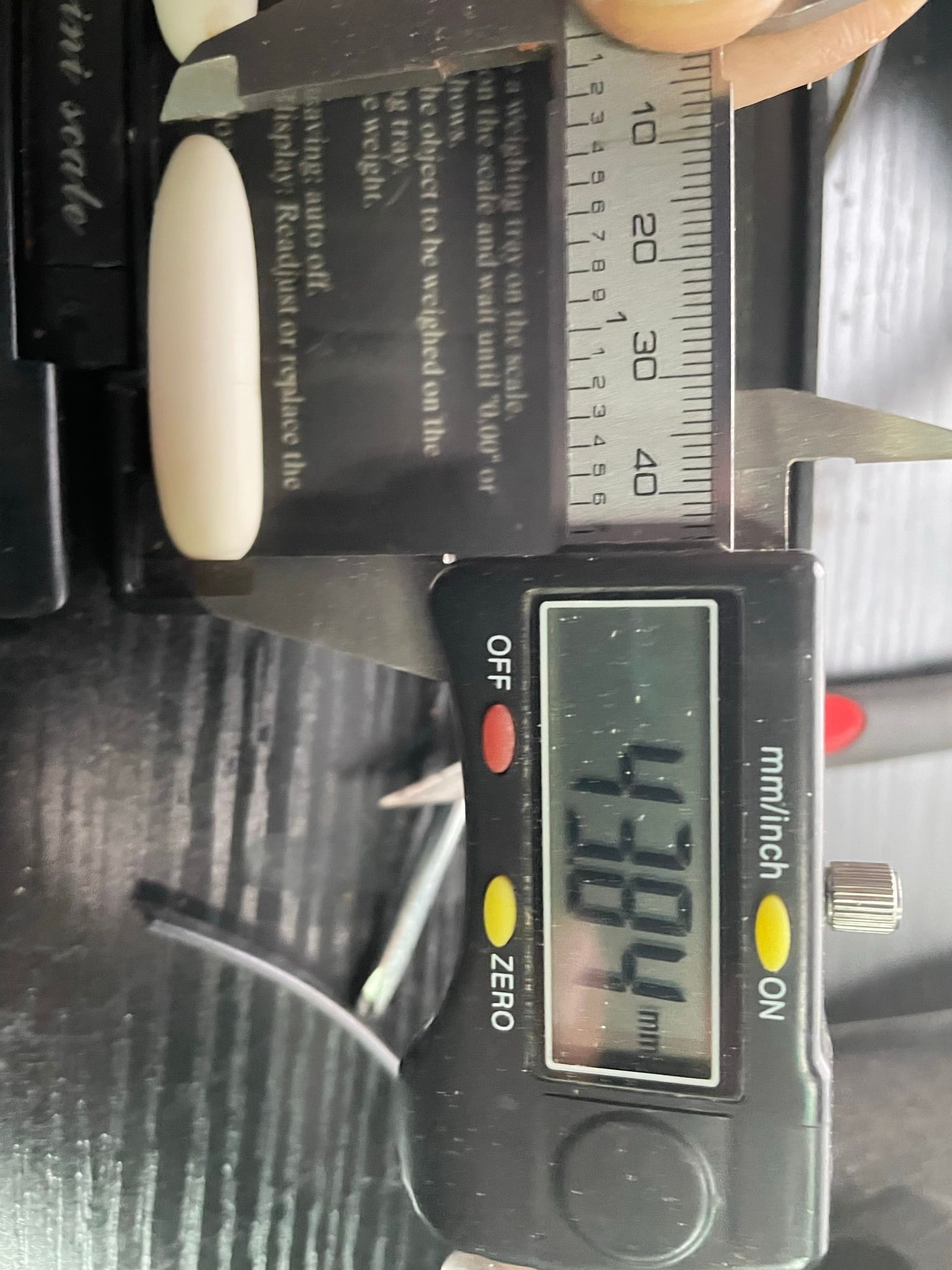
| Egg length | 40–44 mm |
| Eidurchmesser | 10,9 mm |
| Incubation temperature | 29,5 °C |
| Incubation period | 59–60 days |
| Hatchling weight | 3,6 g |
| Hatchling length | 31,5 cm |
| Female resumed feeding | 4 days after oviposition |
| Erste Häutung Jungtiere | 12 days after hatching |
Introduction
In March 2022, I acquired a trio (1.2) of Oxybelis aeneus from LS-Reptiles.
During sex determination, I immediately noticed clear differences compared to my Oxybelis fulgidus. When probing, the probe entered approximately four to six subcaudal scales in the females, whereas in the males it reached six to nine subcaudal scales.
For comparison, in my Oxybelis fulgidus females the probe rarely passes more than two subcaudal scales. This difference initially surprised me and made me question my observations.
A video showing the unboxing and initial examination of the animals can be found in the corresponding blog post.
First Signs of Gravidity
While unpacking the animals, I noticed that one of the females had a distinctly enlarged mid-body region.
After arriving, the female accepted geckos on two occasions before shedding on March 18, 2022. At the time of shedding, the eggs were already clearly visible.
Following the shed, the female stopped feeding completely.
During the following week, she displayed noticeably restless behavior. Since the eggs were clearly visible and positioned deep within the body cavity, I was temporarily concerned about the possibility of egg retention (dystocia).
The female frequently remained at the front glass of the enclosure and repeatedly attempted to squeeze between the glass and the front frame. To reduce this stimulus, I temporarily covered the front glass with a dark cloth.
Preparation of the Nesting Site
To provide the female with several nesting options, I installed multiple hides and egg-laying sites at different heights throughout the enclosure.
During my literature research, I found reports suggesting that Oxybelis aeneus often deposits its eggs close to the ground in the wild. Interestingly, my second female and the male regularly occupied the lower part of the enclosure.
The gravid female, however, never displayed this behavior.
Ultimately, she selected a shallow plastic nesting box installed in an elevated position where temperatures remained between 28 and 29 °C.
Oviposition
On March 30, 2022, twelve days after the pre-laying shed (PLS), the female successfully deposited three eggs.
The eggs were laid directly inside the prepared nesting box.
Their shape closely resembled the eggs of Leptophis species and was considerably more elongated than that of many other colubrid snakes.
Egg measurements
- Weight: 4.0–4.3 g
- Length: 40–44 mm
- Diameter: 10.9 mm
Only four days after oviposition, on April 3, 2022, the female resumed feeding.
Incubation
The eggs were incubated at a constant temperature of 29.5 °C.
The incubation period lasted 59–60 days.
Throughout incubation, all eggs developed normally without complications.
Hatching
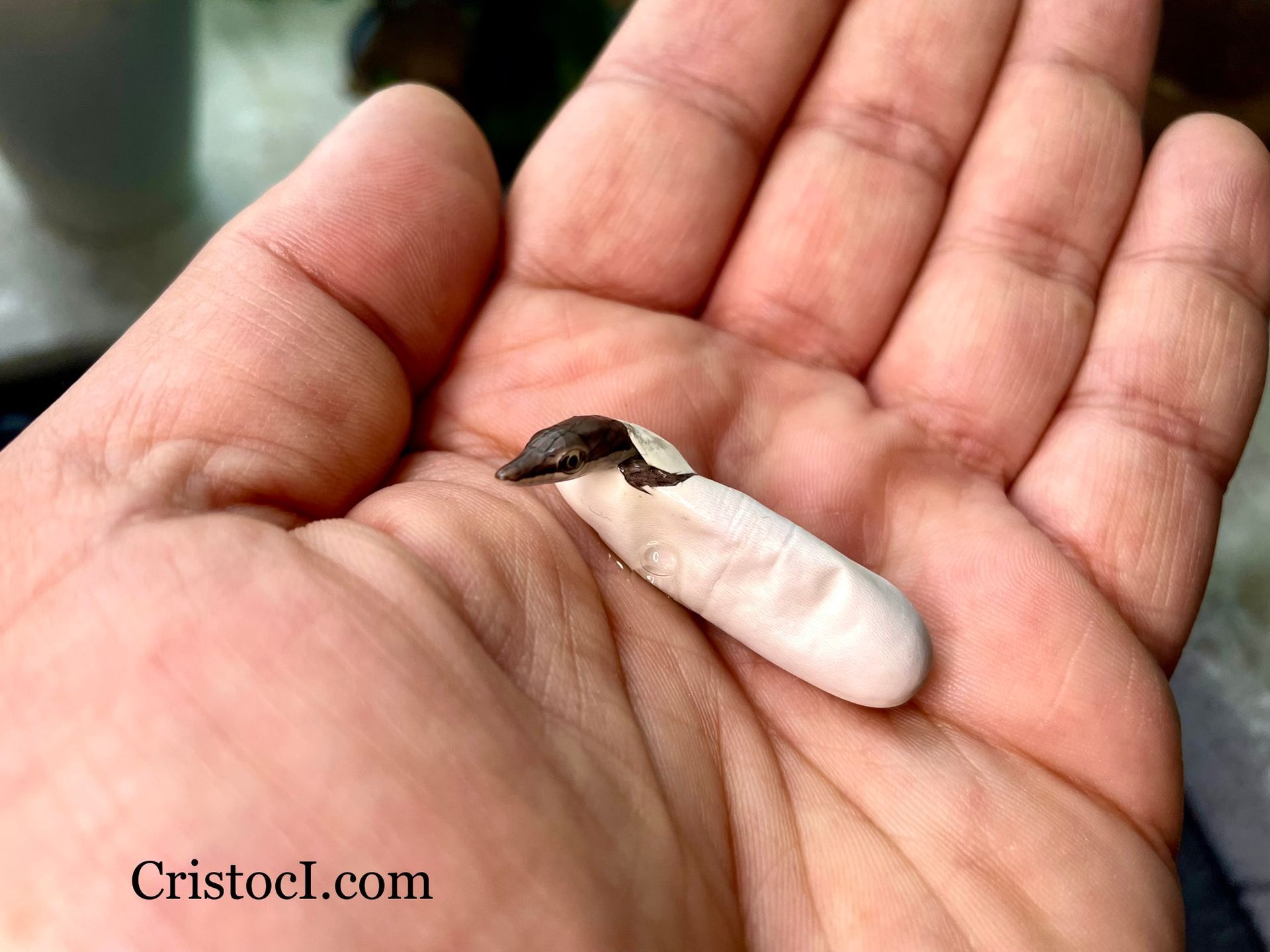
After 59–60 days of incubation, all hatchlings emerged successfully.
The neonates already closely resembled the adults in appearance and displayed the characteristic morphology and coloration of the species.
Hatchling data
- Weight: 3.6 g
- Total length: 31.5 cm
Rearing
The hatchlings were housed individually in 40 cm cube enclosures under subtropical environmental conditions.
The first shed occurred 12 days after hatching.
Following this initial shed, all hatchlings readily accepted juvenile mourning geckos (Lepidodactylus lugubris) as their first prey.
Subsequent growth and development proceeded without any notable difficulties.
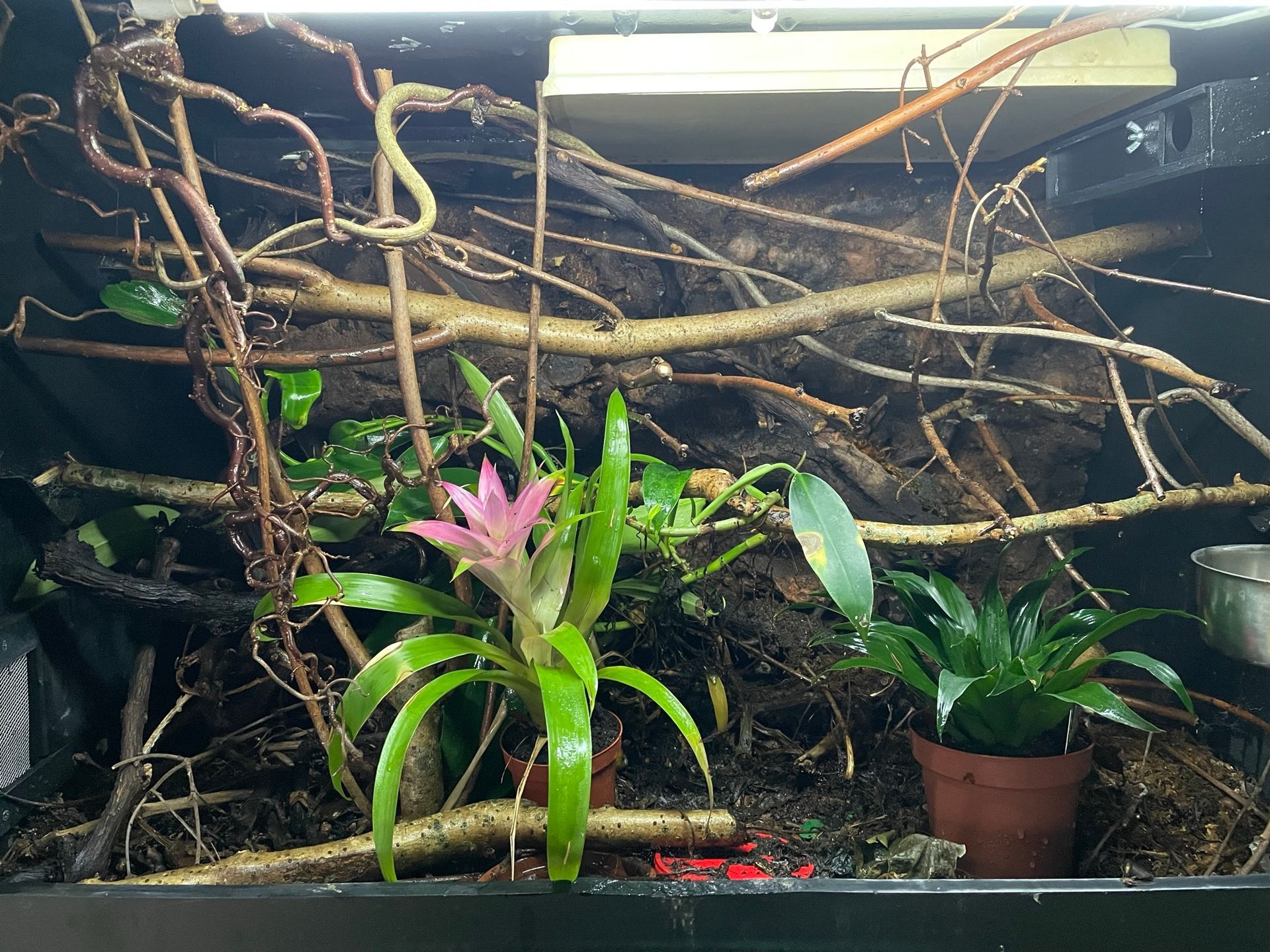
Top photo: Captive enclosure housing one male and two female Oxybelis aeneus.
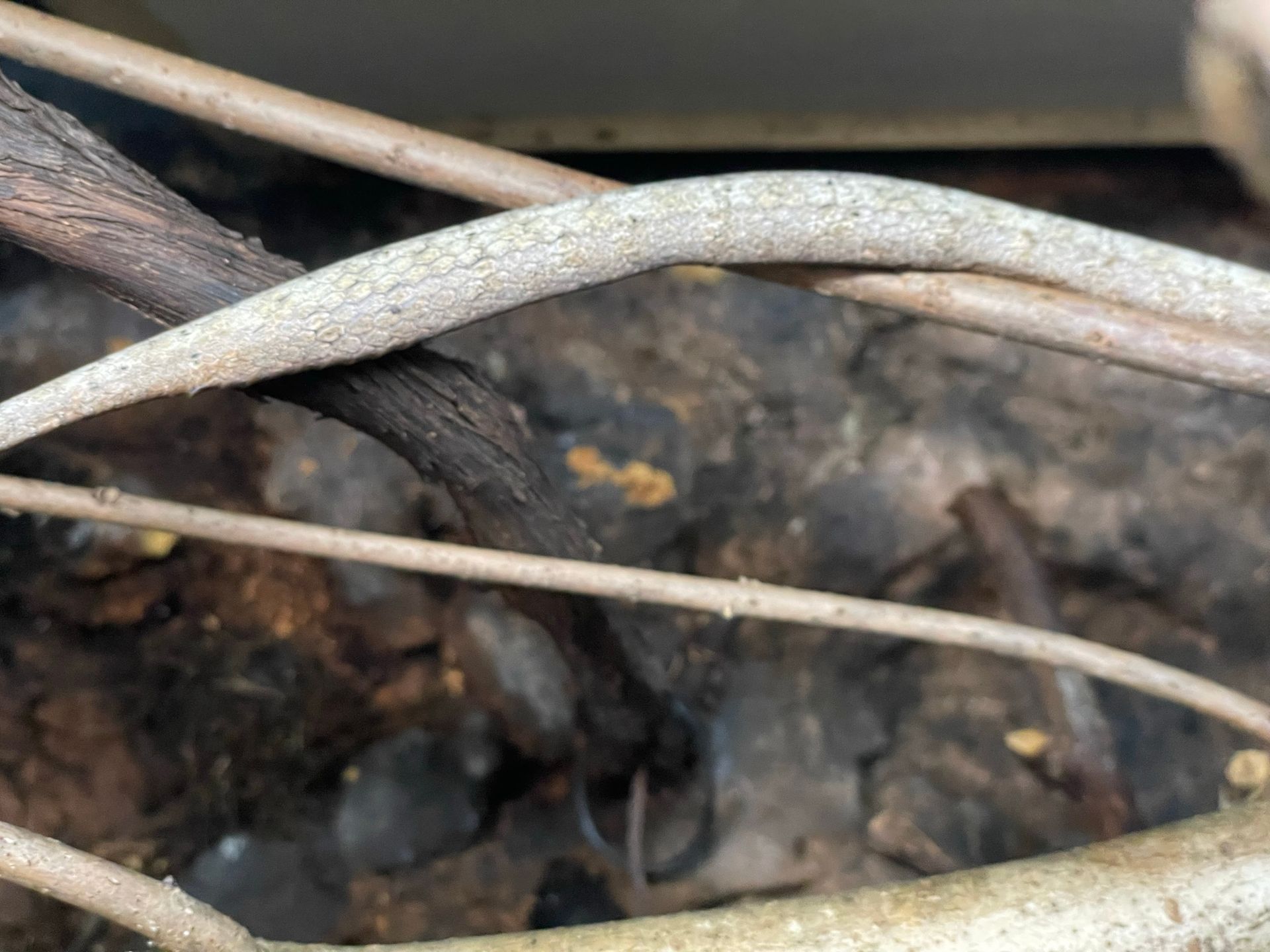
Bottom photo: Gravid female shortly before oviposition, with three clearly visible eggs.
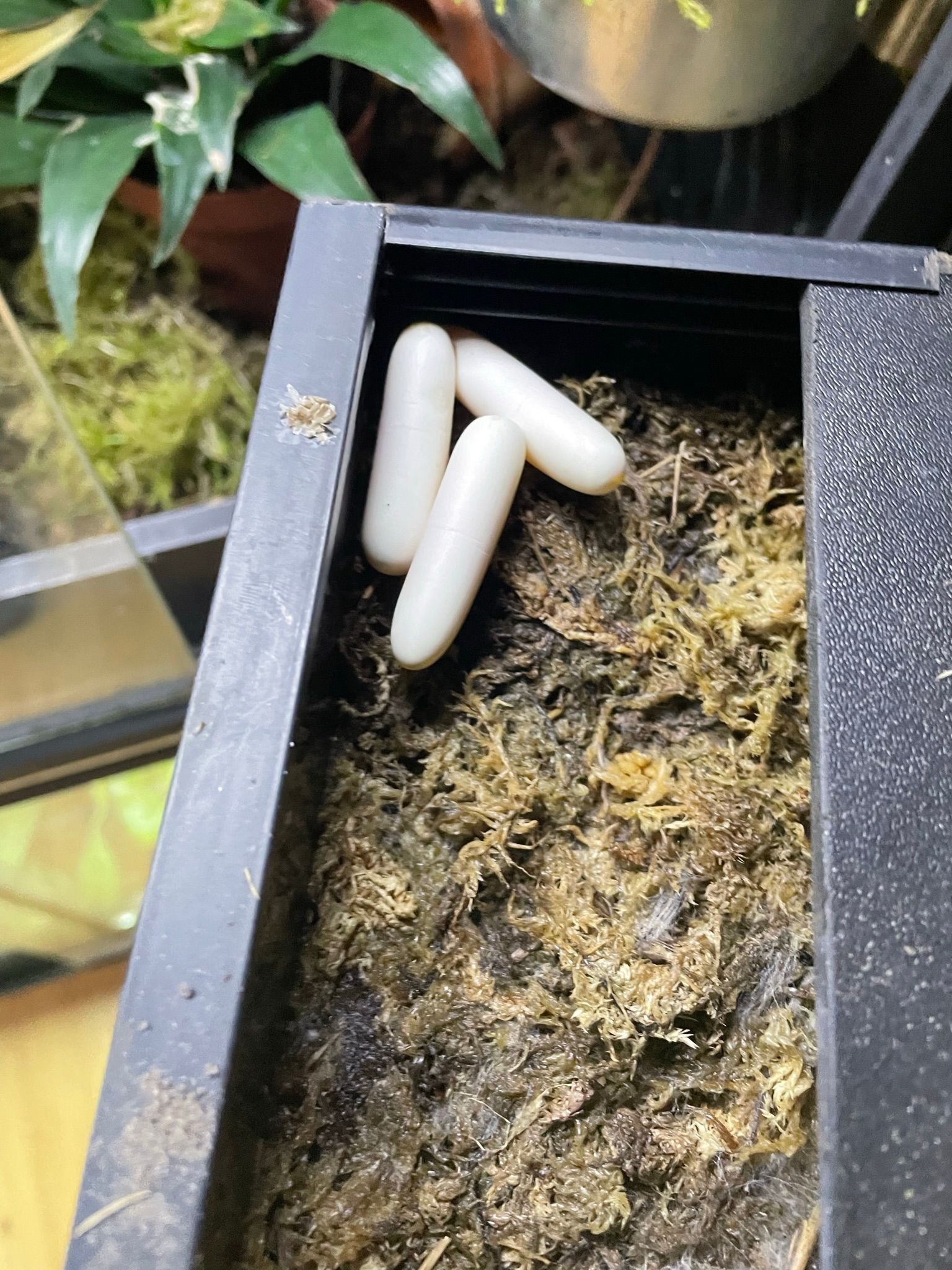
Freshly laid Oxybelis aeneus eggs in the nesting box.
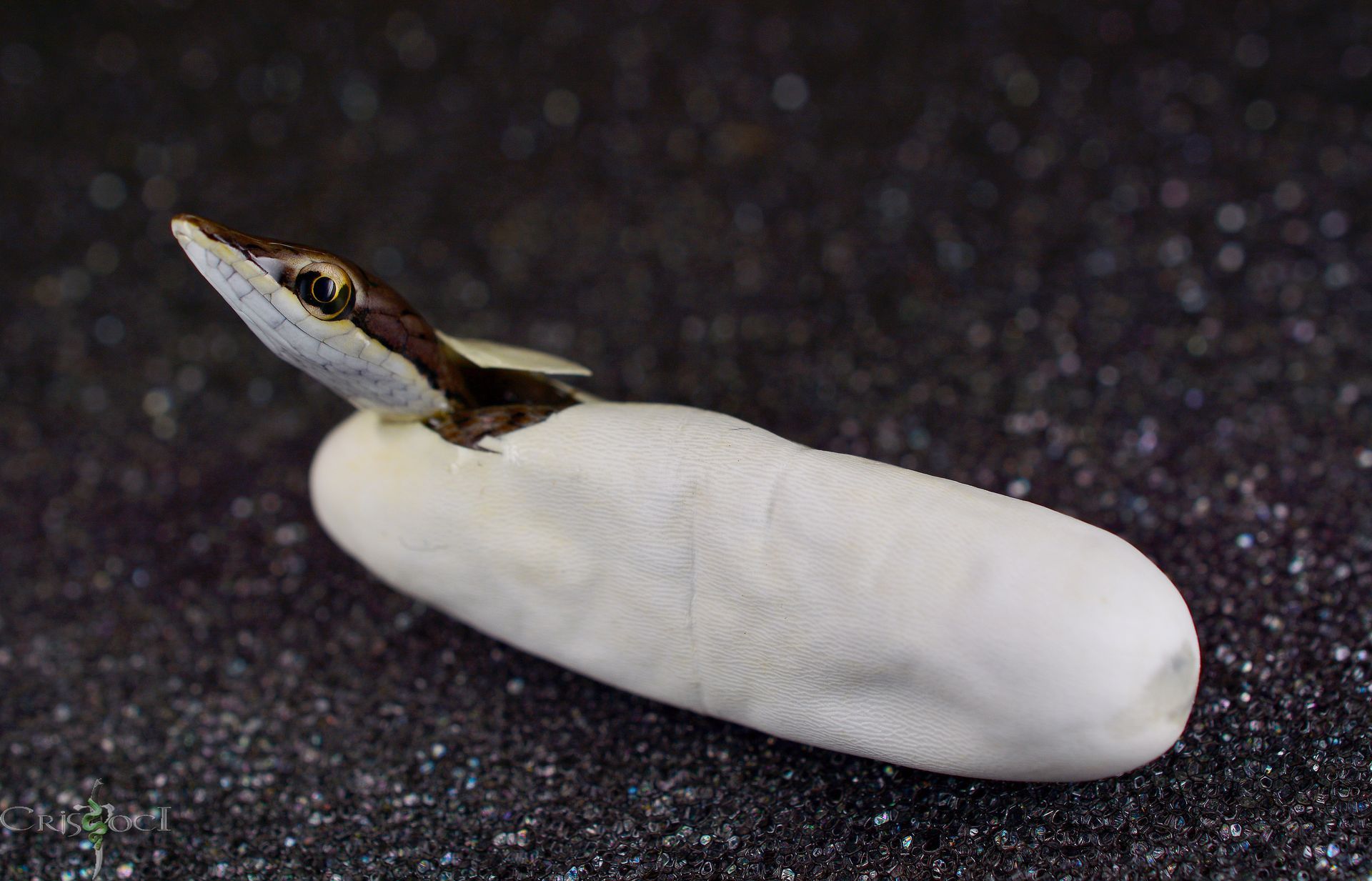
Egg Characteristics