Leptophis ahaetulla – Breeding Report (2022–2023)
Husbandy
| Parameters | Value |
|---|---|
| In captivity | 30.05.2021 |
| Terrariun | 90x60x60 cm ProCage |
| Lighting | T5 UVA/UVB |
| Heating | Heatpanel |
| Misting system | M.R.S Beregnungsanlage |
| Environmental control | Biotherm 2 |
| Climate management | Seasonal climate simulation (Costa Rica) |
Introduction
I have kept Leptophis ahaetulla since May 30, 2021.
The breeding pair is housed in a 90 cm ProCages PVC enclosure equipped with an overhead heat panel, SolarRaptor UVA/UVB lighting, and an M.R.S. automatic misting system. Environmental conditions are controlled using a Biotherm 2 thermostat.
Seasonal conditions are maintained to simulate the natural climatic cycle of Costa Rica.
Breeding Season 2022
Courtship and Mating
Documented copulations were observed on the following dates:
- Late December 2021
- January 7, 2022
- January 12, 2022
During this period, the male became noticeably more active and restless, accompanied by a prolonged fasting period of up to 89 days.
Gravidity and Pre-laying Behavior
During early gravidity, the female displayed a markedly increased appetite. Her final meal was taken approximately 28 days before oviposition.
The pre-laying shed (PLS) occurred on March 6, 2022.
Six days later, on March 12, 2022, the female deposited her clutch.
On the evening of March 11, she was still actively moving throughout the enclosure. By the following morning she had already occupied the nesting site.
Based on the documented mating dates, gestation was estimated at approximately two months following the last copulation.
Oviposition (2022)
Oviposition most likely began around midday on March 12, 2022, and was completed within a relatively short period.
The female selected a narrow, custom-built elevated hide that had permanently been installed high within the enclosure, where temperatures remained consistently around 28 °C.
Clutch Data
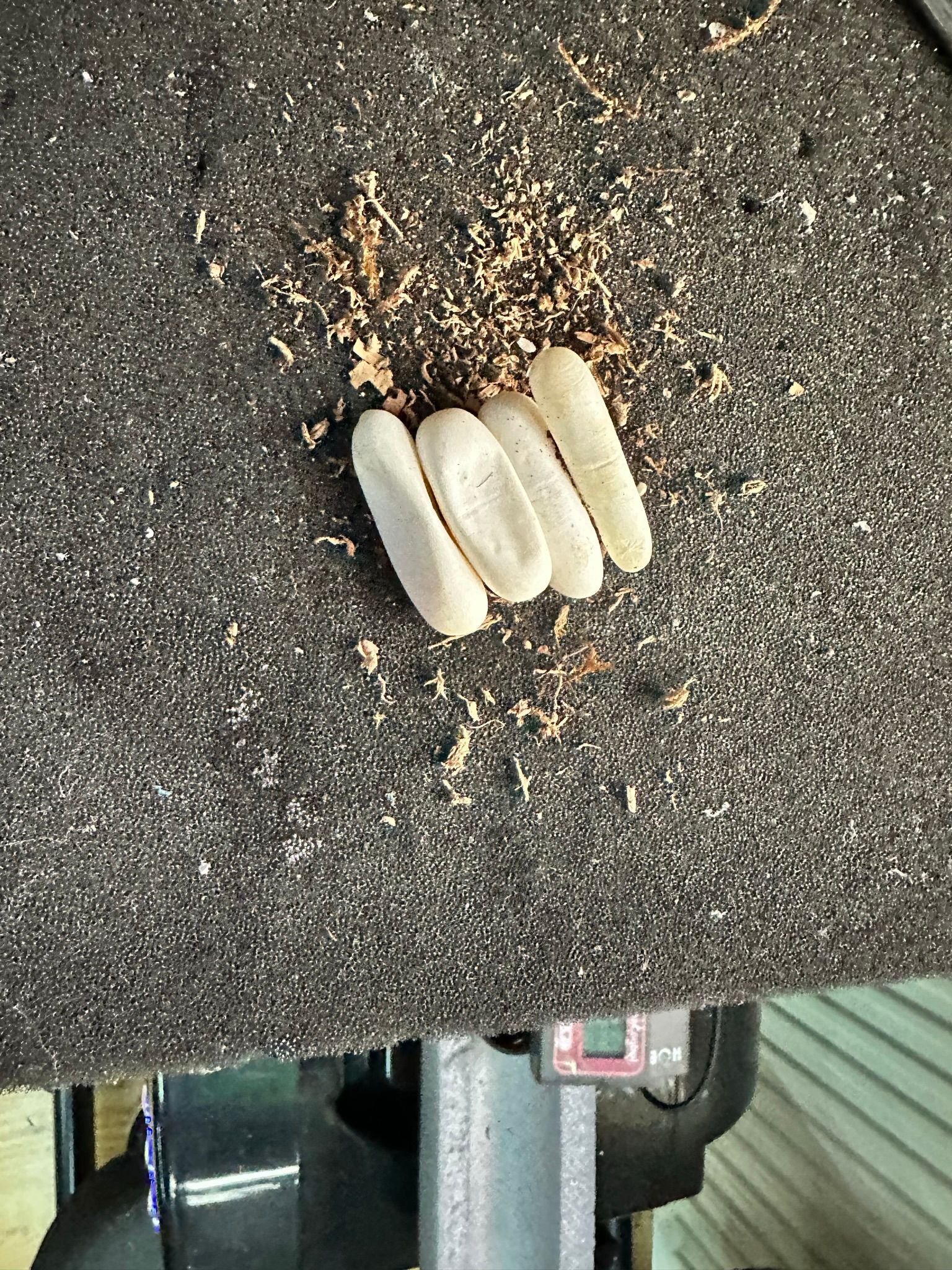
- Clutch size: 4 eggs
- Total clutch mass: 14.3 g
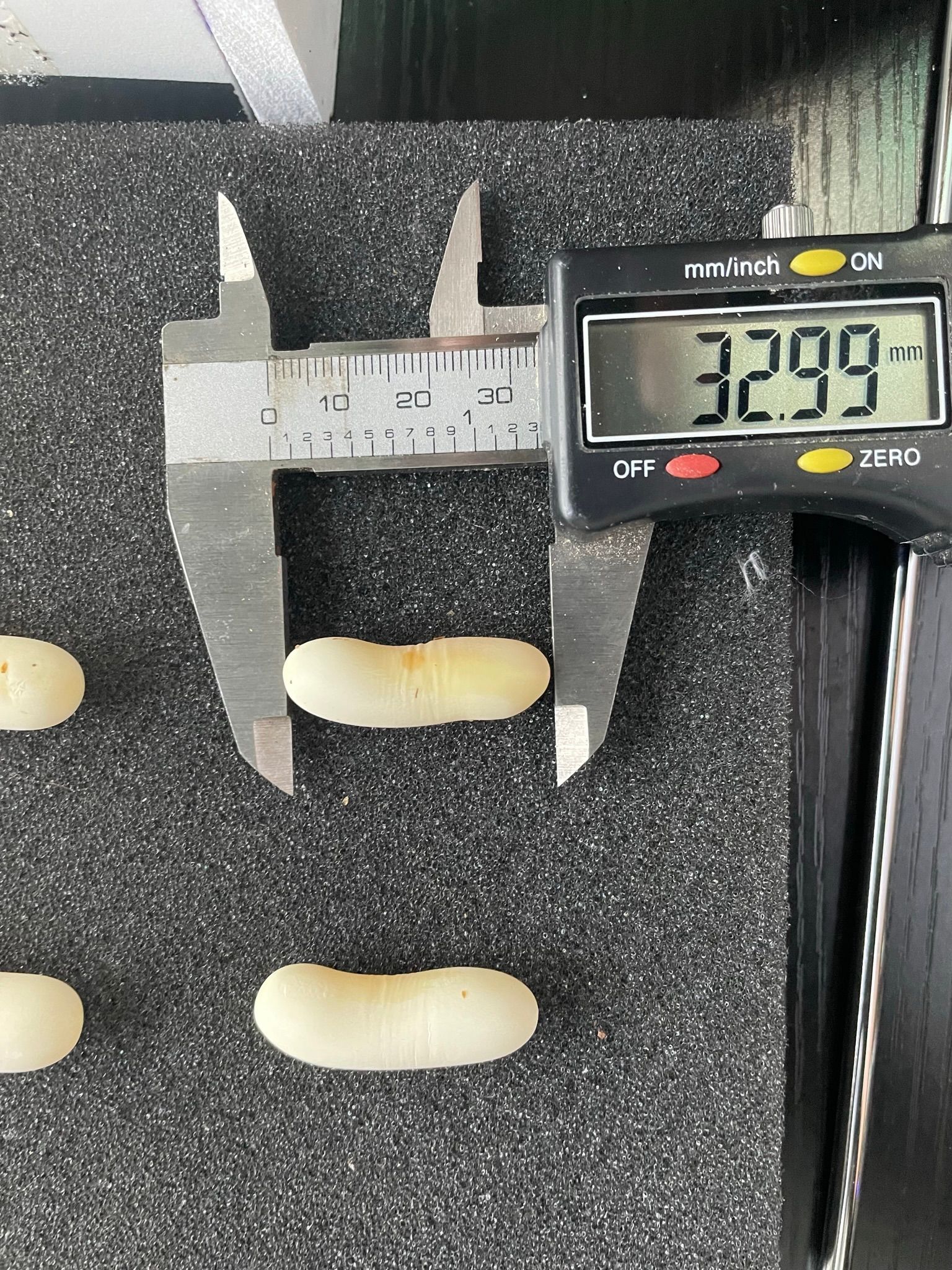
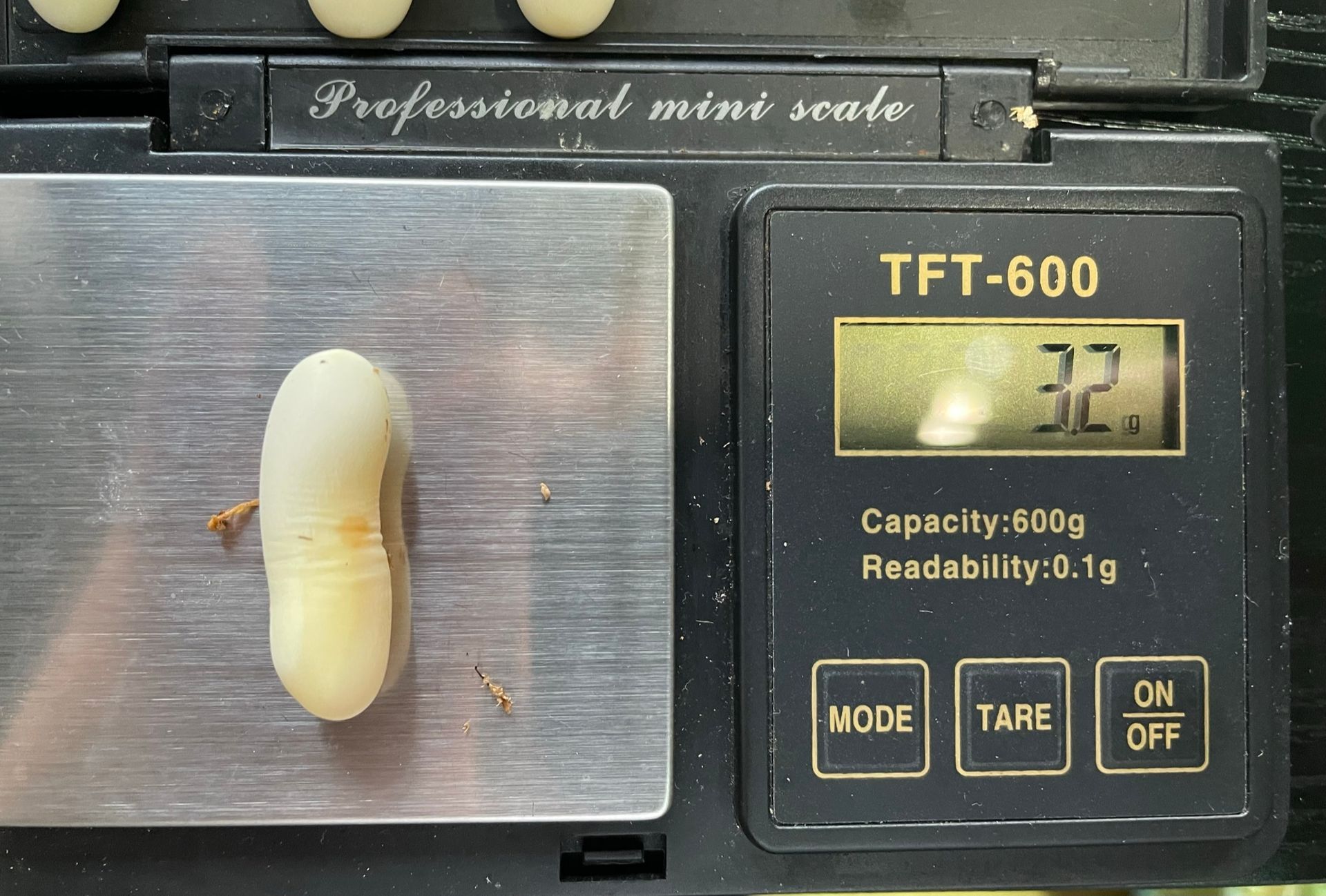
- Individual egg mass: approximately 3.2–3.8 g
- Egg length: approximately 33 mm
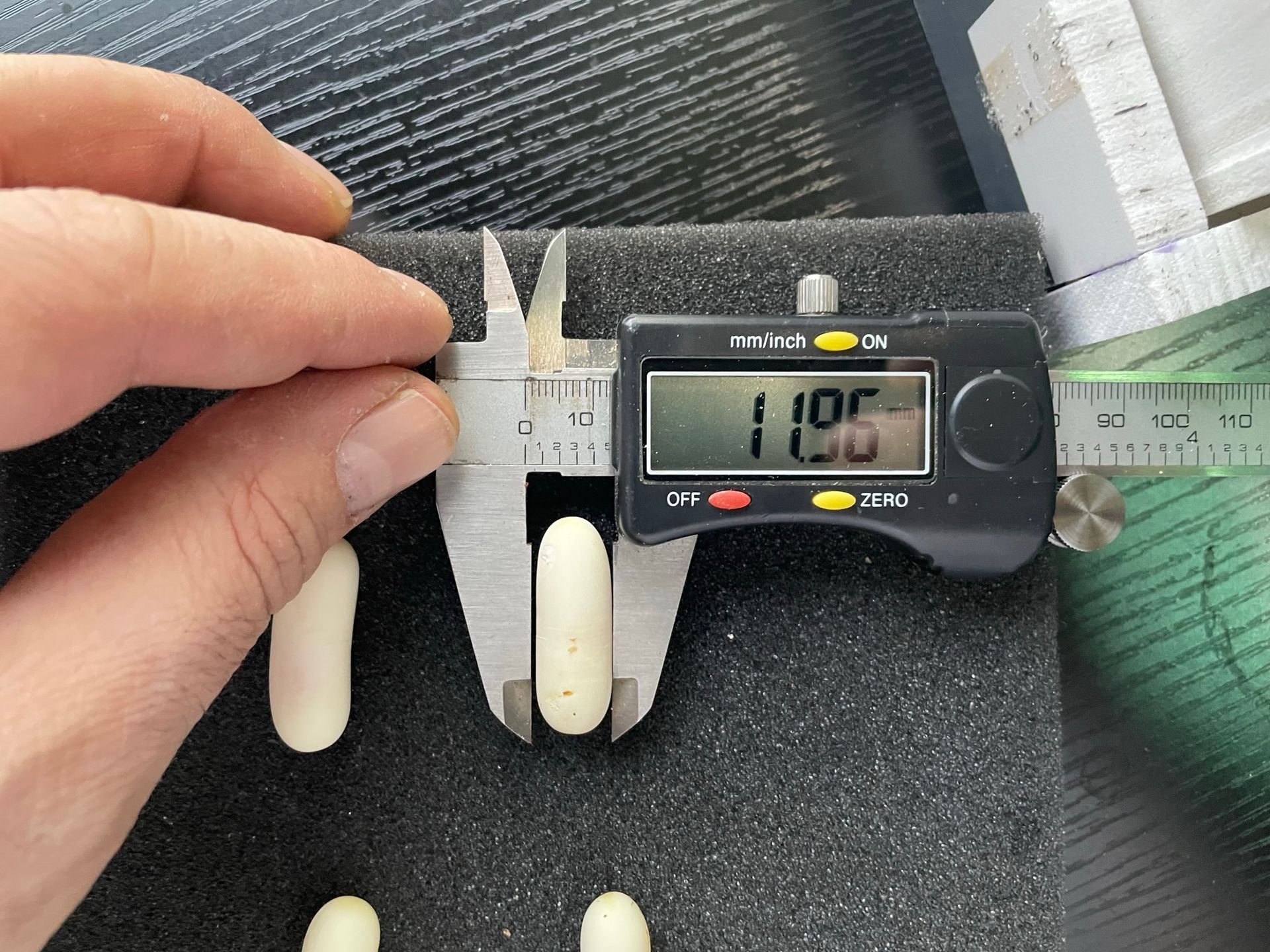
- Egg diameter: approximately 12 mm
- Fertility: 100%
All eggs proved to be fertile.
Incubation (2022)
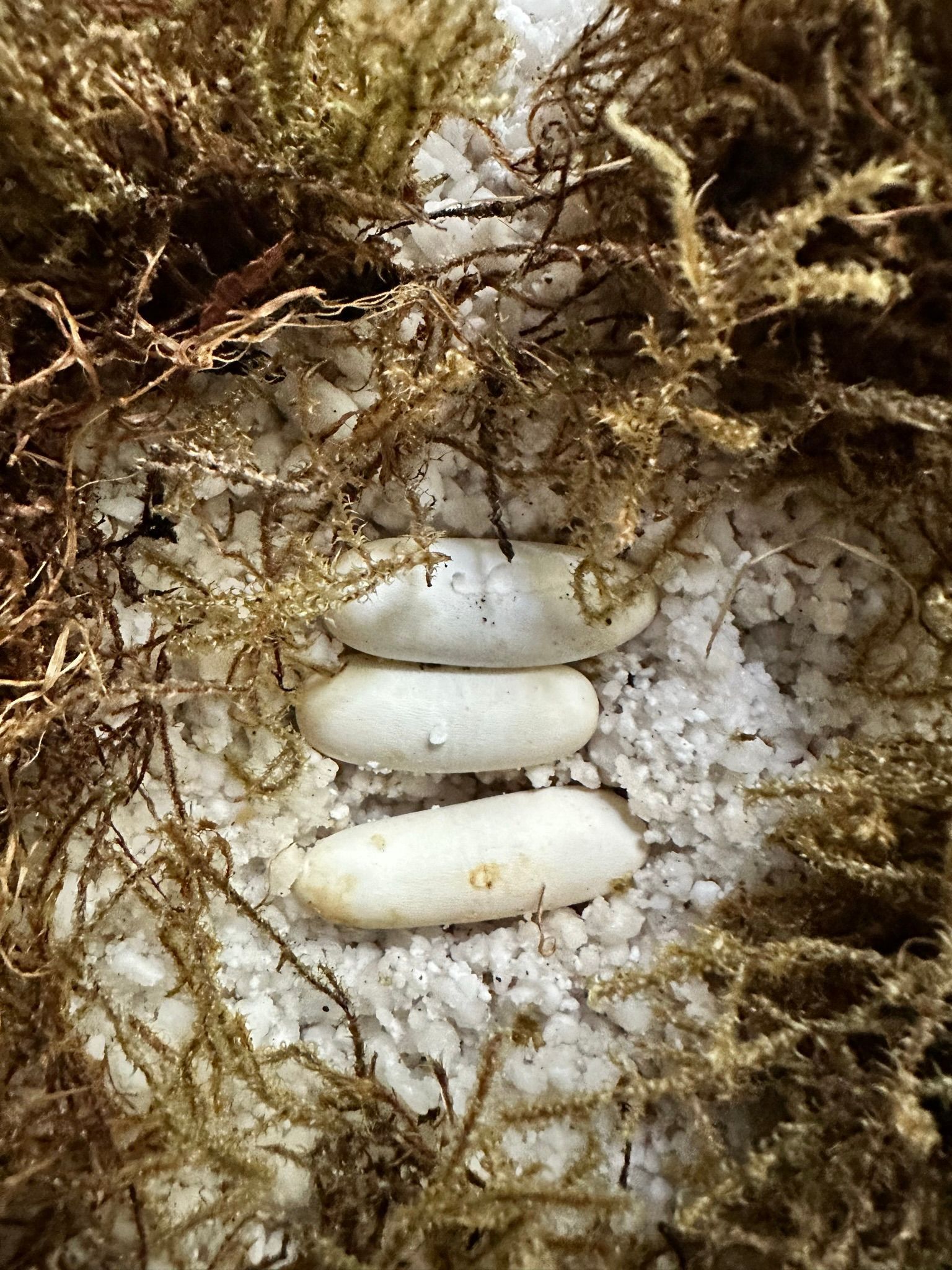
The eggs were incubated in a forced-air incubator on perlite at 29.5–30.0 °C.
Incubation period: 66–67 days.
Hatching
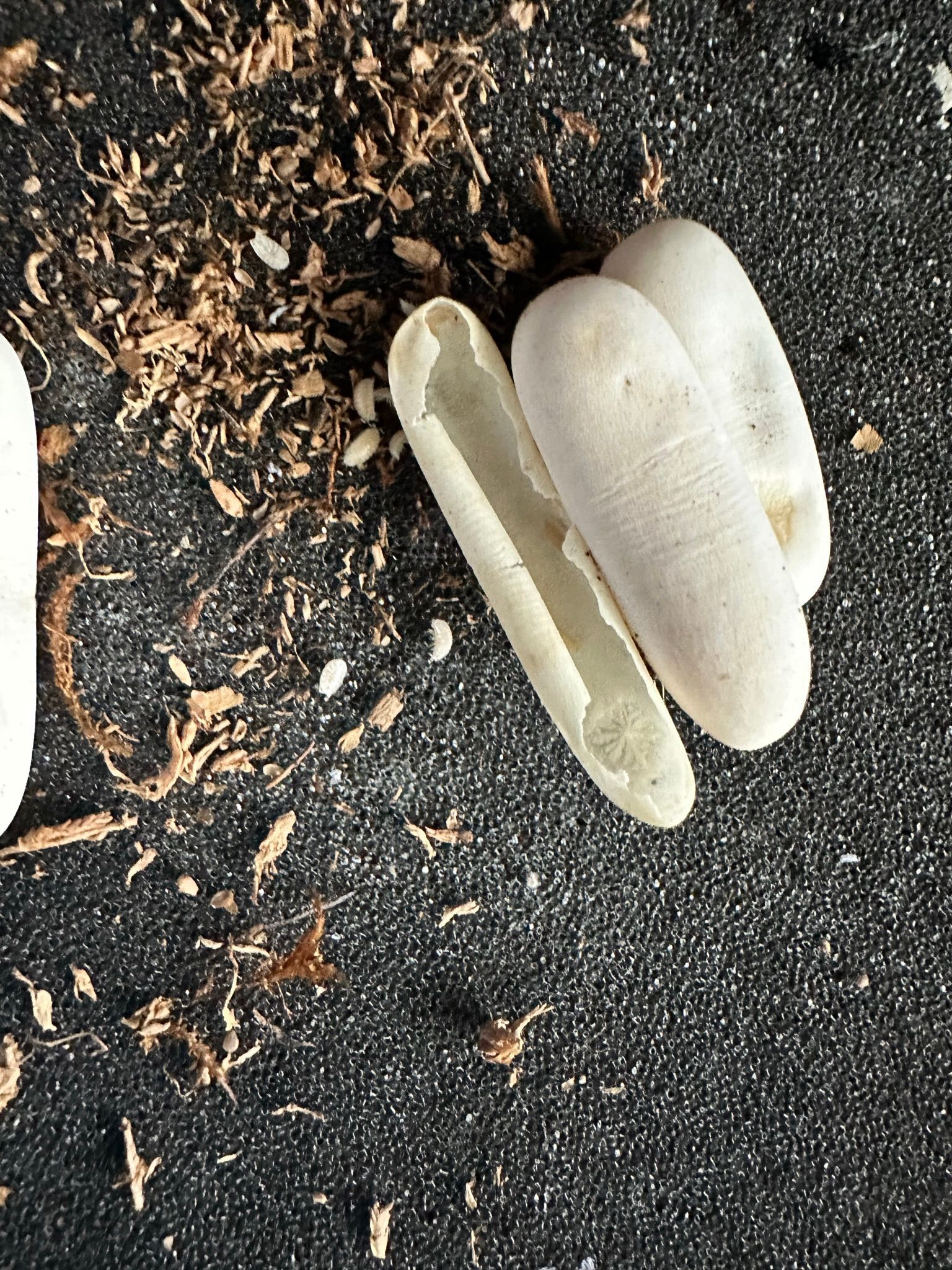
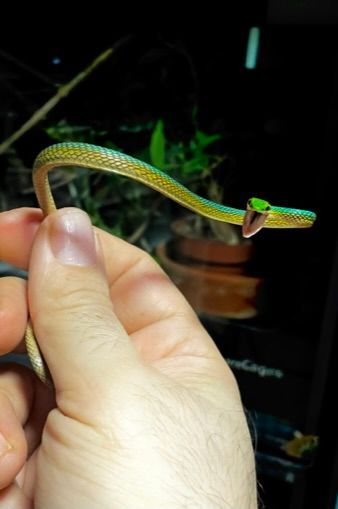
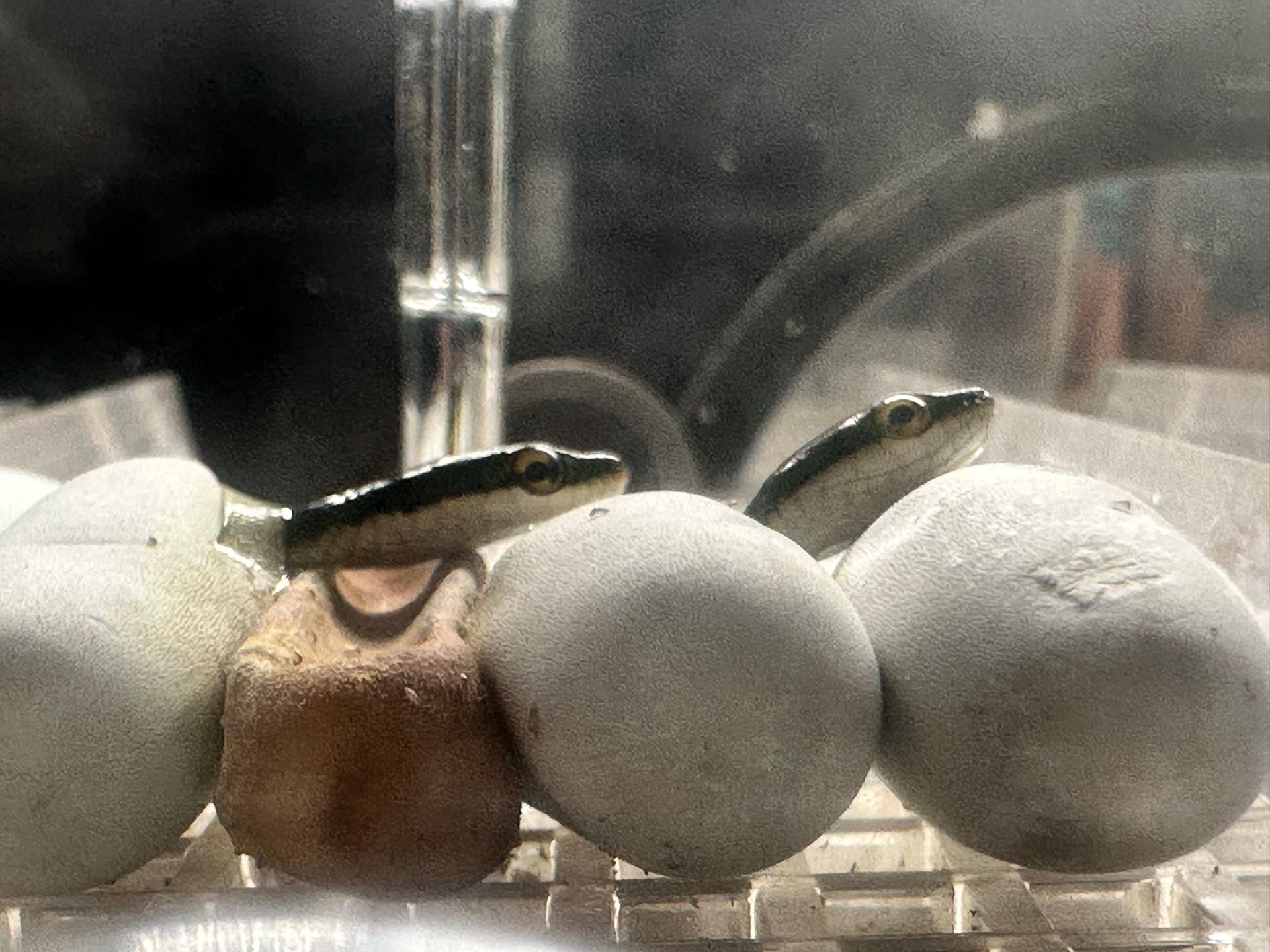
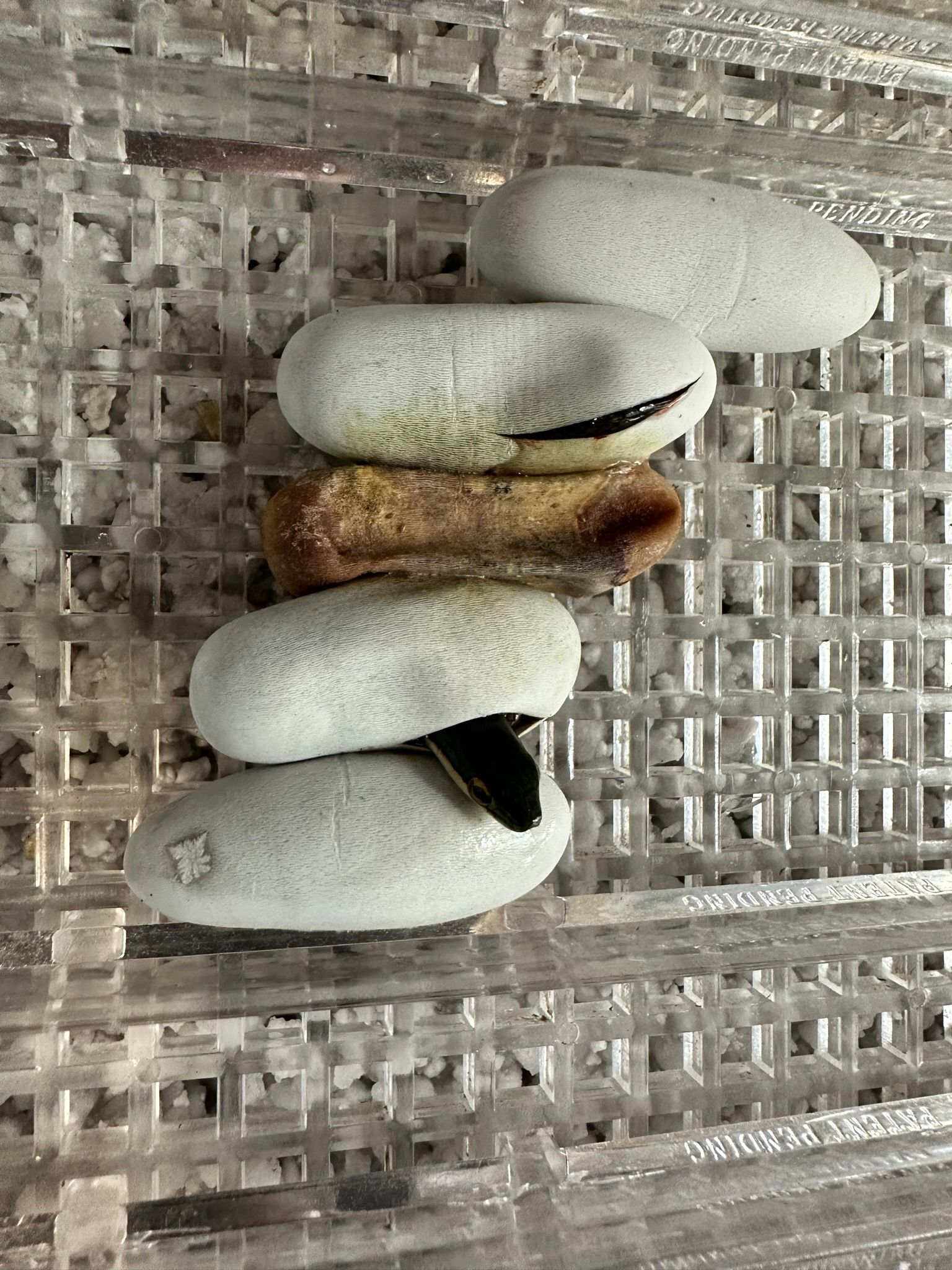
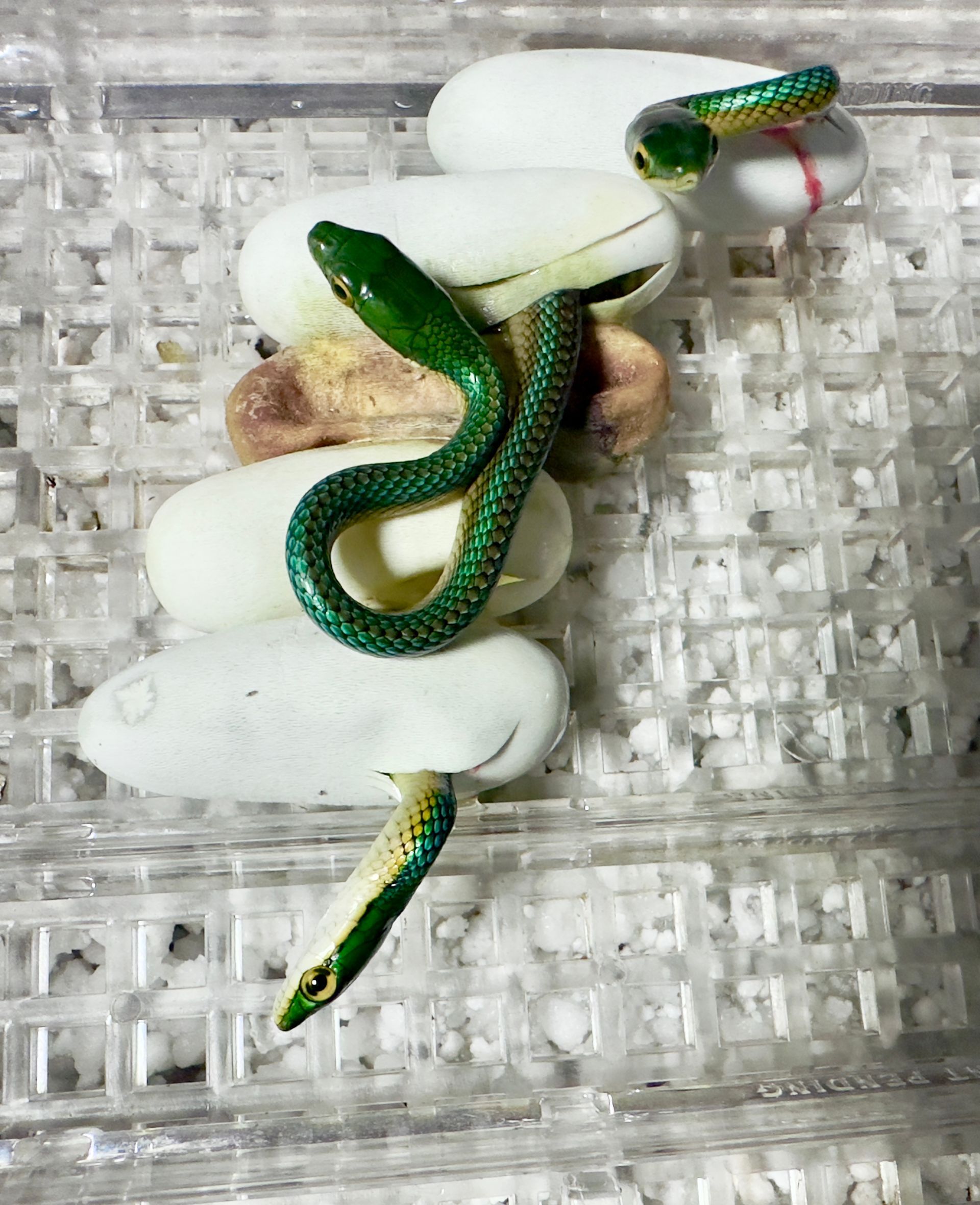
The first hatchling externally pipped on day 66 (May 17, 2022) and emerged completely on day 67 (May 18, 2022).
Measurements
- Weight: 2.9 g
- Total length: 31 cm
The remaining three hatchlings emerged throughout day 67, resulting in a 100% hatching success.
Rearing (2022)
The hatchlings were housed individually in 40 cm cube enclosures containing dense live vegetation, a water bowl, and paper towel substrate.
Environmental conditions:
- Relative humidity: >90%
- Temperature: 21–29 °C
The first shed occurred after 11–12 days.
One hatchling accepted its first meal shortly after shedding, whereas the remaining individuals did not begin feeding until nearly one month later. This delayed onset of feeding was also observed in subsequent clutches.
First prey items consisted of juvenile Lepidodactylus geckos.
Additional Observations (2022)
On March 20, 2022, one egg developed a yellowish discoloration followed by fungal growth.
The egg was removed without any apparent negative effects on the remaining clutch.
Breeding Season 2023
Mating
Only a single copulation was documented:
- March 5, 2023
Gravidity
Approximately one month after mating, the female showed a clearly visible increase in body girth.
The pre-laying shed occurred on April 26, 2023.
As in the previous season, the female displayed intensive nest-searching behavior and again preferred unusual nesting sites in the upper left portion of the enclosure.
On May 2, 2023, she became increasingly restless, particularly during the early afternoon. The eggs were clearly visible through the body wall and positioned deep within the body cavity.
Oviposition (2023)
Oviposition began at approximately 16:30 on May 2, 2023.
Unlike the previous year, the female selected a nesting site beneath a piece of cork bark on the enclosure floor, where she remained stretched out in a loosely coiled position. During oviposition she exhibited pronounced respiratory movements but otherwise remained almost motionless.
Oviposition data
- Start: approximately 16:30
- Completion: approximately 19:00
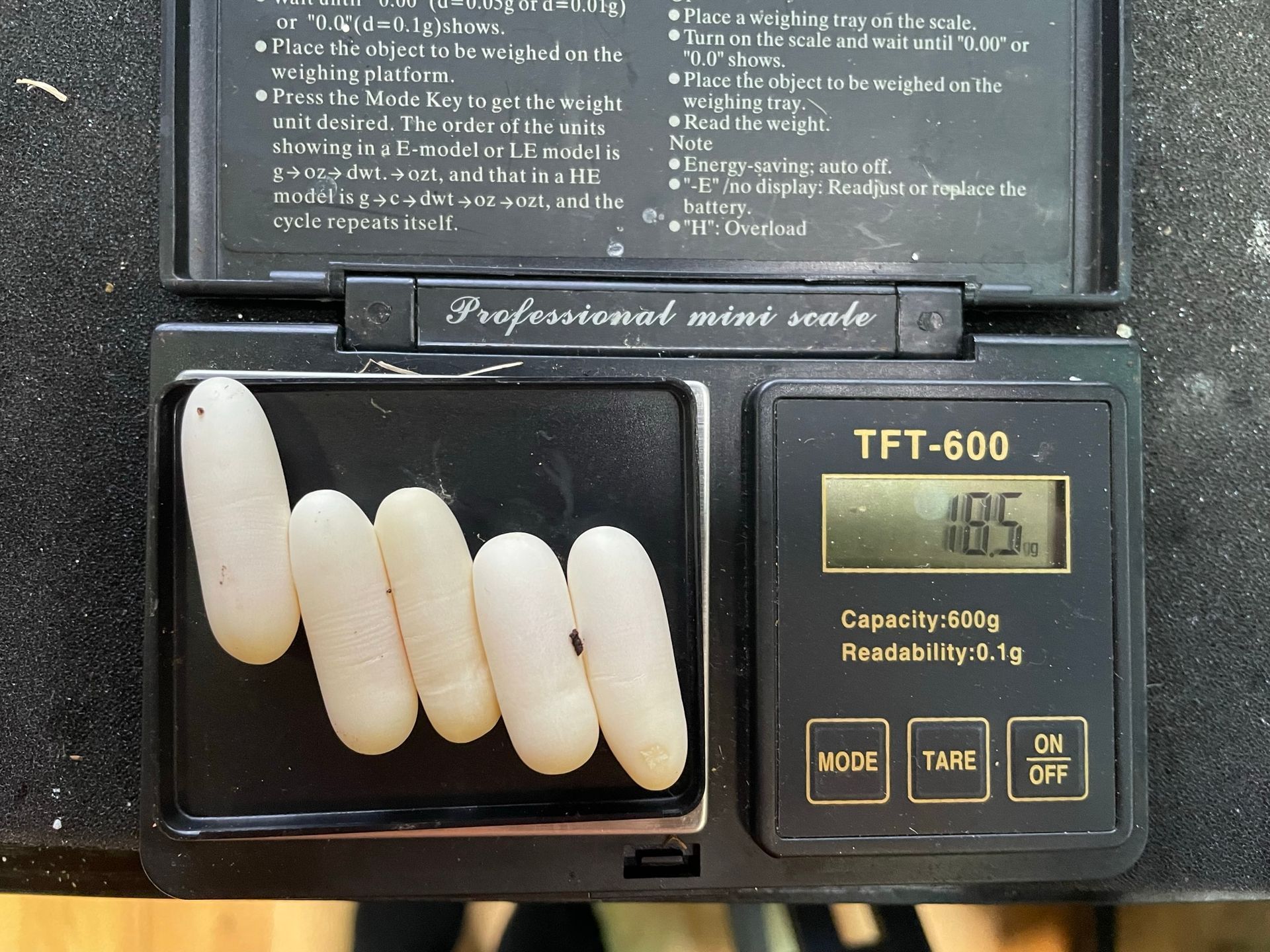
- Clutch size: 5 eggs
- Total clutch mass: 18.5 g
Incubation (2023)
The eggs were incubated in a forced-air incubator at 29.5 °C on perlite inside a suspended mesh incubation box.
During incubation, cockroaches gained access to the incubation container, and one egg was possibly damaged.
Development
Approximately 30 days into incubation, one egg began to deteriorate.
Despite remaining within the clutch, the damaged egg appeared to have no negative effect on the development of the remaining eggs.
Approximately one week before hatching, two eggs showed slight dimpling.
Hatching (2023)
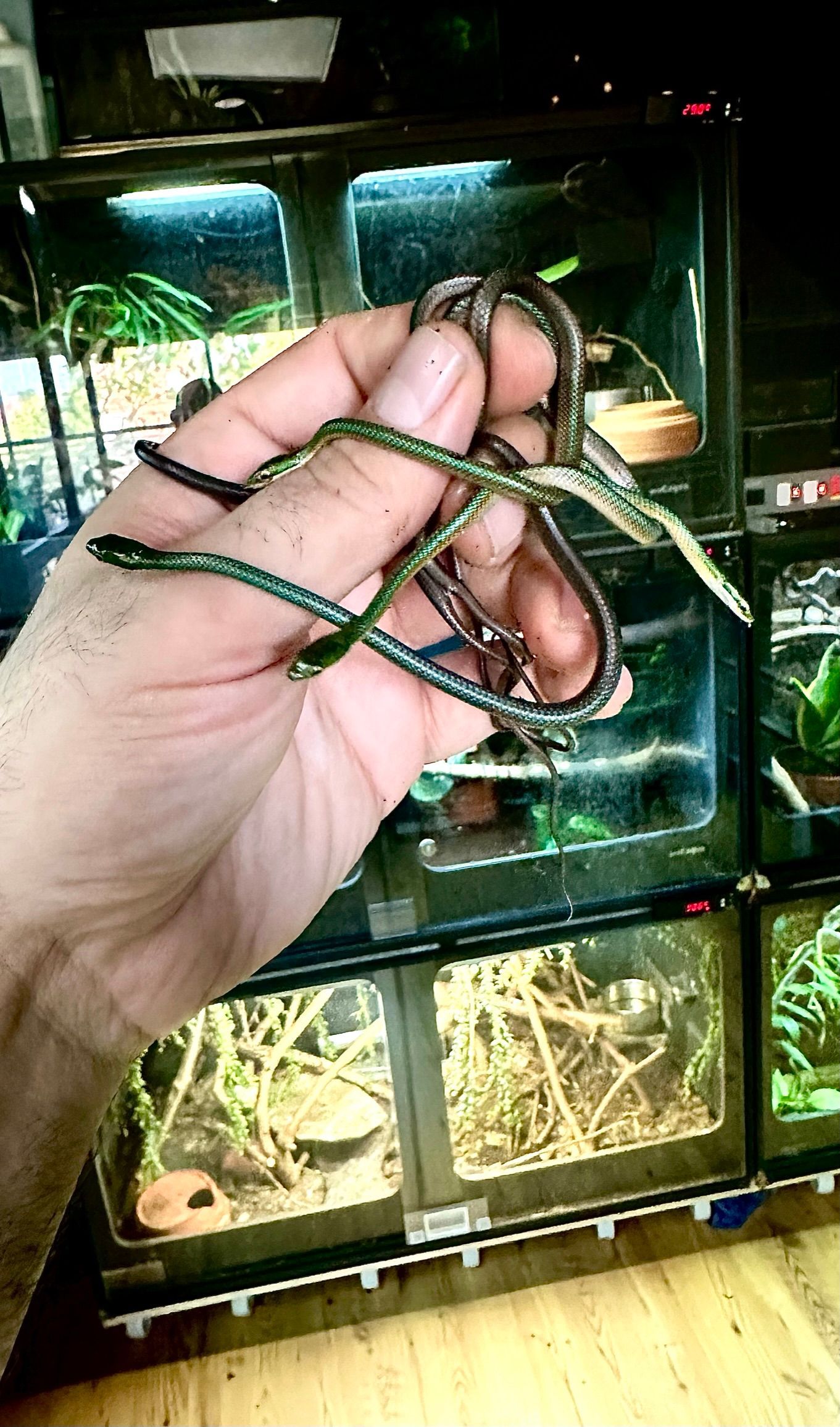
Two hatchlings emerged on day 65 of incubation (July 7, 2023).
Two additional hatchlings emerged overnight on day 66.
A total of four hatchlings were produced.
Hatchling Data
- Weight: 3–4 g
- Housing: individual Exo Terra 30 cm cube enclosures
The first shed occurred after 11–12 days.
Initial feeding took place approximately one month after hatching using live juvenile Lepidodactylus geckos.
Second Clutch (2023)
At the time, I was unaware that this species might produce multiple clutches within a single breeding season.
On July 23, 2023, the female once again displayed increased activity on the enclosure floor.
Relevant observations included:
- Pre-laying shed: July 16, 2023
- Feeding: July 16 and July 23, 2023
A second clutch, estimated to contain approximately four eggs, was probably deposited shortly afterward. However, the exact date remains unknown.
The clutch was only discovered accidentally on August 13, 2023, after returning from vacation.
The eggs had been deposited beneath an inverted flower pot on the enclosure floor. One egg had already been consumed by isopods, while the remaining three eggs were severely dehydrated.
The surviving eggs were transferred to the incubator on August 13, half-embedded in perlite and covered with moist sphagnum moss. Within two to three days, the eggs visibly rehydrated and regained normal appearance.
Additional Observations
On July 23, 2023, the female developed two distinct kinks along the vertebral column. Initially, trauma or a condition comparable to the "cigar back" syndrome described in pythons was suspected.
Following the discovery of the second clutch, these abnormalities appeared more likely to have been associated with oviposition or temporary disturbances in mineral metabolism.
By August 23, 2023, the spinal kinks had become considerably less pronounced. The female continued to feed, hunt, and defecate normally, with no apparent impairment of her overall condition.
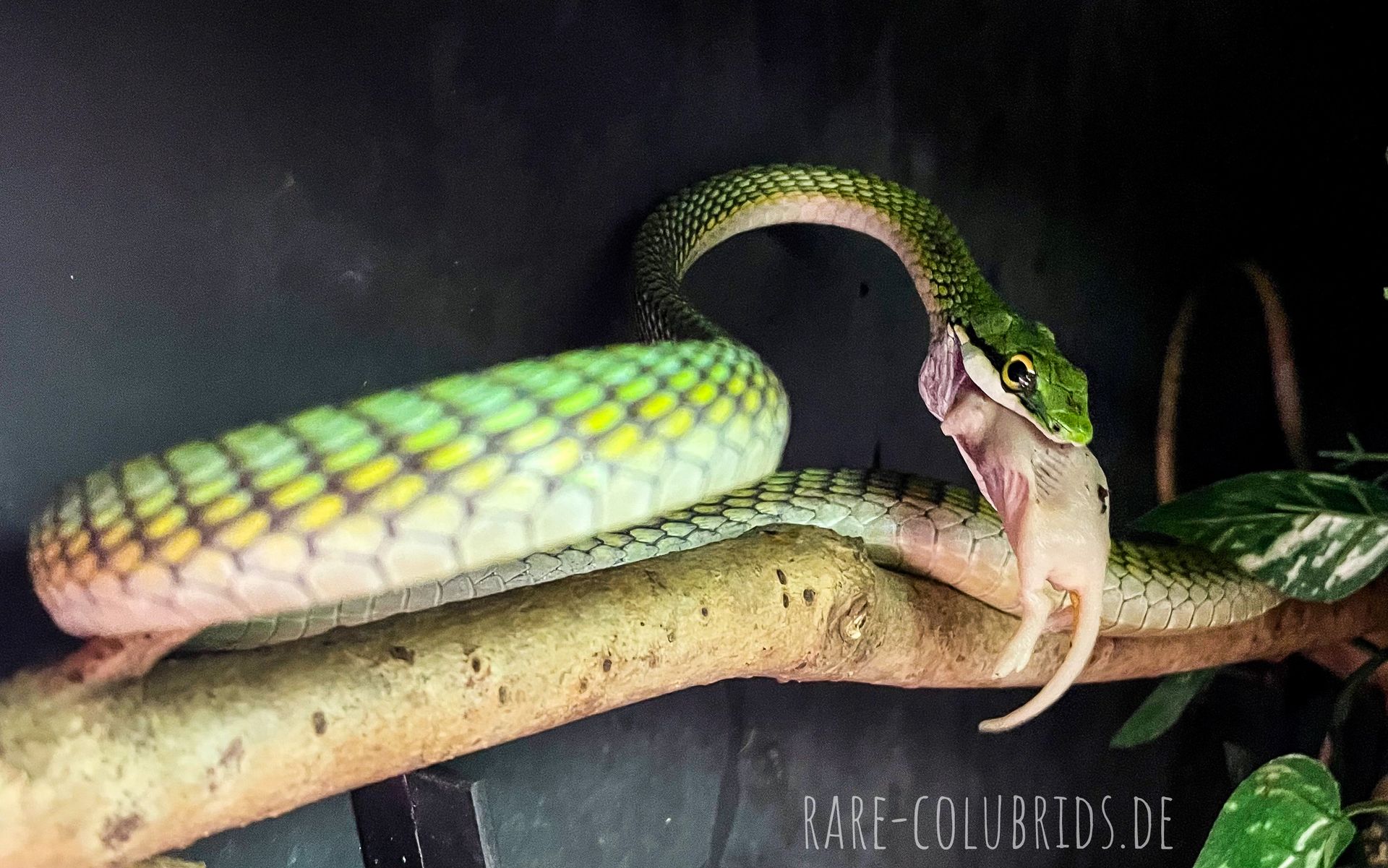
Elterntiere nehmen Nager an. Jungtiere jedoch nicht
Paarung
Eiablage Plätze
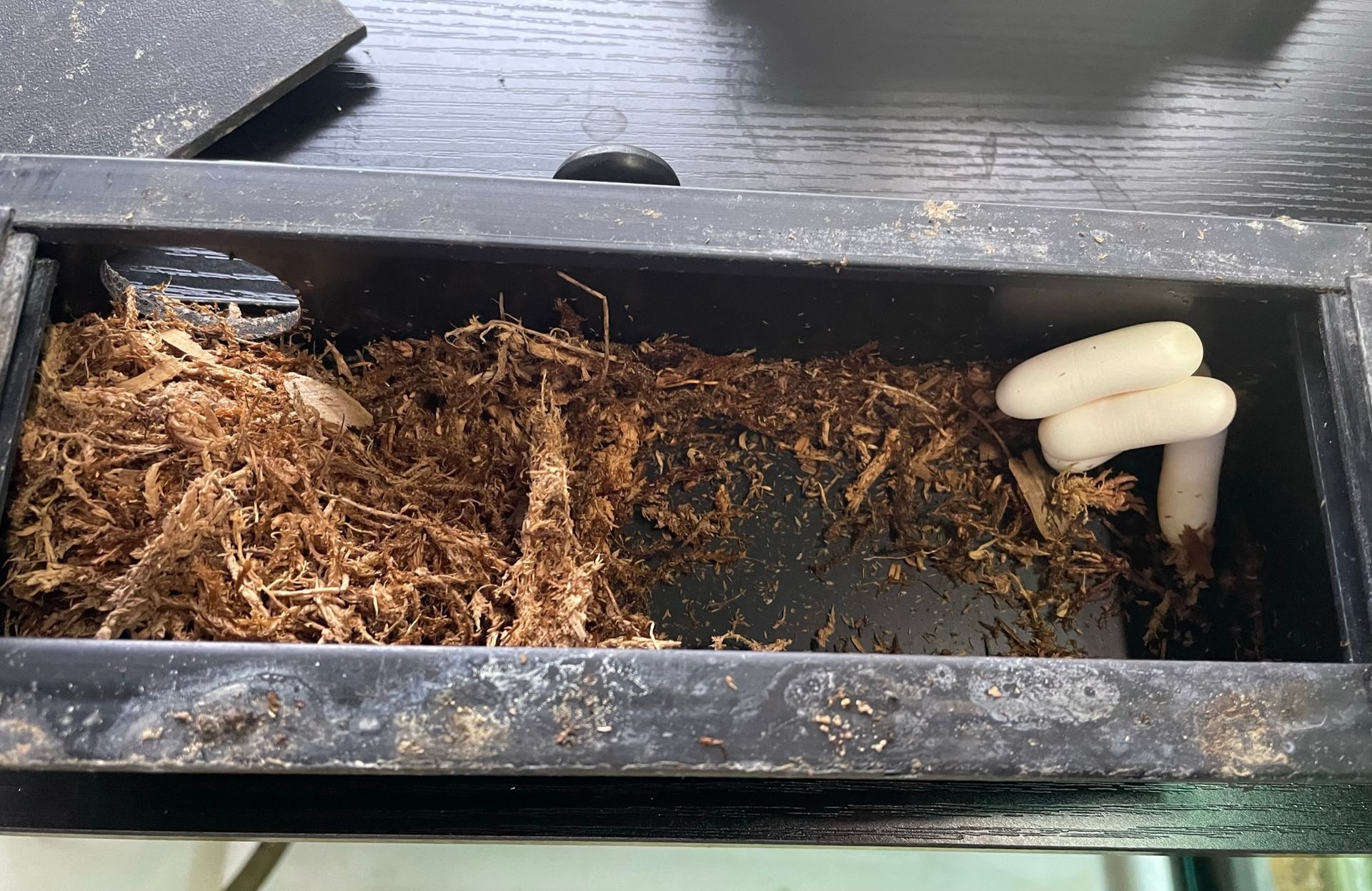
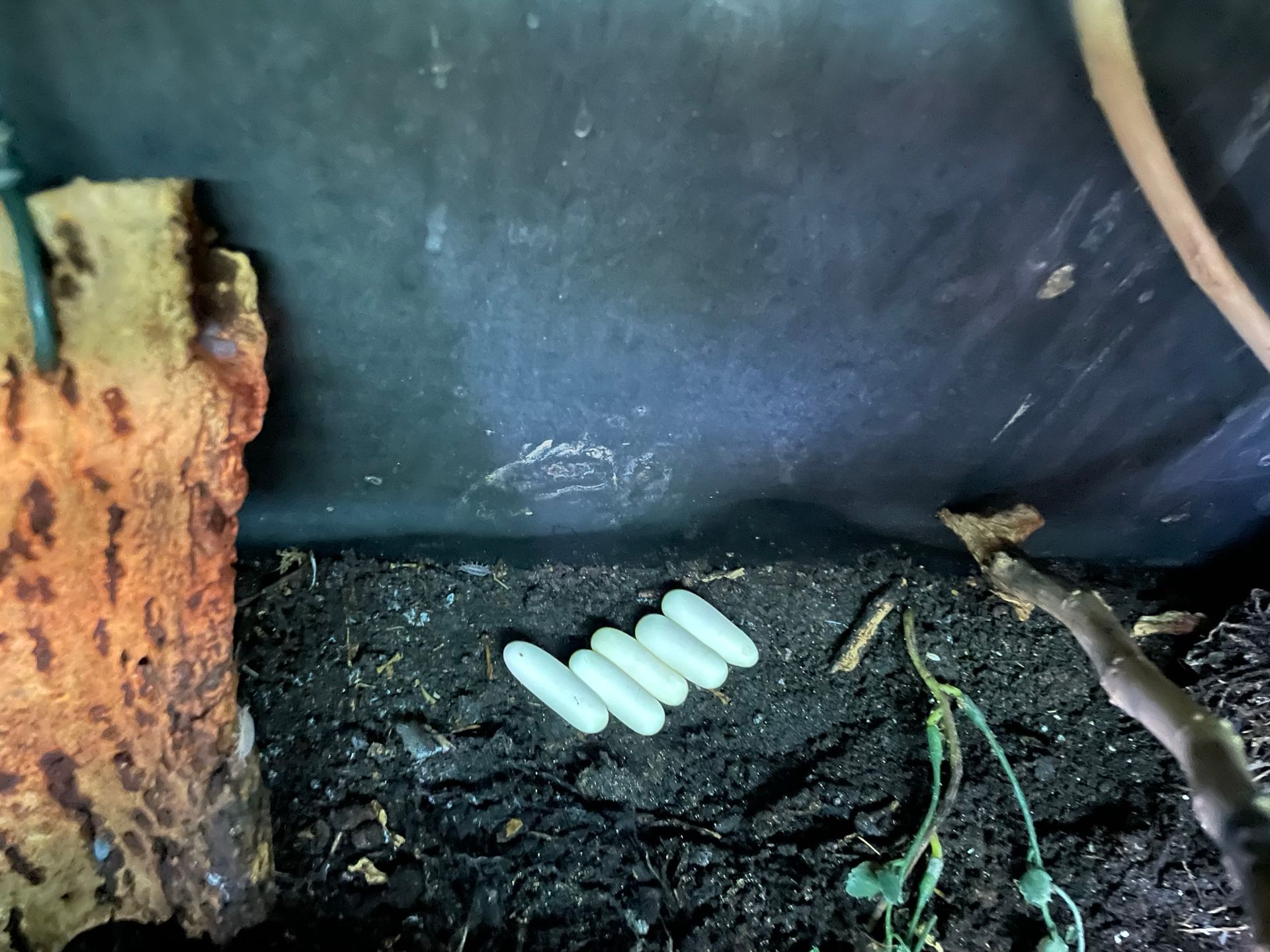
Gelege Daten
Schlupf Fotos
Weitere Bilder von Leptophis ahaetulla